





 Portuguese
  English
  Spanish
  5 min of reading
  0 comments


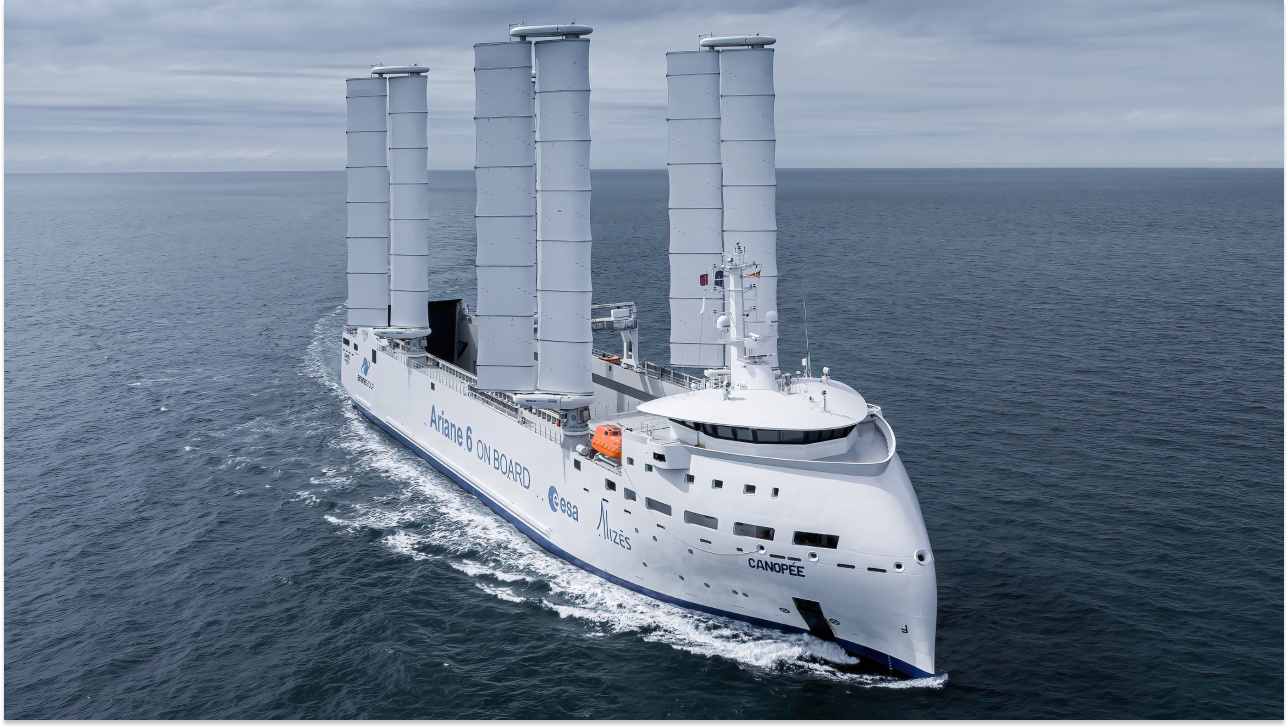
Canopée ship uses 36 m rigid sails to transport Ariane 6 rockets and reduce fuel consumption by up to 30% on ocean routes.
In 2023, the French company Alizés, formed by Jifmar Offshore Services and Zéphyr & Borée, put into operation the cargo ship Canopée, developed specifically for the logistics of the Ariane 6 rocket. According to information released by ArianeGroup and the European Space Agency about the ship, the vessel was designed to transport stages and subcomponents of the European launcher between industrial ports in Europe and the European space center in Kourou, French Guiana.
The project’s differentiator lies in the onboard engineering. The Canopée uses a hybrid propulsion system that combines diesel engines with automated wind assistance, repositioning wind as an active energy source within modern naval operations. According to ArianeGroup, the ship is the world’s first hybrid industrial cargo ship powered by wind, equipped with four automated Oceanwings sails 37 meters high capable of rotating 360° to follow the wind, while the ESA reports that this configuration reduces fuel consumption by up to 30% compared to a conventional ship powered solely by diesel. This concept is not experimental but is directly applied in real commercial routes linked to the Ariane 6 program.
36-meter OceanWings rigid sails function like wings and reduce energy consumption
The ship is equipped with four OceanWings rigid sails, each approximately 36 meters high and with an area exceeding 360 m². Unlike traditional sails, these structures are rigid aerodynamic profiles, similar to aircraft wings.
-
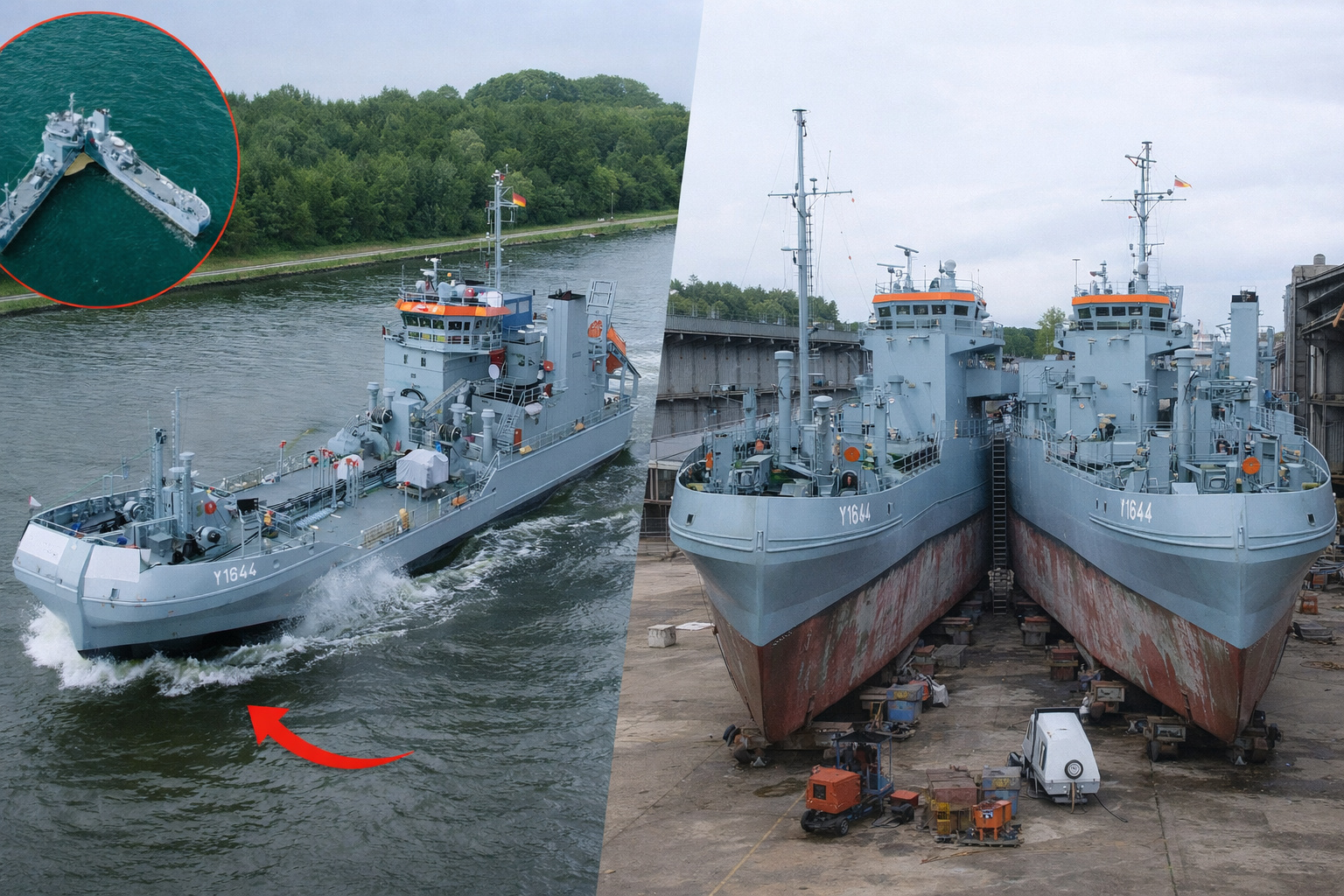
The German ship Bottsand splits its hull in two halves in the middle of the ocean to swallow spilled oil on the surface, separating the oil from the water inside a 790 cubic meter tank and then closing again. It is the only ship in the world factory-designed to split in half as part of normal operations, and the crew of six people who operate everything is civilian.
-
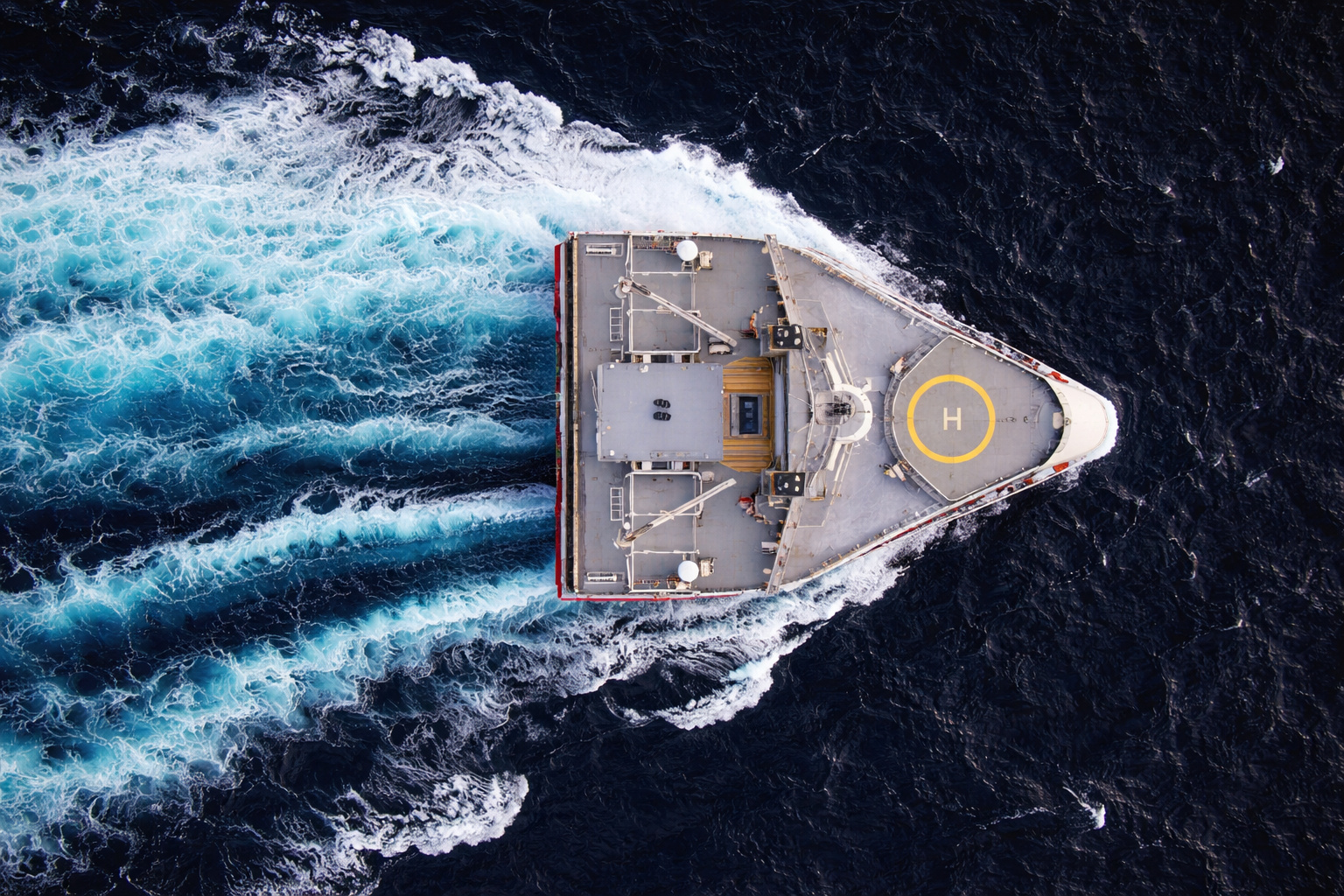
With almost 70 meters in width at the stern and a shape resembling a “giant slice of cheese,” the Ramform Titan tows up to 24 seismic cables to sweep the ocean floor in 3D and reveal oil reserves hidden beneath kilometers of sediment.
-
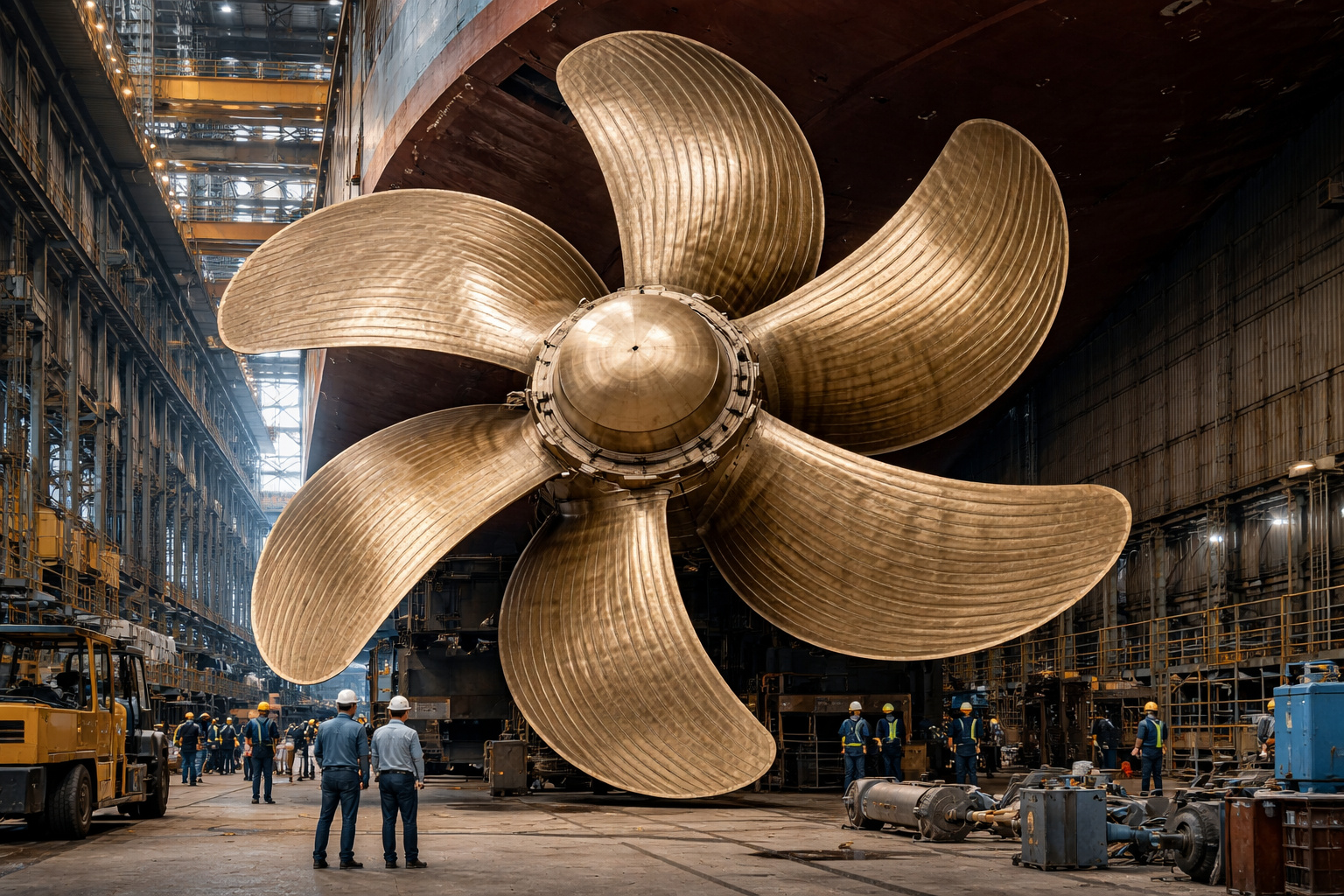
How a 131-ton, 11-meter propeller supports 90% of global trade and transforms the largest container ships on the planet.
-
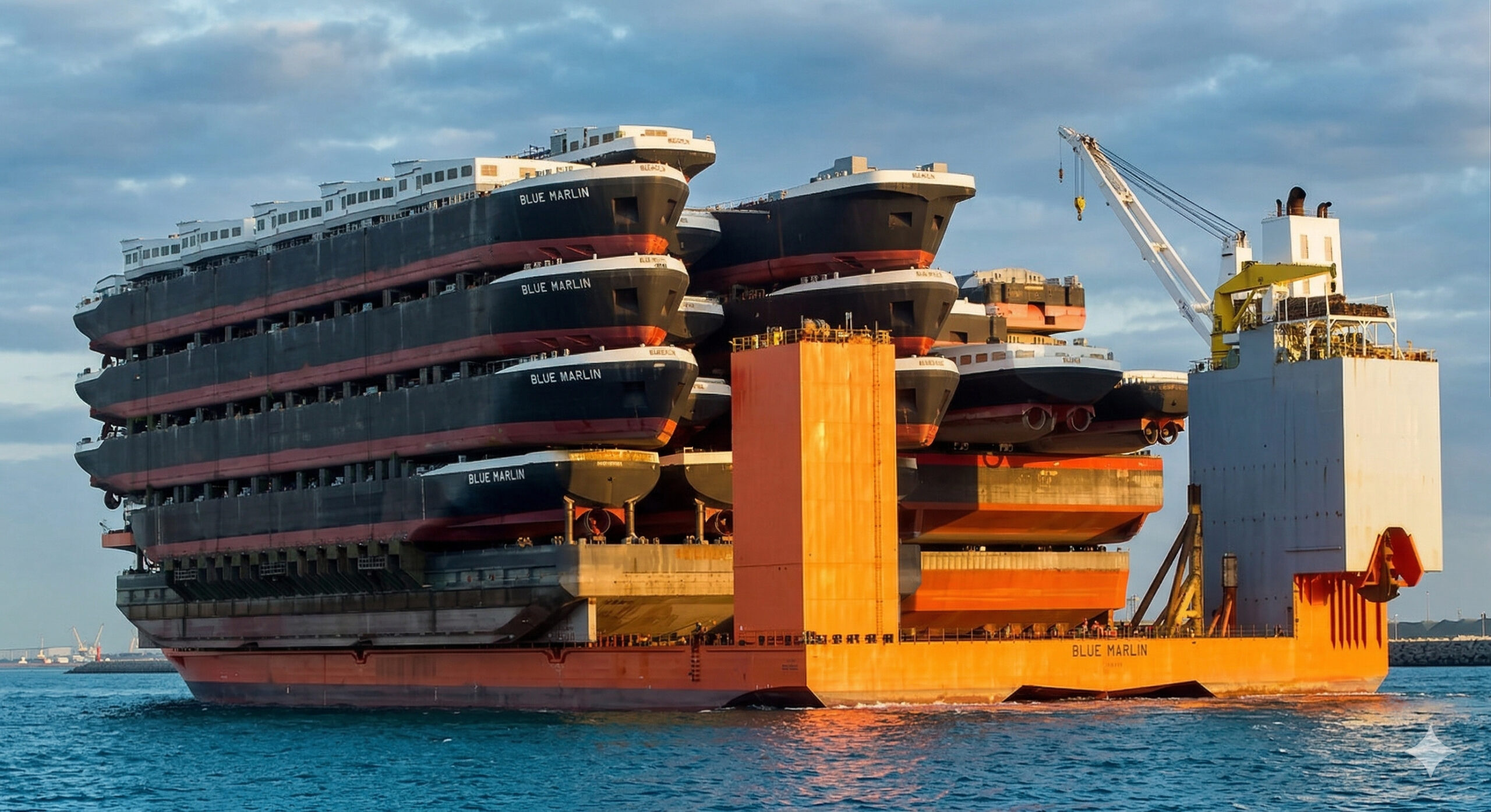
With a length of 225 meters and a capacity of 76 thousand tons, this ship “sinks” its own deck down to 28 meters deep to accommodate war destroyers, oil platforms, and giant radars floating above, and then emerges with everything intact on top like a colossal tray crossing oceans.

Each unit operates with sensors and automated systems that adjust its orientation in real-time. This system allows for continuous and optimized capture of wind energy along the route, reducing the need for effort from the main engines.
The direct result is a constant energy gain during navigation, without interfering with the ship’s stability or the predictability of the journey.
Hybrid system allows for up to 30% reduction in fuel consumption on ocean crossings
Technical data released by the developers indicate that the system can reduce fuel consumption by up to 30%, depending on the weather conditions encountered during the journey.
This reduction occurs because part of the propulsion is provided by the wind, decreasing the load on the combustion engines, which are traditionally responsible for nearly all the energy used in ships of this size.

The direct consequence is a reduction in operational costs and emissions associated with maritime transport, especially on long routes, where fuel represents a significant portion of the logistical cost.
Ship designed to transport Ariane 6 components with high logistical precision
The Canopée was developed to serve a specific function within the European space production chain. It transports components of the Ariane 6 rocket, including large cylindrical structures and sensitive modules.
These components require strict control of vibration and stability during transport, which led to the development of a specific structural design for the ship.
The route connects industrial ports in Europe to the port of Pariacabo in French Guiana, near the launch center. This is a critical logistical operation, where delays or failures can directly impact launch schedules.
Canopée’s structure adapted for sensitive cargo and stable navigation at sea
In addition to the sail system, the ship has a deck designed for bulky cargo and securing systems that ensure stability during the crossing.
The structural engineering has been developed to minimize vibrations and unwanted movements, ensuring the integrity of the transported components over thousands of kilometers of navigation.

This level of specialization transforms the Canopée into an extension of the industrial chain of the space sector, and not just a conventional means of transport.
OceanWings technology transforms wind into a controlled energy source in modern navigation
The use of wind in navigation is not new, but the differentiator lies in how it is utilized. The OceanWings sails operate with automated systems integrated into navigation.
This allows for treating wind as a controllable and predictable variable, integrated into the ship’s energy performance, eliminating the dependence on manual operation typical of older vessels.
This approach transforms a natural resource into a technical component of operational efficiency.
Canopée shows how navigation can reduce emissions without changing the entire infrastructure
Maritime transport is responsible for a significant share of global emissions, and solutions like Canopée show viable paths to reduce this impact.

The integration of hybrid systems allows for energy gains without the need for radical changes to existing infrastructure, making adoption more viable at scale.
The project demonstrates that the combination of naval engineering and energy solutions can generate concrete operational gains while maintaining the economic viability of commercial navigation.
Naval engineering and space logistics converge in a single operational system
The Canopée brings together different disciplines into a single solution. It combines naval engineering, hybrid propulsion systems, and space logistics into an integrated operation.
By transforming wind into an active energy source within commercial navigation, the project redefines how ships can operate on ocean routes, maintaining efficiency and reducing dependence on fossil fuels.
This approach positions the ship as one of the most advanced examples of integration between energy technology and maritime transport in real operation.









Seja o primeiro a reagir!