





 Portuguese
  English
  Spanish
  5 min of reading
  0 comments


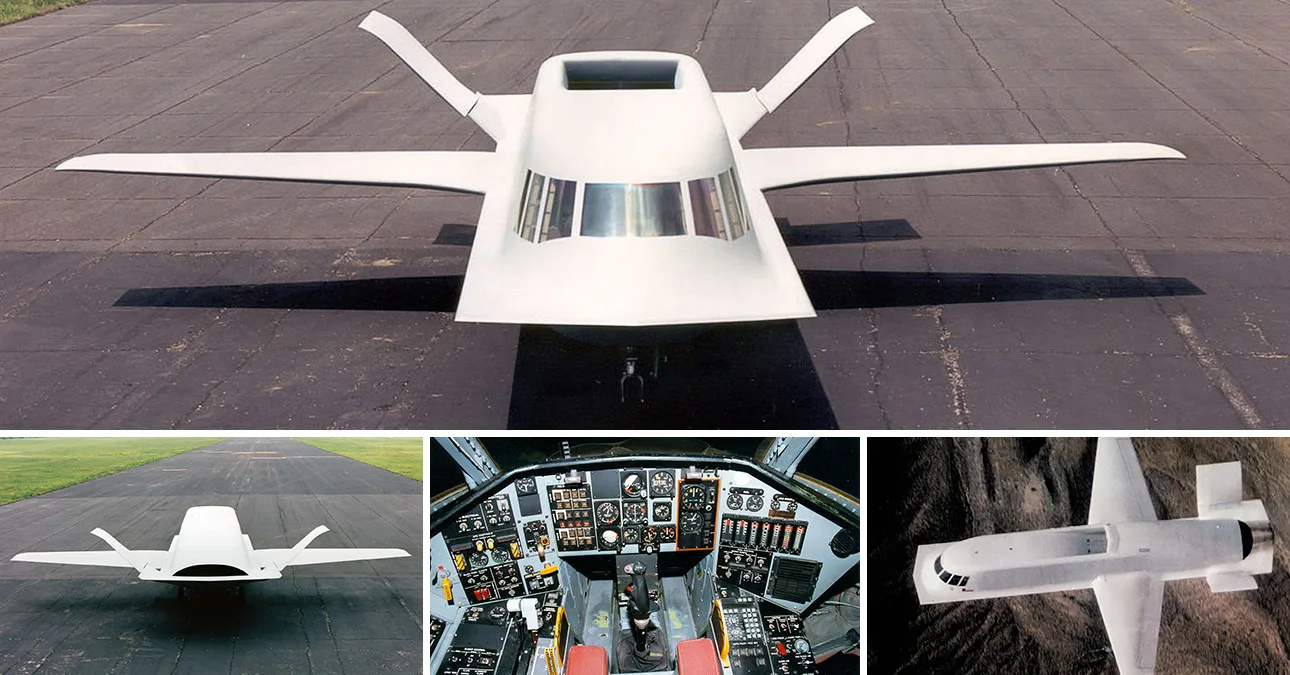
Secret Aircraft Tacit Blue, the “Invisible Whale”, Completed More Than 130 Flights and Revolutionized Stealth Technology by Operating Radar Undetected.
In the late 1970s and early 1980s, amid the technological escalation of the Cold War, the Defense Advanced Research Projects Agency (DARPA), in partnership with Northrop Corporation, advanced one of the most unusual projects in the history of military aviation in the United States. The goal was to test an idea that seemed contradictory for the time: to verify whether a low-observability aircraft could operate radar sensors without compromising its own discretion on the battlefield.
The result was the development of the Tacit Blue, an experimental aircraft that became informally known as the “Whale” due to its unusual fuselage shape. Built in extreme secrecy, the project demonstrated that a stealth aircraft could combine curved surfaces, low radar signature, and sensors capable of monitoring enemy forces without revealing its position, something that would later directly influence programs like the B-2. The program remained classified for years and was only made public in 1996, when the aircraft was declassified.
According to official records from DARPA and the National Museum of the United States Air Force, the Tacit Blue flew for the first time in February 1982 and accumulated 135 test flights until the program ended in 1985. These flights had no direct operational purpose but served to validate concepts of stealth, aerodynamics, and sensors that would redefine the development of military aircraft in the following decades.
-
F-20 Tiger Shark: the light fighter that could rival the F-16, it was to be the successor to the F-5 and cost less, but it died due to politics, without support from the U.S., after 1 billion invested.

-
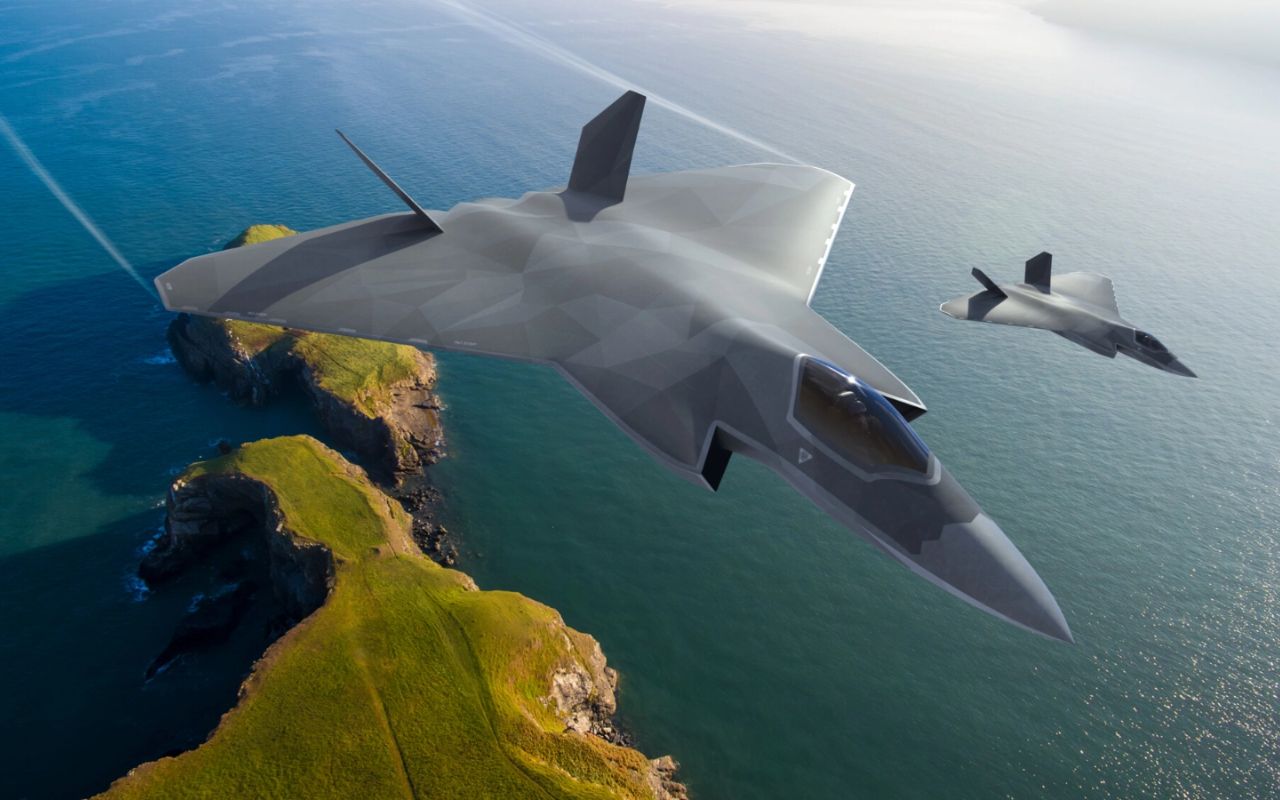
£686 million military project unites Europe and Asia to create one of the world’s most advanced fighter jets.
-
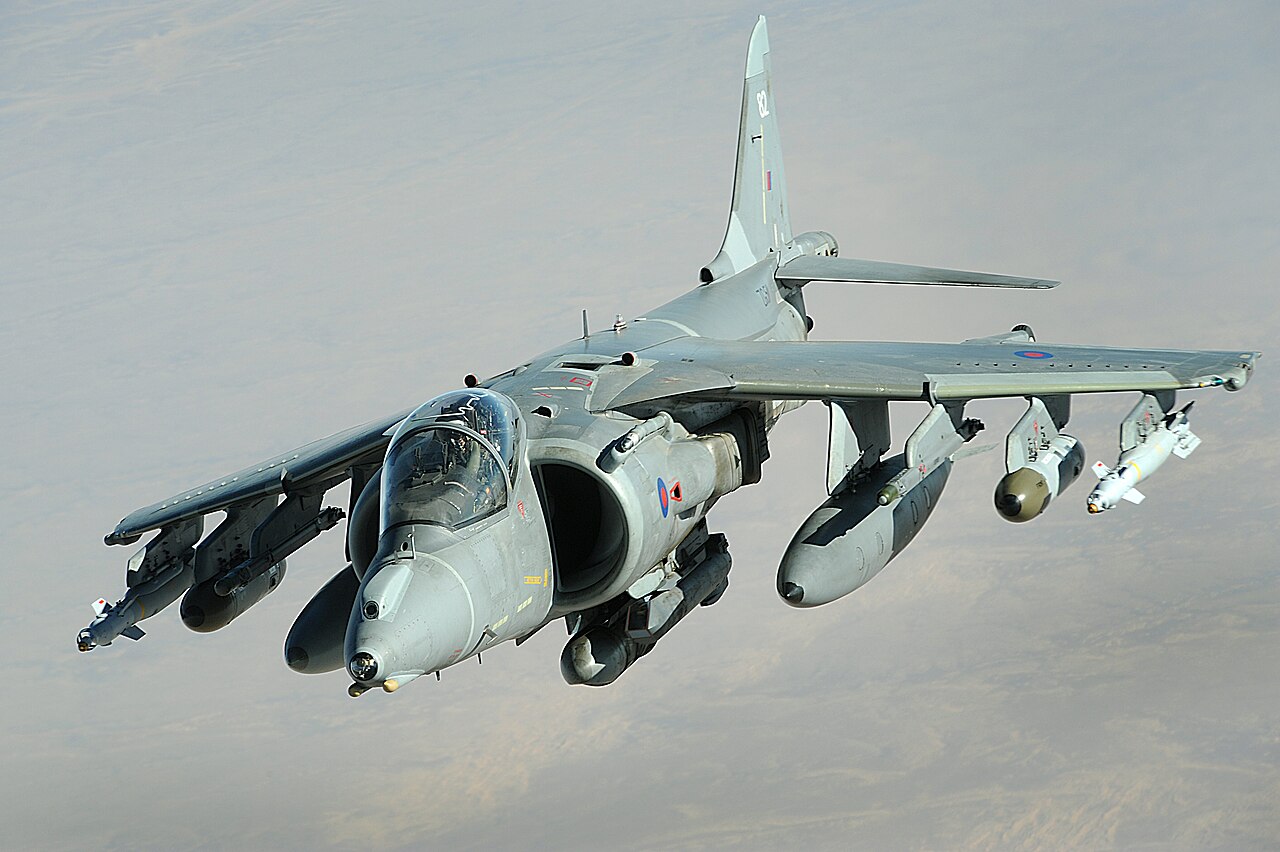
Capable of slowing down from 925 km/h to almost zero in seconds using the thrust of its jets, the Harrier performs the VIFF maneuver, causing enemy fighters to overshoot the target without reaction. This extreme test even threw the pilot against the cockpit due to the brutal deceleration.
-
The Army requests R$ 456 billion to defend Brazil, but an expert says that the figure is only alarming on paper and remains small compared to the military shortfall accumulated by the country: “just one foreign aircraft carrier arriving here and they will have an air force larger than ours.”

Aerodynamic Design of Tacit Blue and Reduction of Radar Signature
The most striking aspect of the Tacit Blue was its shape. Unlike traditional fighters with angular surfaces, the aircraft adopted a completely curved and continuous shape, designed to scatter and dissipate radar waves in multiple directions.


This concept contrasted with other approaches of the time, such as the F-117 Nighthawk, which used faceted surfaces. In the case of Tacit Blue, the proposal was to test whether smooth and rounded surfaces could also efficiently reduce radar cross-section (RCS).
The aircraft had approximately:
- 17.7 meters in length
- 14.7 meters in wingspan
- High and wide fuselage, with an almost oval profile
- Air intake positioned on top, reducing frontal exposure
- Engines installed to minimize infrared signature
This combination resulted in a visually unusual aircraft, but highly efficient for low-observability testing.
Unprecedented Capacity to Operate Radar Undetected
The great differential of the Tacit Blue was not just “being invisible”, but rather continuing to operate active systems without revealing its position.
At the time, reconnaissance aircraft faced a technical dilemma: by activating their radars to detect targets, they ended up revealing their location. The Tacit Blue was designed to solve exactly this problem.
It incorporated an experimental radar system capable of:
- Mapping terrain and identifying ground targets
- Operating in conjunction with low-observability technologies
- Minimizing detectable returns by enemy radars
This concept is considered one of the precursors to current JSTARS (Joint Surveillance Target Attack Radar System) systems and modern aerial surveillance platforms.
The success of these tests demonstrated that it was possible to “see without being seen”, an advancement that profoundly changed military doctrine.
Secret Program and Testing Environment in the Nevada Desert
The tests of the Tacit Blue were conducted in highly restricted facilities, mainly in remote areas of Nevada, associated with centers such as:
- Tonopah Test Range
- Regions near the Area 51
The choice of these locations was not random. Besides the geographical isolation, they offered ideal conditions for experimental flights away from external observation. During its years of operation, the Tacit Blue accumulated fundamental data on:
- Aerodynamic behavior of unconventional fuselages
- Integration of active sensors in stealth platforms
- Structural limitations of aircraft with extreme shapes
Despite the design being inefficient from a classic aerodynamic standpoint, the aircraft managed to maintain sufficient stability to fulfill its experimental mission.
More Than 130 Flights and Validation of Critical Technologies
Throughout its more than 130 test flights, the Tacit Blue served as an airborne laboratory for various technologies that, years later, would be incorporated into operational aircraft. Among the main results obtained are:
- Validation of ground surveillance radars embedded in stealth platforms
- Testing of materials and geometries for radar signature reduction
- Development of control systems for aircraft unstable by design

These flights were essential to prove that concepts considered risky or unfeasible could, in practice, work.
Direct Influence on the Development of the B-2 Spirit Bomber
One of the most important legacies of the Tacit Blue was its direct influence on the development of the Northrop B-2 Spirit, one of the most advanced bombers ever built.
The B-2 inherited several lessons learned from the program, especially:
- Integration of sensors and stealth
- Reduction of radar signature from multiple angles
- Use of unconventional shapes for detection control
Although the B-2 uses a flying wing configuration, different from the “invisible whale”, many of the principles validated in the Tacit Blue were fundamental to its design.
Why Tacit Blue Seemed “Wrong” but Was Ahead of Its Time
Visually, the Tacit Blue challenged any traditional aircraft standard. Its tall, rounded, and seemingly inefficient aerodynamic shape raised doubts even among experts.
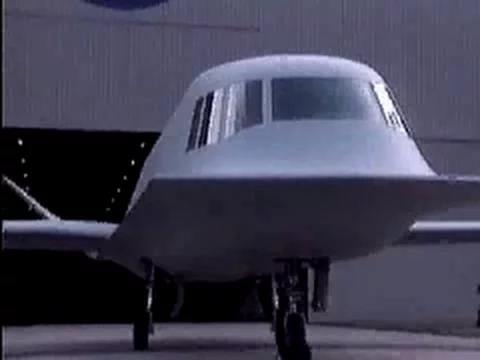
However, this design was the result of a deliberate choice: to prioritize stealth and sensory capability over classic aerodynamic efficiency.
This approach showed that:
- Aircraft do not need to follow conventional shapes to fulfill specific missions
- Radar signature can be manipulated by geometry, not just by materials
- Active sensors can coexist with low observability
Today, these principles are applied in various modern military platforms.
The End of the Program and the Revelation to the Public
The Tacit Blue program was terminated in 1985, after fulfilling its experimental objectives. For years, its existence remained classified.
Only in the 1990s was the aircraft officially revealed to the public, becoming one of the most emblematic examples of secret projects from the Cold War. Currently, the only known specimen is preserved at the:
- National Museum of the United States Air Force, in Ohio
Its unusual appearance continues to attract attention, but its true impact lies in the invisible systems it helped develop.
Comment: Have You Heard of the “Invisible Whale” That Helped Create the B-2?
The Tacit Blue is a clear example of how seemingly strange projects can completely transform military technology. Even without entering combat, it redefined how aircraft see and avoid being seen.
Had you heard of this secret aircraft or other experimental projects from the Cold War that seemed impossible for the time?







Seja o primeiro a reagir!