





 Portuguese
  English
  Spanish
  5 min of reading
  0 comments


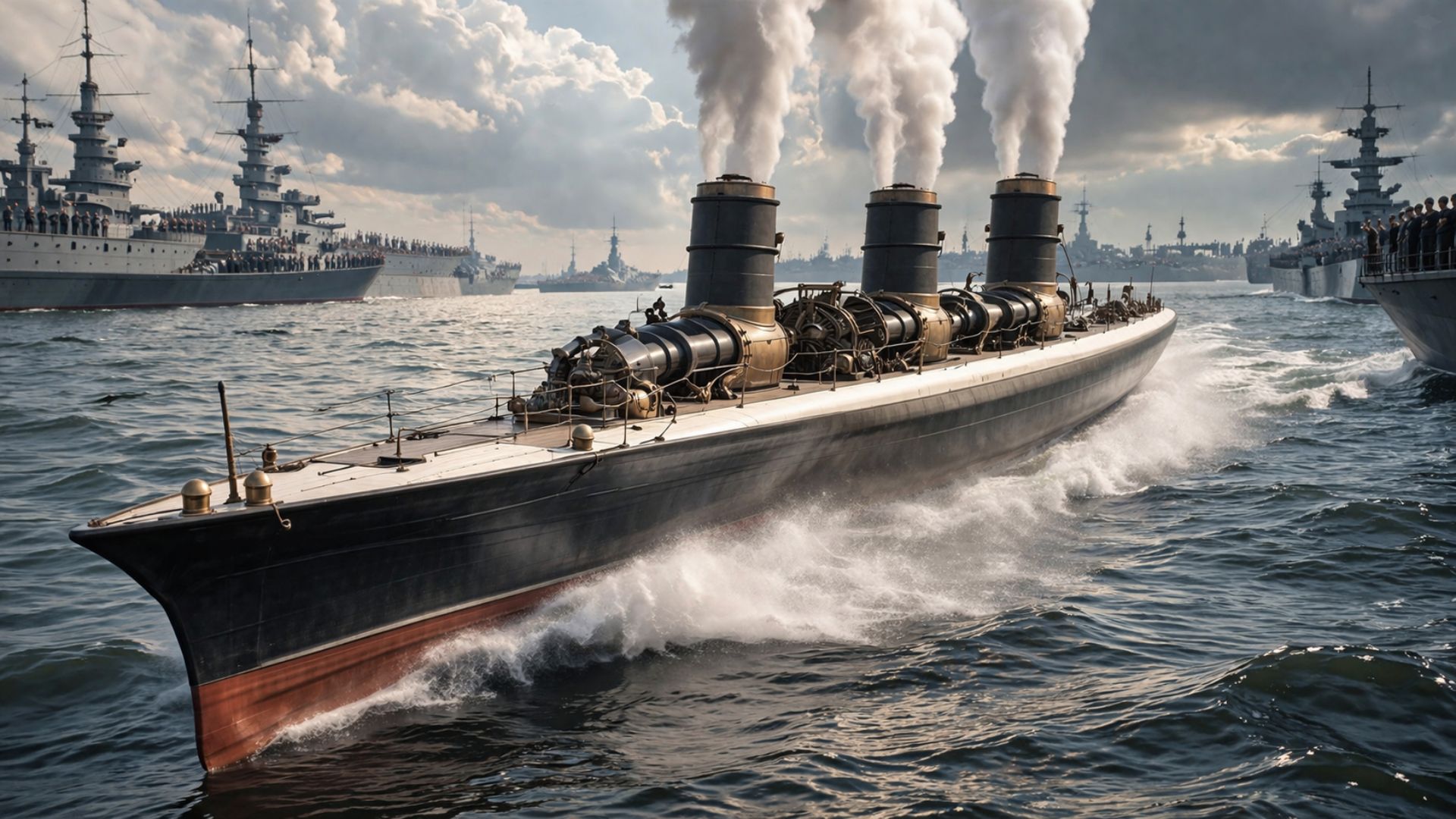
Historical demonstration of speed and naval innovation at the end of the 19th century drives definitive change in maritime engineering and redefines propulsion standards with lasting impact on military and commercial ships.
By crossing the British fleet in June 1897, the Turbinia practically demonstrated that steam turbines could surpass in speed and smoothness the then-predominant alternative engines, achieving performance unattainable by the large warships gathered at that historic event.
During the naval review of Queen Victoria’s diamond jubilee at Spithead, the vessel advanced at over 30 knots between rows of ships, clearly evidencing a technological change that was moving from theoretical to having a direct impact on maritime engineering.
Origin of the Turbinia and the innovation of Charles Parsons
Responsible for the design, Charles Algernon Parsons conceived the vessel as a full-scale laboratory aimed at testing a technology already applied in electric generation in the maritime environment, based on continuous rotation instead of the alternating movement of pistons.
-
China has released 30.82 million spectra from a single telescope, a mega astronomical structure that has been operating for 14 years and has become the largest base in the world for studying the Milky Way, exoplanets, and quasars.
-
Neither in the refrigerator nor in the cabinet above the stove: this is the correct way to store coffee.

-
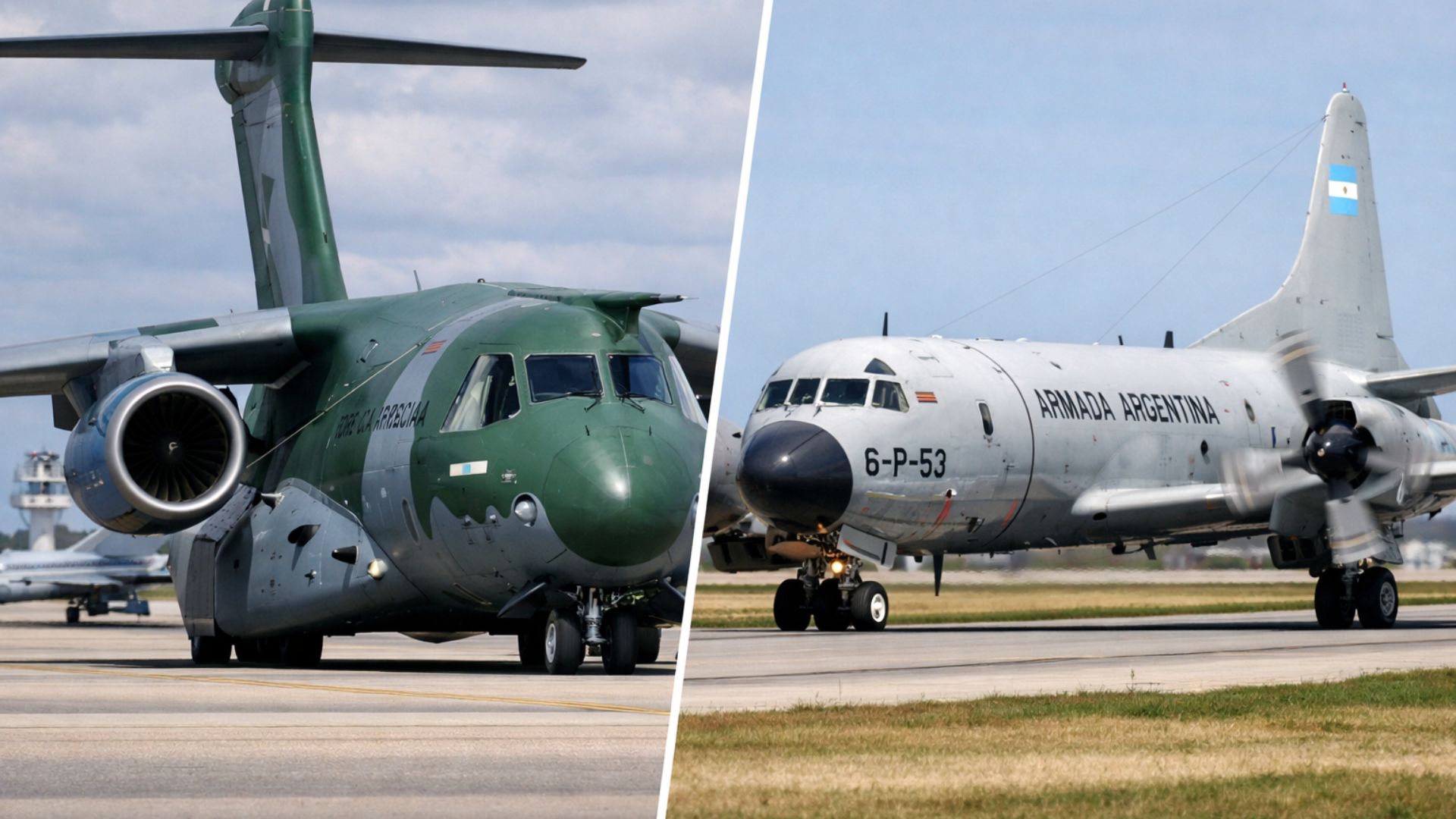
While Brazil gains ground among NATO forces with the KC-390, Argentina attempts to monitor the South Atlantic with P-3 Orion aircraft retired by Norway.
-
With over 300 million coins produced every day, the mining factory extracts copper from tons of rock, using giant machines, metal alloys, and an inspection system that completes an impressive production process.


With this proposal, the engineer sought to reduce vibrations and increase mechanical efficiency while demonstrating that naval propulsion could be rethought from a completely different principle than the traditional systems used at the end of the 19th century.
Although it had modest dimensions by military standards, the Turbinia incorporated unusual technical solutions, with 31.62 meters in length, 2.74 meters in beam, and a displacement of 44.5 tons, characteristics that concealed an innovative mechanical set for the time.
In the configuration that established its reputation, the design included three turbines totaling about 2,000 shp, each connected to a shaft with three propellers, forming an arrangement of nine propellers that allowed it to reach 34.5 knots, about 64 km/h, an exceptional result for an experimental prototype.
Technical challenges and the problem of cavitation
Despite the impressive final result, the initial tests did not meet expectations, as after its launch on August 2, 1894, the vessel began trials in November of the same year with only one turbine of 1,000 hp, recording performance below expectations.
In practice, the maximum speed was 19.75 knots, a number insufficient to validate Parsons’ proposal, highlighting that the challenge was not only in generating power but in the efficiency of transferring that energy to the water through the available propellers.
In light of this scenario, it became evident that the main obstacle was the interaction between the propellers and the water, as the high rotational regime compromised performance and prevented the potential of the turbines from being fully converted into effective propulsion.

According to the American Society of Mechanical Engineers, Parsons identified the problem in the behavior of the flow around the blades, a phenomenon later associated with cavitation, which reduced efficiency and required a complete overhaul of the vessel’s mechanical configuration.
To overcome this limitation, the engineer redesigned the system, adopting three shafts, three turbines, and nine smaller diameter propellers, in addition to conducting an extensive series of experimental tests that allowed for precise observation of the hydrodynamic behavior of the new arrangement.
With these changes, the results evolved rapidly, as the vessel reached 29.6 knots in December 1896 and 32.76 knots in April 1897, establishing itself, after further adjustments, as the fastest in the world by surpassing the mark of 34 knots.
The demonstration at Spithead that changed naval history
In this context of technical advances, the presentation at Spithead gained decisive relevance, as the Turbinia advanced among the ships of the British fleet at superior speed, making visible a transformation that until then had remained confined to the experimental field.
More than a public test, the exhibition represented a symbolic milestone, evidencing that a light and narrow vessel could surpass larger and more traditional units, altering the perception of the future of naval propulsion among engineers and military authorities.
As a direct consequence, the British Royal Navy ordered the destroyers Viper and Cobra, both equipped with turbines, signaling the rapid adoption of a technology that was beginning to consolidate as the standard for high-performance vessels.
The evolution continued at a rapid pace, culminating in the launch of the HMS Dreadnought in 1906, considered the first battleship powered by turbines, capable of reaching 21 knots, surpassing in speed vessels equipped with piston engines.
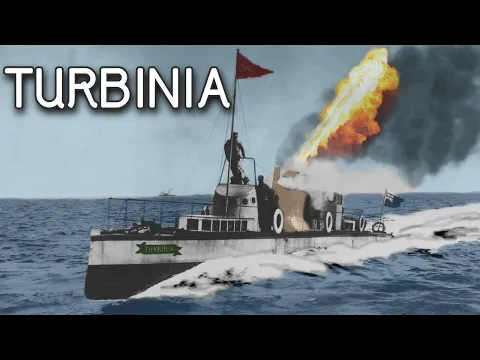

At the same time, the civil sector also incorporated the innovation, as in 1907, large transatlantic liners such as Mauretania and Lusitania began to use Parsons turbines, demonstrating the viability of the technology in large-scale commercial operations.
Historical preservation and legacy of the Turbinia
After fulfilling its role as a technological showcase, the Turbinia continued to operate for a few years, including participation in the Paris Exposition of 1900, before suffering significant damage in 1907 when it was struck by another vessel on the River Tyne.
Even after repairs, its last voyage under its own propulsion occurred that same year, ending a relatively short operational trajectory but with enormous impact on naval engineering.
Subsequently, the vessel underwent a fragmented preservation process, with parts being separated and stored until, in 1959, they were reunited, allowing for a restoration that recovered its original appearance from 1897.
Currently on display at the Discovery Museum in Newcastle upon Tyne, the Turbinia is recognized as a landmark of modern engineering, symbolizing the moment when turbine propulsion ceased to be an experiment and began to redefine the standards of global navigation.
In just a few years, the logic tested in that prototype was incorporated by military and commercial ships, consolidating a technological transformation that redefined speed, efficiency, and performance in maritime transport.





Seja o primeiro a reagir!