





 Portuguese
  English
  Spanish
  5 min of reading
  0 comments


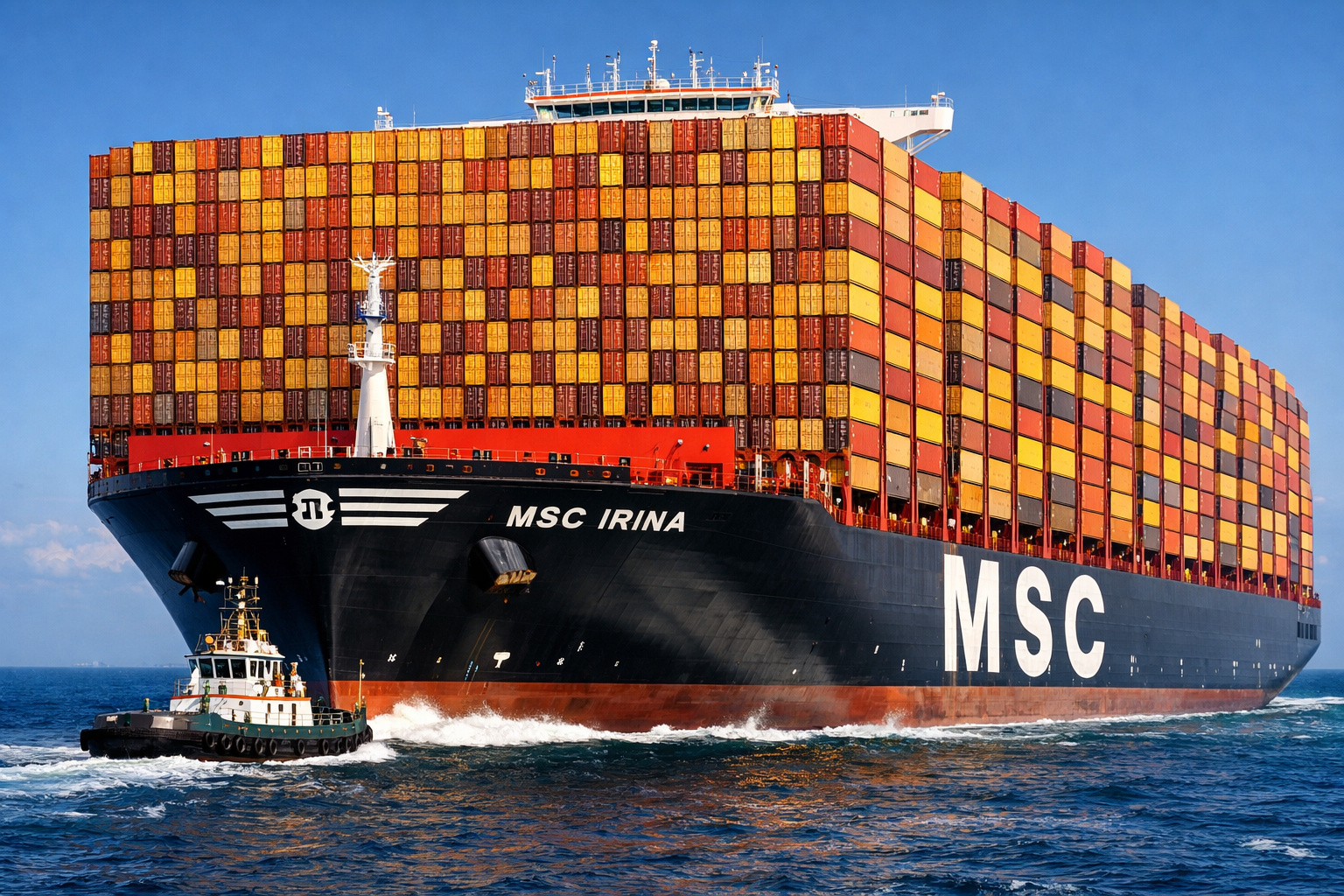
Meet the ocean giant that redefines global logistics with technology, unprecedented scale, and direct impact on the modern global economy
Global maritime transport has just reached a new historic level. In a scenario where efficiency, scale, and technology are decisive factors, the MSC Irina emerges as a true game changer. With an impressive length of 399.9 meters and the capacity to carry over 24,346 containers, the ship not only breaks records but also completely redefines the concept of maritime logistics in the 21st century.
Moreover, its colossal size — equivalent to four football fields — reinforces the growing prominence of mega container ships in international trade. Thus, the MSC Irina is not just a ship: it is a symbol of the evolution of the global economy and the interconnection between continents.
The revolution that started with 58 containers and changed the world
To understand the grandeur of the MSC Irina, it is essential to go back in time. In April 1956, an old converted military oil tanker, called Ideal X, discreetly crossed the waters between New Jersey and Texas carrying only 58 containers. Although it seemed like a simple operation, that moment marked the beginning of a true logistical revolution.
-
With nearly 6,000 square meters and an investment of $100 million, the building that seems to move in Las Vegas has a reflective stainless steel façade, creates optical illusions, and has become a symbol of creativity worldwide.

-
From Florianópolis to Antarctica non-stop at 60 years old: 1st Brazilian woman to sail solo makes history by facing one of the most dangerous routes on the planet.

-
A Brazilian recounted how a sudden malaise triggered the entire hospital machinery in the United States, with emergency protocols, tests to rule out a heart attack, and a bill that could reach $40,000.

-
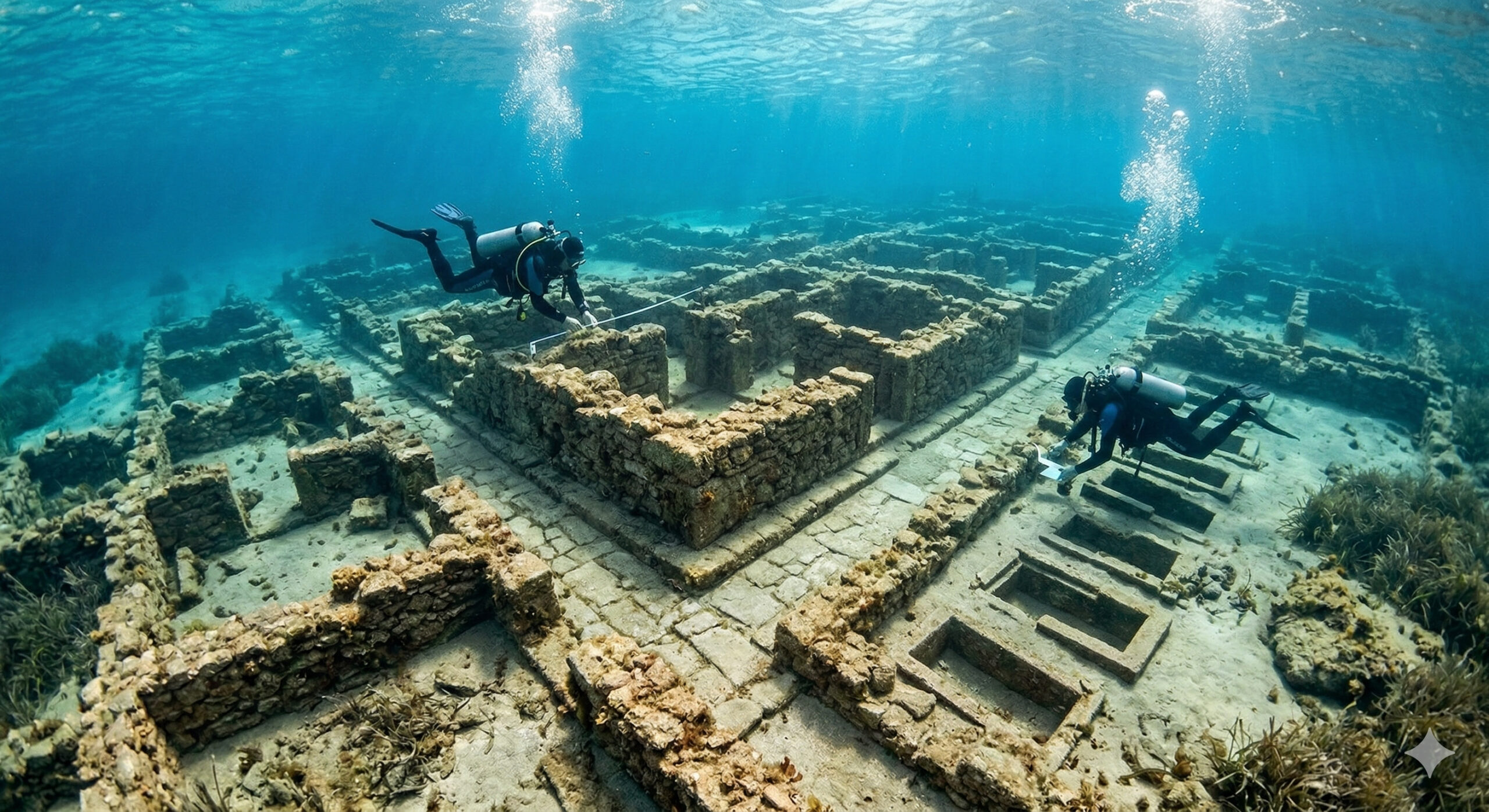
Discovered just 4 meters deep, a 5,000-year-old submerged city with streets, tombs, and trade signs with Crete reveals how one of the oldest civilizations in the world lived before disappearing beneath the sea.

In that context, businessman Malcolm McLean from North Carolina introduced an innovative concept: the standardization of cargo. Consequently, this idea radically transformed global trade, reducing costs, speeding up port operations, and allowing the expansion of international trade on an unprecedented scale.
Over the years, ships evolved rapidly. Initially, vessels with a capacity of up to 1,000 TEU sailed at speeds between 18 and 20 knots. However, the pursuit of efficiency led to the construction of increasingly larger ships.
During the 1980s, the Panamax limit emerged, with vessels about 294 meters long, 32.3 meters wide, and capable of carrying approximately 4,000 containers. However, this standard would only be the beginning of a global race for gigantism on the oceans.

The race for giant ships and the birth of a new record
With advancements in naval engineering, records began to fall rapidly. In 2017, the OOCL Hong Kong surpassed the mark of 21,000 TEU for the first time. Soon after, ships like the MOL Triumph (20,150 TEU) and the Madrid Maersk (20,568 TEU) further raised the industry standard.
Later, in 2023, the OOCL Spain reached 24,188 TEU, establishing a new technical limit. However, this record did not last long.
In March 2023, the MSC Irina was launched as the largest container ship in the world, with a capacity of 24,346 TEU, surpassing the OOCL Spain by 158 TEU. Built at the Yangzijiang Shipbuilding yards, the giant quickly took the title of “king of the seas.”
To give an idea of its capacity, imagine a line of over 24,000 14-meter trucks. This line would stretch about 340 km, nearly the distance between São Paulo and Rio de Janeiro (357 km). In other words, we are talking about a scale that challenges human comprehension itself.
Extreme engineering: how the MSC Irina was built
The construction process of the MSC Irina involved complex technical challenges and strict deadlines. The work began in November 2021, requiring maximum precision from day one.
Additionally, the ship uses steel plates with a thickness between 100 mm and 110 mm, ensuring sufficient strength to withstand the intense forces of the ocean. This structural level is significantly higher than that of conventional vessels.
The main assembly began in June 2022, with only 144 days in dry dock. By August of the same year, the ship was launched into the sea — a critical moment that required maximum precision from the technical team.
Subsequently, in February 2023, the MSC Irina underwent weeks of rigorous testing, simulating extreme operational conditions. Valued at over 200 million dollars and weighing about 300,000 tons when fully loaded, the ship was officially recognized as a milestone of modern naval engineering.
Technology, efficiency, and impressive consumption
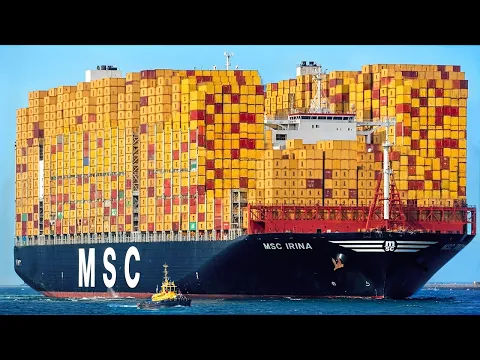
More than size, the MSC Irina represents significant technological advancements. Its optimized configuration allows stacking containers up to 26 layers high, maximizing space utilization.
However, this performance comes with high consumption. The ship’s engine consumes about 300 tons of fuel per day — equivalent to fueling approximately 1,000 trucks.
On the other hand, the ship also incorporates sustainable technologies, reducing carbon emissions by 3% to 4% compared to previous models. Thus, it balances operational efficiency and environmental responsibility.
Gigantism and risks: the warning from the Ever Given case
Despite advancements, gigantism also brings challenges. A striking example occurred in 2021 when the Ever Given, measuring about 400 meters, blocked the Suez Canal for six days.
As a result, the incident generated estimated losses of 9.5 billion dollars per day, highlighting the vulnerability of global trade in the face of these giants.
Thus, while ships like the MSC Irina reduce costs and increase efficiency, they also amplify systemic risks on strategic routes.
MSC’s global strategy and the future of maritime transport

The MSC Irina is not an isolated project. It is part of an ambitious strategy by the Mediterranean Shipping Company (MSC), founded in 1970 by Gianluigi Aponte with just one ship.
Currently, the company controls over 600 vessels and about 20% of the global maritime transport capacity. Additionally, it has more than 130 ships under construction and plans to reach a fleet between 5.5 and 6 million TEU.
This information was disclosed by the channel “Imperium,” based on data from the international maritime sector and specialized reports from the shipbuilding industry, which track the evolution of mega container ships and their influence on global trade.
Thus, the MSC Irina represents not only the pinnacle of naval engineering but also a silent transformation that sustains the modern economy.
A revolution that continues on a global scale
Finally, it is impossible to ignore the impact of this evolution. From the modest 58 containers transported in 1956 to the more than 24,000 of the MSC Irina, the world has witnessed a profound transformation.
While digital technology connects people in seconds, these giants continue to cross oceans for weeks, transporting the products that sustain modern life.
Thus, the MSC Irina is not just a record. It is proof that innovation, when combined with scale, can completely redefine how the world operates.






Seja o primeiro a reagir!