





 Portuguese
  English
  Spanish
  4 min of reading
  0 comments


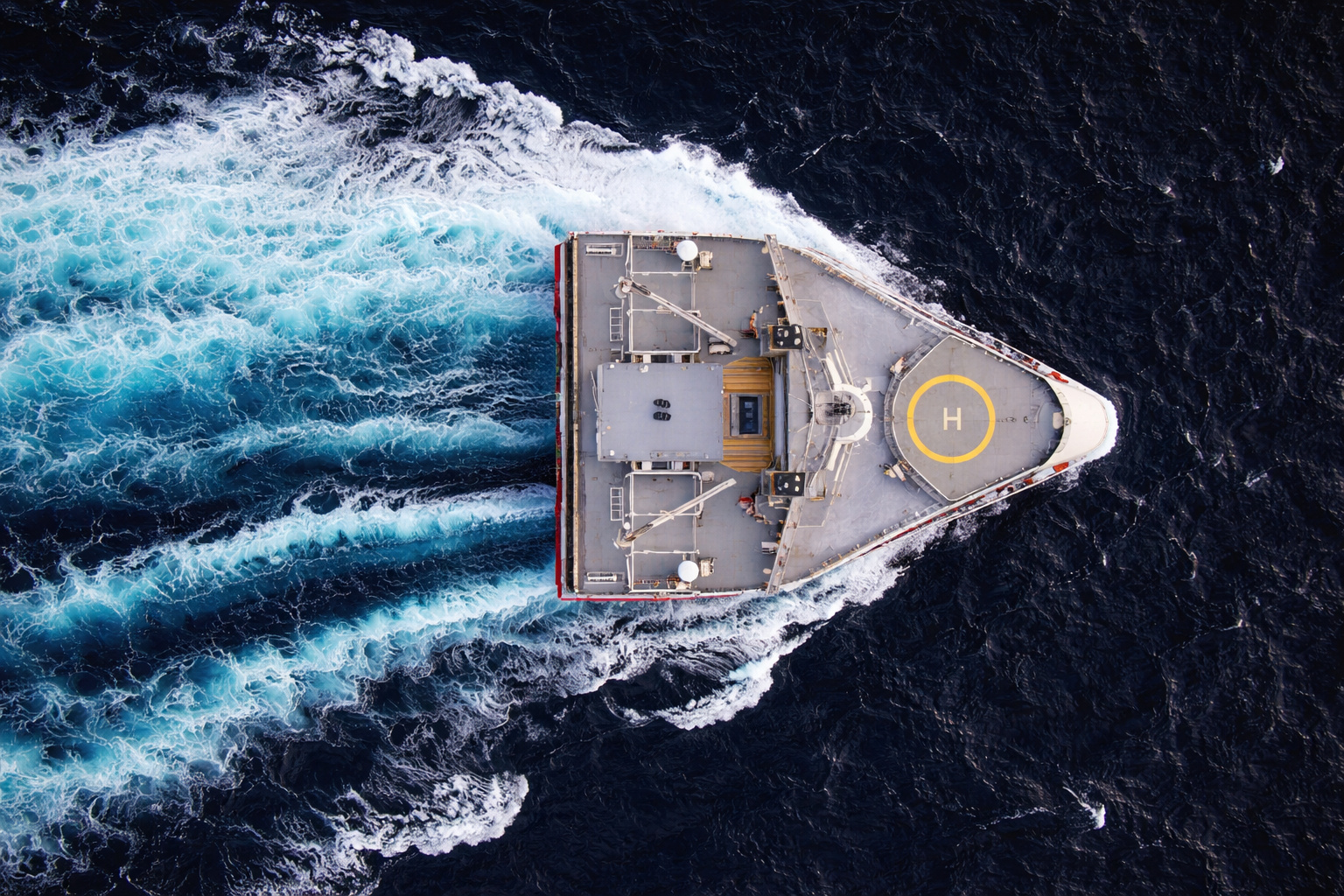
With innovative design and technology, the Ramform Titan revolutionized maritime seismic exploration by expanding data collection, increasing accuracy, operational efficiency, and reach in three-dimensional submarine geophysical mapping.
In 2013, the seismic vessel Ramform Titan began operations after being built at the Mitsubishi Heavy Industries shipyard in Nagasaki, Japan, for the Norwegian company PGS. Specifically designed for high-precision seismic surveys, the ship features a characteristic that makes it unique: a stern nearly 70 meters wide, creating a triangular shape reminiscent of a giant slice.
The most striking fact is that this geometry allows the Ramform Titan to tow up to 24 seismic cables simultaneously, each several kilometers long, creating one of the broadest systems ever used to map the seabed in 3D. This capability places the ship among the most advanced in the world for geophysical exploration.
Triangular shape of the Ramform Titan ensures stability and unprecedented capacity
The design of the Ramform Titan completely deviates from the standard of conventional ships. While traditional vessels have relatively uniform widths, the Titan features an extremely wide stern and a narrow bow, forming an inverted triangle.
-
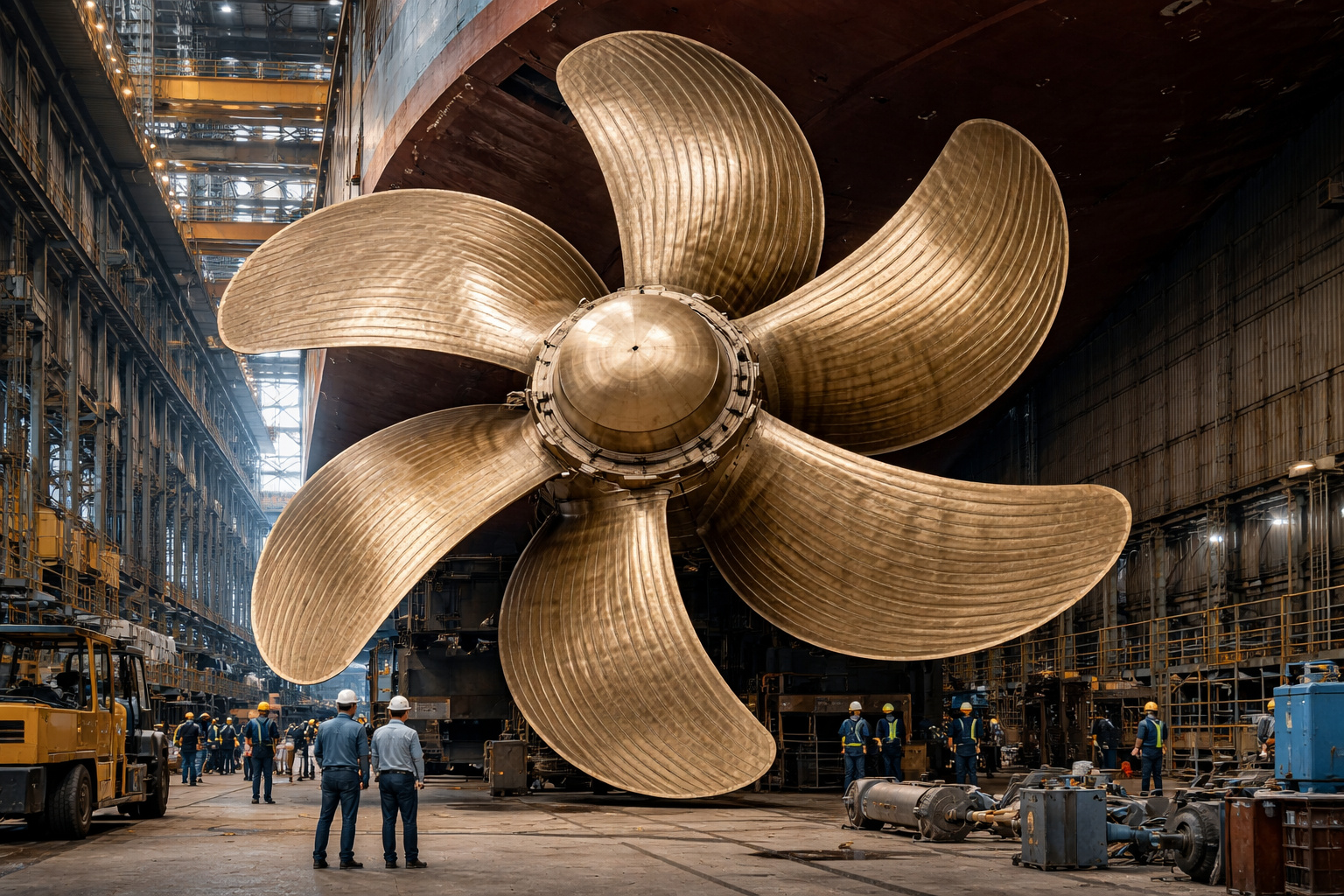
How a 131-ton, 11-meter propeller supports 90% of global trade and transforms the largest container ships on the planet.
-
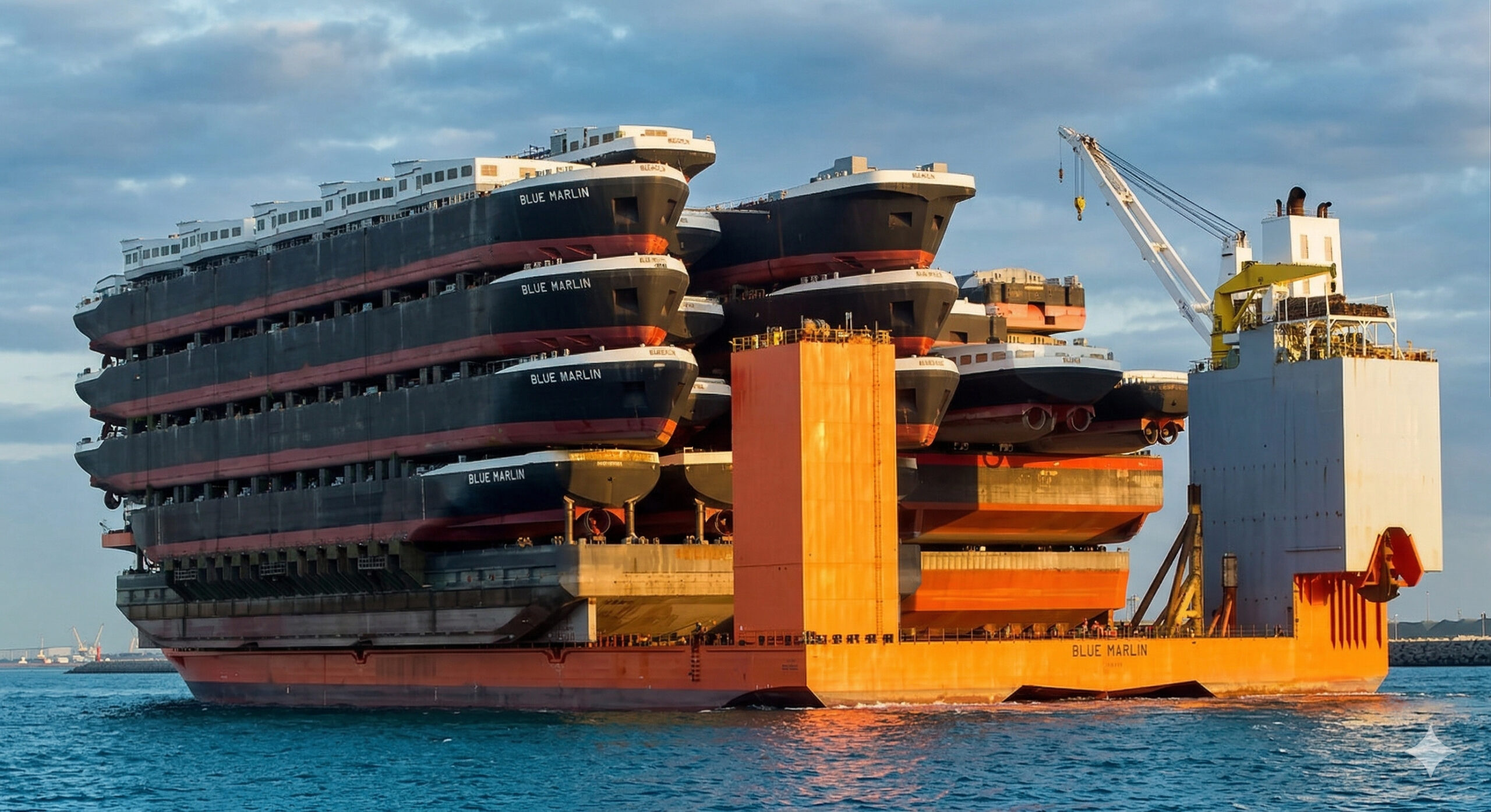
With a length of 225 meters and a capacity of 76 thousand tons, this ship “sinks” its own deck down to 28 meters deep to accommodate war destroyers, oil platforms, and giant radars floating above, and then emerges with everything intact on top like a colossal tray crossing oceans.
-
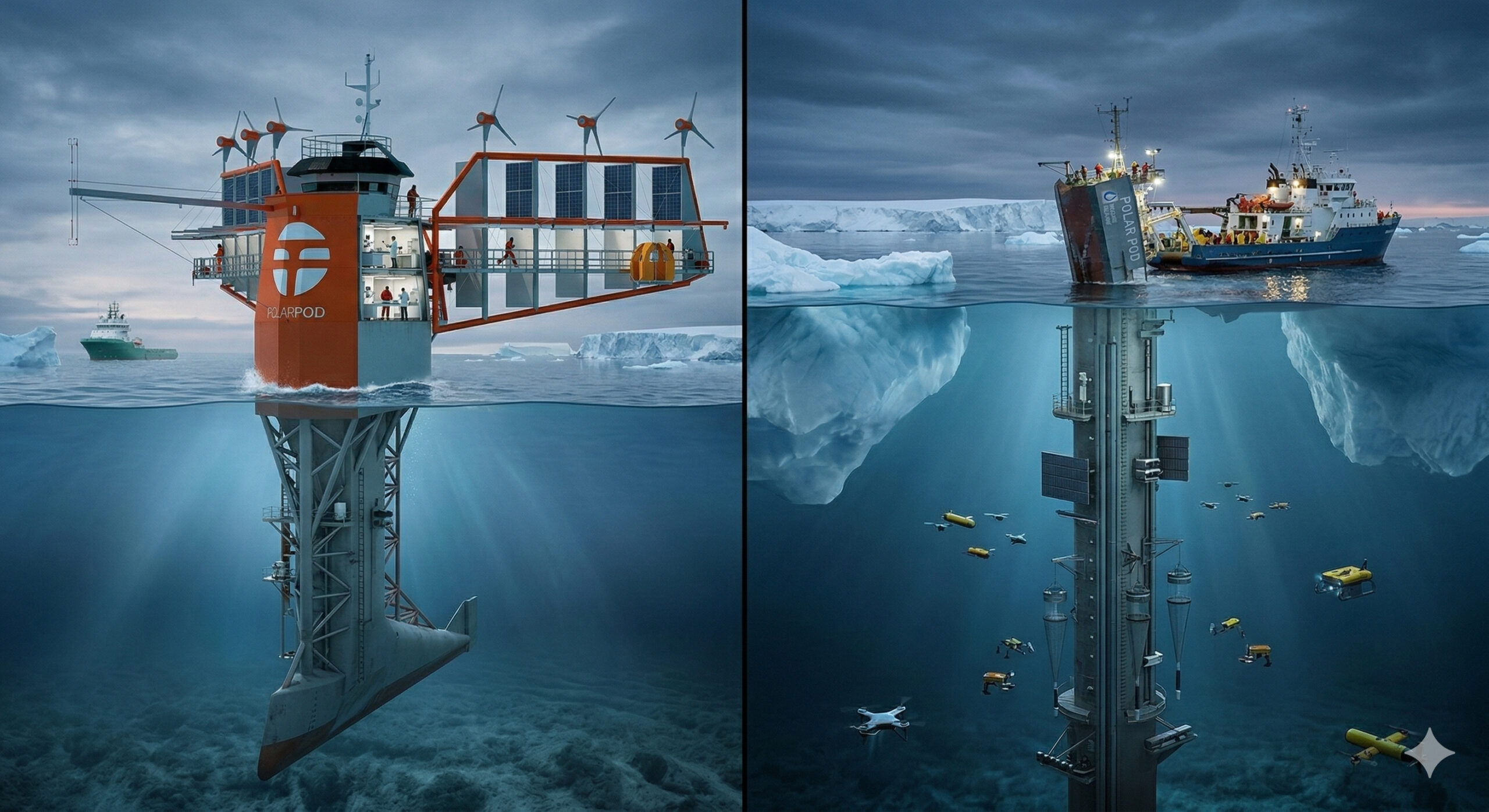
A 100-meter platform without a motor, without a keel, and operating upside down rotates 90 degrees in the ocean, sinks 75 meters, and drifts around Antarctica for two years driven by the planet’s most powerful current to study the largest carbon sink on Earth, still poorly understood by science for accurate climate modeling.
-
With a length of 108 meters and a giant spoon shape, the FLIP was the only ship in the world capable of rotating 90 degrees in the ocean and remaining vertical, with 91 meters submerged, operating for 60 years until it was retired and sent to the scrapyard in 2023.



This configuration offers two main advantages. First, it drastically increases lateral stability, essential for operations with multiple cables extended at sea. Second, it creates sufficient physical space to accommodate a large number of seismic equipment.
This unusual width allows the ship to operate with a number of sensors that simply would not fit on traditional vessels, significantly expanding the coverage area in each operation.
How the seismic cables used by the ship work
The main system of the Ramform Titan consists of long cables known as streamers. Each of these cables can be several kilometers long and contains sensors that capture sound waves reflected from the seabed.
The process works as follows: The ship emits acoustic pulses into the ocean, which penetrate the seabed and traverse geological layers. When these waves encounter different formations, such as rocks or reservoirs, part of the energy is reflected back.
These signals are captured by the sensors distributed along the cables. Analyzing this data allows for the construction of detailed three-dimensional images of the subsurface, revealing geological structures invisible to the naked eye.
Why the Ramform Titan can map larger areas than other ships
The great innovation of the Ramform Titan lies in the scale of its system. With up to 24 cables operating simultaneously, it covers a much wider swath than conventional ships.
This means that in a single pass, the ship can collect data from a much larger area, reducing the time needed to complete seismic surveys.
This operational efficiency reduces costs and increases the accuracy of studies, making the ship a strategic tool for the oil and gas industry.
Noise control and accuracy of seismic data
Although it uses intense acoustic sources, the Ramform Titan is designed to minimize interferences that could compromise data quality. This includes:
- Control of structural noise
- Cable stabilization
- Highly accurate navigation systems
The quality of the collected data directly depends on stability and vibration reduction, factors that are favored by the ship’s design.

Crew and continuous operation at sea
The Ramform Titan operates with a crew of approximately 70 to 80 people, including technicians, engineers, and navigation staff. Operations can last weeks or even months, depending on the exploration area.
During this period, the ship maintains a constant speed and precise trajectory, ensuring the quality of the collected data. Continuous operation at sea requires integration between technological systems and specialized personnel, making the ship a highly complex platform.
Impact on the oil and gas industry
The use of ships like the Ramform Titan has transformed the way oil exploration is conducted. Before the introduction of advanced seismic systems, the identification of reserves relied on less precise methods. With current technology, it is possible to:
- reduce drilling risks
- identify geological structures with greater accuracy
- optimize investments
This represents a significant change in the efficiency of offshore exploration, with a direct impact on the global economy.
Engineering behind one of the most unusual ships in the world
The Ramform Titan is an example of how naval engineering can be adapted to meet specific needs. Every element of the design was conceived to maximize efficiency in data collection: shape of the vessel, weight distribution, and sensor integration.

The result is a vessel that not only stands out visually but also redefines the operational limits of seismic exploration.
A ship designed to see what is hidden
The Ramform Titan represents one of the most significant advances in exploring the ocean floor. With its unusual shape, ability to tow multiple cables, and cutting-edge technology, it allows for the revelation of geological structures hidden beneath kilometers of sediment.
By transforming sound waves into detailed three-dimensional maps, the ship demonstrates how engineering and science can work together to explore inaccessible regions of the planet, expanding knowledge about available natural resources.





Seja o primeiro a reagir!