





 Portuguese
  English
  Spanish
  4 min of reading
  0 comments


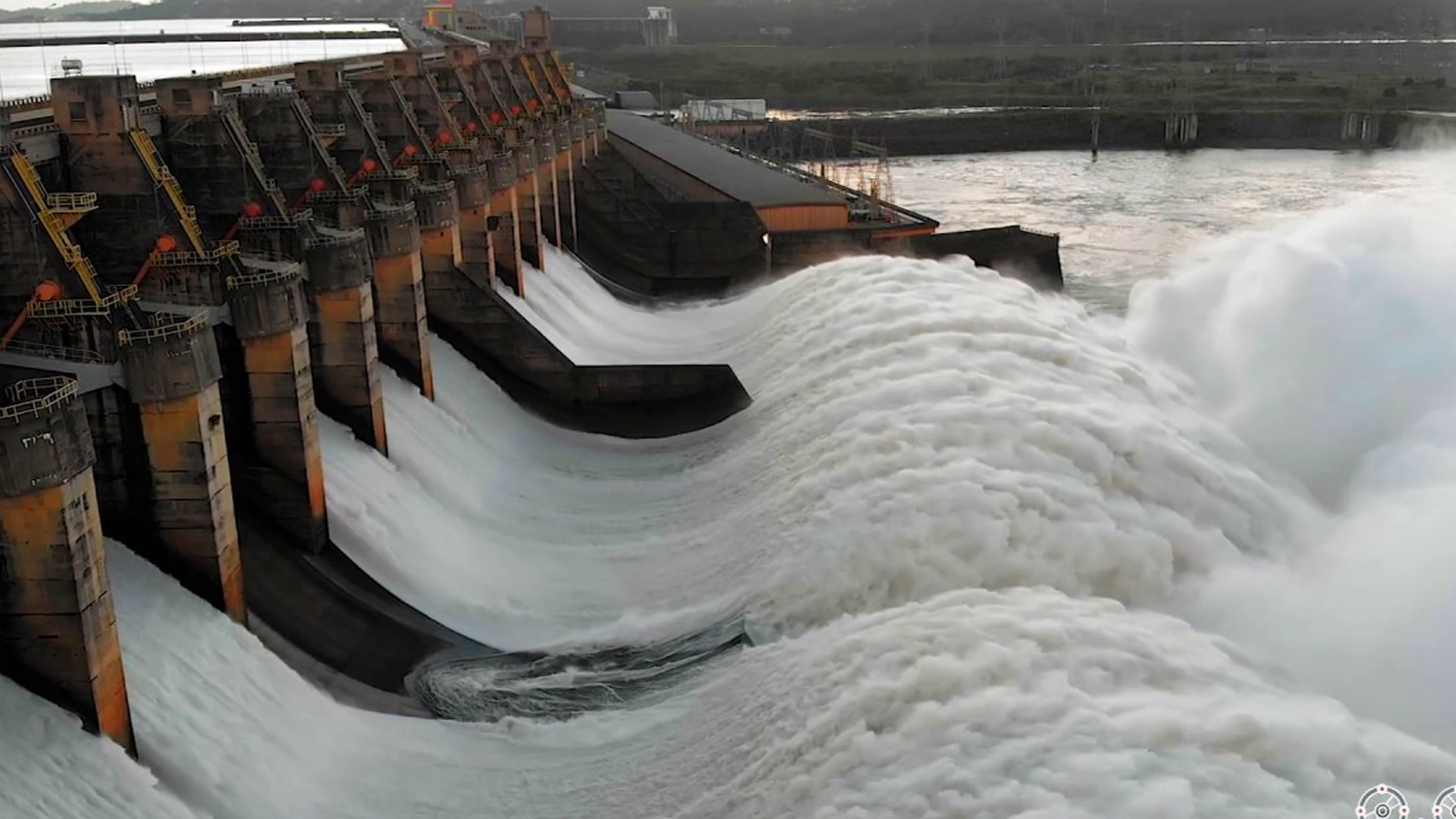
With 2,850 km² and 8,370 MW of capacity, the Tucuruí Hydroelectric Power Plant remains vital after 40 years and powers millions of Brazilians with 100% national energy.
In the heart of the Pará Amazon, a silent colossus has been moving Brazil for four decades. It is the reservoir of the Tucuruí Hydroelectric Power Plant, the largest fully Brazilian artificial lake and one of the largest engineering undertakings ever built in South America. With 2,850 square kilometers of flooded area, 45 billion cubic meters of stored water, and 8,370 megawatts of installed capacity, Tucuruí is more than a power plant: it is an industrial city within the forest — a landmark of national energy integration.
A Giant Born at the Peak of Brazilian Energy Development
The story of Tucuruí began in 1975, when the federal government approved the project to build a monumental dam on the Tocantins River, in the municipality of Tucuruí (PA). The goal was twofold: to meet the growing energy demand from the North and Northeast regions and facilitate industrial development in the Amazon.
Construction began in 1976 and mobilized more than 35,000 workers in a site that became a true city. In 1984, after eight years of excavations, concrete pours, and tests, the first stage of the project was inaugurated, which would become an icon of Brazilian hydraulic engineering in the following decades.
-
The Brazilian colonial city that stopped in time and shares territory with a rocket launch base.
-
79-year-old woman challenges limits, visits 193 countries in the world after 56 years of planning and reveals the behind-the-scenes of a global journey that few have managed to accomplish.

-
These are the drivers who may stop paying tolls on highways in a project that promises to reduce costs for those who live from transportation in Brazil.

-
(Video): Italian pilot lands plane on moving train at 120 km/h and achieves unprecedented feat in aviation, even with a narrow runway and without direct visual contact.


Since then, Tucuruí has supplied millions of homes, industries, and mining companies, sustaining a significant part of the economy of the North and Northeast.
Dimensions That Impress and Make History
Nothing in Tucuruí is small. The 2,850 km² reservoir has an area comparable to that of the Federal District, holding a volume of 45 km³ of water, equivalent to 18 million Olympic swimming pools.
The dam, at 78 meters high and 12.5 km long, holds one of the largest volumes of impounded water in the country and creates a water mirror that extends more than 200 km upstream, submerging valleys and islands.
The installed capacity of 8,370 MW results from two expansion phases: the first, completed in 1984 with 12 turbines of 350 MW, and the second, inaugurated in 2007, which added 11 more generating units.
Today, Tucuruí accounts for about 7% of all hydroelectric energy produced in Brazil, according to Eletrobras Eletronorte.
An Industrial City Within the Amazon
The infrastructure created to support the power plant is worthy of a medium-sized municipality. At the peak of construction, the site had hospitals, schools, an airport, accommodations, and an internal road network.
Today, part of this structure remains active, with hundreds of employees working in shifts 24 hours a day to monitor turbines, locks, and electrical systems.

Besides energy generation, Tucuruí houses two locks that allow navigation for vessels between the Lower and Middle Tocantins, integrating the region into the national hydro-transportation system. This work, inaugurated in 2010, transformed the river into a true logistical route, facilitating the flow of grains, timber, and ore.
Continental Economic and Social Impact
The impact of the Tucuruí HPP goes far beyond energy supply. The project was decisive in consolidating Pará as an industrial and mineral hub, enabling the establishment of projects like Albrás (aluminum) and Alunorte (alumina), both dependent on the cheap and abundant energy generated by the plant.
It is estimated that Tucuruí injects billions of reais into the Brazilian economy annually, considering royalty collection, ICMS, and the movement of direct and indirect jobs.
The municipality of Tucuruí, which was a small village by the river before construction, now houses more than 100,000 residents and is one of the most developed cities in the southeastern Pará.
Energy, Engineering, and Environmental Challenges
Like every major Amazon hydroelectric project, Tucuruí faced criticism and environmental challenges. The formation of the lake flooded vast areas of forest and necessitated the relocation of about 30,000 people.
In the following decades, the project underwent improvements, including forest restoration programs, fishery management, wildlife monitoring, and environmental compensation projects, under the supervision of Ibama and Eletronorte.
Today, Tucuruí is considered a reference plant in environmental management and operational efficiency. Eletrobras maintains a biodiversity monitoring center and ongoing studies on water quality and the socioeconomic impact in the region.
Tucuruí in the Global Context: Among the Largest in the World
With its 8,370 MW, Tucuruí ranks among the ten largest hydroelectric plants in the world, alongside Itaipu (Brazil/Paraguay), Three Gorges (China), and Guri (Venezuela).
Unlike Itaipu, however, it is 100% national, built and operated entirely by Brazil — an achievement that underscores the technical and industrial capacity of the country in large-scale projects.
The Tucuruí lake is also one of the largest artificial reservoirs in the world by flooded area, surpassing many natural lakes in South America.
Forty Years Later, a Legacy That Continues to Power the Country
In 2024, the Tucuruí Hydroelectric Power Plant will complete 40 years of operation, remaining a symbol of energy sovereignty and Brazilian engineering.
Even after decades, the plant operates with a high level of reliability, ensuring constant energy to millions of Brazilians and sustaining entire production chains.
Day or night, amid the forest, the turbines keep spinning, reminding us that Tucuruí is not just a dam — it is one of Brazil’s greatest engines.







-

-

-

-

-

-

126 pessoas reagiram a isso.