





 Português
  Inglês
  Espanhol
  5 min de leitura
  0 comentários


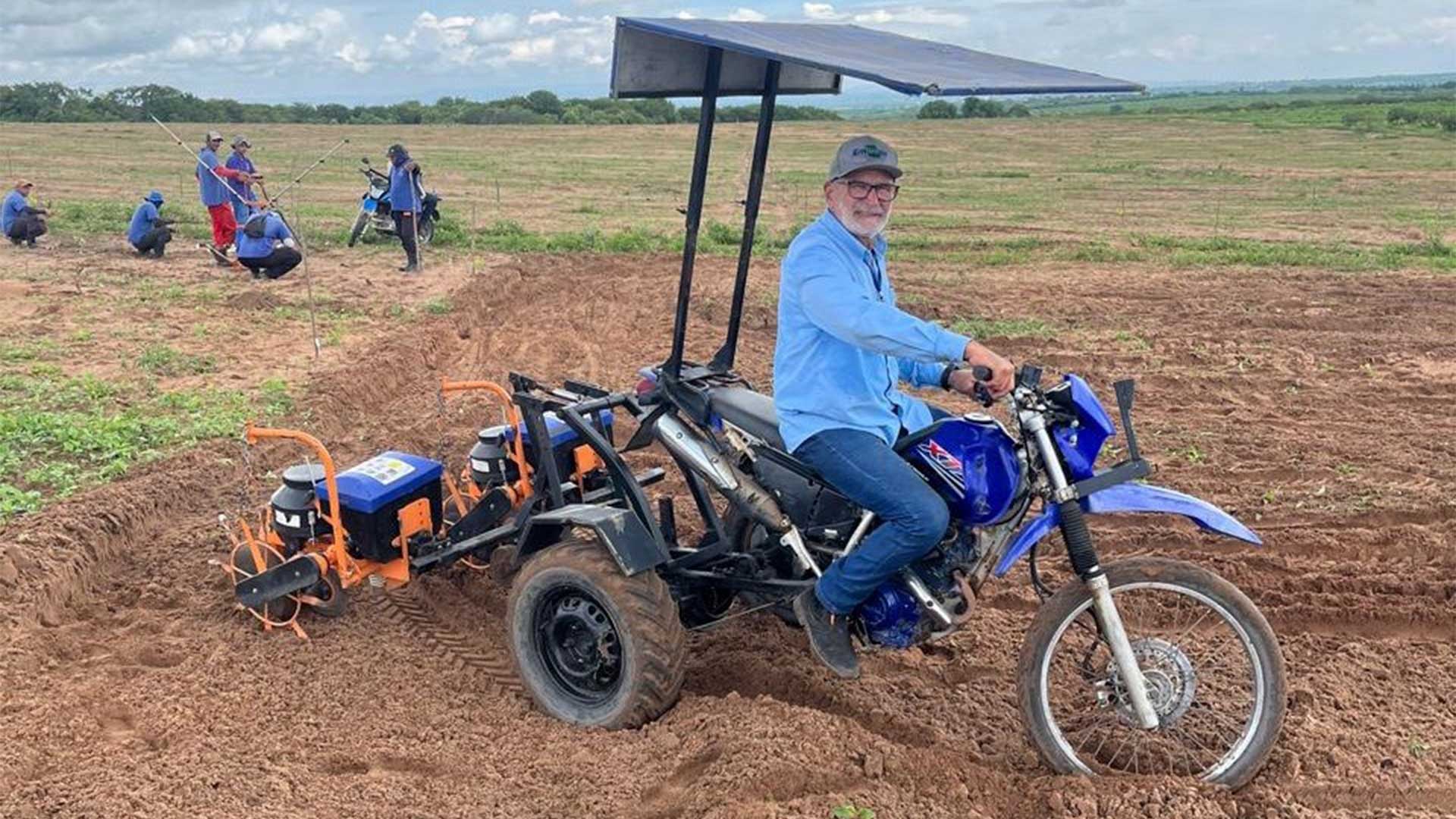
Prototype developed for family farming was recognized at a national fair in Campinas and reinforces the bet on accessible mechanization, productivity, and the permanence of youth in the countryside.
The mechanization of small rural properties gained a new symbol in March 2026, when the tricycle developed by Embrapa Algodão under the Brazil-FAO South-South Cooperation appeared among the five technologies selected in the 1st National Contest of Inventions of Machines, Equipment, and Implements Adapted to the Reality of Family Farming and Traditional Peoples and Communities.
The initiative was part of the National Fair of Machines and Technologies for Family Farming, held in Campinas, in the interior of São Paulo.
The recognition did not come in a small universe. The contest brought together 242 technological solutions aimed at concrete problems of family farming, which increases the weight of the selection and helps explain why the equipment has begun to attract attention both within and outside the cotton sector.
-
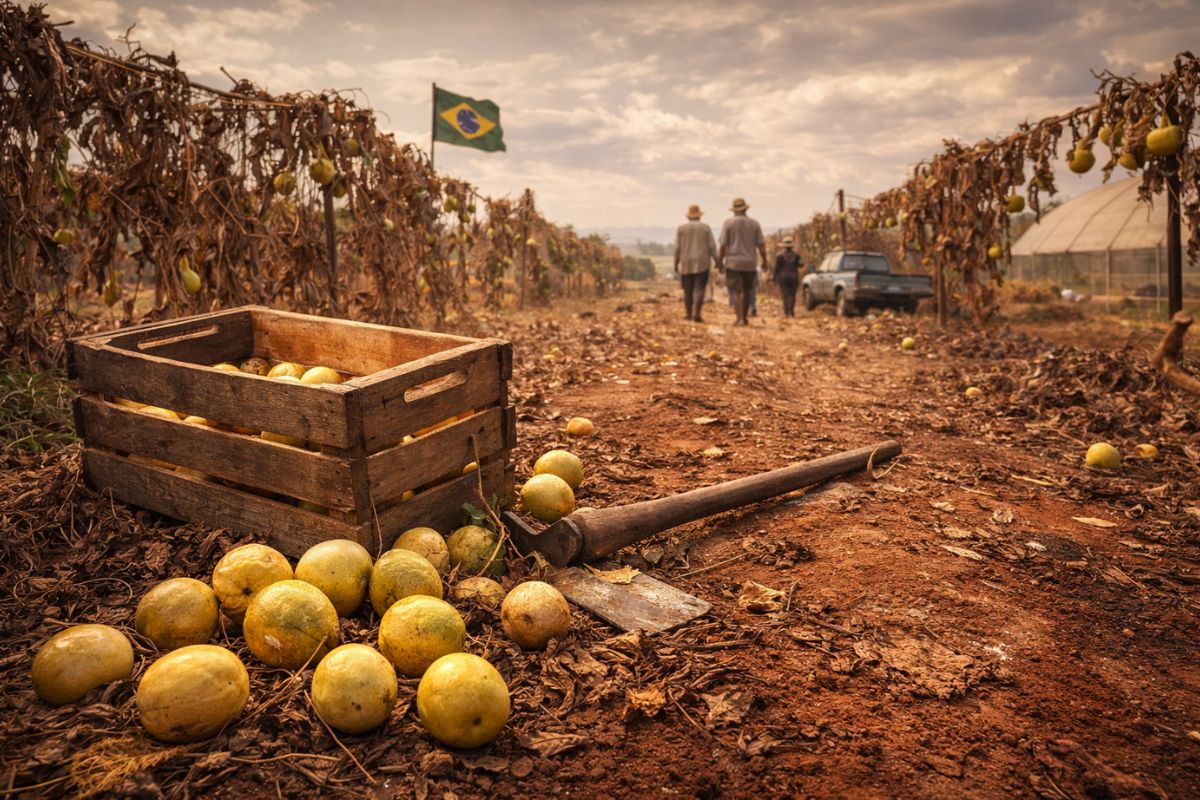
From 130 producers in the year 2000 to just 15 today: the dramatic decline of passion fruit in Araguari shows how the lack of labor in the Brazilian countryside is killing a decades-old agricultural tradition, even with Brazil being the largest producer in the world.
-
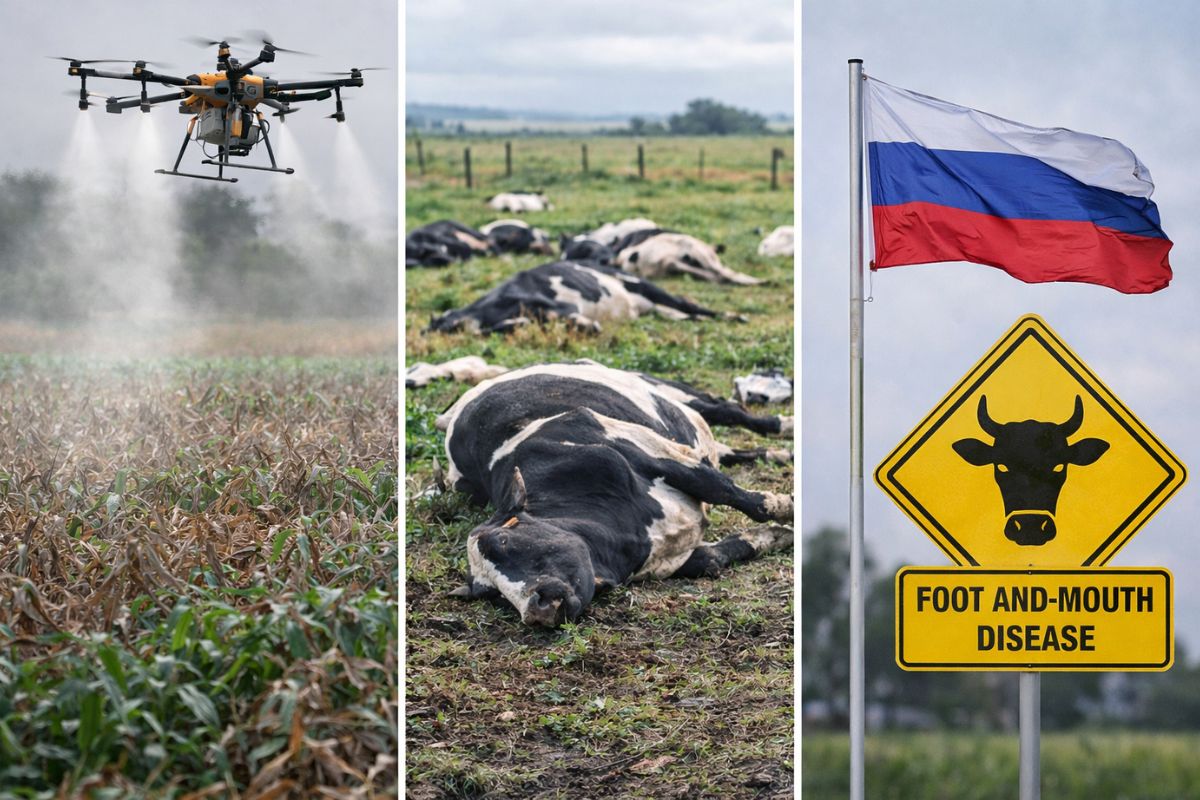
Agricultural drone sprayed poison into the air and destroyed the neighbor’s crops, causing 1 million in damages; 48 cows died from nitrite poisoning in the pasture, and Russia is hiding a possible outbreak of foot-and-mouth disease: the week was brutal for the rural sector.
-
Russia cut fertilizers, China cut fertilizers, and oil prices soared with the war in the Middle East: sugarcane producers in the interior of São Paulo are seeing costs explode from all sides and warn that the effects will take months to be absorbed.

-
It does not come from flowers, is produced only every two years, and more than 90% goes straight to Europe: meet the bracatinga honeydew honey from Santa Catarina, considered one of the rarest in the world and overlooked by Brazil itself.


In practice, the tricycle addresses an old bottleneck in Brazilian agriculture. In many family properties, conventional tractors remain too expensive for purchase and maintenance, while manual labor still consumes time, energy, and limits the scaling of essential activities.
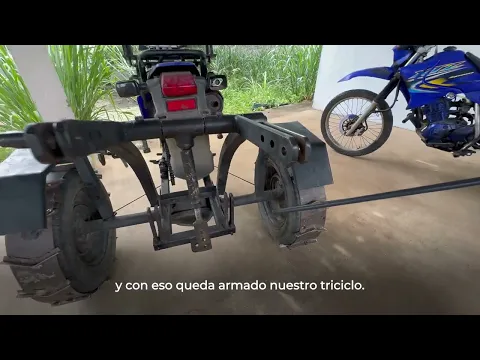
Therefore, the solution created by Embrapa Algodão gained relevance beyond the award. It combines a simple idea, based on adapting a motorcycle for agricultural functions, with a direct focus on low cost, simplified operation, and efficiency gains, decisive points for those producing on a small scale.
Why the tricycle attracted attention in Campinas

The fair held between March 16 and 18, 2026, at Expo Dom Pedro in Campinas, was organized by the Ministry of Agrarian Development and Family Agriculture in partnership with Embrapa and Conab. The event brought together farmers, researchers, social movements, public managers, and companies to discuss mechanization adapted to the reality of family farming.
In this environment, the tricycle emerged as an example of technology designed for the end-user. Instead of reproducing the logic of expensive and sophisticated machines, the project bets on a solution that aligns with the financial and operational reality of small properties, especially in regions where producers need versatility and uncomplicated maintenance.
The highlight is also explained by the political and productive moment of the sector. The very programming of the fair was built around the advancement of mechanization for family farmers, with presentations of prototypes, debates on adapted equipment, and actions aimed at strengthening Pronaf and public policies for rural infrastructure.
How the machine reduces costs and speeds up work

The main differential of the tricycle lies in the proposal to partially replace the dependence on larger equipment and even older forms of traction. FAO reports that the adaptation also emerges as an alternative to animal traction, which is increasingly absent in many small properties, in a context where motorcycles have already become part of rural daily life.
According to technical information released by the agencies involved in the project, the equipment combines low cost, ease of maintenance, and greater agility in field tasks. The system includes a manual mechanism to raise or lower implements, which facilitates maneuvers and expands the utility of the set in different stages of agricultural work.
This means more than operational comfort. In practical terms, the adaptation seeks to allow the farmer to execute the service more quickly, with a better standard of work and lower expenditure, reducing the limitations of exclusively manual handling and increasing the productivity potential in small areas.
Another important point is that the tricycle was not designed as an isolated piece. It integrates a set of machines aimed at family cotton farming, with solutions for soil preparation, sowing, spraying, processing, and transporting production, forming a kind of ecosystem of smaller-scale mechanization.
Project +Cotton amplifies impact beyond the equipment
The tricycle was born within the project +Cotton, an initiative of the Brazil-FAO International Cooperation Program. The arrangement brings together the Brazilian Cooperation Agency of the Ministry of Foreign Affairs, FAO, and partner countries from Latin America and the Caribbean, focusing on strengthening the cotton chain through innovation, agricultural management, and socio-productive inclusion.
This context helps to understand why the technology has social weight beyond mechanical gain. The project states that, in 2019, the region accounted for 131,500 cotton producers, of which 77% were family farmers, showing how accessible solutions can have a broad effect on income, production, and food security.
This is also not a small action in institutional terms. Initiated in 2013, +Cotton has already mobilized over US$ 12 million in regional actions and in partner countries, in addition to a network of more than 100 public and private institutions connected to strengthening the cotton chain.
Within this strategy, mechanization appears as a way to modernize family farming without breaking with its real scale. The logic is to bring to the field open, adaptable, and financially feasible technologies, avoiding that innovation continues to be synonymous with equipment inaccessible to those who most need to gain productivity.
What this recognition signals for family farming
The award given to the tricycle has symbolic value because it signals a shift in focus. Instead of looking only at large machines and high investment, the sector begins to recognize that relevant innovation can arise from smart adaptations, with immediate application and direct effect on the routine of small producers.
There is also an important social component in this debate. The coordination of the +Cotton project argues that more accessible equipment can make work less burdensome and more attractive to rural youth, reinforcing succession in the countryside and the permanence of new generations in productive activities.
In the end, the award-winning tricycle in Campinas summarizes a discussion that should gain strength in small-scale agribusiness in the coming years. Useful technology is not necessarily the most expensive. In many cases, it is the one that can deliver real results with simplicity, viable maintenance, and the ability to fit into the budget of those who produce.
Can this type of innovation change life in the countryside, or are we still far from seeing affordable mechanization truly reach most small producers? Leave your comment and say whether solutions like this represent a concrete advance or if there are still gaps in credit, scale, and technical support to turn the promise into reality.










Seja o primeiro a reagir!