





 Portuguese
  English
  Spanish
  5 min of reading
  0 comments


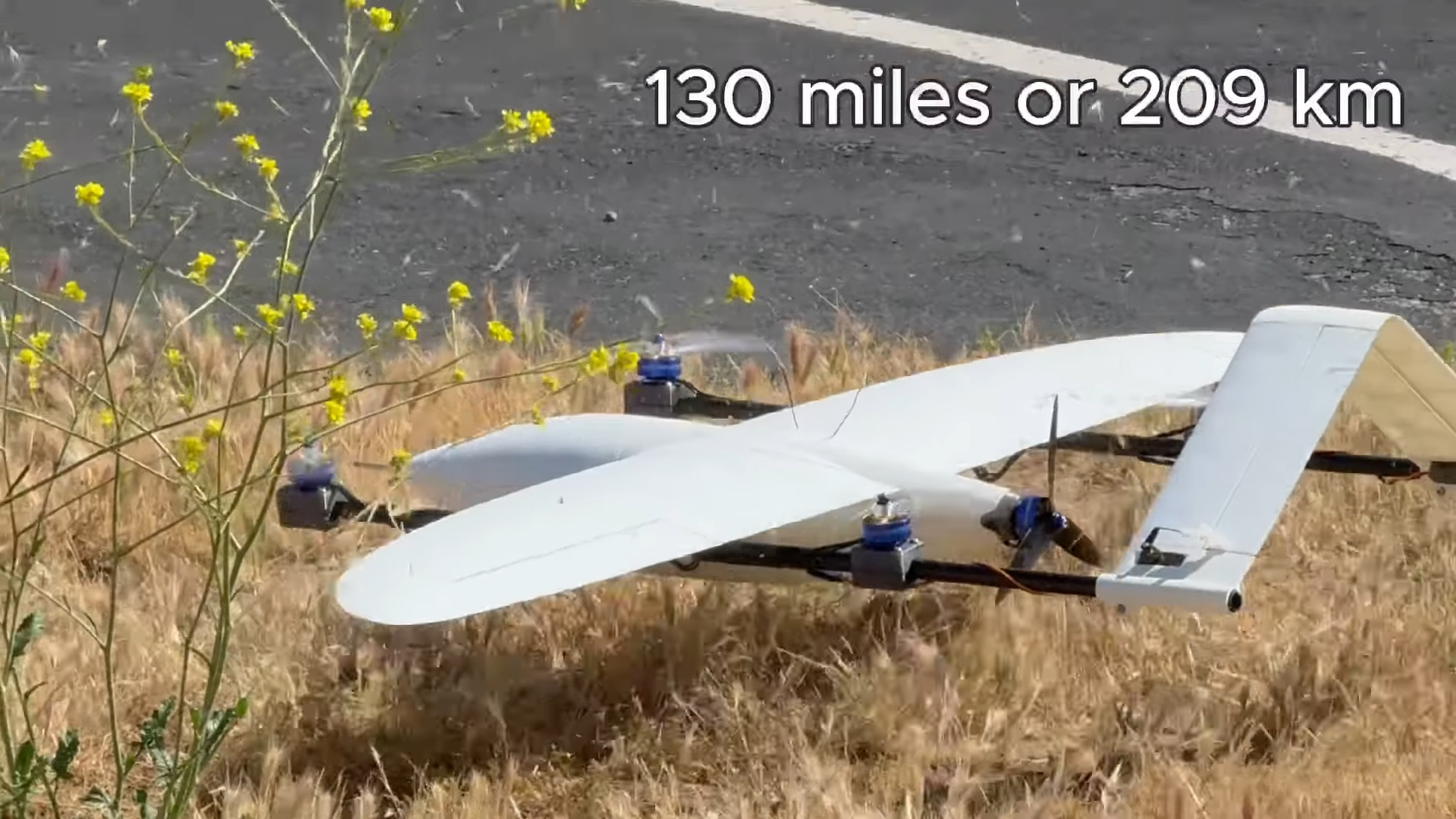
Student builds VTOL drone in 90 days with up to 3 hours of autonomy and an estimated range of 130 miles using 3D printing.
In 2025, independent creator Tsung Xu drew attention by publicly documenting, on his own technical blog, the development of a fixed-wing vertical take-off and landing (VTOL) drone built in about 90 days. In the account, Xu claims he started the project without a background in aerospace engineering and with very limited experience in CAD, 3D printing, and aerodynamic modeling. The case gained traction after Interesting Engineering highlighted that the aircraft, according to test data presented by him, could achieve 130 miles of range and about 3 hours of flight.
What makes the project particularly relevant is not just the final result, but the context in which it was developed. Instead of emerging within an industrial framework, with multidisciplinary teams and advanced infrastructure, Tsung Xu’s VTOL was conceived independently, with strong support from accessible tools such as modeling software, iterative testing, and a Bambu A1 3D printer, which he cited as central to the manufacturing process of the airframe and prototype components.
This case helps illustrate how experimental engineering has been expanding beyond traditional environments, driven by technologies that have made rapid prototyping and continuous iteration more feasible for independent creators. In Xu’s example, the advancement of the project did not depend on a large corporate structure, but on the combination of accelerated learning, digital tools, and accessible manufacturing, in a movement that has been bringing experimental aerospace development closer to maker culture.
-
Comet C/2025 R3 (PanSTARRS) is starting to shine brighter each night and may become visible to the naked eye in April; this rare phenomenon promises to transform the sky into one of the biggest astronomical spectacles of the year.

-
After a devastating fire that left 3 injured and 200 intoxicated by smoke in the Red Sea, the most expensive warship ever built — $13.3 billion — returns to the front in Iran after quick repairs in Croatia.

-
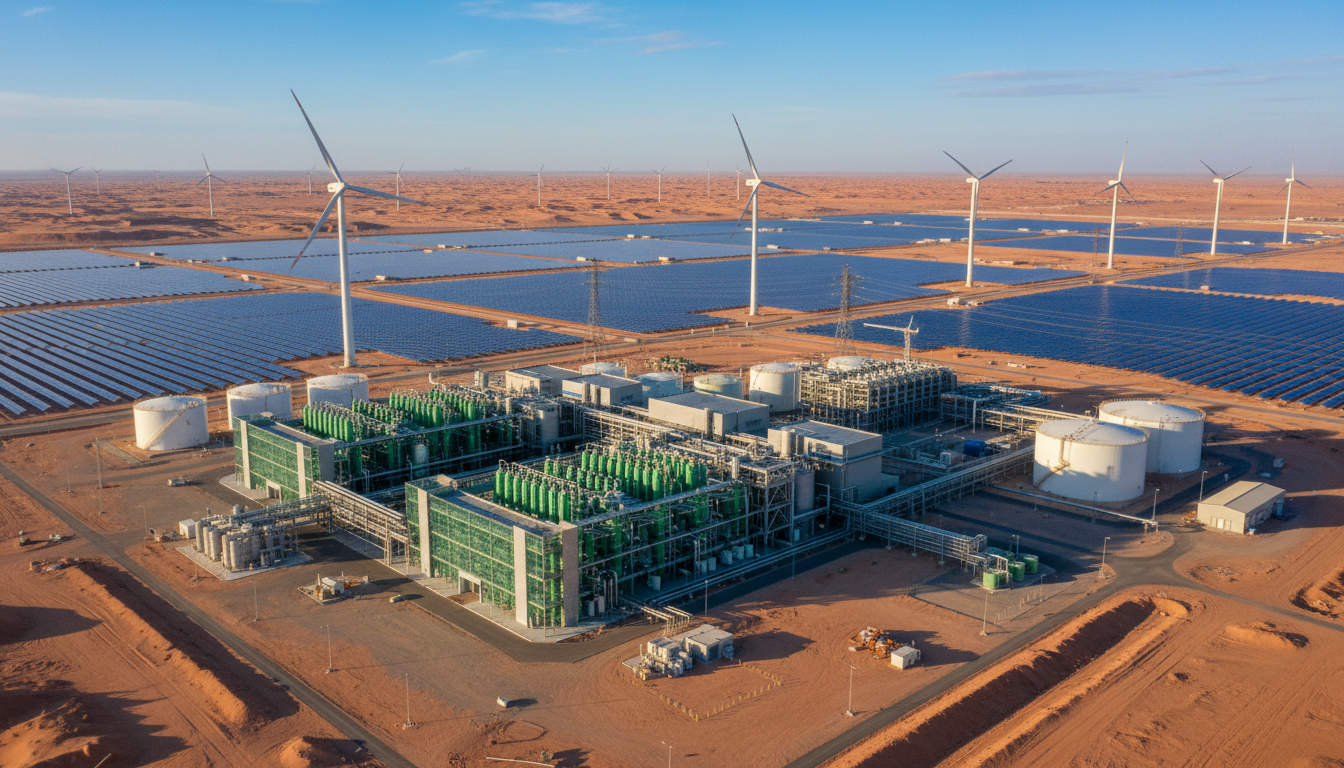
In the Saudi Arabian desert, the world’s largest green hydrogen plant is 80% complete and will use 4 gigawatts of solar and wind energy to produce 600 tons of clean fuel per day when it opens in 2027.
-
Sixteen years after the largest environmental disaster in oil history, BP has just received approval to open its first new field in the Gulf of Mexico, and the 10 billion barrels are 10 kilometers below sea level.

3D printed structure allowed cost reduction and accelerated development
One of the pillars of the project was the use of 3D printing for most of the aircraft’s structure, including fuselage and aerodynamic components. This choice had a direct impact on the speed of development.
By opting to manufacture parts on demand, Tsung Xu eliminated reliance on more complex industrial processes, allowing for quick adjustments between one version and another of the prototype. This was essential for correcting stability issues, weight distribution, and aerodynamic efficiency throughout the project.

Additionally, 3D printing enabled the creation of more specific geometries optimized for the intended type of flight, something that would be more difficult to achieve with conventional methods without high costs.
VTOL configuration combines vertical takeoff with fixed-wing efficiency
The developed drone uses a hybrid system known as VTOL (Vertical Take-Off and Landing), which combines two distinct modes of operation.
In the initial phase, the aircraft takes off vertically using motors positioned to generate thrust directly upwards. After reaching a certain altitude, the system transitions to horizontal flight, where lift is generated by the wings, as in a conventional airplane.
This configuration allows for the combination of two important advantages: the ability to operate without a runway and the energy efficiency of fixed-wing flight, which consumes less energy over long distances.
This type of architecture is considered more complex from the standpoint of control and stability, which makes independent development even more relevant.
Autonomy of up to 3 hours was estimated based on tests and calculations
One of the most striking data points of the project is the estimated autonomy of up to 3 hours of flight, with a potential range close to 130 miles (about 209 km).
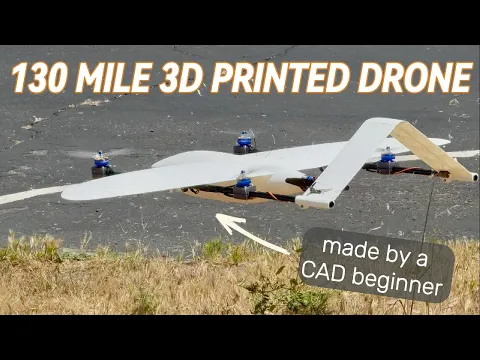

This number does not necessarily correspond to a proven continuous flight over that total distance, but rather an estimate based on tests conducted by the creator, energy consumption, and system performance.
Even so, the values indicate a significant level of efficiency for a drone built outside of an industrial environment, especially considering the use of batteries and components available on the market.
Development in 90 days involved intensive iterative process
The timeframe of about 90 days represents not only the construction time but also a period of testing, adjustments, and successive corrections.
During this process, the project went through different configurations until reaching a sufficient level of stability for consistent flights. This type of approach, based on trial and error, is common in experimental projects and was crucial for achieving the final performance.
Each modification contributed to improving aspects such as aerodynamic balance, energy efficiency, and response of the control systems.
Project reinforces advancement of independent engineering with accessible tools
The case of Tsung Xu illustrates a structural change in access to advanced engineering. Tools such as 3D printing, simulation software, and high-performance electronic components have allowed individuals to develop complex projects with relatively limited resources.

This democratization of technology reduces barriers to entry and expands the space for innovation outside traditional research and development centers.
At the same time, it creates an environment where experimental solutions can emerge more quickly, exploring paths that would often not be prioritized in corporate projects.
Limitations and absence of industrial validation define the scope of the project
Despite the performance achieved, it is important to highlight that the drone did not undergo formal certification or industrial validation processes.
This means that the data presented relies on measurements and tests conducted by the creator himself, without independent verification at the institutional level.
This aspect does not invalidate the project, but defines its framing as an experimental initiative, aimed at concept demonstration and technical exploration.
Experimental engineering expands frontiers of technological innovation
The development of the VTOL drone by Tsung Xu shows how experimental engineering can contribute to expanding the limits of what is possible outside traditional environments.
The combination of self-directed learning, accessible tools, and an iterative approach allowed for a result that, a few years ago, would have been restricted to specialized teams.
This type of project is likely to become increasingly common as manufacturing and simulation technologies continue to evolve.
What do you think of this drone created in 90 days outside the aerospace industry
The project raises a relevant question about the future of innovation: to what extent can independent solutions compete with developments led by large companies and institutions?
Now I want to know your opinion: do you believe that projects like this can directly influence the evolution of unmanned aviation or are they still isolated initiatives within a landscape dominated by industry?









Seja o primeiro a reagir!