





 Portuguese
  English
  Spanish
  5 min of reading
  0 comments


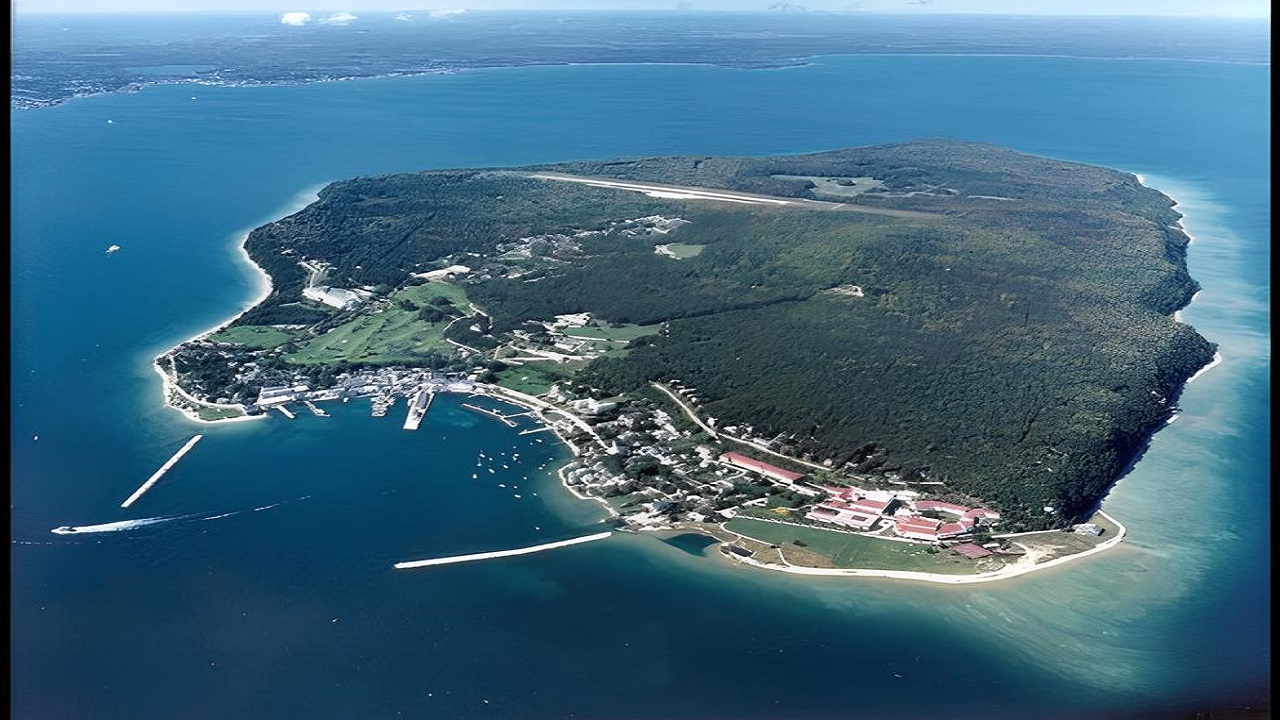
On Mackinac Island, Cars Have Been Prohibited Since 1898. There, Horses and Bicycles Reign, Creating a Life as if it Were 1890 — and No One Wants to Change That.
Imagine a place where the roar of engines has been replaced by the rhythmic sound of hooves on stone. Where horns do not exist, and the fastest available transport is a bicycle — or at most, a horse-drawn carriage. Such is Mackinac, a historic island in the United States where cars have been banned for over a century, horses are part of daily life, and life moves at a pace that directly recalls the 19th century.
Located in the state of Michigan, the island of Mackinac (pronounced “Mackinaw”) is only 3.8 square kilometers but offers an experience that seems torn from the pages of a period novel. At first glance, it appears to be an alternative ecological paradise. But as you learn more, it becomes clear that Mackinac is, in fact, a living time capsule, where the past and present coexist harmoniously — with charm, tradition, and an impressive environmental awareness.
The Only Highway in the U.S. Where You Can’t Drive
It may sound strange that in the heart of the “cradle of the automotive industry,” in the same Michigan that is home to brands like Ford and General Motors, there exists a place where even golf carts are prohibited. But it is precisely this contrast that makes Mackinac stand out.
-
Why was the Great Wall of China built? The truth that many are unaware of!
-
At 73.8 meters tall, the world’s tallest teapot-shaped building has 15 floors, ensures stability, and impresses with an internal space of 28,000 cubic meters.
-
Ambev has planted over 3 million trees and restored an area equivalent to the coastline from São Paulo to Natal, and the result after 15 years of silent investment has finally appeared for all of Brazil to see.
-
A new AI collar technology for cattle eliminates physical fences, creates virtual barriers, monitors animals 24/7, and detects changes in behavior and health.


Since 1898, no motorized vehicles have been allowed on the island, a decision made after the noise of one of the first cars frightened local horses.
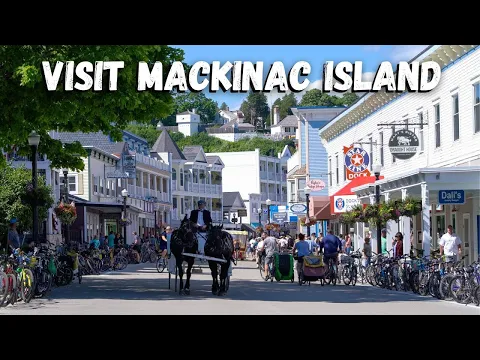

This measure was adopted by the village, and in 1900, it was expanded to the entire island. Thus, it has remained, generation after generation. Today, it is the only federal highway in the United States where you cannot drive — a symbol of resistance to modern conveniences in the name of preserving a unique way of life.
“Here, the Horse is King”
On the island, there are about 600 permanent residents, but during the warmer months, over 1.2 million tourists arrive by ferry, coming from Mackinaw City or St. Ignace, to experience this peculiar place where time seems to have stood still.
“Here, the horse is king,” says Urvana Tracey Morse, owner of a craft shop on the main street, perfectly summarizing the spirit of the island.
More than 600 horses handle everything: deliveries from FedEx, garbage collection, tourist taxis, and even home moves.
The island’s infrastructure has been adapted to this reality: trails, stables, wide sidewalks, and streets without traffic lights. And if you hear a loud noise, it’s probably not a car honking — but rather a goose crossing the road or a bicycle wheel.

Eco-Friendly Transportation by Nature
Besides horses, bicycles are the primary means of transportation on the island. With over 1,500 bikes for rent and 110 kilometers of marked trails, Mackinac has become a paradise for those wanting to practice sustainable tourism. It’s not uncommon to see locals like Morse biking through forest trails, even during the harsh winter.
“I love the idea of taking my bike and heading down to the village through the trees. It prepares me for the day,” she says. “You’re always greeting and chatting with people.” And perhaps it is this intentional slowness that makes eco-friendly transportation in Mackinac not just an option but a way of life.
The Past That Lives in the Present
The ban on motor vehicles is not the only trait of nostalgia. The island’s architecture reflects the 18th and 19th centuries, with well-preserved Victorian cottages, century-old shops, and cobblestone streets.
An example is the imposing Grand Hotel of Mackinac, which has 138 years of history and boasts the world’s longest porch, according to its managers. The place still retains its individually decorated rooms and exudes the charm of the American Gilded Age.
The hotel is so iconic that the Governor of Michigan even suggested Mackinac as a setting for the next season of The White Lotus, an HBO series known for depicting luxurious resorts in exotic locations.
But the residents themselves are cautious about excessive tourism. “You take pride in the place where you live, but at the same time, you don’t want to tell people how nice it is here,” Morse comments with a laugh.
Indigenous Roots and Anishnaabe Culture
Long before the arrival of the British, the island was already considered sacred by the Anishnaabe native peoples, who called it “Michilimackinac”, or “place of the great turtle,” in reference to the shape of its limestone cliffs. The name was shortened by colonizers, but the indigenous legacy remains alive.
Eric Hemenway, an Anishnaabe historian, leads the revival of this history at the Mackinac Island Native American Museum, opened in 2021 at the Biddle House. Cemeteries dating back over 3,000 years have been identified on the island, confirming its spiritual and cultural importance.
“Mackinac is one of our most sacred sites in the Great Lakes,” says Hemenway. “The waters were — and continue to be — the highways of our people.”
Arch Rock, Fort Holmes, and the Lilac Festival
Among the main attractions on the island are the Arch Rock rock formation, a natural limestone bridge 15 meters wide, Fort Holmes, the highest point on the island and an excellent place for star-gazing, and the famous Lilac Festival, held in June.
The island also offers guided carriage tours, access to ecological trails, beaches, and woodlands, all within the Mackinac Island State Park, which occupies 80% of the island’s area. Even in the winter months, when the island can be isolated due to ice blocks preventing ferry crossings, life goes on — and so does the work of the horses.
Where the Car Never Reached — and Never Will
Since 1898, when a car frightened local horses and caused chaos on cobblestone streets, the ban on automobiles became municipal law. Rather than reconsider the decision over time, the island reinforced the tradition. To this day, not even golf carts are allowed, except in rare medical cases or for essential services.
Thus, the roughly 600 permanent residents and over 1 million annual tourists need to get around by bike, on foot, or in a carriage — literally.
And no one seems to complain. As Urvana Tracey Morse, a resident and local shop owner, puts it: “Here, the horse is king.”
Although it is now famously known as a tourist destination and a historic island in the U.S., Mackinac carries deep indigenous roots. The name comes from “Michilimackinac”, which in the Anishnaabe language means “the place of the great turtle”, referencing the shape of the island rising from the waters of Lake Huron.
Eric Hemenway, a historian and member of the Anishnaabe people, highlights the sacred importance of the island to native communities. Indigenous cemeteries dating back about 3,000 years have been found on the site, and the newly opened Mackinac Island Native American Museum, located in the Biddle House, helps preserve this millennia-old heritage.








Seja o primeiro a reagir!