





In the Chinese province of Jiangsu, a farmer and mechanic spent the equivalent of a fraction of the price of a supercar to transform a used Volkswagen into a replica of the Lamborghini Reventón. He was prevented from driving it on the streets due to lack of a license, so he gave the dream car the most mundane function possible.
Wang Jian, a 28-year-old farmer and mechanic living in Jiangsu province, eastern China, always wanted to have a unique car, made with his own hands. Without money to buy a real supercar, he started with what was within reach: in May 2011, he bought a used Volkswagen, cut and welded the chassis anew, and began working on a full-size replica of the Lamborghini Reventón, one of the most expensive and rarest cars in the world, valued at around 840 thousand pounds, according to the Dailymail.
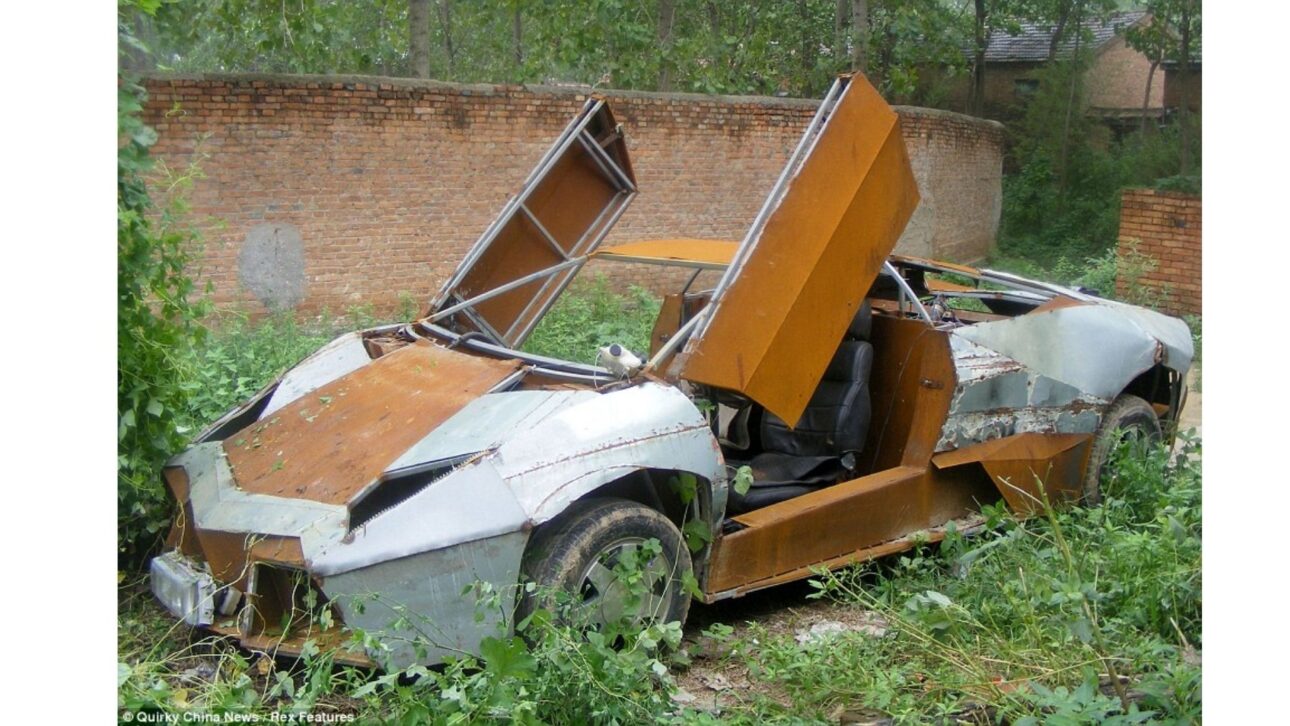
The result is both impressive and comical. The bodywork looks similar to the Italian model in almost every aspect, but the car has a rough finish, a rusty appearance, and a top speed that many bicycles surpass. Since the police did not issue a license plate for the homemade vehicle, Wang ended up giving it the most unusual use possible: transporting fertilizer on the farm.
From miniature model to full-size car
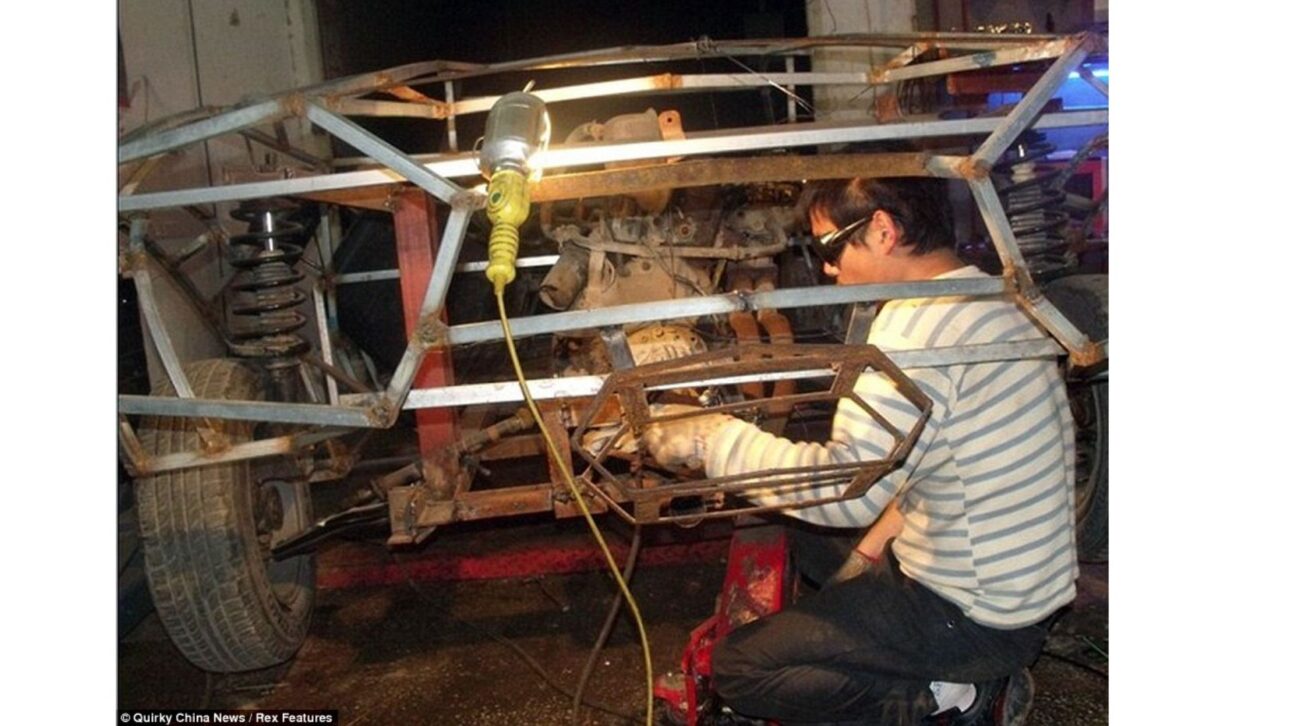
Wang’s passion for automobiles comes from childhood, and it was not a casual hobby. He graduated as a mechanic at 16 and worked for a decade in a workshop before opening his own business, accumulating the practical knowledge he would later apply to the most ambitious project of his life.
-
China began a lotus flower-shaped stadium for 100,000 spectators, which would cost more than R$ 10 billion, but the project was never inaugurated and ended up being reduced after the collapse of Evergrande.

-
China uses 42 million tons of steel in a R$2.2 billion arena and does something unique in the world: a giant braided structure that supports the roof without pillars over the field, providing an unobstructed view for more than 90,000 people.
-
Caterpillar that devastates soybean, corn, and cotton plantations harbors four fungi capable of degrading styrofoam within its own intestine.

-
Sarah Winchester inherited a fortune from the most famous rifles in the United States and spent almost 40 years expanding a 160-room mansion surrounded by legends about ghosts.



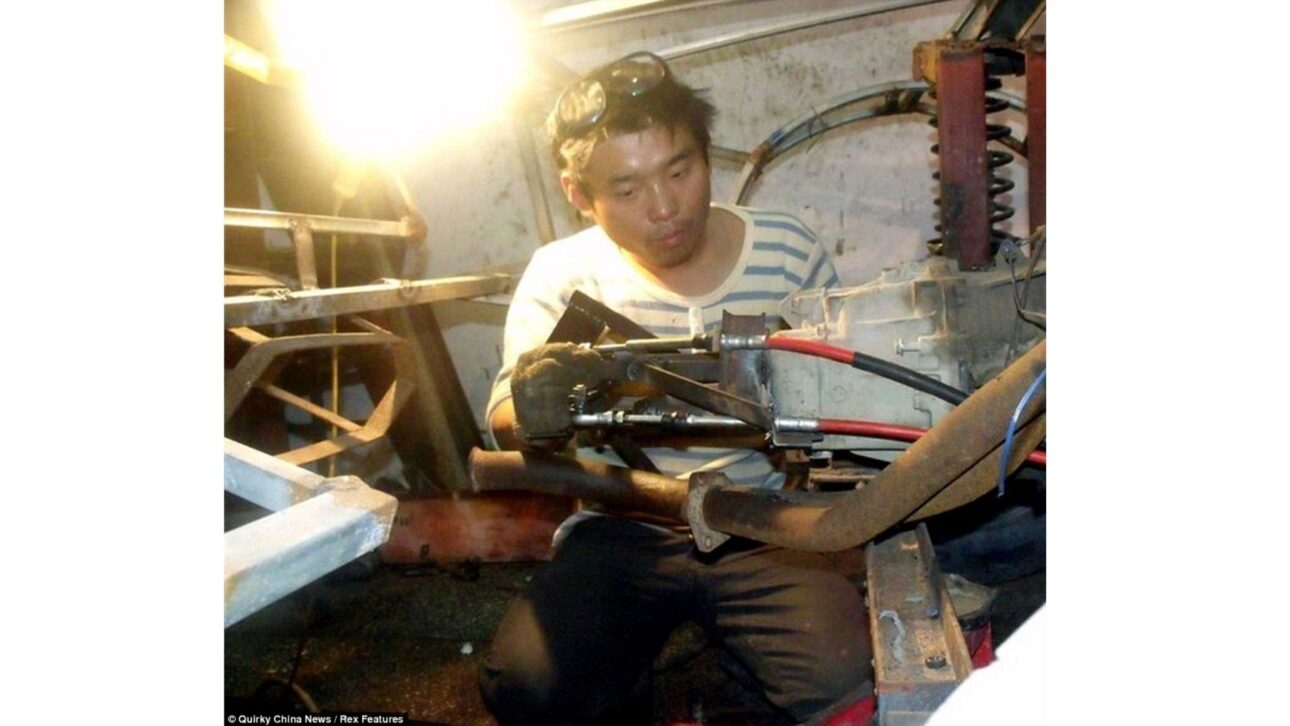
Before tackling the full-scale car, he first built a small model of the Lamborghini Reventón, to understand the proportions and design of the piece he intended to reproduce. Only then did he proceed to the real version. The chosen base was a used Volkswagen, bought precisely to become the raw material for the project, and the first major task was to re-weld the chassis and move the engine from the front to the rear, imitating the architecture of a mid-engine sports car.
Why the Reventón specifically
The choice of model was not random, and Wang explains the reasoning directly. While researching on the internet, he found the Reventón and was captivated not only by its aggressive look but mainly by its rarity, as there were only 21 units of the car in the entire world. It was the kind of exclusivity that matched his desire to have something that no one else had.
This detail of rarity has a real basis. The Lamborghini Reventón was produced by the Italian manufacturer in a very small number of units, although there are rumors that production reached up to 100 cars. The names of most wealthy buyers who took a Reventón home remain secret to this day, which only reinforces the aura of mystery around the model that Wang decided to recreate in his own workshop.
Six thousand pounds versus eight hundred and forty thousand
The gap between the original and the replica is in the price, and that’s where the story gains strength. Wang built the car for about 6,000 pounds, 834,000 pounds less than the selling price of the authentic turbo version. Instead of a fortune, the project cost the equivalent of a used popular car, assembled piece by piece with reclaimed material.
What money couldn’t buy becomes evident upon close inspection. The interior has nothing to do with the real Reventón, and the performance is light years away from the Italian model. The bodywork, however, is described as a faithful replica of the original in practically every other aspect, which is quite an achievement for someone who worked without an assembly line, without an industrial mold, and with a backyard budget.
The Rusty Appearance Was a Choice
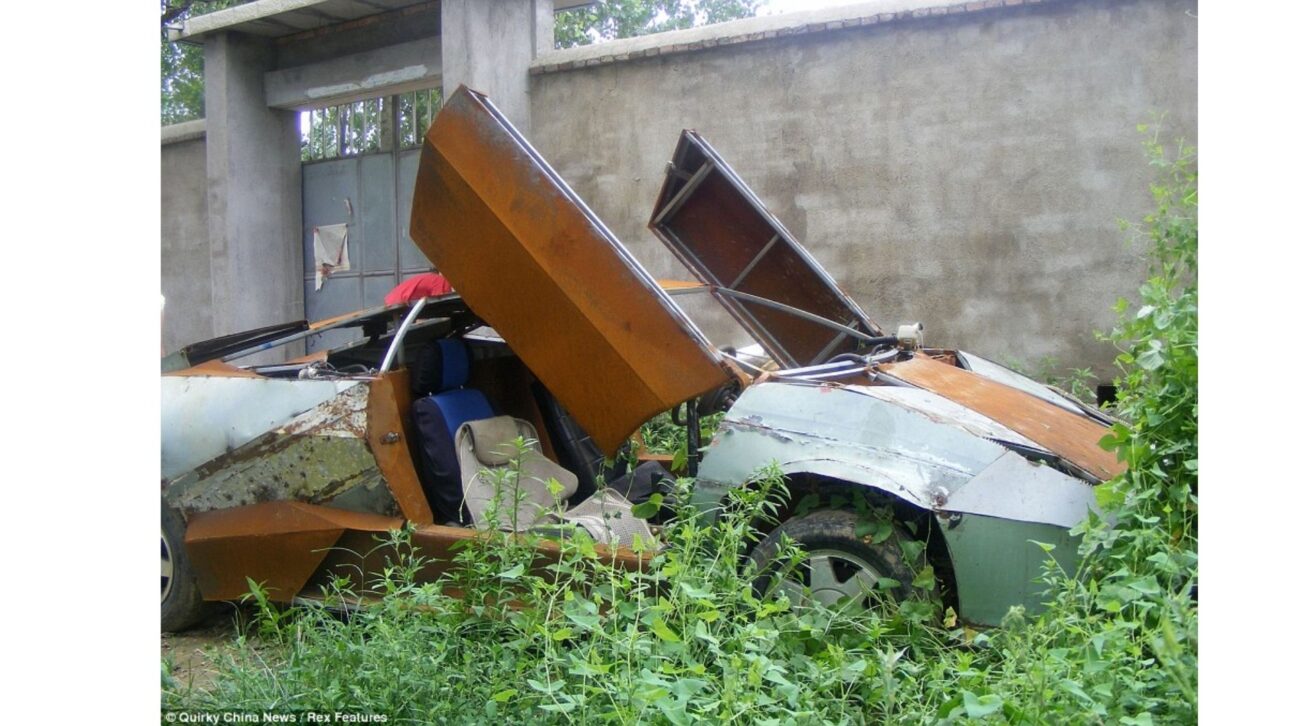
A detail that often goes unfinished is actually Wang’s decision. The original color of the Reventón is a sophisticated semi-transparent gray, but he chose to keep the natural rust appearance on his own car, giving the replica a look far from the shine of a showroom supercar.
This aesthetic choice sums up the spirit of the project, which was never to deceive anyone but to fulfill a personal desire. Wang wanted to build a unique car made by himself, not a perfect copy to pass as a millionaire. The raw finish and assumed rust make it clear that it is a handcrafted creation, with the signature of its maker stamped in its very imperfection.
The Dream Car That Became Fertilizer Transport
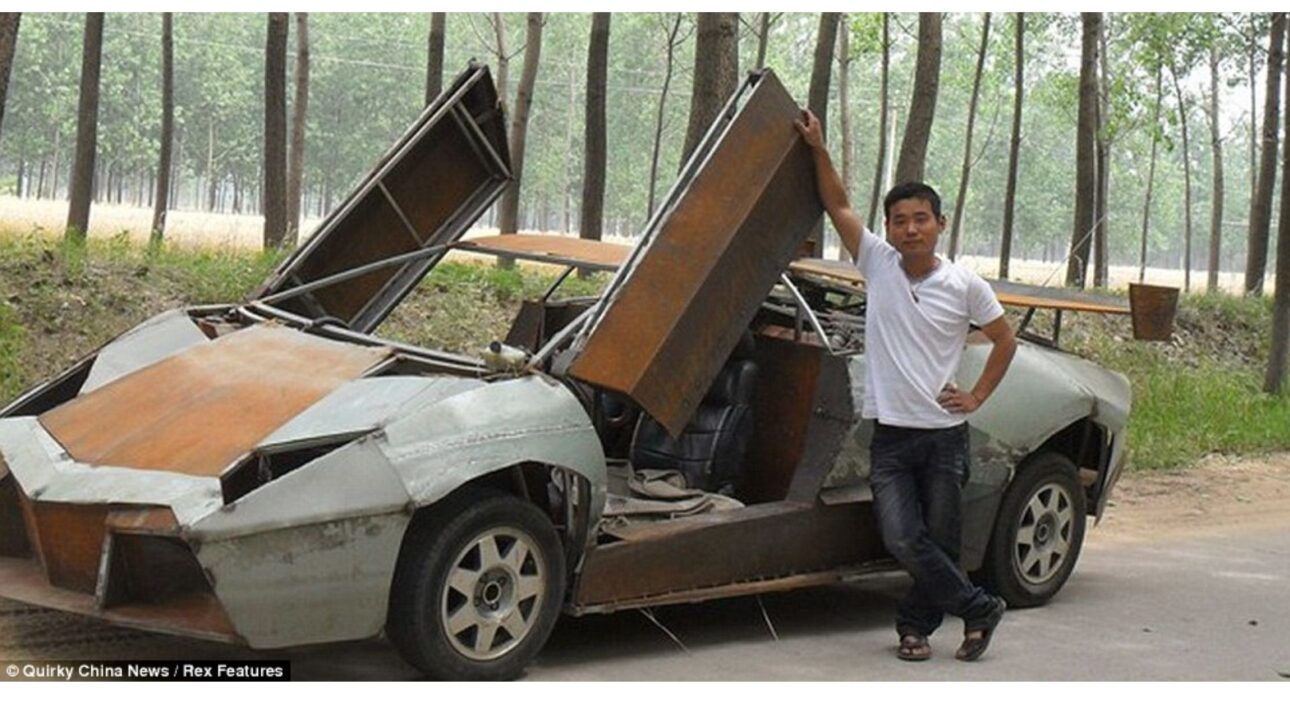
Once the work was completed, frustration came that redefined the vehicle’s use. Wang was unable to obtain a license to drive the machine on the streets, which practically prevents him from driving the replica like a regular car. Unable to drive around showcasing the creation, he found a practical purpose for the homemade sports car.
The fate of the fake Lamborghini is as down-to-earth as one can imagine. Instead of speeding down avenues, the scrap Reventón carries fertilizer across the fields, fulfilling the task of a rural work vehicle. The modest top speed, unable to approach the original model’s 356 km/h, ceases to be a problem when the function becomes transporting fertilizer from one point to another on the property.
The Real Reventón, the Bull, and the Race Against a Fighter Jet
It is worth understanding what Wang tried to reproduce, because the authentic Reventón is a separate chapter in Lamborghini’s history. Launched in 2007, the model was named after a bull, following the brand’s tradition, in this case, the animal that killed the Mexican bullfighter Félix Guzmán in 1943. The maximum speed of the real version reaches 356 km/h, a number that Wang’s replica would never achieve.
The car’s design was inspired by the aerodynamic lines of airplanes, and the automaker made sure to dramatize this influence in a spectacular way. To illustrate the similarity, Lamborghini organized a race between a Reventón and a Panavia Tornado fighter jet on a two-kilometer track.
The supercar led almost the entire race but was overtaken by the fighter jet in the final meters, in a duel that became a marketing piece and helped build the legend of the model that, years later, a Chinese farmer would try to recreate with scrap metal.
A Backyard Lamborghini
The story of Wang Jian mixes talent, stubbornness, and an involuntary humor difficult to match. He took an old Volkswagen, cut and welded salvaged metal, relocated the engine, and single-handedly built a replica of one of the most exclusive cars on the planet, spending less than 1% of the original’s price, only to end up using it as a motorized manure cart.
And then comes the question that sparks real conversation. Do you think Wang’s effort is brilliant, a guy who fulfilled his dream in the way he could, or is it wasted effort, since the car can’t even be driven on the street? Comment below what you would do with such a replica parked in the garage, and tell us which dream car you would try to build if you had his skill.


