





 Portuguese
  English
  Spanish
  5 min of reading
  2 comments


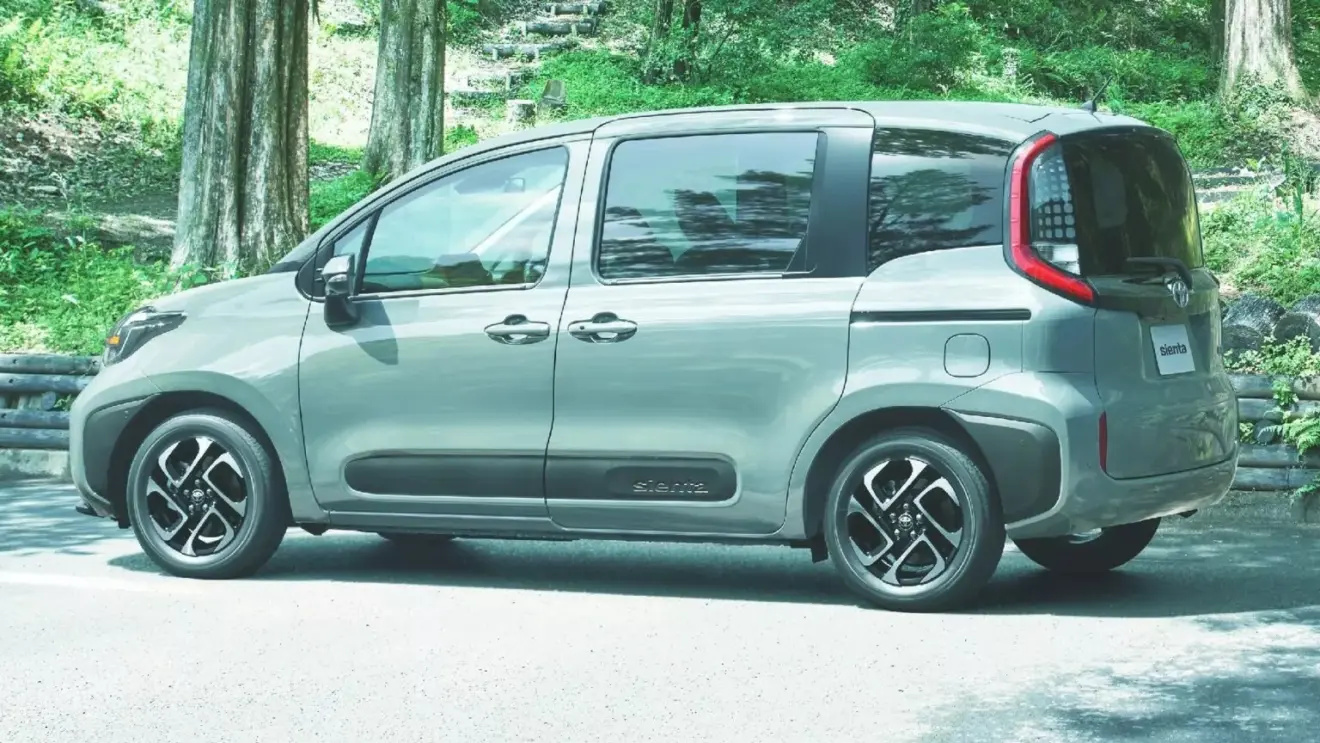


Toyota Sienta Juno, nicknamed the “Japanese Spin,” features a hybrid engine, 4×4 drive, and an interior that can turn into a mobile office. Learn everything about Toyota’s versatile minivan.
A compact, technological minivan with a vocation to be more than just a family transportation car: this is the proposal of the Toyota Sienta Juno, a model recently updated in Japan that has been attracting attention for its unconventional design and internal possibilities. Endearingly nicknamed the “Toyota Spin” by the Brazilian public, the Sienta mixes versatility, efficiency, and practical solutions that please everyone from families to professionals who work remotely.
With a hybrid engine, all-wheel drive, and a configuration that allows the interior to be transformed into a kind of living room or mini-office, the Sienta Juno positions itself as a unique option in the market. Although there is still no official forecast for its arrival in Brazil, the model sparks interest among consumers looking for space, economy, and comfort without giving up on innovation.
Toyota’s Hybrid Minivan: Versatile, Efficient, and Urban DNA
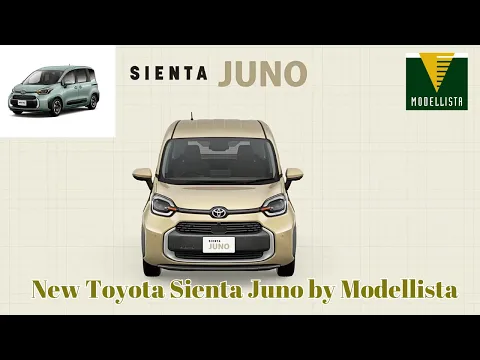
The new Toyota Sienta Juno is built on the TNGA-B platform, the same used in the Toyota Yaris in Europe. However, it uses an elongated variation, offering excellent internal space utilization even with only 4.26 meters in length.
-
The Toyota Hilux is R$ 75.5 thousand cheaper and bets on the 2.8 turbodiesel engine with up to 204 hp and 50.9 kgfm to catch up with the VW Saveiro, which leads with 4,472 sales.
-
The new Renault Koleos has a screen exclusively for the passenger that is invisible to the driver, heated rear seats, and 29 assistance systems, but its Chinese competitors cost R$ 40,000 less and deliver more power.
-
The car stored for 38 years: when opening the barn door, what appears is breathtaking and looks like a scene from a movie!

-
Fiat works miracles in the Brazilian market, lowers the price of its 0 km hatch to R$ 69,990, reestablishes the model as the cheapest car in the country, and reignites the battle against Kwid and C3.

The design is modern and uncomplicated, with rounded headlights, a short hood, and well-utilized sides — a design that mixes charm with functionality.
Under the hood, the minivan can be equipped with two engine options: a 1.5 gasoline engine or a hybrid setup, which delivers greater energy efficiency, ideal for those seeking economy in urban daily driving. In the case of the hybrid version, the average consumption can exceed 25 km/l in the Japanese WLTC cycle, an impressive number for a model of this category.

Another important differentiator is the all-wheel drive with E-Four system, available in the hybrid versions. This ensures greater stability on slippery surfaces, such as snow or heavy rain, and expands the use of the minivan in rural areas or on dirt roads.
Modular Interior: Living Room or Office on Wheels?
But it’s inside the cabin that the Sienta Juno truly surprises. Aiming to cater to new post-pandemic lifestyles, especially with the increase in remote work and digital nomadism, Toyota offers optional kits that transform the vehicle into something beyond simple transport.
With foldable rear seats and accessories like curtains, USB-C sockets, laptop stands, and even configurable ambient lighting, the interior can be adapted to serve as a living room on wheels or a mobile mini-office.
Ideal for those needing a comfortable place to work outside the home or for families taking long trips who want to maintain a cozy atmosphere during the journey.
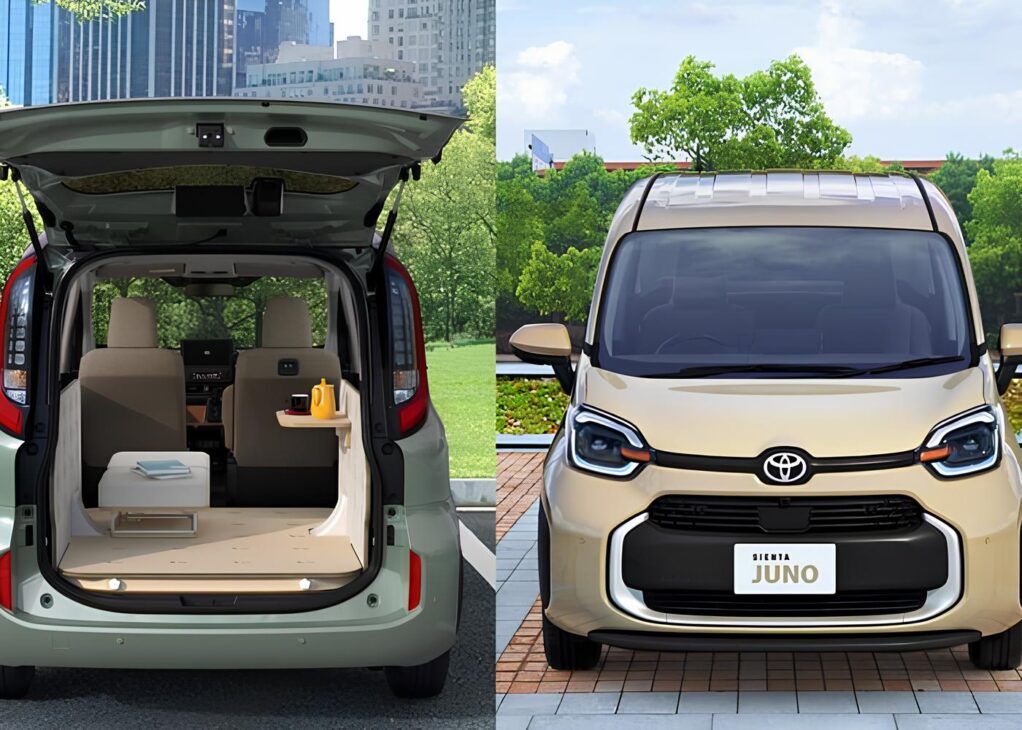
The driving position is elevated, the central panel features a touchscreen, intuitive controls, and digital air conditioning with vents for the second row. The minivan can also be equipped with adaptive cruise control, frontal collision warning, autonomous emergency braking, and lane-keeping assist, enhancing its safety and technology levels.
Designed for Families, but Without Sacrificing Style
Despite its urban and professional vocation, the Sienta also stands out as an excellent option for families. Rear access is provided by sliding doors, making it easier for children or people with reduced mobility to enter. There is also the option to configure the model with seven seats, thanks to the excellent internal utilization and the modularity of the seats.
For frequent travelers, the luggage compartment is versatile, capable of reaching volumes of up to 1,200 liters with the seats folded, allowing for the transport of everything from suitcases to small bicycles, pets, or work equipment.
Additionally, sound insulation is efficient, the finishing materials are of good quality and easy to clean, and the model also features air conditioning with a pollen filter, ensuring the well-being of the occupants.
How Much Does Toyota’s Hybrid Minivan Cost?
In the Japanese market, the Toyota Sienta Juno’s prices range from US$ 24,800 to US$ 26,100, which currently corresponds to approximately R$ 135 thousand to R$ 142 thousand, in direct currency conversion, excluding import taxes. The competitive pricing, combined with its unique and technology-rich offering, makes it considered a “smart bargain” within the compact minivan segment.
This price includes hybrid versions, which come factory-equipped with all-wheel drive and some comfort and safety features already onboard.
The interior transformation kits, such as those aimed at creating a mobile office, are optional and can be purchased directly at Japanese dealerships.
Could It Come to Brazil?
Although the Sienta Juno has not yet been confirmed for the Brazilian market, it would certainly find space among consumers looking for an alternative to the Chevrolet Spin, which currently has virtually no direct competition.
The hybrid potential, good fuel consumption, internal modularity, and the unique proposal of the Japanese minivan catch attention — especially at a time when the national market is starting to pay more attention to multifunctional vehicles.
It’s worth noting that Toyota has been expanding its hybrid lineup in Brazil and already includes Corolla, Corolla Cross, and hybrid Yaris in its portfolio. A possible arrival of the Sienta Juno could be strategic for consolidating the brand in the compact family car segment, especially amidst the lack of models in this category with modern proposals.
The Toyota Sienta Juno, nicknamed the “Japanese Spin”, is a minivan that represents the future of urban and family mobility: hybrid, connected, versatile, and adaptable to different lifestyles. With competitive pricing, all-wheel drive, an economical engine, and an interior that can turn into a living room or office, the model reinforces Toyota’s tradition of creating vehicles that combine functionality with technology.
Even though still limited to the Japanese market, the Sienta Juno serves as a reference for what we can expect from the new generation of minivans and family cars — which, far from being outdated, are reinventing themselves with creative and efficient proposals.










A spin nipo brasileira, já que a Chevrolet virou bolivo-brasileira junto com a Zafira kkk
Nada ver essa comparação, nem de longe, lembra o veículo da chevrolet, que é líder do seguimento 7 lugar, melhor custo benefício.