





 Portuguese
  English
  Spanish
  6 min of reading
  11 comments


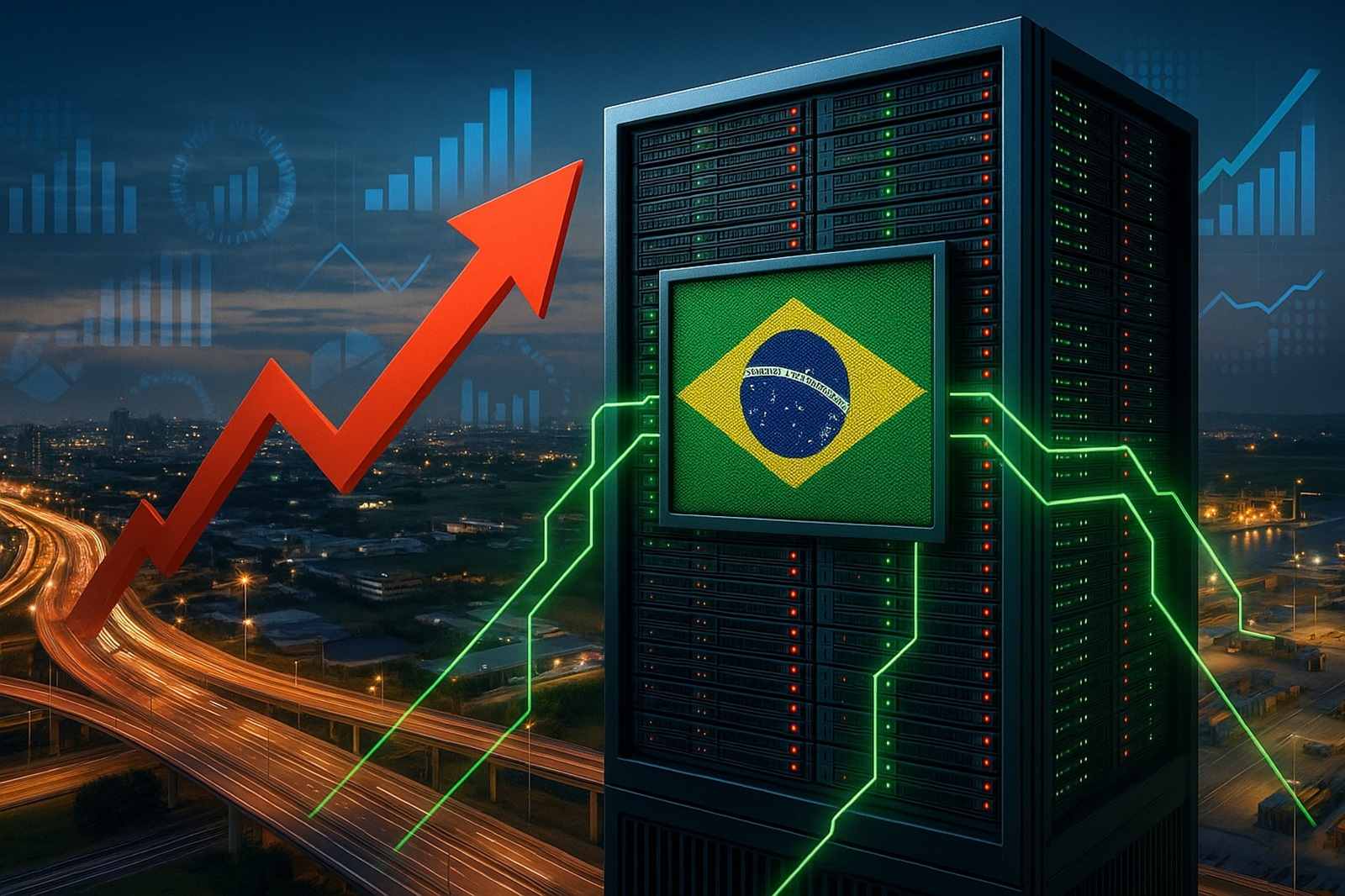


With a Launch Scheduled for 2026, the New Platform of the Revenue Service Promises to Eliminate Delays, Frauds, and Tax Evasion with Real-Time Automated Oversight
The federal government is making a heavy investment in the development of an advanced platform to streamline the collection of new consumption taxes — the CBS (federal) and the IBS (state and municipal) — that will replace PIS, Cofins, IPI, ICMS, and ISS.
The heart of the project is its scale: the system will be 150 times larger than PIX.
In contact with G1, the Federal Revenue Service explained that the scale does not stem from the number of documents, but from the volume of information in each electronic invoice, which carries data about the product, the issuer, and tax credits.
-
“No one will make us change the Pix,” says Lula after the US report.

-
Lula responds directly to Trump and says that Pix is from Brazil and will not change under pressure from anyone, after a report from the United States pointed out the Brazilian payment system as an American trade barrier.

-
Amazon has just announced a new fee on all deliveries, and your online purchases will become more expensive starting April 17, including for those buying from the United States here in Brazil.

-
He sold his share for R$ 4 thousand, saw the company become a giant worth R$ 19 trillion, and missed the opportunity of a lifetime.


The estimate is to process around 70 billion invoices per year, similar to the flow of PIX in quantity, but much heavier in terms of data.
Why “150 Times Larger” than PIX
According to the Secretary of the Federal Revenue, Robinson Barreirinhas, the “gigantism” exists to handle 100% of the electronic invoices in the country.
“The gigantism is to handle this volume of information that comprises 100% of the electronic invoices. We estimate that around 70 billion documents per year will be received by this system, which is roughly the volume of PIX”, he said.
While PIX has few fields — who pays, who receives, and the valueor — each invoice carries “a lot of other information”.
The annual number of documents is comparable, but the size of each makes processing about 150 times more demanding.
Split Payment
A central module of the platform is the “split payment”.
In practice, when payment for a transaction is made electronically, the portion corresponding to taxes is automatically separated and sent, at the time, to the accounts of the Union, the states, and the municipalities.
The promise is to drastically reduce tax evasion, eliminate delays in collection, and close the loophole for shell companies — the “note issuers” — that issue false or altered invoices.
For cash payments, the “split” does not apply; but the logic of digital is expected to broaden coverage.
Pilot in 2026 and Start of B2B in 2027
The project is already in a pilot phase, with nearly 500 companies. In 2026, the system is expected to operate without effective collection — a symbolic rate of 1% will be used for testing, with the possibility of offsetting against other taxes.
Starting in 2027, the “split payment” will enter production for the CBS in transactions between companies (B2B), without encompassing retail.
In the same 2027, PIS and Cofins will be eliminated. The transition from ICMS and ISS to IBS will occur between 2029 and 2032, with a gradual reduction of current rates and a progressive increase of the new subnational tax.
Collection, Tax Evasion, and Rate Design
The government’s expectation, already disclosed, is that tax evasion will fall sharply with the introduction of the new system.
According to G1, an expert states that by not going through the companies’ cash flow, the due amounts “eliminate delays in collection and the complexity of the guides”, but affect the corporate cash flow.
At the same time, the reform provides for total tax relief on investments and exports, which reduces collection on the other end.
All this factors into the future reference rate — which, based on projections so far, is likely to be among the highest in the world, preserving the current weight of consumption taxes in the country.
Tax Credits Released in Hours
The new IVAs (CBS and IBS) will be non-cumulative.
Thus, each stage of the chain generates credits for the next, avoiding cascading taxation.
The national platform — integrated and operating in real time — will be responsible for quickly calculating these credits.
The law provides for up to three days for adjustments among federative entities, but the Revenue Service claims it works to release them in hours, ideally “at the same time” that the information arrives.
The acceleration of credit helps mitigate cash flow tensions in long chains and enhances the financial predictability of companies.
Professional Management and Integrated Technology
With taxes being automatically separated, spreadsheets and manual operations will be a thing of the past: integrating internal systems into the new environment of the Revenue Service will be crucial.
Forced digitization reduces loopholes, standardizes processes, and imposes stricter tax governance.
Conversely, companies operating with narrow margins will need to reassess working capital and payment schedules to suppliers, since cash will no longer serve as a “bridge” for collecting taxes later.
Official Calculator, Fewer Errors, and Warning Before Enforcement
Another goal is to reduce calculation and product classification errors.
In the current model, the taxpayer fills out the invoice, the document goes to state risk management, and, if there is a discrepancy, the enforcement follows.
In the new design, there will be an official calculator. The taxpayer enters the transaction details within the Revenue Service’s system; if processing identifies errors, the environment will alert and request correction of the invoice before any penalties.
The Revenue Service describes the platform as “user-friendly”, resulting in direct compliance gains and reduced litigation.
By centralizing invoices, automatically separating taxes, accelerating credits, and standardizing calculations, the Revenue Service aims for an infrastructure leap that provides practical support for the consumption tax reform.
At the center of it all remains the key piece: a system 150 times larger than PIX, designed to process — with depth and in real time — all electronic invoices in the country.
The New Brazilian VAT: CBS and IBS
Brazil is replacing the current entanglement of consumption taxes (PIS, Cofins, IPI, ICMS, and ISS) with two new value-added taxes (VATs):
- CBS (Contribution on Goods and Services) — will be federal, collected by the Union.
- IBS (Tax on Goods and Services) — will be jointly managed by states and municipalities.
These two taxes will have the same rules for incidence, calculation base, and credits, functioning on a non-cumulative basis, meaning each company can deduct the tax paid in previous stages of the production chain.
This eliminates so-called “cascading taxation” and brings Brazil closer to the VAT model adopted in developed countries.
Implementation will be gradual:
- In 2027, PIS and Cofins will be eliminated, giving way to CBS.
- Between 2029 and 2032, ICMS (state) and ISS (municipal) will be progressively replaced by IBS.
This unification aims to simplify the rules and reduce disputes, but requires a long transition to adapt systems, local legislation, and accounting practices.
Historical Complaints from Companies About the Current System
Brazilian companies have been complaining for years that the national tax system is among the most complex, burdensome, and unpredictable in the world. The main problems pointed out by the productive sector are:
- Fragmentation of rules: each state and municipality has its own ICMS and ISS rules, creating a maze of legislation that makes it difficult to comply with obligations.
- Constant litigation: the multitude of interpretations and enforcement actions means that Brazil has one of the highest volumes of tax processes in the world.
- Compliance costs: companies spend thousands of hours and resources on tax and accounting teams just to fulfill obligations.
- Unpredictability in cash flow: delays in utilizing credits and retroactive charges directly impact financial planning.
Studies from the industrial sector indicate that, in Brazil, companies spend over 1,500 hours per year to assess and pay taxes — far above the global average.









Por que não criam um sistema desse para melhorar o SUS e evitar que consultas com especialistas demorem uma eternidade para sair, exames que demoram meses, anos ou nem saem, etc. A eficiência em sugar impressiona, seja por parte do governo federal, estadual e municipal. Na cidade onde moro as viaturas da guarda de trânsito tem câmeras em cima para filmar infrações e aplicar multas, aí fico pensando, porque não usam essas câmeras para filmar os buracos nas estradas e notificar a prefeitura.
Queria essa tecnologia, para devolver os roubos dos nossos aposentados!!!
Concordo.
E essa tecnologia toda pra gestão de gastos? Pra reatrear dinheiro desviado do INSS? Parece que o único objetivo desse governo é tirar o fí**** das pessoas. Aumentar impostos e dar nada em troca. Que inferno isso.