





 Portuguese
  English
  Spanish
  5 min of reading
  0 comments


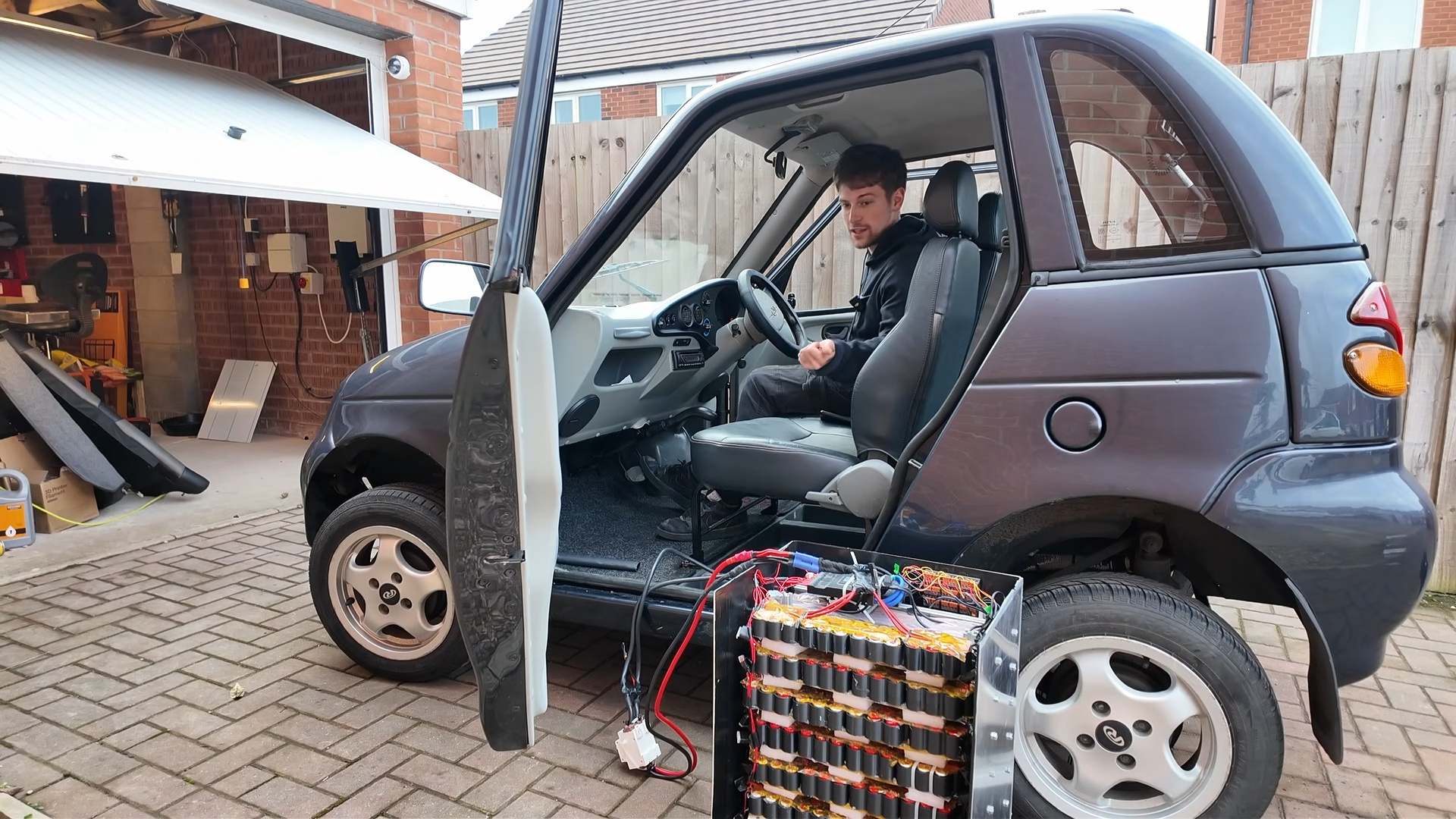
Engineer reuses batteries from 500 discarded vapes and drives electric car for over 20 km, exposing lithium waste in the world.
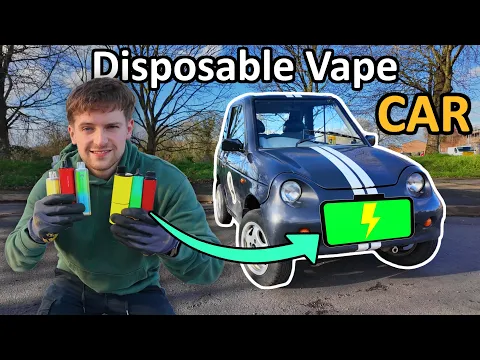
In 2025 and early 2026, content published by Chris Doel and reported by outlets such as Tom’s Hardware brought to the debate an experiment that moved from the maker universe and began to symbolize, in a concrete way, the problem of electronic waste: the reuse of disposable electronic cigarette batteries to first build a home energy storage system and then power a real electric car.
The basis of the project stemmed from a fact that had already been publicly disclosed by the UK government and by research from Material Focus: the country is facing a surge in vape disposal, with official and sector estimates indicating that almost 5 million devices per week were thrown away in 2024, while later surveys indicated that the total volume of vapes discarded or improperly recycled had already reached 8.2 million per week, many of which still contained usable lithium-ion cells.
It was from this scenario that Chris Doel decided to practically test how much energy still remained in these devices after disposal. After transforming hundreds of recovered cells into a system capable of powering his home and workshop, he took the idea further and adapted a small Reva G-Wiz with a set made up of 500 discarded vape batteries, in an experiment that drew attention precisely for showing, on a real scale, how much functional material is still being thrown into electronic waste.
-
Meteorologists warn that the polar vortex is behaving in an unprecedented manner, and the speed of this anomaly could cause frost and droughts outside the norm in major agricultural production areas.

-
The phenomenon of the “brown ribbon” of sargassum is advancing across the Atlantic Ocean on a gigantic scale, becoming visible from space and directly impacting tourist beaches, maritime activities, diving, and the environmental balance in tropical regions.

-
Damage caused by zero-calorie sweeteners can affect up to 2 generations, alter genes related to inflammation, provoke glucose intolerance, and raise blood sugar levels, reveals a study with sucralose and stevia.

-
A viral image of the supposed “missing piece” on Artemis 2 scared people on social media, but NASA rushed to explain what really appeared on the thermal shield.
Dismantling hundreds of devices revealed usable cells
The process began with the collection and dismantling of approximately 500 disposable vapes, each containing a small lithium-ion battery similar to those used in smartphones.
Upon opening the devices, Doel found a recurring pattern: even after the complete use of the liquid and the internal resistance, the batteries still exhibited residual charge and, in many cases, sufficient functional capacity for new usage cycles.

This detail is central to the experiment, as it highlights a structural characteristic of the product: the vape is discarded not because the battery is completely depleted, but because the system was designed as a sealed unit, with no possibility for recharging or direct reuse by the user.
Assembly of a 48-volt pack transformed waste into useful energy
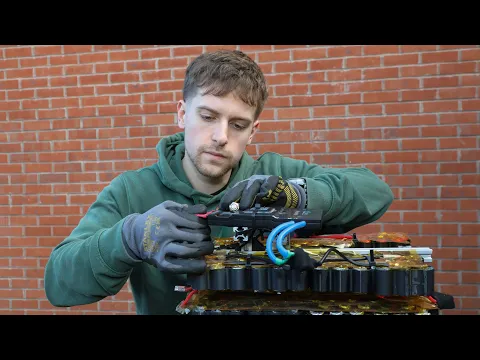
After extracting the cells, the engineer began assembling a larger system, connecting the batteries in series and parallel arrangements until reaching a voltage compatible with a light electric vehicle.
The result was a pack of about 48 to 51 volts, integrated into a basic management system and adapted to power a Reva G-Wiz, a micro electric car widely known in the UK for urban use.
This type of vehicle originally uses lead-acid batteries, which makes the experiment even more relevant, as the system based on reused cells showed superior energy density compared to the original set.
Practical test put the car in motion for almost 30 km
With the system installed, the vehicle was put into operation. During the tests, the car traveled approximately 29 kilometers, demonstrating that the reused cells were capable of providing enough energy to move a real automobile under practical conditions.
This result represents not only a technical achievement but also concrete evidence that discarded devices on a large scale still carry a significant volume of usable energy.
The distance traveled places the experiment at a level that goes beyond symbolic demonstrations, showing functional viability within a controlled scenario.
Discarded batteries could have a much longer lifespan
The central point of the project lies in the discrepancy between the product’s usage time and the durability of its components. While a disposable vape may be used for a few days, its battery is designed to withstand hundreds of charge and discharge cycles.

This means that at the time of disposal, a significant portion of the energy capacity is still available.
This characteristic raises questions about the consumption model associated with this type of device, especially in a global context where lithium is considered a strategic resource.
Environmental pressure grows with increase in vape disposal
The growth in the consumption of disposable electronic cigarettes has raised concerns among environmental authorities, mainly due to the volume of electronic waste generated.
In addition to lithium, these devices contain metals, plastics, and circuits that, when improperly disposed of, can cause significant environmental impacts.
The figure of 1 million units discarded per day in the UK has become a reference point to size the problem, placing the issue at the center of discussions on regulation and sustainability.
Project connects practical engineering with global debate on resources
By transforming discarded batteries into a functional system capable of moving a vehicle, Chris Doel’s experiment goes beyond the realm of technical curiosity and enters into a broader debate about resource use and energy efficiency.

The initiative tangibly demonstrates that a significant portion of the energy stored in fast-consumption devices could be reused, whether through structured recycling or redesign of products.
Reuse of cells gains space in independent projects
The use of reused batteries is not exclusive to this experiment. Technical communities and independent projects have been exploring this practice in various applications, such as home storage systems, electric bicycles, and portable devices.
However, the case of the Reva G-Wiz stands out for taking this concept to a more visible and easily understandable level, directly connecting everyday waste to a concrete application of mobility.
Accessible engineering exposes limitations of the disposable model
The project also highlights how accessible tools and technical knowledge can reveal structural inefficiencies in widely consumed products.
By dismantling common devices and reorganizing their components, the engineer demonstrated that the limitation is not necessarily in the technology, but in the design model adopted.

Chris Doel
This perception reinforces the discussion about how products could be developed with a greater focus on reuse and extended life cycles.
What do you think of using discarded batteries to move a car
The experiment with disposable vapes shows how seemingly insignificant waste can hide relevant energy potential, raising questions about consumption, disposal, and resource utilization.
Now I want to know your opinion: do you believe that solutions like this could evolve into real large-scale applications or are they still just isolated demonstrations of independent engineering?









Seja o primeiro a reagir!