





 Portuguese
  English
  Spanish
  5 min of reading
  4 comments


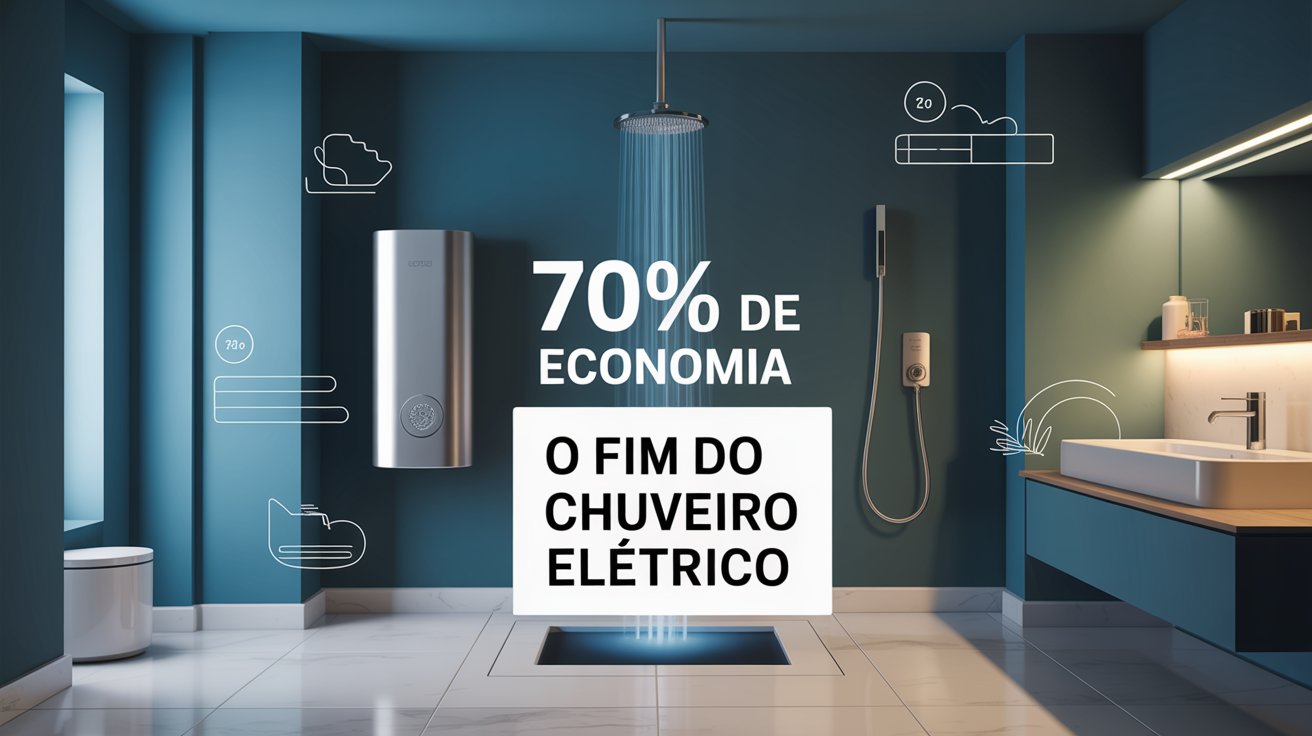


The Heat Pump Water Heating Technology Gains Ground in Brazil and Raises Interest from Consumers Seeking Lower Energy Costs and New Alternatives to Electric Showers.
The arrival of heat pump water heaters in the Brazilian market is beginning to reposition the traditional electric shower.
Promising to reduce energy consumption by up to 70% compared to resistance systems, this technology, already established in countries like the United States, is starting to be seen as a viable alternative in homes, old buildings, and retrofit projects in Brazil, even with a higher initial investment and still without specific federal incentives in the country.
While the electric shower remains dominant, the heat pump water heater gains traction by combining long-term savings, relatively simple installation in many cases, and the potential to relieve the electrical system during peak hours, especially during periods of more expensive tariff flags.
-
With a length of 399.9 meters and a capacity for over 24,346 containers, the MSC Irina becomes the largest ship in the world and revolutionizes global maritime transport.

-
With nearly 6,000 square meters and an investment of $100 million, the building that seems to move in Las Vegas has a reflective stainless steel façade, creates optical illusions, and has become a symbol of creativity worldwide.

-
From Florianópolis to Antarctica non-stop at 60 years old: 1st Brazilian woman to sail solo makes history by facing one of the most dangerous routes on the planet.

-
A Brazilian recounted how a sudden malaise triggered the entire hospital machinery in the United States, with emergency protocols, tests to rule out a heart attack, and a bill that could reach $40,000.


How the Heat Pump Works for Hot Water
The equipment known internationally as Heat Pump Water Heater (HPWH) works similarly to a “refrigerator in reverse.”
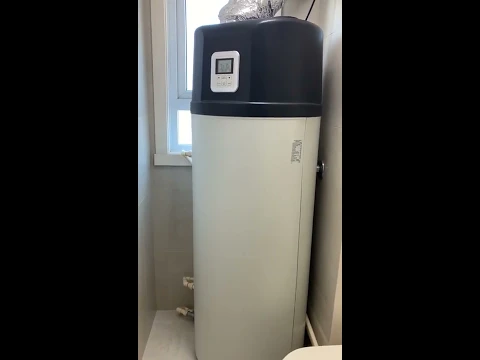
Instead of consuming electricity to generate heat directly through resistance, it uses a compressor and a refrigeration circuit to extract heat from the air and transfer it to the water stored in a tank.
This performance is measured by the Coefficient of Performance (COP), which indicates how much thermal energy is delivered for each unit of electrical energy consumed.
Efficient models achieve a COP above 3.5, meaning that for every 1 kWh consumed, more than 3 kWh in the form of heat are transferred to the water.
This result places heat pump water heaters at a level of efficiency superior to conventional electric boilers.
In many current models, the refrigerant gas used is R-290 (propane), with low global warming potential, in line with international standards that restrict the use of hydrofluorocarbons.
Energy Savings and Financial Return

In the United States, calculations from the ENERGY STAR program indicate that a certified heat pump water heater can provide an annual savings of around US$ 550 for a family of four.
This value is calculated in comparison to a standard electric boiler.
In terms of consumption, this type of system tends to use approximately one-third of the energy required by a resistance heater to provide the same volume of hot water.
In 2024, the U.S. Department of Energy (DOE) approved new minimum efficiency standards for residential water heaters.
Starting in 2029, electric boilers manufactured in the country will have to meet performance levels that effectively require heat pump technology.
The official estimate is that the change will generate billion-dollar savings on electricity bills and reduce energy consumption associated with water heating.
A study published in April 2025 by the Washington Post and researchers from Harvard University simulated the replacement of a gas system with an HPWH in a typical home in the state of Maryland.
The survey indicated an approximate savings of US$ 240 per year, with the initial investment recovered in up to four years.
Brazilian Market, Prices, and Available Options
In Brazil, heat pump water heaters intended for domestic use are mostly imported in 220 V single-phase, compatible with a large part of residential installations.
Global manufacturers like Midea offer models ranging from 200 to 300 liters, with COP above 3.5.
Among national manufacturers, companies like Nautilus use the same heat transfer technology base to develop compact lines intended for residential use.
The price range for models with integrated tanks varies between R$ 8 thousand and R$ 12 thousand, not considering installation costs.
Electric boilers of similar capacity cost between R$ 2 thousand and R$ 3 thousand.

In regions where the energy tariff exceeds R$ 1 per kWh, monthly expenses tend to be significantly reduced.
For a daily usage profile of around 280 liters of hot water, technical documents indicate that an HPWH can operate with an annual consumption of around 1,000 kWh, compared to over 3,000 kWh for a resistance heater.
Installation in Homes and Technical Requirements
The installation requires an environment with a minimum volume of 10 m³, adequate ventilation, and a drain point for the discharge of condensed water.
Engineers involved in efficiency programs in the U.S. explain that the air returned to the environment after passing through the evaporator is 5 °C to 7 °C cooler.
In laundries and service areas, this cooling can be used to moderate the temperature of the environment.
In enclosed spaces, performance decreases, as the equipment recirculates cooler air and loses efficiency.
The tanks typically have anti-corrosive coatings, made of vitrified glass or stainless steel, and include a magnesium anode, which should be inspected every three years.
Incentives, Regulation, and Environmental Impact
In the United States, consumers can apply for federal tax credits of up to US$ 2 thousand for eligible equipment, covering up to 30% of the total cost.
State and municipal programs offer additional bonuses that can exceed US$ 1,200.
Studies linked to the new efficiency rules indicate that replacing electric boilers with heat pump versions can reduce emissions at levels equivalent to about 10 million vehicles.
In Brazil, there are still no federal subsidies aimed at HPWH.
However, utility companies like Neoenergia, in Recife, and Copel, in Paraná, have been testing the technology in homes since 2025.
The results should support a possible inclusion of the technology in Aneel’s energy efficiency programs.

Use in Retrofit and Old Buildings
In old buildings and properties without piped gas, the heat pump water heater stands out for utilizing the existing electrical and plumbing structure.
Data from the Brazilian Association of Real Estate Developers (Abrainc) indicate that bringing piped gas to an apartment can exceed R$ 4 thousand, in addition to fixed monthly fees.
The structural savings make the HPWH a considered advantageous option in retrofit projects.
Brazilian Regulation and Increased Demand
Inmetro is developing its own methodology to classify the performance of heat pump water heaters under Brazilian climatic conditions, with an average temperature of 25 °C and humidity around 60%.
The new efficiency label is expected to be put out for public consultation by the end of 2025.
Large retailers are recording an increase in searches for “heat pump for bathing” since the first half of 2025.
High temperatures and rising electricity bills contribute to increasing public interest.
The discussion now taking place in the market is whether the Brazilian consumer considers it feasible to replace the electric shower with a heating system capable of reducing energy consumption throughout the year.







Aqui na nossa região não funciona,bem com em muitas nos EUA… isso não falam…como este sistema só funciona em regiões mais quentes não vejo vantagem ai toma banho de agua fria mesmo…Abaixo de zero mesmo sistema se desliga totalmente. Falam como fosse a salvação do mundo.
Enquanto isso, a COP fica discutindo ó sexo dos anjos e jogando o dinheiro do contribuí no ralo ou no bolso do …
Muito prático e econômico, gostaria de saber onde posso fazer um curso para manutenção e instalação deste equipamento no Brasil, mais especificamente no Rio de Janeiro.