





 Portuguese
  English
  Spanish
 4 min of reading
  0 comments


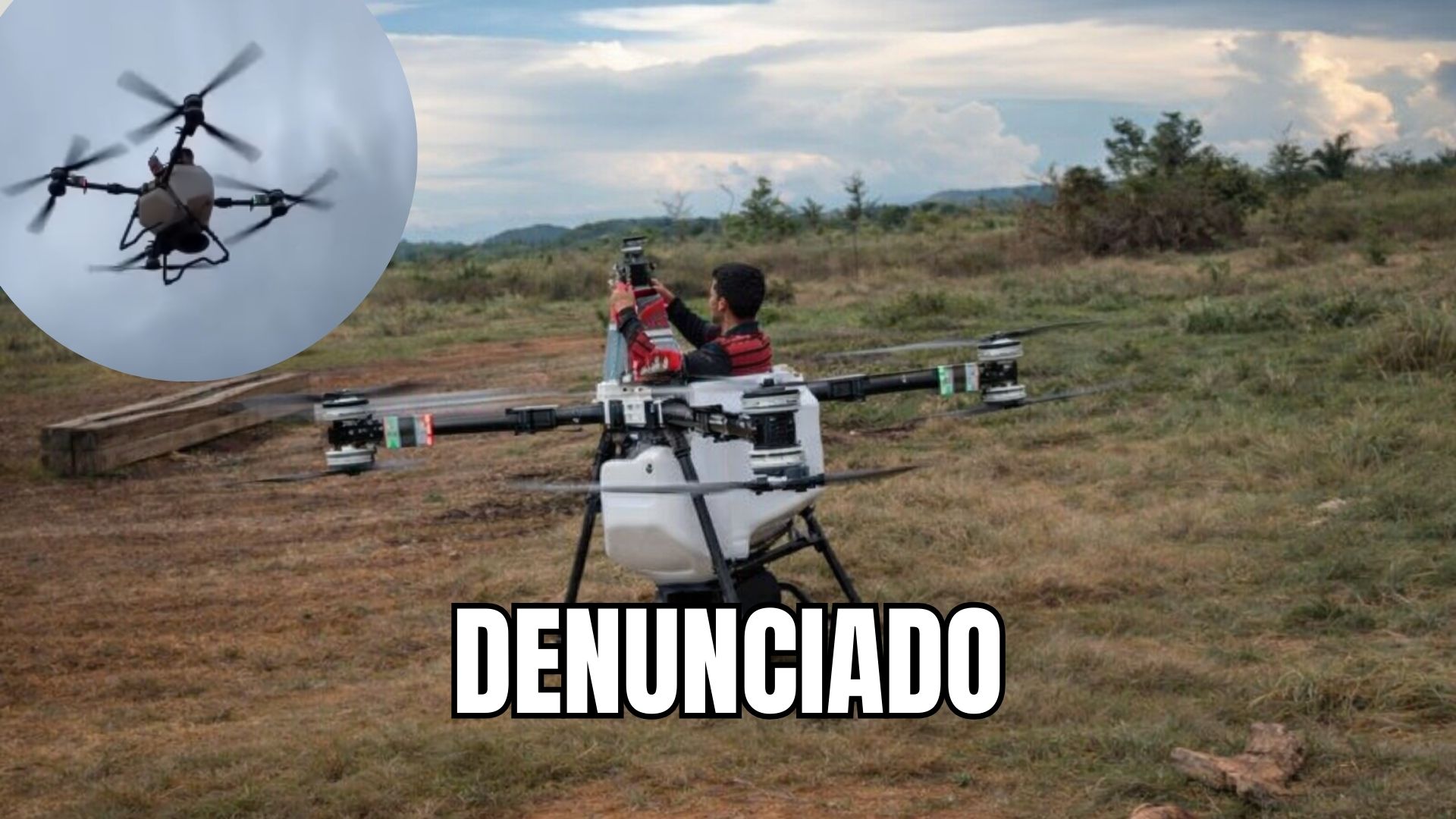
Video Recorded at Farm in Southern Pará Exceeds Millions of Views, Exposes Misuse of Large Agricultural Technology, and Reignites Debate on Safety, Professionalism, and Legal Limits in Brazilian Agriculture
Since agricultural drones began to gain traction in Brazil, their use has primarily been associated with precision agriculture, crop spraying, and advanced monitoring of crops. However, this week, the topic gained national attention for a completely different reason. A pilot decided to ride on a large agricultural drone, valued at around R$ 300 thousand, and use the equipment as an improvised means of transportation within a farm in the municipality of Tucumã, in southern Pará.
The information was disclosed by media outlets and quickly spread across social networks, fueled by a video that has already surpassed 5 million views. In the footage, the pilot is seen comfortable in the drone’s reservoir, which is designed for agricultural spraying, and takes off above the vegetation to fetch a bottle of “cold water” for a friend who was recording the entire scene. A few minutes later, the drone returns to its starting point with the occupant holding the bottle, while the recording continues in a casual atmosphere.
However, despite the informal tone of the video and comments praising the operator’s bravery, the episode quickly moved beyond mere curiosity and began generating institutional repercussions, involving representative entities of the sector and regulatory bodies of Brazilian civil aviation.
-
The noise law will no longer be in effect at 10 PM starting in June with a new rule valid during the 2026 World Cup.

-
The Chamber opens a debate on driver’s licenses at 16 years old as part of a reform that includes around 270 proposals to change the Brazilian Traffic Code and may redesign rules for licensing, enforcement, and circulation in the country.

-
The new Civil Code could revolutionize marriages in Brazil with “express divorce” and changes that could exclude spouses from inheritance.
-
Banco do Brasil sues famous influencer for million-dollar debt and intensifies debate on delinquency, risks of seizure, and direct impact on Gkay’s credibility.


Reaction from the Aeroagricultural Sector and Formal Complaint to Authorities
As the video gained national reach, the repercussions also reached the National Union of Agricultural Aviation Companies (Sindag), which decided to formally file a complaint with the National Civil Aviation Agency. According to the entity, the conduct recorded in the released material shows clear signs of irregularities and significant operational risks.
According to Gabriel Colle, executive director of Sindag, the case needs to be investigated rigorously. He stated that if the irregularities are confirmed, the penalties provided by law must be applied to those involved, respecting the due administrative process.
In an official statement, the union emphasized that the Brazilian agricultural aviation, both piloted and unmanned, is composed of thousands of highly qualified professionals who operate daily under strict safety protocols, environmental responsibility, and regulatory compliance. Thus, the incident shared on social networks not only exposes risks but also directly confronts the principles of professionalism that guide the sector.
Furthermore, the entity stated that the action recorded in the video offends technicians, agronomists, managers, assistants, and pilots of drones, helicopters, and airplanes who have built, for decades, one of the most regulated and qualified agricultural aviation systems in the world. Additionally, Sindag highlighted that the behavior displayed does not represent the values or the history of Brazilian agricultural aviation, which is approaching 80 years of history, marked by technical evolution and a permanent commitment to operational, environmental, and social safety.
What the Legislation Says About Agricultural Drones in Brazil
Although the use of agricultural drones has been relaxed in recent years, operations still follow clear limits established by law. In May 2023, the National Civil Aviation Agency made an important change by categorizing agricultural drones under Class 3, removing the maximum weight limit that previously varied between 250 grams and 25 kilograms. The measure aimed to provide greater operational freedom for agricultural activities, considering their specific characteristics.
Despite this, the rules continue to require that operations occur exclusively in uninhabited areas and respect the maximum height limit of 122 meters, equivalent to a building of approximately 40 stories. Flights must occur in VLOS (Visual Line of Sight), where the pilot maintains direct visual contact with the drone, or EVLOS (Extended Visual Line of Sight), where visual observers assist in the operation.
In addition to operational rules, professional activities with agricultural drones are regulated by both the Ministry of Agriculture and Livestock and the Anac itself. The pilot must be over 18 years old, present suitable physical conditions, have registration with the Department of Airspace Control (Decea), and must complete the Remote Agricultural Aerial Applicator Course (Caar), regulated by Ordinance No. 298. This course can be taken in online, in-person, or hybrid formats.
In other words, although legislation has evolved to keep pace with technological advancements, the use of these machines remains subject to strict technical criteria, precisely to prevent accidents, environmental damage, and risks to human life.
Agricultural Drones: Power, Innovation, and Safety Limits
The technology behind agricultural drones has revolutionized the Brazilian agribusiness. Equipment of this size can carry loads exceeding 100 kilograms, cover areas of up to 34 hectares per hour, perform spraying with high precision, monitor crops in real-time, identify pests, detect diseases, and even map water stress in the fields.
For this reason, experts warn that the misuse of these machines represents a significant risk. Unlike recreational or small drones, agricultural drones operate with high torque, great mass, and powerful propulsion systems, designed exclusively for technical applications. Any deviation from their intended purpose can result in critical failures, accidents, and unpredictable consequences.
According to a technical analysis presented by Sindag in the official letter sent to Anac, the episode recorded in the video shows signs of violations of civil aviation regulations and aeroagricultural operations, as well as evident operational risks. The entity reinforced its expectation for a complete investigation of the facts by the competent aviation authority and the application of appropriate sanctions if the irregularities are confirmed.
Considering the risks, legislation, and the impact on the aeroagricultural sector, do you think the complaint presented to the authorities is correct?
Source: Globo Rural







Seja o primeiro a reagir!