





 Portuguese
  English
  Spanish
  3 min of reading
  0 comments


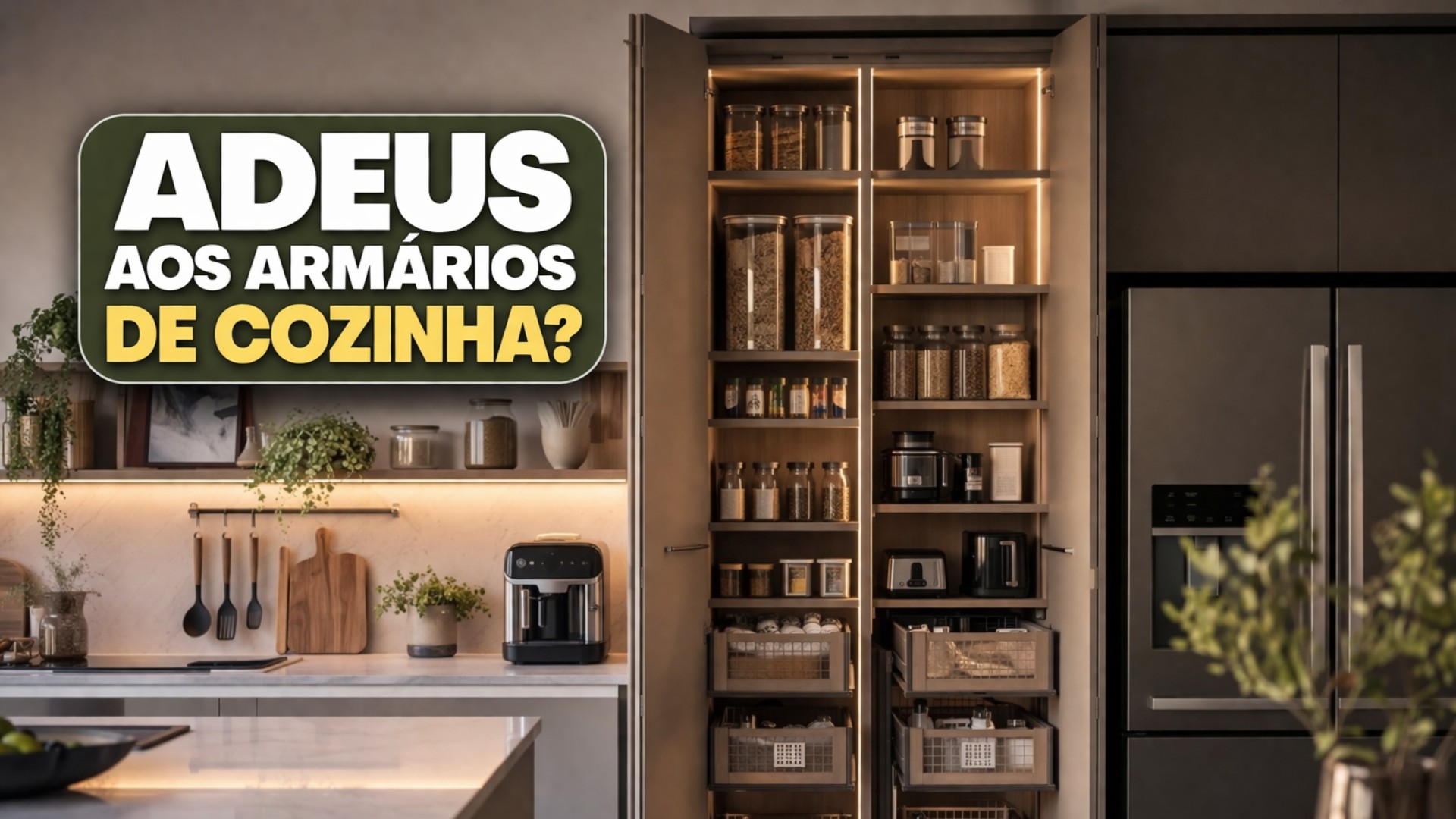
Silent transformation in kitchens redefines storage, expands organization, and changes the role of traditional cabinets with vertical solutions, smart lighting, and better space utilization in contemporary projects.
In the latest projects, the way to store groceries, utensils, and small appliances undergoes a significant reorganization, driven by the adoption of vertical modules, built-in pantries, and planned niches that reduce visual occupancy and enhance the functionality of the countertop.
At the same time, this reorganization accompanies a broader change in the role of the kitchen, which ceases to be merely a preparation area and also takes on a social function, requiring more integrated, visually clean environments adapted for everyday use with greater fluidity.
Modern pantry takes center stage in the project
Industry reports and surveys with consumers indicate a consistent advance in the preference for personalized storage systems, highlighting floor-to-ceiling cabinets, adjustable modules, and integrated solutions that better organize space without compromising aesthetics.
-
The end of the Portuguese language: award-winning writer proposes changing the name of the language and reignites debate on colonial heritage, African culture, and Brazilian identity after highlighting influences from more than 6 African, Indigenous, and Arab languages in the formation of modern Portuguese.

-
Bicycles become a ‘craze’ in SP, synonymous with agility in traffic, but the government wants to limit electric ones to 20 km/h, reduce speed to 6 km/h near pedestrians, and even prohibit circulation on fast lanes after an increase of 212 thousand units in the Brazilian market.
-
After BYD and others, China invades Brazil with giant tractors of up to 700 hp, 50% fuel savings, and a billion-dollar factory planned after Zoomlion projects R$ 500 million in sales in Brazilian agriculture.
-
Goodbye, Citroën! The brand, known for problematic and ‘bomb’ cars in Brazil, is preparing to leave the country after disappointing sales, as its owner (Stellantis) prioritizes Fiat Fastback, the new Argo, and Jeep Avenger in the Brazilian market.


Moreover, recent data shows that pantry cabinets lead the choices in renovations, reflecting a growing search for centralized organization and easier access to everyday items, especially in kitchens that concentrate multiple functions.
Centralized organization changes the dynamics of the kitchen
In practice, the modern pantry ceases to occupy a secondary role and begins to structure the functioning of the kitchen, concentrating dry goods, utensils, and small appliances in a single vertical unit with internal divisions designed for different usage frequencies.
With this reorganization, the environment gains a cleaner and more continuous reading, while the most used items remain accessible, reducing unnecessary movements and avoiding the disordered accumulation typical of fragmented upper cabinets.
Lighter visual and integrated technology
From an aesthetic point of view, smooth doors, continuous panels, and finishes without visible handles contribute to a more uniform look, while built-in lighting and sensors play a practical role by facilitating the identification of stored items.
In this context, technology ceases to be merely a complementary element and begins to integrate into everyday use, reinforcing the efficiency of the space and making the kitchen experience more intuitive and organized.
Ergonomics redefines the use of cabinets
The gradual replacement of high cabinets with vertical columns is directly related to ergonomics, as systems with sliding trays, internal drawers, and adjustable dividers allow for simpler front access and reduce physical effort during use.
As a result, organization shifts from prioritizing depth to valuing visibility and practicality, distributing groceries, utensils, and equipment in a logical manner aligned with the routine and frequency of use of each item.
Solutions adapted to different kitchen sizes
In spacious kitchens, planning often reserves an entire wall for high cabinetry, creating a continuous front that concentrates storage, appliances, and functional niches, which helps free up other areas and enhances the feeling of space.
On the other hand, in compact environments, utilizing residual areas becomes strategic, using narrow modules, vertical columns, and ceiling-high cabinets that increase storage capacity without compromising circulation.
Open shelves enter as strategic support
Although traditional upper cabinets lose space, open shelves remain as a complementary solution, primarily used for frequently used items or decorative elements that contribute to the visual dynamics of the environment.
Still, the use of these structures requires balance, as constant exposure demands frequent organization, which is why more efficient projects combine open and closed areas in a planned manner.
Practical changes in daily life
In daily routines, adopting this model can start with simple adjustments, such as reorganizing what remains on the countertop and concentrating storage in an efficient vertical structure, prioritizing accessibility and clarity in the arrangement of items.
With the advancement of these solutions, the traditional model of fragmented upper cabinets loses relevance, making way for more organized, functional kitchens adapted to contemporary demands for integrated use and social interaction.


Be the first to react!