





 Portuguese
  English
  Spanish
 5 min of reading
  0 comments


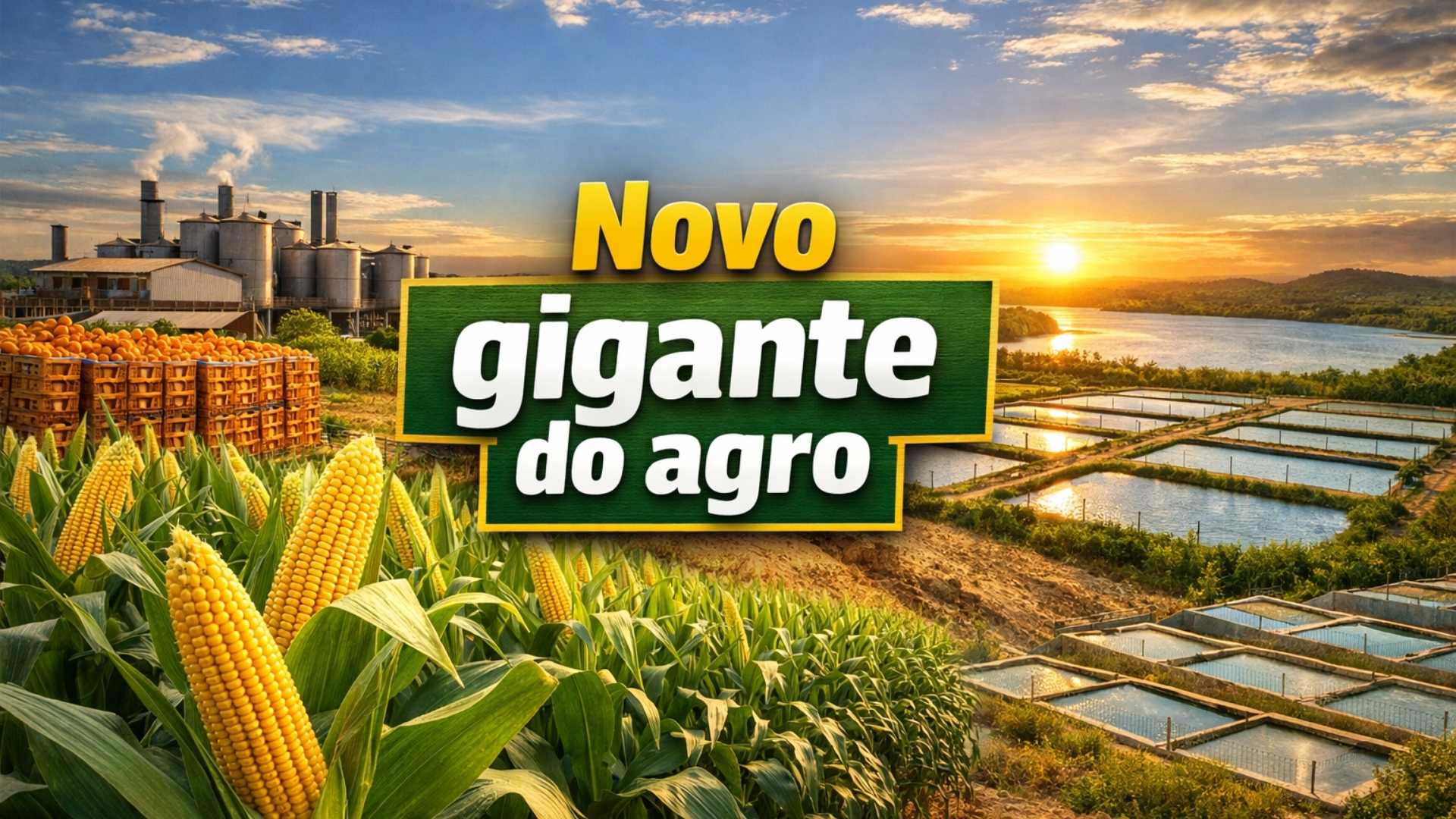
Record Productivity, Intensive Use of Technology, and Integration with Industry Placed Sergipe at the Center of the Brazilian Agriculture Debate, Even with Reduced Territory and Climatic Limitations, According to Official Data and Recent Surveys on Grains, Milk, Fruits, and Aquaculture.
The smallest state in Brazil by area has recorded, in recent harvest cycles, indicators that place it at the center of discussions about productivity in the field.
Sergipe, historically outside the main axis of national agribusiness, topped the Brazilian ranking for average grain productivity in 2024, according to data from Conab released by official bodies, and also showed significant results in sectors such as milk, citrus, aquaculture, and irrigated rice.
The recent trajectory has begun to gain greater visibility in promotional content from the agricultural sector.
-
India announces a plan of $3.06 billion to bring aviation to forgotten regions: 100 new airports, $1.07 billion in subsidies, and regional routes guaranteed for 10 years, from 2026 to 2036, away from the centers.
-
Brazil blocked a proposal from the United States at the WTO that would make the exemption from tariffs on digital products like streaming and ebooks permanent, favoring American tech giants at the expense of developing countries.

-
IPTU exemption for seniors in 2026: see how to secure the benefit.

-
The institute that trained the greatest aerospace engineers in Brazil has just opened its first campus outside São Paulo after 75 years: ITA Ceará will have R$ 445 million, new courses in energy and systems, and classes are expected to start in 2027.

In one of these materials, analyst Edson Benat from the UVP Agro channel stated that “size hardly matters” when referring to the state’s performance.
The phrase encapsulates a recurring interpretation among technicians and producers: the territorial limitation has led Sergipe to seek gains in efficiency rather than area.
Reduced Territory and Productivity Strategy in Sergipe Agriculture
With about 21,900 square kilometers, Sergipe is the smallest Brazilian state by territorial extension.
For comparison, São Paulo has approximately 248,000 square kilometers, which means that Paulista territory is about 11 times larger.
The difference helps to gauge the challenge of expanding agricultural production in a restricted space.
With no relevant possibility of horizontal expansion, part of the local productive sector has begun to concentrate efforts on increasing yield per hectare.
Technicians point out that the advancement is associated with the adoption of improved seeds, intensive management, use of irrigation, and greater technical assistance.

The most cited reflection appears in the average grain productivity, which reached 5,107 kilograms per hectare in 2024, the highest in the country in that Conab survey.
In the 2024/2025 harvest, performance remained high.
Official data indicate average productivity of 5,989 kilograms per hectare and total grain production close to 1.19 million tons, with a strong influence from corn in the state result.
Corn in Sergipe Drives Regional Market and Income in the Field
In addition to corn intended for feed, a specific segment gained prominence in 2025: green corn.
State government information indicates that, in irrigated perimeters, projected production surpassed 4.5 million ears, aimed primarily at supplying the June festivals in the Northeast.
This type of cultivation, according to technicians linked to family farming, fits the land profile of Sergipe, characterized by smaller properties.
The shorter cycle and direct sale in the regional market ensure quick liquidity for the producer, especially during periods of greater cultural and gastronomic demand.
Still, grain corn remains the main indicator when analyzing total volume and agricultural productivity in the state.
Milk Production in the Semiarid Advances with Management and Genetics
The dairy farming in the Upper Sertão of Sergipe also frequently appears in official reports.
Data from the state government indicate average productivity of 3,960 liters of milk per cow per year in the region.
The figure exceeds the state average, estimated at 2,336 liters, and is above the national average reported in the same reports.
Animal production specialists associate this result with factors such as genetic improvement, nutritional management, and adaptation to climate.
The use of forage cactus is cited as a strategy to ensure food and water supply to animals during drought periods.
In the academic field, the Federal University of Sergipe reported the development of sensors to monitor the thermal comfort of cattle.

The aim is to monitor environmental variables and assist producers in decision-making in regions with more extreme climates.
Orange Harvest Pressures Industry and Logistics in the State
In fruit cultivation, orange remains one of the main symbols of Sergipe’s production.
The state ranks fifth in the national ranking and second in the Northeast, with an estimated harvest of just over 402,000 tons in 2025, according to IBGE data released by the state government.
The high volume brought logistical and industrial challenges.
Reports published throughout the harvest reported trucks lined up and difficulty in processing at processing plants, especially in the municipality of Estância.
In light of this scenario, companies announced investments.
In a technical visit reported by the Faese/Senar system, the Maratá Group announced the expansion of its processing capacity by about 20%, with the installation of five new extractors.
According to company representatives, the measure sought to adapt the structure to the increase in fruit supply.
Tropfruit also announced industrial expansion, including a new orange factory in Bahia and the installation of new extractors starting in 2026, as reported in articles about the sector.
Shrimp and Rice Increase Diversity of Agribusiness


Along the coast and in estuary areas, shrimp farming has solidified as a relevant activity.
The company Carapitanga reports annual production exceeding 8,000 tons of shrimp, distributed in ponds totaling more than 2,000 hectares in the Northeast.
Meanwhile, in the Lower São Francisco, rice cultivation continues to be the foundation of regional agricultural production.
Data from the state government indicate production estimated at around 41,900 tons of rice in 2024.
The volume keeps Sergipe among the main producers in the Northeast.
Technicians highlight that irrigation systems are crucial for the continuity of activity, especially during periods of reduced river levels.
Agricultural Technology Guides Decisions and Investments
Productive modernization also involves the use of new technological tools.
The Ministry of Agriculture maintains specific rules for the use of drones in the application of agricultural inputs, increasing interest in technology in hard-to-reach areas.
This profile is common in parts of Sergipe’s territory, characterized by smaller properties.
The advancement occurs within a national context of growth in the agribusiness sector’s participation in the economy.
Calculations from Cepea/CNA indicated 23.5% of GDP in 2024, with higher projections for 2025, depending on the sector’s performance and the economy.
Based on these indicators, Sergipe has begun to be analyzed by technicians and public managers as a case of productive intensification and integration between agriculture and industry.
To what extent can similar experiences be adopted by other states with limitations in area or climate?






-

-

-

-

-

-

32 pessoas reagiram a isso.