





 Portuguese
  English
  Spanish
  3 min of reading
  0 comments


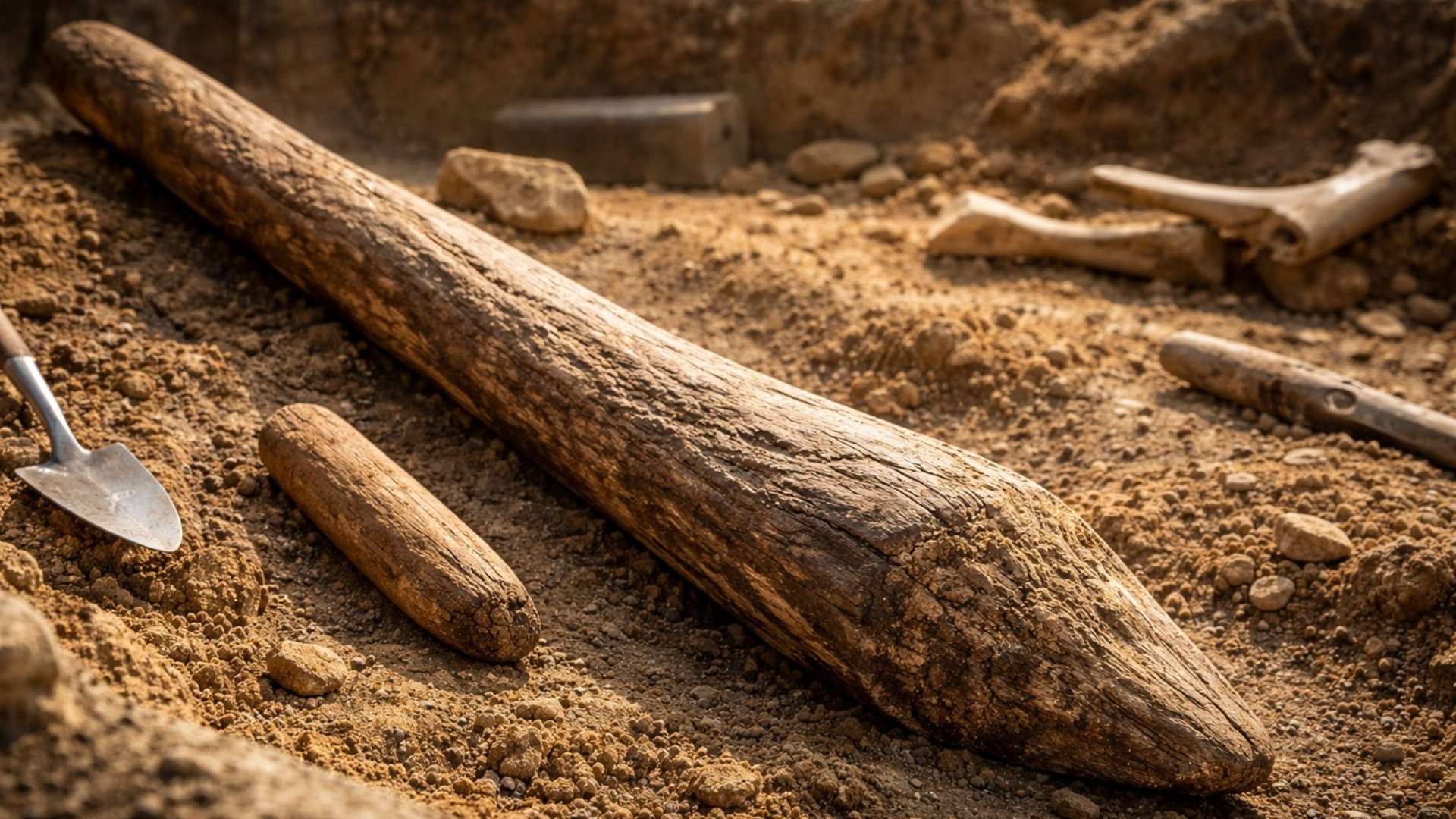
The Discovery of Two Wooden Hand Tools Dated to About 430,000 Years at the Archaeological Site of Marathousa in Peloponnesus, Southern Greece, Extends by at Least 40,000 Years the Known Record of This Type of Technology and Precedes by About 130,000 Years the Appearance of Homo Sapiens
A study published on January 26 reports the discovery, in the Peloponnesian peninsula in southern Greece, of two wooden hand tools dated to about 430,000 years, considered the oldest ever recorded of this type, produced by hominids preceding modern humans.
Discovery at the Archaeological Site of Marathousa
The tools were found at the archaeological site of Marathousa, where archaeologists identified exceptionally preserved wooden artifacts.
According to researchers, the objects represent the oldest wooden hand tools ever discovered, extending the known evidence of this type of technology by at least 40,000 years.
-
Goodbye iron: new technology from Xiaomi promises to revolutionize the way we iron clothes with 500 kPa steam, continuous flow of 120 g/min, heating in 65 seconds, and six smart modes for different fabrics.

-
Rio Pardo, the most mysterious city in Rio Grande do Sul: untouched Pampas castle, the missing treasure of the Devil Boy, bride’s saint, invisible tunnels, and a 200-year curse today.

-
China retires the J-7 fighter after years of military protection and can now transform military items into drones, following more than 60 years of operation of the J-7, derived from the MiG-21, with thousands of units produced and strategic use in the PLAAF and PLANAF.

-
Volunteers are sought to live in the mountains for a month: a study pays people to stay at 2,500 meters, with 24-hour monitoring of sleep, metabolism, and blood pressure.


The study states that the artifacts were crafted by a yet unidentified species of hominid. The absence of human remains at the site prevents direct attribution to a specific species, leaving the identity of the makers of these tools open.
Physical Characteristics of the Wooden Tools
One of the tools measures 81 centimeters in length and shows flaking and wear on one end. According to the authors, its morphology and size are consistent with those of digging sticks, suggesting use for turning the soil or accessing buried resources.
The second tool is 5.7 centimeters long and has been completely stripped of its bark. It displays rounding and small cavities on one end. Its exact function remains uncertain, but researchers indicate it may have aided in making stone tools.
Preservation Conditions and Environmental Context
The artifacts appear to have remained buried in moist soil, a condition that favored the preservation of the wood. The low-oxygen environment allowed for the conservation not only of the tools but also of other organic remains found at the site.
Excavations revealed remains of animals and plants that helped reconstruct the landscape of the time. The fauna includes terrestrial and semi-aquatic mammals, freshwater mollusks, turtles, and birds, indicating a rich and diverse lake environment.
Climate, Fauna, and Environmental Occupation
The study points out that, when the tools were used, Europe was undergoing an extremely cold glacial period. Despite this, the area near the lake in Marathousa would have offered relatively comfortable conditions for the hominids who lived there.
Among the identified faunal remains are elephants, hippos, deer, and wild boars. These findings suggest that the occupants of the site were exploiting an environment with an abundance of resources, even in an adverse climatic context, which reinforces the strategic importance of the region.
Authorship, Dating, and Uncertainties About the Makers
The tools date to approximately 430,000 years ago, around 130,000 years before the appearance of Homo sapiens. According to Annemieke Milks, the lead author of the study and an archaeologist at the University of Reading, it is not possible to precisely determine which hominid produced the objects.
Milks stated that, for this period, there is ambiguity about the species present in the region. The tools may have been made by Homo heidelbergensis or very primitive Neanderthals, a hypothesis that remains open due to the absence of associated human fossils.
Technological Diversity and Previous Excavations
Stone and bone tools had already been identified in Marathousa, and the discovery of the wooden artifacts broadens the understanding of the diversity of materials used by early humans. According to Milks, this indicates knowledge of the properties of different resources available in the environment.
Co-author Katerina Harvati, a professor of paleoanthropology at the University of Tübingen, stated that the tools offer a rare glimpse into technologies based on perishable plant materials, about which there is little archaeological evidence.
The excavations at the site took place between 2013 and 2019. The digging stick was found in 2015, while the smaller tool, with an uncertain function, was discovered in 2018.
The study was published in the journal PNAS, detailing the results of these investigations and their relevance to the understanding of the oldest known technologies.








Seja o primeiro a reagir!