





 Portuguese
  English
  Spanish
  5 min of reading
  1 comment


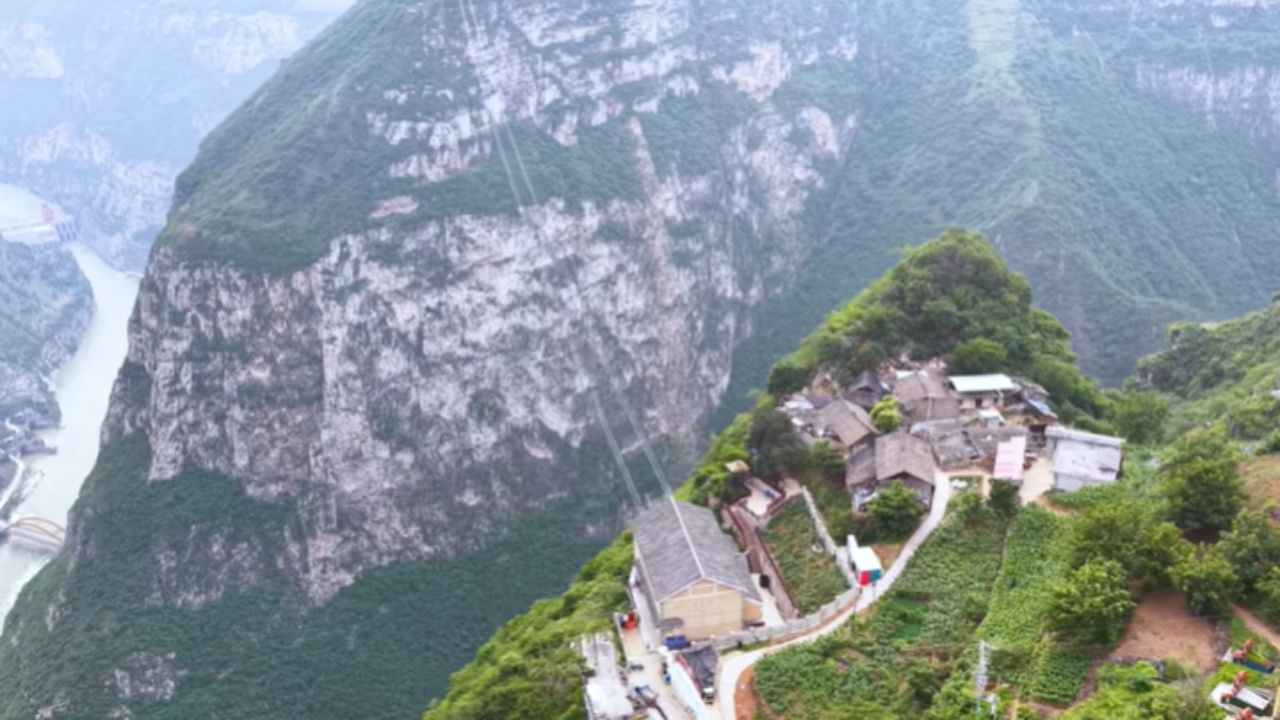


A Village Built on a Cliff, Carved at the Top of a Mountain Over 1,400 Meters High and with Almost 1 Kilometer of Vertical Drop to the Bottom of the Valley, Still Lives Today Without Car Access and Depends on Trails, Mules, and a Cable Car That Crosses Canyons to Connect to the Rest of the World.
For over 400 years, families have climbed this cliff to escape war, put down roots, and transformed what seemed an impossible hideout into a permanent home. Today, this cliffside village, known as Gulu Village, survives among vertical rocks, narrow trails, a cable car hung over the abyss, and a landscape so extreme that even eagles think twice before flying there, but which impresses tourists willing to face the radical access.
Where the Cliffside Village Is Located
Gulu Village is located in Hanyuan County, in the city of Ya’an, Sichuan Province, China. It is called the cliff village and also the village in the clouds because the entire community is literally glued to a rock wall, with houses aligned at the top and an almost vertical void down to the Grand Canyon of the Jinkou River below.
In practice, this cliffside village appears suspended in the air: on one side, the abyss; on the other, sheer rock faces, full of marks from excavation left over the decades.
-
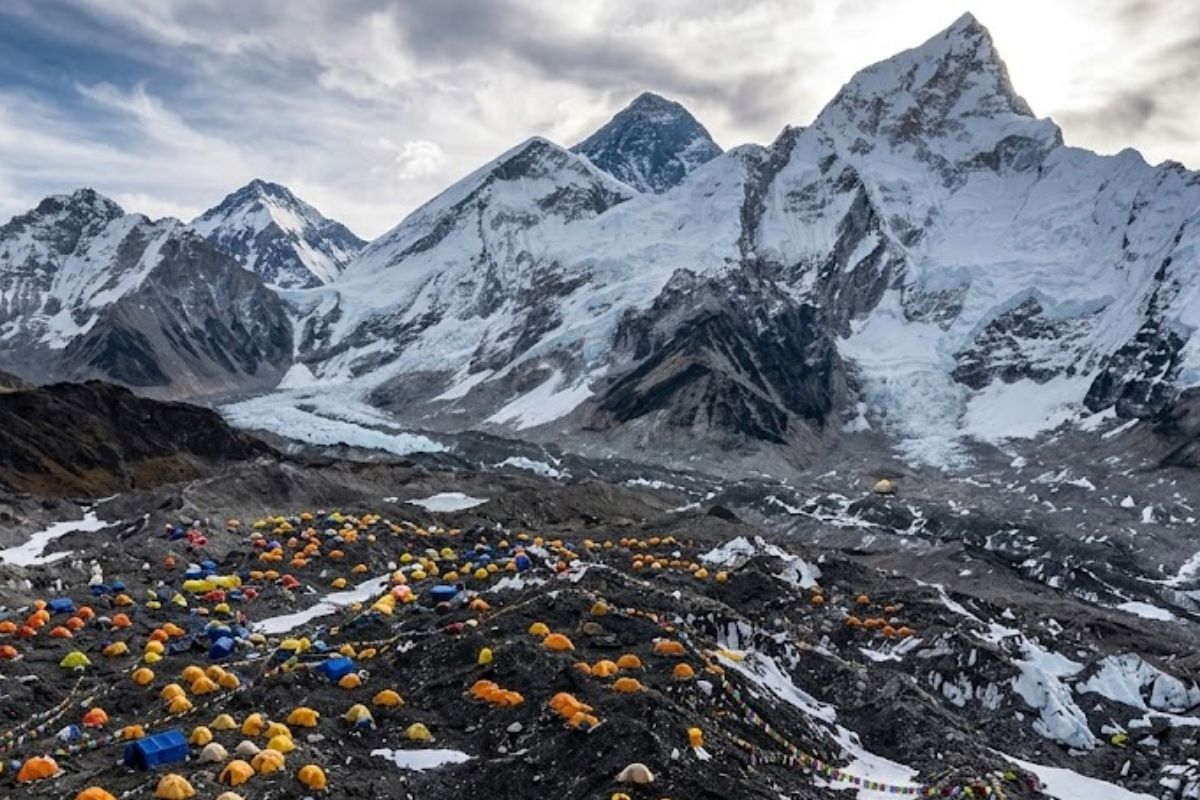
Tourists on Everest were poisoned by guides who mixed substances in food to provoke false symptoms of altitude sickness while helicopter operators and hospitals charged inflated rescue fees to insurance companies.
-
Few people know this, but Neil Armstrong, one of the most famous NASA astronauts in history, survived the Korean War after jumping from the plane during his seventh combat mission aboard the USS Essex aircraft carrier of the United States.

-
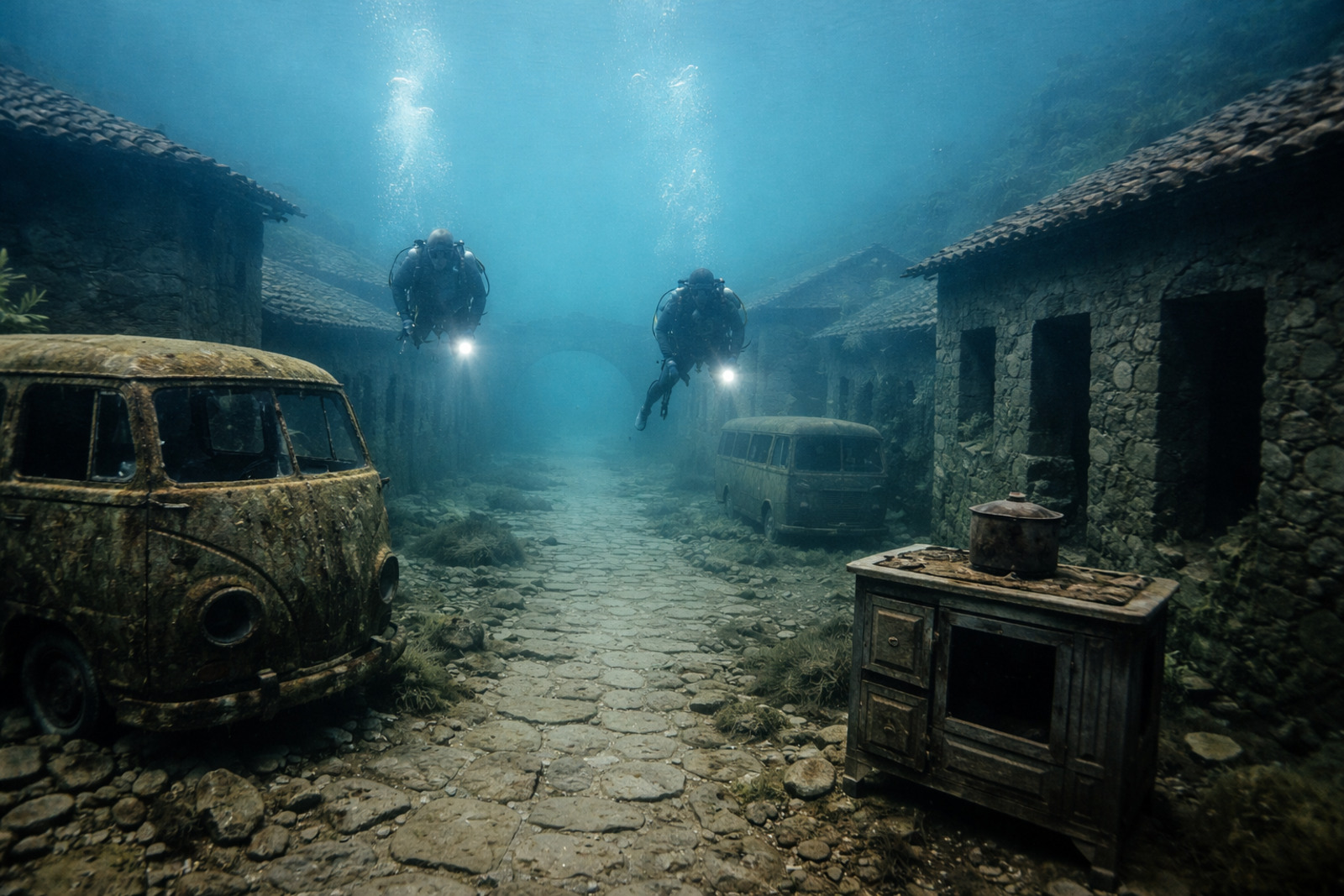
Diving with a camera in Lake Furnas reveals a submerged city with an entire street, almost intact houses, a preserved bridge, a wood stove, a Kombi, and even a bus at the bottom of the largest lake in the Southeast.
-
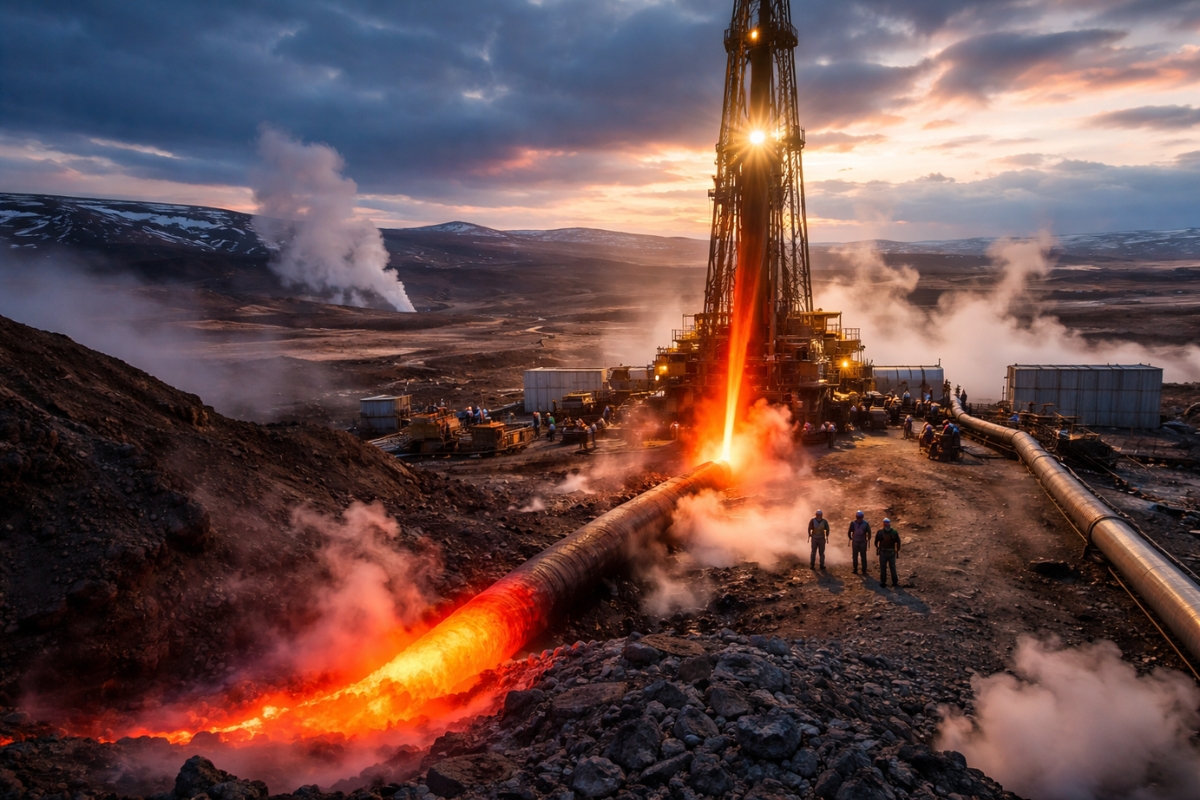
Iceland accidentally drilled into a magma pocket at 2,100 meters and revealed that the extreme heat beneath the crust could pave the way for a new source of continuous energy.

To this day, no car can drive directly to the houses, because there is simply no conventional road that reaches up there.
The Mule Trail That Hangs the Village on the Mountain

Since the cliffside village has no road, the classic route has always been on foot, along the mule and horse path carved into the cliff. This trail is about 6 kilometers long, was opened in the rock, and is now partially concreted, with approximately 1 meter in width and sections protected by metal fences.
The journey is not a light stroll: visitors need to climb a steep mountain road, face hand-carved tunnels, and pass through points where the cliff drops almost 1,000 meters right beside them.
Many tourists give up halfway, but others take on the challenge just to experience how the locals have always traveled. The round trip can take six or seven hours, depending on the pace and breaks.
For many years, the only way to communicate with the outside world was by vine ladders and ropes hanging from the rock.
Later, in the 1960s, during the construction of the Chengdu Kunming railway, steel ladders were installed to improve the situation a bit, but access remained extreme.
The big turnaround came in 2002, when the government and residents began carving the current plank road into the cliff, transforming the old path into a safer trail for mules, horses, and now tourists.
The work took about 16 years to complete, a patient effort that literally hung a road on the mountain wall.
Cable Car, Suspended Cars, and Logistics on the Edge
Over time, the cliffside village gained a second access: a cable car that crosses the canyon, connecting one point of the mountain to the plateau where the houses are located.
The cable car hangs almost 1,000 meters above the valley, linking two rock walls in a section that many visitors find frightening just to look at.
Tourists pay to use this cable car for one-way or round trips, while locals have free access, as they depend on it for daily transportation.
Cars have even been taken apart and sent up by the cable car and assembled up there, precisely because there is no traditional road going up the slope. First, the vehicle is suspended, then reassembled at the top, where it only circulates in small internal sections.
Even with the cable car, much still goes up and down powered by animal strength: mules and horses remain essential for transporting goods, products, and supplies, using the same narrow road that winds through the cliff.
The path has indentations and reliefs made purposefully to prevent hooves from slipping, showing how every detail of the infrastructure was shaped for survival in extreme terrain.
A Cliff Village with More Than 400 Years of History
The history of Gulu Village dates back over 400 years. The first residents climbed the 1,400-meter cliff to escape war and find a refuge that enemies would hardly reach.
There, they farmed, raised animals, formed families, and maintained a thriving community in a place where many people think it wouldn’t even be possible to live.
The name Gulu came from a sound: the stones falling from the top of the mountain to the base of the cliff made a characteristic noise, reminiscent of “gulu gulu.” Over time, this onomatopoeia became the name of the place.
Until recently, there were residents who had practically never descended the mountain in their entire lives, precisely because of the difficulty of access before the plank road.
Today, the cliffside village already has brick houses and small commercial structures. Residents sell water and other items on the path for tired tourists, with prices considered even cheap for such a remote place.
Life continues to be simple, but tourism has brought extra income and a new perspective from the world on this piece of rock inhabited for centuries.
Tourism, Vertiginous Landscapes, and Life on the Edge of the Abyss


For visitors, the shock begins even during the ascent. At various points, the road seems to float on the mountain wall, with the valley opening below and a constant sensation of walking in the clouds.
At viewing platforms just below the cliffside village, visitors can see the path taken from the bottom of the valley and the true dimension of the nearly vertical cliff.
On the other side, equally steep slopes shelter flocks of sheep grazing in areas that seem inaccessible even to birds.
Those watching from a distance can only see small white dots moving on the mountain and only realize they are animals when they zoom in on the image or talk to the locals.
It’s a routine that mixes normalcy for those born there with absolute astonishment for first-time arrivals.
At the end of the day, when the sun begins to set and the light hits the walls sideways, the feeling is of being in an impossible scenery: a cliffside village, sustained by stairs, trails, mules, a cable car, and a lot of human stubbornness, resisting time and transforming a nearly unreachable place into a fixed address.
And you, would you have the courage to visit a cliffside village like Gulu Village and face narrow trails, a cable car over the abyss, and a whole day of climbing to see this landscape up close?








Deus me livre, é possível que não resistisse às dificuldades naturais de viver isolado.