





 Portuguese
  English
  Spanish
  3 min of reading
  0 comments


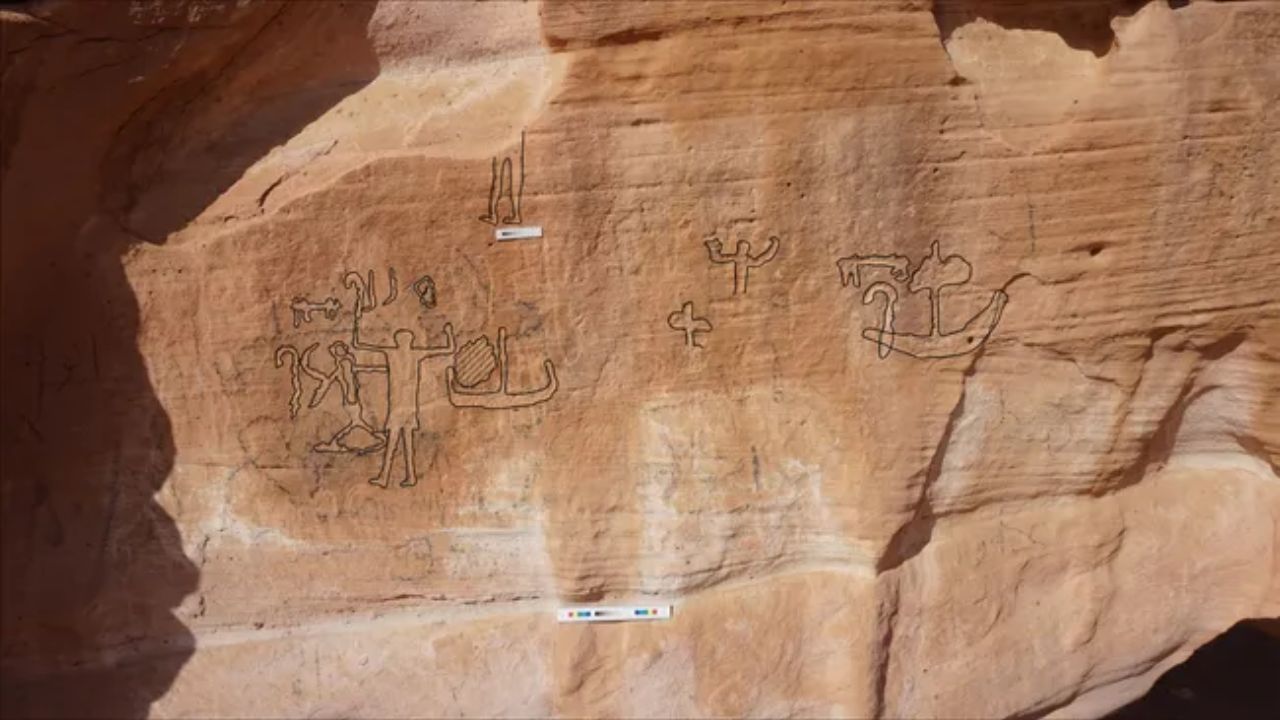
Archaeologists Discover 5,000-Year-Old Rock Art in Egypt’s Wadi Khamila, Illustrating the Conquest of Sinai and Egyptian Presence Fueled by Mineral Resources.
A rock art piece approximately 5,000 years old found by archaeologists in the Egyptian desert dramatically depicts an ancient conquest in Sinai.
The discovery occurred in 2025 in the Wadi Khamila region, in the southwest of the Sinai Peninsula, when researchers identified a rock panel engraved with human figures and symbols that, according to experts, represent the subjugation of local peoples by ancient Egyptians.
What Does Rock Art Reveal About Ancient Egypt?
The engraving on the rock shows a scene of confrontation and dominance. One of the characters appears in a position of control, while the other is depicted as injured and without a chance to react, indicating a possible Egyptian victory over local populations.
-
INMET danger alert: heavy rains between the 3rd and 4th may drop up to 100 mm/day and winds of 60 to 100 km/h in several regions of Brazil require extra caution.

-
The parts crisis may bring back the drop notch and microSD in 2026; while Windows 11 promises to become lighter, leaks mention batteries of up to 10,000 mAh and 200 MP cameras.

-
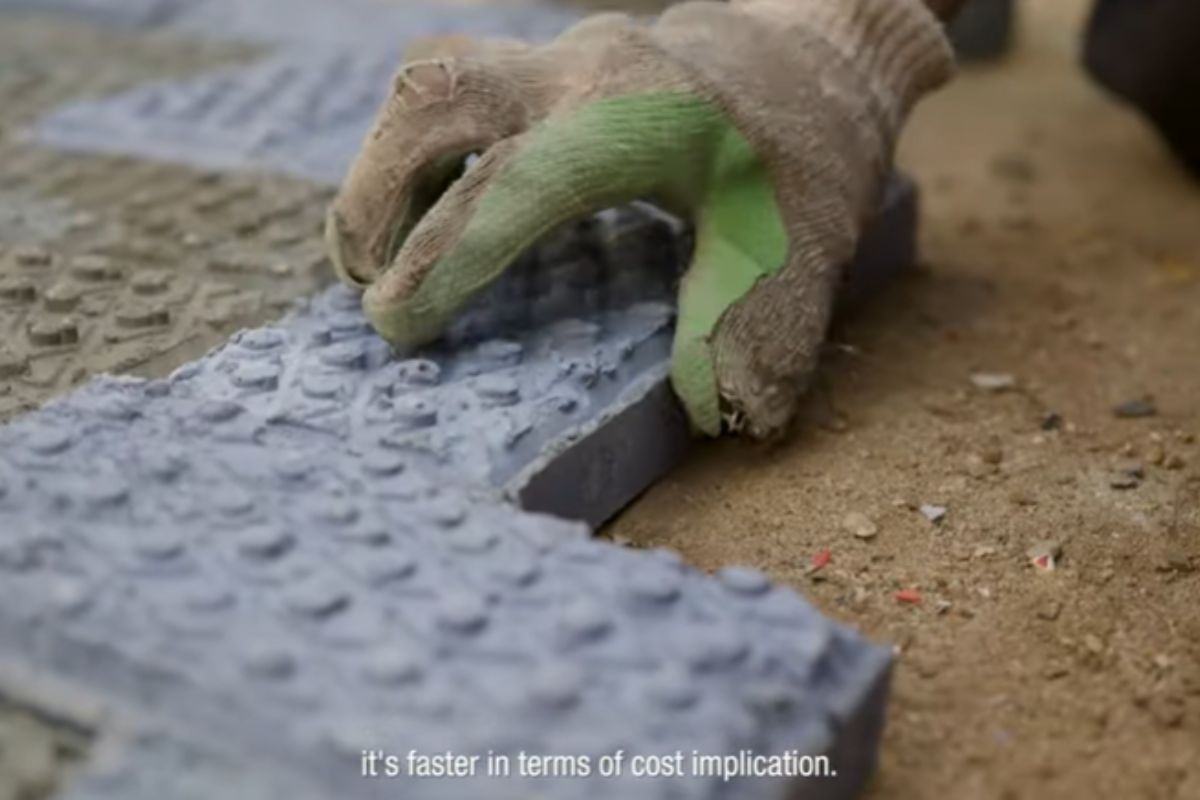
In Kenya, engineer Nzambi Matee created “bricks 2.0” using packaging plastic: a mixture with sand, heated and pressed; they are 5 times more resistant, already have official licensing, and are being used in streets and construction projects.
-
More than 20,000 positions could be opened, and thousands of technicians are starting to be trained in Brazil, as the expansion of data centers creates an urgent race for professionals to keep the internet, cloud, and artificial intelligence running 24 hours a day.


For researchers, the image serves as a visual record of conquest.
Alongside the main scene, the figure of a vessel reinforces the connection to the power of Ancient Egypt, as this type of symbol often represented official expeditions and state authority.
At the top of the panel, an inscription mentions the god Min, associated with fertility but presented as the ruler of a region rich in copper.
This reference suggests that the Egyptian advance into Sinai was not only military but also motivated by the pursuit of mineral resources, such as copper and turquoise.
Archaeologists, Research, and Historical Context
The panel in Wadi Khamila was discovered by archaeologist Mustafa Nour El-Din from the Egyptian Ministry of Antiquities during a field survey in 2025.
Since then, his team has been studying the scene and its implications, publishing results in specialized journals.
According to researchers, this carved scene is one of the earliest visual representations of the Egyptian conquest and political domination over another territory.
This helps understand how ancient Egyptian society expressed power and recorded significant events long before widespread written production in the Nile Valley.

Why Is This Rock Art Important?
Evidence of Egyptian Expansion and Influence
Similar rock art panels have been identified in places like Wadi Ameyra and Wadi Maghara, indicating that Ancient Egypt had maintained presence and organized actions in the Sinai for millennia.
Highlighting Economic Motivation
The presence of inscriptions linked to the god Min, “ruler of the copper area,” shows that Egyptian interest in this region had a strong economic component, related to mineral exploitation.
Rock Art as a Historical Source
For scholars, these images are more than mere art: they are primary visual sources that help reconstruct how prehistoric societies thought, organized expeditions, and expressed authority in territories distant from their central base in the Nile Valley.
What Are Archaeologists Planning Now
The team responsible for the discovery states that the work is just beginning. They plan to extend excavations and search for more rock art in the Wadi Khamila region and surrounding areas.
It is expected that other scenes and inscriptions will reveal even more about the relationships between ancient Egypt and the peoples living in Sinai five thousand years ago.
Implications of the Discovery for Archaeology
Rewriting Chapters of History
The identification of this rock art in Egypt represents a new chapter in the understanding of Egyptian colonization and influence.
Art as a Political Document
This panel suggests that, long before widely disseminated written documents, images engraved in stone served to communicate power, ideology, and political presence in conquered territories.
The discovery of a 5,000-Year-Old Rock Art Panel in Egypt in the Sinai significantly broadens our understanding of ancient history.
It not only confirms that Egypt exercised dominance over distant territories but also highlights how symbols, figures, and inscriptions were used as visual historical documents.
As new expeditions emerge, there is an expectation that more prehistoric records will come to light, further enriching the narrative about Egyptian expansion and its motivations.

With information from Olhar Digital.







-

-

-

-

-

10 pessoas reagiram a isso.