





 Portuguese
  English
  Spanish
 4 min of reading
  6 comments


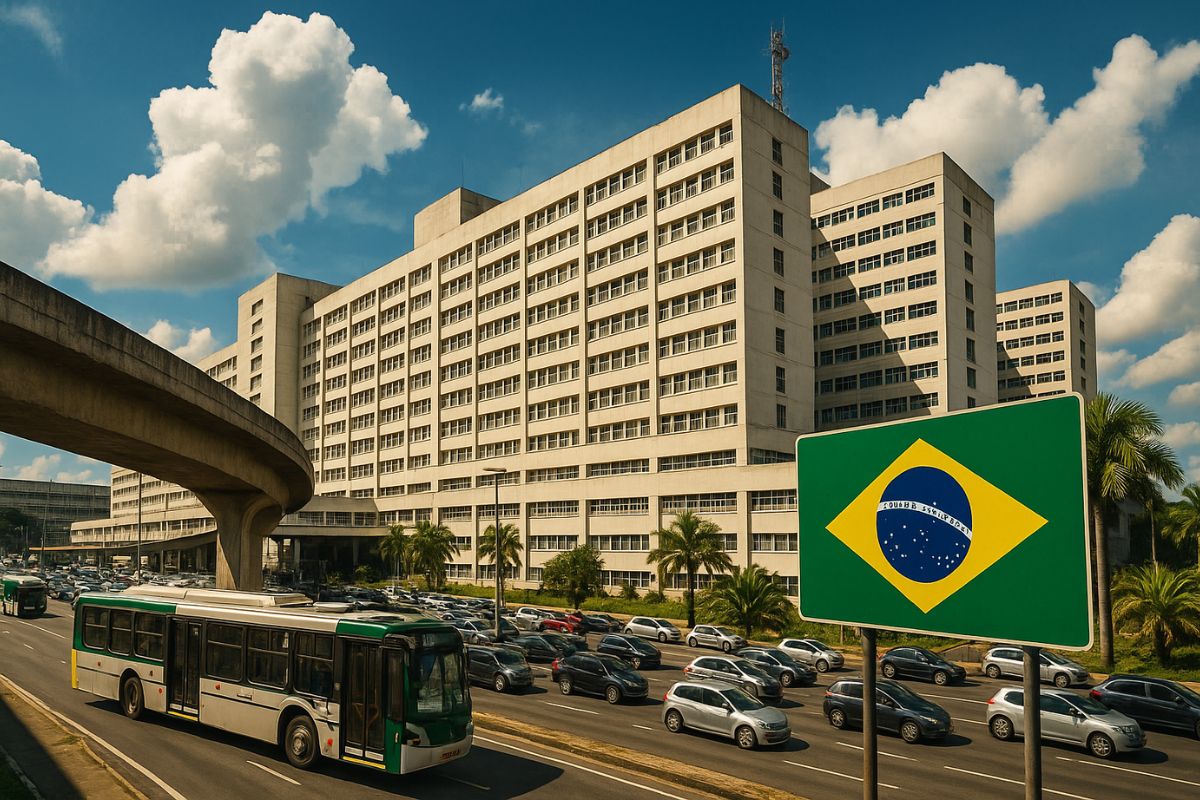


The Largest Hospital In Brazil, The Clinic Hospital Of The Faculty Of Medicine Of Usp, Concentrates More Than 2 Thousand Beds, 20 Thousand Employees, And A Daily Flow Of People Comparable To That Of Large International Airports
The largest hospital in Brazil is much more than a health center. The Clinic Hospital of the Faculty of Medicine of USP, in São Paulo, gathers between 2,200 and 2,500 beds and mobilizes more than 20 thousand professionals, including doctors, nurses, technicians, and researchers. Its scale is impressive and makes it comparable to a true functioning metropolis.
The size of the complex is so great that the daily movement of patients, companions, students, and employees rivals that of large airports, showcasing the hospital’s importance not only for public health but also for scientific research and medical education in Brazil.
The Origin Of The Largest Hospital In Brazil
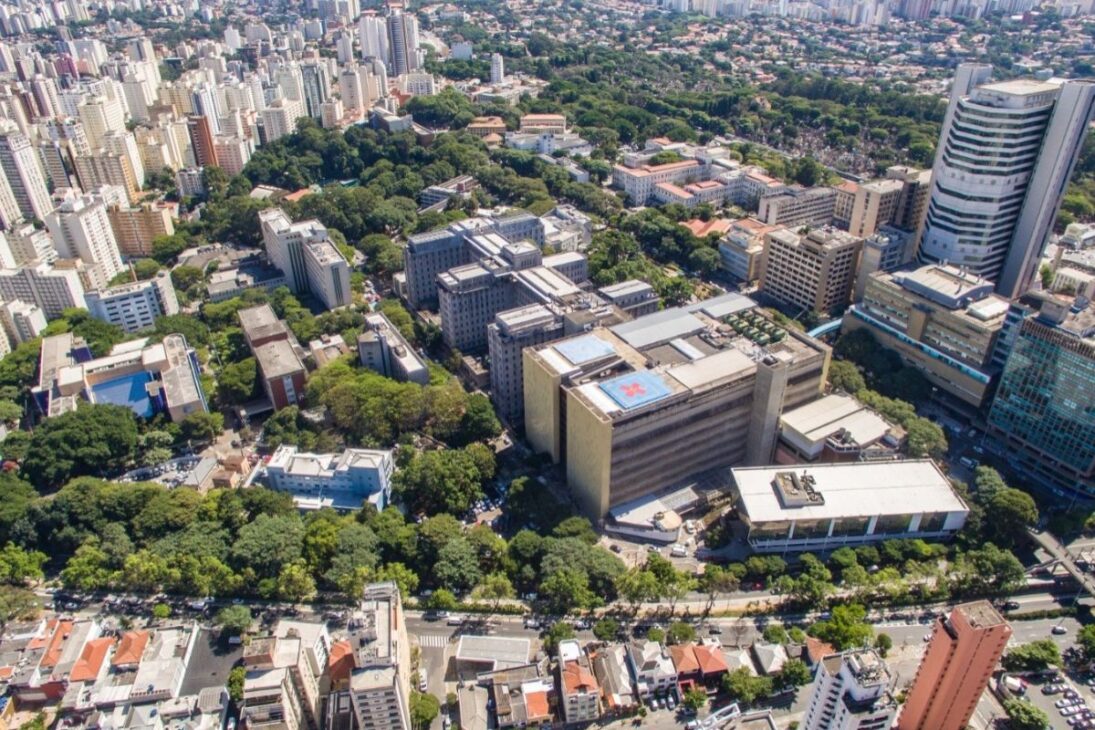
The history of the Clinic Hospital is intertwined with the evolution of medicine in the country.
-
A promise made to their father led three men to unearth a forgotten house that had been swallowed by time for over 70 years, in a story of memory, abandonment, and reconstruction that seems straight out of a movie.

-
A strong earthquake in Indonesia affects houses and schools, causes panic, triggers a tsunami alert, and records a rise in sea level of up to 30 centimeters in some areas.

-
The Argentine government celebrates the lowest poverty rate in 7 years, but experts warn that the methodology has changed, real wages have fallen, unemployment has risen, and the number of people on the streets of Buenos Aires has increased by 57% since Milei took office.

-
7.8 magnitude earthquake in Indonesia frightens the population, triggers tsunami alert, and hits an island with over 200,000 inhabitants this Thursday.

It was created out of the need for a modern teaching hospital for the Faculty of Medicine of USP, and planning began in 1915, with the support of the Rockefeller Foundation.
The goal was to create a center that integrated teaching, research, and care.
Construction began in 1938 and the inauguration took place in 1944, in São Paulo. Since then, the HC has solidified its status as a reference in high complexity, functioning as a public and university hospital.
It was here that Brazil took some of the most significant steps in modern medicine, such as the first kidney and heart transplants in the country.
Structure That Impresses With Its Grandiosity
The largest hospital in Brazil is not a single building, but a set of specialized institutes.
The complex houses units such as the Heart Institute (InCor), the Cancer Institute of São Paulo (ICESP), and the Institute of Orthopedics and Traumatology (IOT).
Each functions as if it were an individual hospital, but integrated into the whole.
This structure allows for millions of consultations to be performed each year, both in outpatient visits and in emergency cases.
With thousands of patients circulating daily, the comparison to airports is not an exaggeration: the constant flow of people is worthy of an entire city in motion.
Pioneering And Advances In Brazilian Medicine
The Clinic Hospital has always been at the forefront of medical innovation. In 1965, it performed the first kidney transplant in Latin America.
In 1968, it was the stage for the first heart transplant in Brazil. By 1988, it became a global reference by performing the first living liver transplant in the world.
Additionally, it was a pioneer in introducing cutting-edge technologies into the public health system, such as magnetic resonance imaging in the 1990s, and in assisted reproduction, when the first test-tube baby was born in a public hospital in Brazil.
Today, the complex invests in telemedicine and innovation projects, such as OpenCare 5G, which connects specialists to patients in remote areas.
Human Movement And Social Impact
The largest hospital in Brazil receives thousands of people daily, including patients, families, and healthcare professionals.
This intense circulation causes its operation to be compared to a true city.
There are millions of consultations and procedures annually, a number that rivals major urban centers in continuous activity.
In addition to direct care, the social impact of HC is amplified by medical education.
The complex is one of the main teaching hubs in the country, where generations of doctors and specialists are trained based on real cases of high complexity.
It is an institution that combines assistance, teaching, and research in a single health ecosystem.
The largest hospital in Brazil, the Clinic Hospital of USP, demonstrates how health, science, and logistics unite on an impressive scale.
With thousands of beds, professionals, and patients in circulation, its operation rivals that of a metropolis.
Have you had any experience at the Clinic Hospital or know someone who has been treated there? In your opinion, is HC’s scale an advantage for ensuring quality care, or can it pose challenges for the humanization of care? Share your thoughts in the comments.









Meu primeiro contato com o Hospital das Clinicas aconteceu em 1.990 por conta de um tratamento de cálculo renal. Desde então tive outros tratamentos e continuo acompanhamento nas Clinicas de Urologia, Endocrinologia, Gastrenterologia. Otologia. No INCOR, operei o coração e atualmente sou atendido na Cardiogeriatria. No ICESP trato um carcinoma. Sempre fui atendido com muita atenção e eficiência. Por causa de sua capacidade e recursos de alta complexidade atende pessoas de todos os lugares do Brasil e da América Latina. É um orgulho de São Paulo e da América Latina por sua excelência.
Direção de liderança impar! Tudo na mais perfeita ordem ! Pessoal, limpeza! Segurança, tudo q **** o dedo funcionou ! Parabéns! Só vivenciando pra acreditar ! Fiquei um
Mês por la acompanhando paciente, nem
Um tris! pra por defeito ! Parabéns!!!
Maravilhoso
Sua complexidade é tanta que pessoas que residem dentro do município de São Paulo não conseguem atendimento no HC. As UBS’s , AME às vezes, não conseguem dar um diagnóstico preciso. Os médicos destas entidades não solicitam a transferência quando há necessidade de especialização. Os pacientes acabam desistindo e tomando remédios por conta própria ou buscando outras alternativas. Quando a doença é grave por exemplo um câncer é dificílimo o atendimento no ICESP e quando se consegue por outro lado não consegue o exames ou tratamento. A doença não espera, “detona” com a vida da pessoa.
Então ele é grande por fora e pequeno na sua essência. Afff…
É um complexo de excelência, minha filha nasceu no HC, eu já fui atendido por várias vezes, ressonância magnética, InCor, Endocrinologia. Minha sogra fez tratamento Oncológico no HC.
Parabéns!!(