





 Portuguese
  English
  Spanish
  4 min of reading
  0 comments


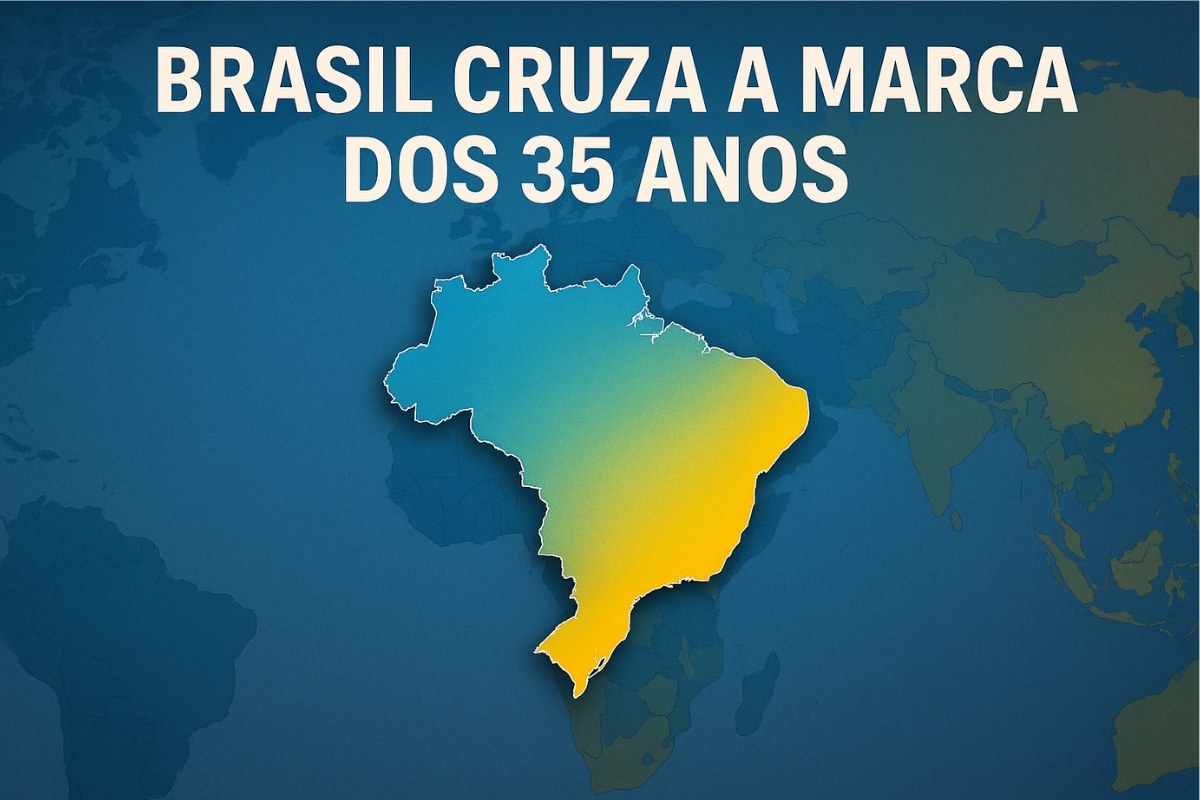
Brazil’s Accelerated Aging Reveals Deep Changes in Population Composition and Poses New Challenges for Public Policy, Economy, and Labor Market Dynamics
The median age in Brazil has reached 35 years, which completely changes the social, economic, and population landscape of the country. For the first time since this indicator has been accurately monitored, half of the Brazilian population is over 35 years, while the other half is younger.
The number may seem merely statistical, but it opens a deep discussion about the labor market, social security, public health, and even development models. And when we observe the global median age map, we realize that Brazil is right in the middle of a transition that has been reshaping the world over the past decades.
A Country That Ages Faster Than It Imagines
Between 2010 and 2022, Brazil’s median age jumped from 29 to 33 years. Today, IBGE projections indicate 35 years, driven by two simultaneous movements: the consistent drop in fertility, currently at 1.69 children per woman, below the replacement rate, and the increase in the population’s longevity. During the same period, the number of people aged 65 and older grew by 57%, from 14 million to over 22 million.
-
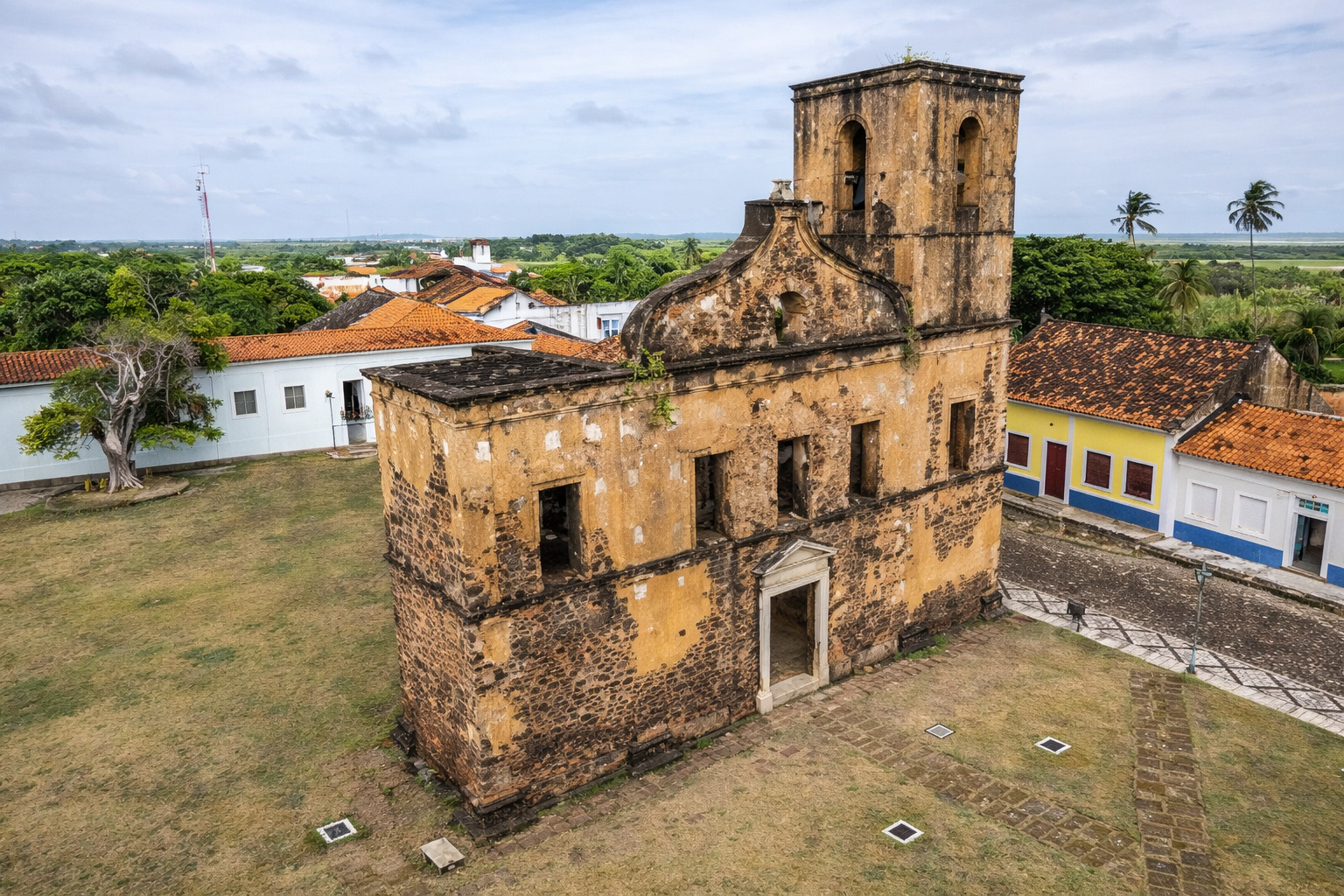
The Brazilian colonial city that stopped in time and shares territory with a rocket launch base.
-
79-year-old woman challenges limits, visits 193 countries in the world after 56 years of planning and reveals the behind-the-scenes of a global journey that few have managed to accomplish.

-
These are the drivers who may stop paying tolls on highways in a project that promises to reduce costs for those who live from transportation in Brazil.

-
(Video): Italian pilot lands plane on moving train at 120 km/h and achieves unprecedented feat in aviation, even with a narrow runway and without direct visual contact.


This aging has direct effects. In 1990, each elderly Brazilian was statistically “supported” by almost 10 people of working age. By 2024, that number has dropped to around 3.5. The trend is that, by 2050, Brazil will have one elderly person for every two adults of working age, putting pressure on social security and health systems.

Brazil on the Global Age Map: Neither Young Nor Old
Brazil is not among the most aged nations, but it has long left the group of young populations. While European countries such as Italy (48), Spain (47), Germany (47), and Portugal (46) face intense and accelerated aging, Brazil appears with an intermediate profile, more similar to Chile, China, and Russia, regions where the median age ranges between 35 and 42 years.
This demographic distribution center means that Brazil is at a decisive point: there is still a strong enough active population base to support the economy, but it is rapidly declining.
Africa, The Youngest Continent, and The Demographic Engine of The Planet
The contrast appears when we look at Africa. According to the UN, 70% of the African population is under 30 years old, with a median age of 18 to 20 years in dozens of countries. Niger, Chad, Uganda, and Somalia remain the world’s youngest countries, all with a median age under 18 years.
This massive youth transforms Africa into the major population axis of the coming decades. The UN projects that, by 2100, 4 in every 10 inhabitants of the planet will live on the African continent.
Europe and Eastern Asia Lead Global Aging
At the other end, Europe remains the most aged continent on the planet. The average median age is 46 years — and rising. In countries like Italy and Spain, the number of births has been insufficient to compensate for deaths for more than a decade.
Japan, a global icon of aging, has reached a median age of 50 years. China, which until recently was synonymous with a young population, has reached 40.8 years and faces the critical combination of low fertility and population decline.
These trends explain why so many countries are openly discussing immigration as a state policy — something that, sooner or later, will also enter the Brazilian agenda.
Brazil Among Opportunities and Risks
A population with a median age of 35 years represents a demographic window that still exists, but is closing. The country has an abundant workforce, but it will decline rapidly. Experts point out that this is the last chance to transform population growth into economic growth.
There are clear risks:
– increased pressure on social security,
– rising health costs,
– reduced productivity if investments are not expanded,
– economic slowdown in 20 to 30 years.
But there are also opportunities:
– expansion of the longevity economy,
– demand for automation and AI technologies,
– growing market for medical services, therapies, care, and wellness,
– potential to attract skilled immigrants to replenish the workforce.
In the end, understanding the median age and its evolution is not just about looking at a neat number in demographic reports: it’s about clearly observing where Brazil will be in the coming decades — and whether it will be able to take advantage of the time it still has.







-

Uma pessoa reagiu a isso.