





 Portuguese
  English
  Spanish
  4 min of reading
  8 comments


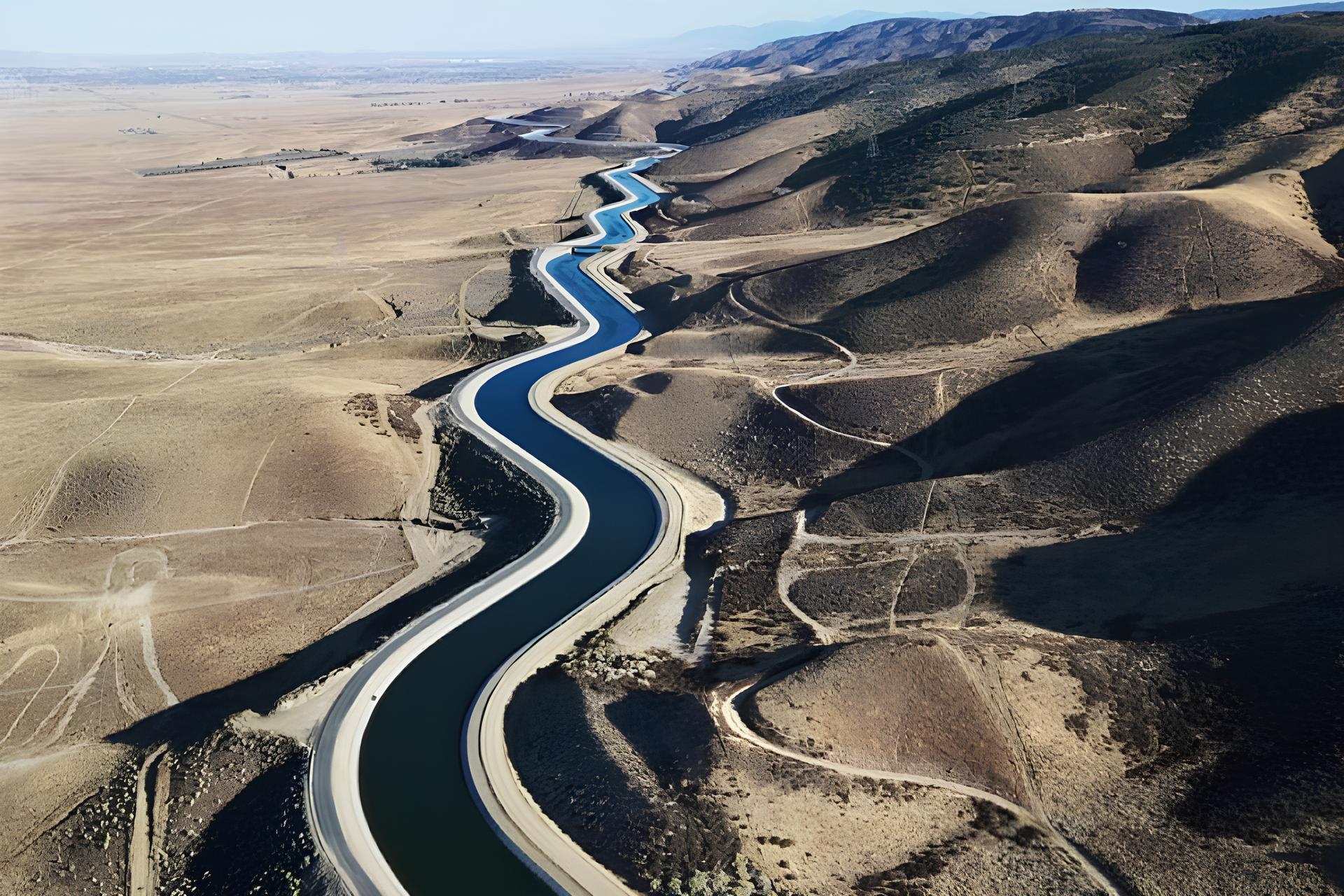


California State Water Project Moves Water Over 1,100 Km and Elevates Rivers by Up to 600 Meters, Consuming Urban-Scale Energy to Supply Millions.
According to technical documents from the California Department of Water Resources (DWR) and historical reports from the state government, the California State Water Project (SWP) was born in the early 1960s as a response to an increasingly evident geographical paradox: while Northern California holds most of the state’s surface water, the arid South is home to the largest cities, industry, and a significant portion of the population. Solving this mismatch required a solution that not only transported water over long distances but overcame entire mountains, something that natural hydrology would never achieve on its own.
Since then, the SWP has evolved into one of the most complex water infrastructures on the planet, directly or indirectly sustaining the lives of tens of millions of people and reshaping urban, agricultural, and energy growth in modern California.
A Water Network Over 1,100 Km Crossing the State
The California State Water Project is not an isolated canal, but an integrated network with over 1,100 kilometers in length, composed of open canals, buried aqueducts, hydraulic tunnels, reservoirs, and pumping stations distributed throughout the state.
-
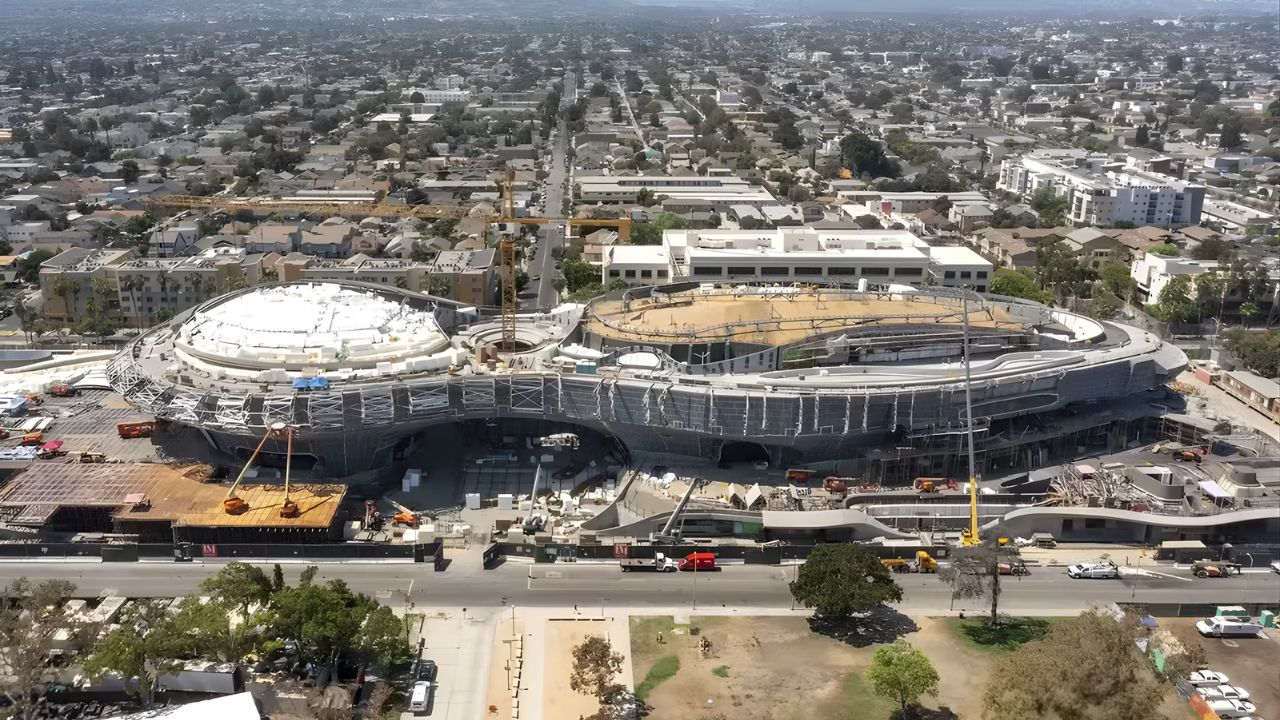
Created by George Lucas with over $1 billion, a futuristic museum in the shape of a spaceship with 1,500 curved panels is about to open in Los Angeles and will house one of the largest private collections of narrative art in the world.
-
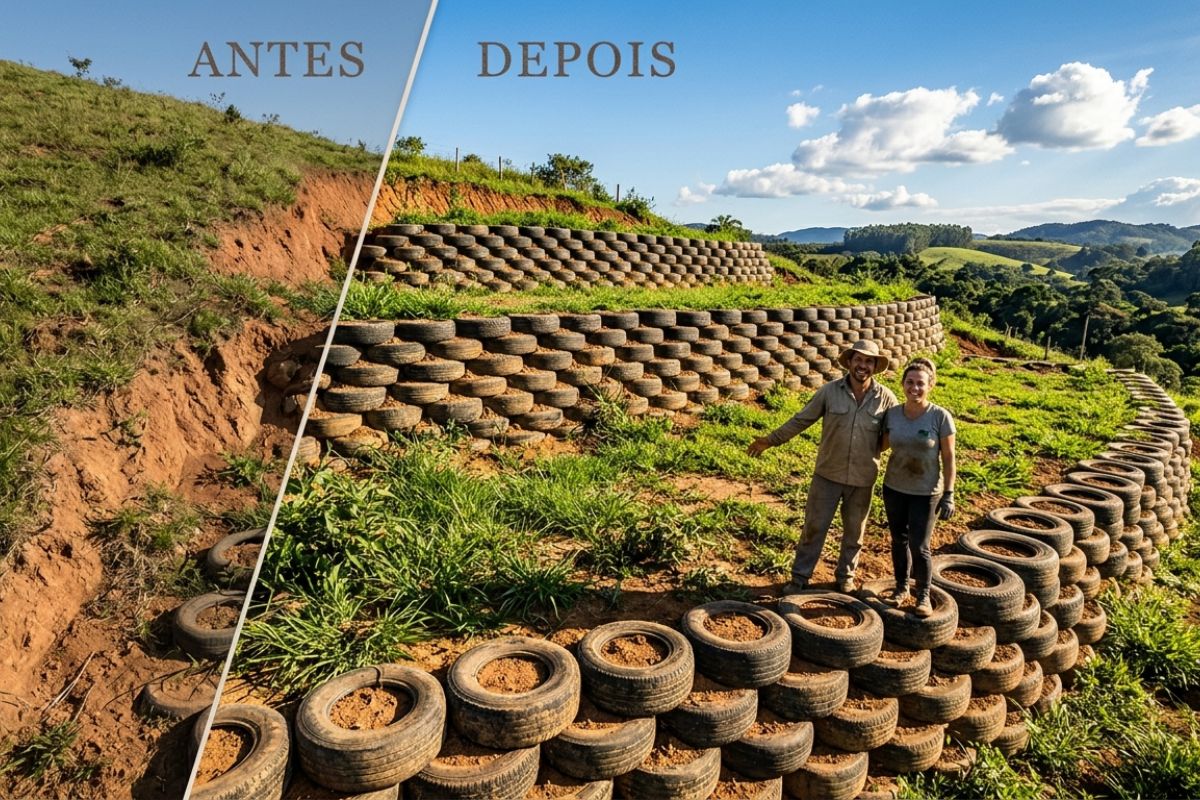
Couple shows how they built a retaining wall on their property using 400 old tires: sloped land turned into plateaus, tires are aligned, filled, and compacted with layers of soil, with grass helping in support and at almost zero cost.
-
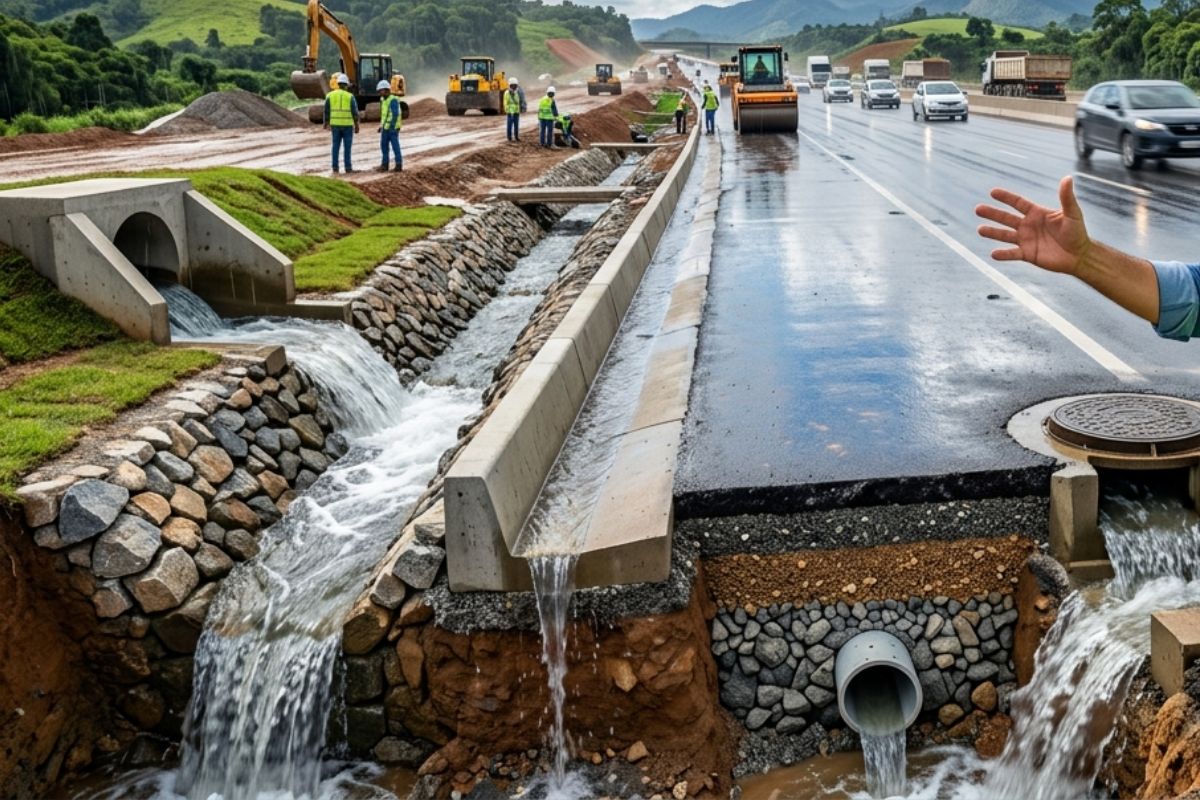
Engineer explains drainage during the rainy season: the difference between surface water and deep water, ditches, gutters, and water outlets on the road, as well as drains and drainage mattresses, to prevent erosion, aquaplaning, and flooding at the construction site today.
-
With 55 floors, 177 meters in height, a 15-meter walkway between the twin towers, ventilated facade, and 6,300 m² of leisure space, Ápice Towers already has one tower completed and another nearly at the top.

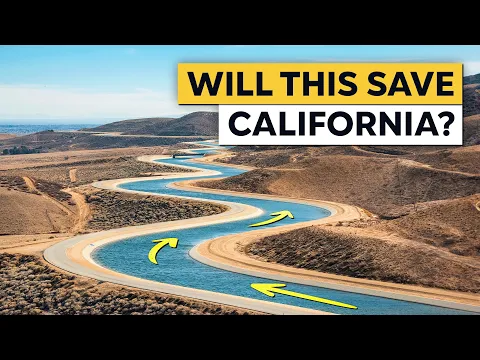

This network connects hydrologically opposite regions, capturing water from rivers and reservoirs in the north, traversing the Central Valley, and reaching Southern California, where urban and industrial demand is constant.
The system operates as a single continuous infrastructure, capable of redirecting volumes based on water availability and consumption needs.
The Greatest Challenge: Pushing Water Up the Mountain
The most extreme point of the SWP is the crossing of the Tehachapi Mountains, where water needs to be artificially elevated by about 600 meters in elevation. This feat is accomplished by the Edmonston Pumping Plant, one of the largest water pumping stations in the world.
At this stage, water stops following the logic of gravity and becomes entirely dependent on electric power. Giant pumps push millions of cubic meters of water up the mountain, allowing it to flow by gravity again toward the Southern cities on the other side.
From an engineering perspective, it is a system that inverts the natural behavior of rivers, transforming electric energy into water displacement on a continental scale.
Energy Consumption on a City-Scale
Moving water in this way comes at a high cost. The California State Water Project ranks among the largest individual consumers of electric energy in California, potentially accounting for up to 2% to 3% of the state’s total electricity at certain times.
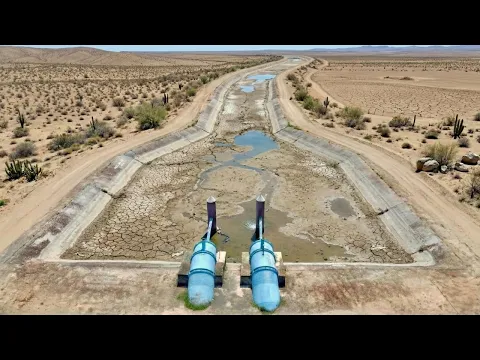
In practice, part of the energy produced in California is used solely to keep the water moving. This direct relationship between water and energy makes the SWP a classic example of the so-called water-energy nexus, where water decisions directly impact the electrical system and vice versa.
Invisible Engineering Beneath Cities and Agricultural Fields
Much of the SWP remains invisible to those living in California. Tunnels run through mountains, aqueducts lie buried under agricultural areas, and canals traverse isolated regions without drawing attention.
Nonetheless, this silent infrastructure supports some of the largest urban areas in the United States, including metropolitan regions of the southern part of the state.
In addition to urban supply, the system also provides water for agricultural irrigation in the Central Valley, one of the most productive agricultural regions on the planet, responsible for a significant portion of the food consumed in the country.
A Project That Allowed California to Grow Where Water Did Not Exist
Without the California State Water Project, the growth of Southern California would have been severely limited by water scarcity. Cities like Los Angeles and San Diego could not sustain their current populations without a stable source of water coming from afar.
The SWP, therefore, not only transports water; it enables territory. The infrastructure allowed for urban expansion, industrial development, and the establishment of an economic model that relies on imported water daily.
Environmental Tensions and the Future of the System
Like all major water megaprojects, the SWP has also generated environmental impacts, especially in the Sacramento–San Joaquin Delta, where water extraction affects sensitive ecosystems.
These conflicts have led to decades of debates over conservation, sustainability, and the adaptation of the system to climate change.
Currently, the project is undergoing reviews and modernization proposals, including new capture solutions, operational adjustments, and greater integration with environmental policies, demonstrating that even colossal projects need to evolve to continue functioning.
Water as Energy Infrastructure
In the end, the California State Water Project exposes a little-seen reality: in arid and densely populated regions, water does not flow naturally; it is pushed, elevated, and kept in motion by heavy engineering and electric power.
This invisible infrastructure, consuming urban-scale energy, supports millions of people daily. When it functions, it goes unnoticed.
When it fails, it reveals how entire cities depend on tunnels, pumps, and canals that have transformed California’s natural geography into an artificial survival system.





A situação pode ser melhorada se as águas residuárias forem tratadas e armazenadas por longos períodos e uma rede de águas para usos industriais e agrícolas se utilizarem dessas águas, exige massivos investimentos, planejamento, mais reduziria o volume importado e energia consumida.
Se fosse possível a produção de energia elétrica seria viabilizada e feita na queda da águas tornando o sistema circular pelo menos parcialmente…
This article makes destruction of nature sound like an engineering marvel of mankind. The Mojave River used to flow from Whitney to the Colorado up until 1938. This effectively killed the Mojave Desert and it’s species. Tortures live about 65 years… do the math. 1938 + 65 = approx 2000ish and…… theirs about 18,000 tortures left on a reservation. Big Horn Sheep, Coyotes, Foxes, fish ect ect ect. Environmental destruction of a massive scale is never a good thing. How CA moves, steals, sells and delegates water is sickening.
I was at the 1989 BtoV race when Seirra Club killed 3 riders…. “To sAvE the Tortuses”