





 Portuguese
  English
  Spanish
 4 min of reading
  0 comments


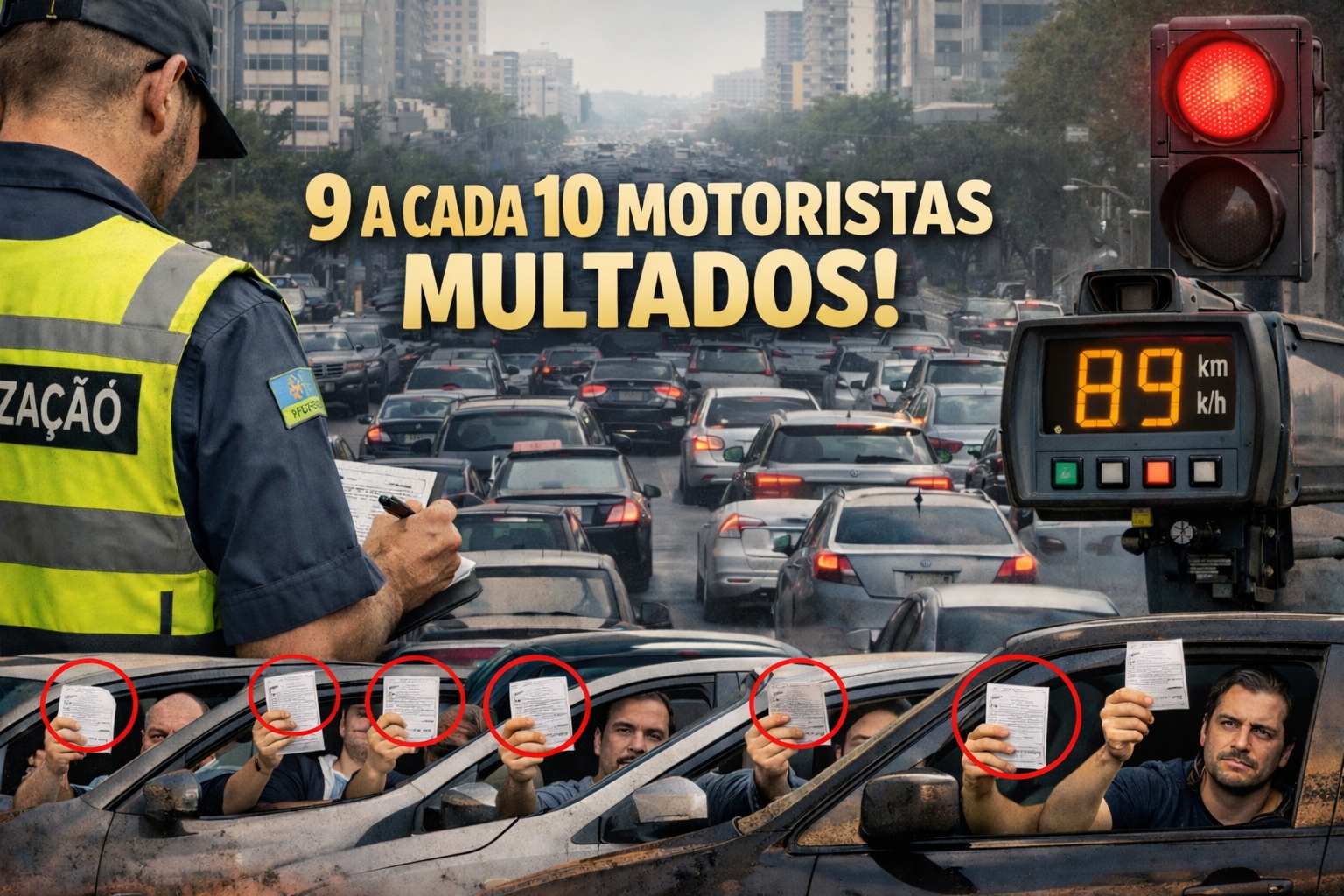
This Brazilian City Registered 236 Thousand Fines in 2025. Daily Fleet Nears 400 Thousand Vehicles with More Cars than Residents and Raises Alert About Traffic Safety
Chapecó, in the West of Santa Catarina, has firmly entered the radar when it comes to traffic fines. The city ended 2025 as the 3rd highest in infractions in the state, behind only Joinville and Itajaí.
The number is striking: there were 236,449 fines in 2025, a jump of 5.26% compared to 2024. In practice, if this figure were evenly distributed, almost 9 out of every 10 residents would have at least one infraction in their name.
The detail that garnered the most attention is evident on the streets: heavy traffic, slow pace, and a clear sense of an excess of vehicles circulating, especially in central areas.
-
“No one will make us change the Pix,” says Lula after the US report.

-
Lula responds directly to Trump and says that Pix is from Brazil and will not change under pressure from anyone, after a report from the United States pointed out the Brazilian payment system as an American trade barrier.

-
Amazon has just announced a new fee on all deliveries, and your online purchases will become more expensive starting April 17, including for those buying from the United States here in Brazil.

-
He sold his share for R$ 4 thousand, saw the company become a giant worth R$ 19 trillion, and missed the opportunity of a lifetime.


Chapecó Becomes Highlight by Having More Vehicles Than Population and Entering the Top 3 of Fines in SC
The city has a characteristic that helps explain why so many violations occur. The estimated population is 282 thousand people, according to IBGE, but the number of vehicles circulating daily can reach close to 400 thousand.
This total considers the local fleet and the floating fleet, which consists of vehicles from visitors and nearby cities that come and go every day. The result is straightforward: more wheels than feet on the streets.
With this scenario, Chapecó has to deal with a fleet that is 41.5% higher than the number of residents, generating an average of 1.4 vehicle per inhabitant.
The Local Fleet Exceeds 230 Thousand and Daily Circulation Challenges Traffic Organization
The numbers show that the volume of vehicles is one of the driving factors of the problem. The local fleet has already surpassed 230 thousand vehicles.
When including vehicles coming from outside, the estimated daily circulation approaches 400 thousand. This constant flow puts pressure on roads, intersections, and critical points, increasing the chance of violations and raising the risk of dangerous situations.
The more vehicles enter the mix, the greater the challenge to educate drivers and maintain road safety.
Speeding Leads the Violations, with 150,333 Records and Extremely Serious Cases
Among all the infractions, one stands out with a significant advantage: driving at a speed higher than allowed.
Just this behavior accounted for 150,333 violations in 2025. And there’s an even harsher statistic: 2,257 drivers were caught exceeding 50% of the speed limit, an extremely serious infraction that automatically results in the suspension of the right to drive.
In addition to speeding, other situations frequently occur on the streets and contribute to the high volume of fines, such as running a red light, using a cellphone while driving, not wearing a seatbelt, and driving under the influence of alcohol.
Drunk Driving Sums 959 Captures, and the City Reinforces Surveillance at Critical Points
In the scope of the most sensitive infractions, driving under the influence of alcohol shows 959 captures in 2025.
Also included are other recurring irregularities, such as failing to identify the offending driver and not registering the vehicle within the 30-day legal timeframe.
Amid this scenario, drivers still need to be vigilant about behaviors outlined in the Brazilian Traffic Code that weigh even more on the wallet. There is one infraction considered the most expensive in Brazil, which can exceed R$ 35 thousand in case of re-offending.
Fewer Accidents, But More Deaths: 10,121 Occurrences and 33 Deaths in 2025
Here appears the contrast that no one likes to see. Chapecó had a slight decrease in the number of accidents, with 10,121 records in 2025, a drop of 0.44% compared to 2024.
But at the same time, collisions became more lethal. The number of deaths on the road rose to 33, an increase of 26.9% compared to the previous year.
The impact is direct: even with a slight decrease in accidents, the final result was more loss of lives, which increases the pressure for more effective measures.
Chapecó Has 84 Agents and Invests in Education, Campaigns, and Continuous Surveillance to Reduce Deaths
The city currently has 84 traffic agents. For the coming years, the defined priority is to reduce deaths.
The plan includes bolstering educational actions and awareness campaigns, expanding lectures in schools and companies, and continuous traffic enforcement at critical points.
At the heart of the discussion, the message upheld by security agencies is clear: the way to curb fines and deaths is through respect for basic traffic rules.
Chapecó ended 2025 with 236,449 fines, a daily fleet estimated at up to 400 thousand vehicles, 10,121 accidents, and 33 deaths on the road, a set of numbers that draws attention to the contrast between intense enforcement and increased lethality.
We want to hear your opinion: what weighs more in this scenario, the excess of vehicles on the streets, the rush of daily life, or the lack of attention while driving? Leave your comment and tell us what traffic is like in your city.









Seja o primeiro a reagir!