





 Portuguese
  English
  Spanish
  3 min of reading
  5 comments


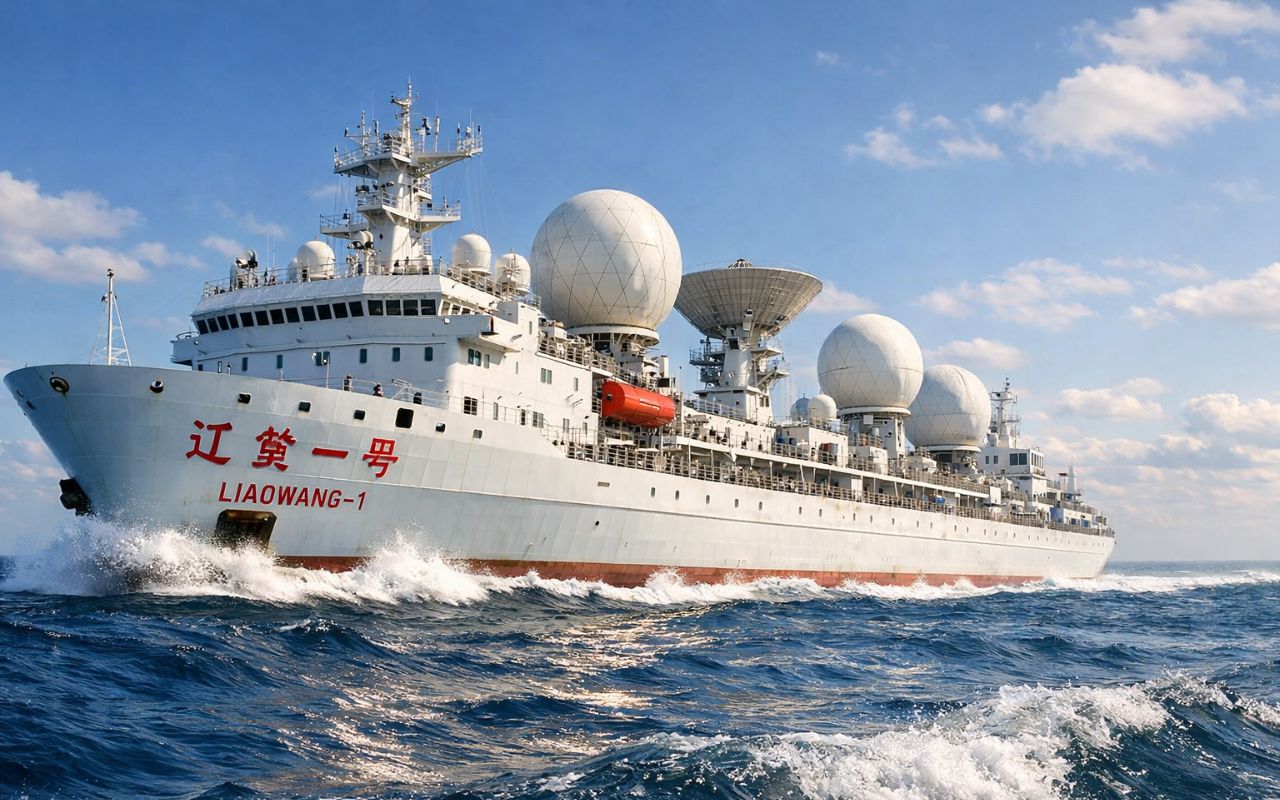


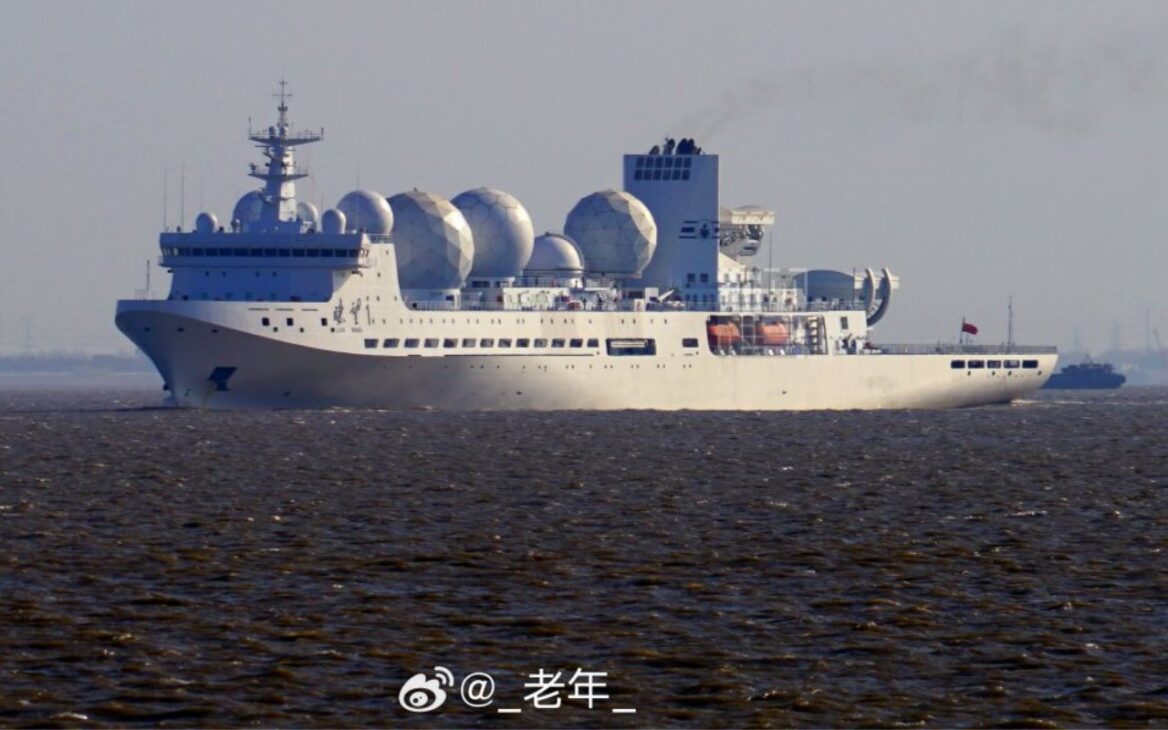
Chinese Spy Ship Liaowang-1 Operates Near the Strait of Hormuz with Technology Capable of Monitoring Up to 1,200 Missiles and Military Activities Up to 6,000 Km.
One of the most important maritime routes in the world has once again attracted international attention. The Strait of Hormuz, a passage connecting the Persian Gulf to the Gulf of Oman, has become a focal point for strategic observation following the presence of the Liaowang-1 spy ship, operated by China.
The vessel has been positioned nearby and is equipped with technology capable of monitoring large-scale military activities.
This movement occurs amidst rising tensions in the Middle East, where naval forces from different countries maintain a constant presence.
-
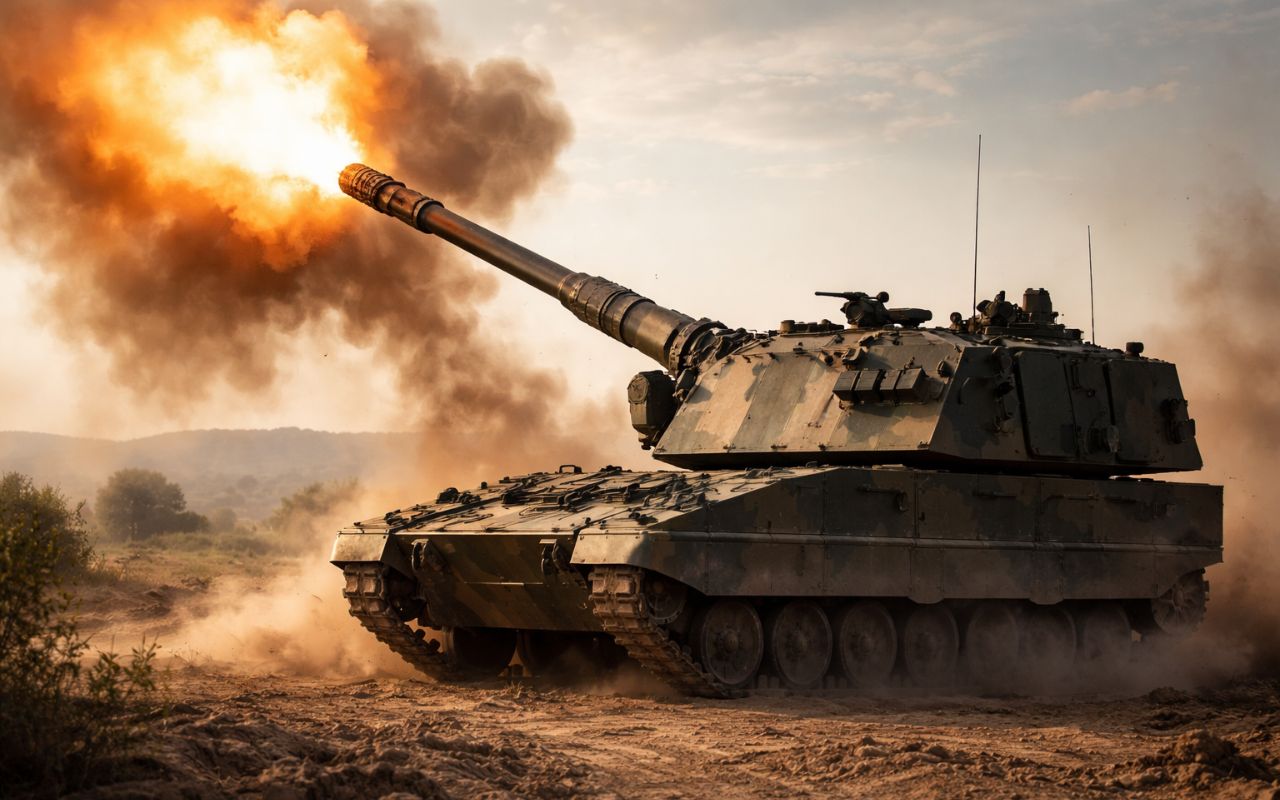
The German “steel monster” weighing 55 tons fires up to 10 projectiles per minute at over 40 km and avoids counterattacks on the battlefield by moving quickly to escape enemy attacks; meet the Panzerhaubitze 2000.
-
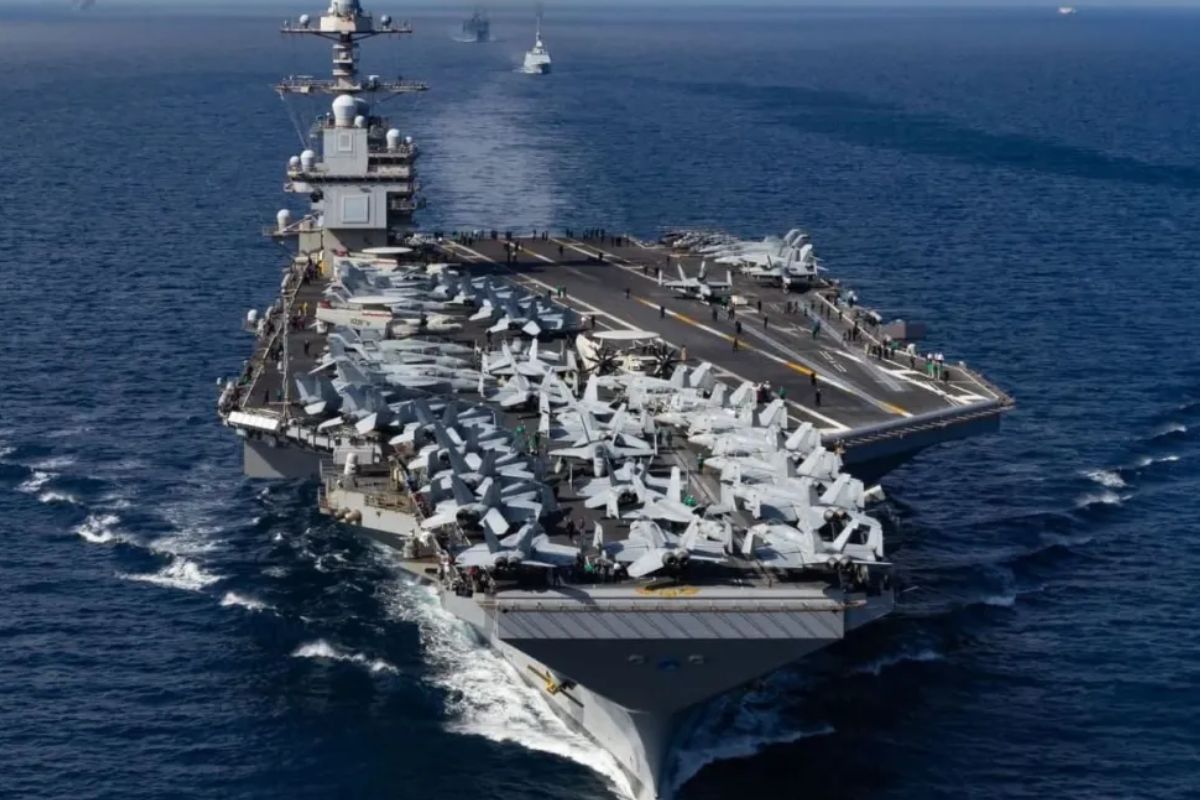
USS Gerald R. Ford, the largest aircraft carrier in the world, returns to sea after a fire in the laundry in the Red Sea; repaired in Crete, it resumes missions of Operation Epic Fury against Iran.
-
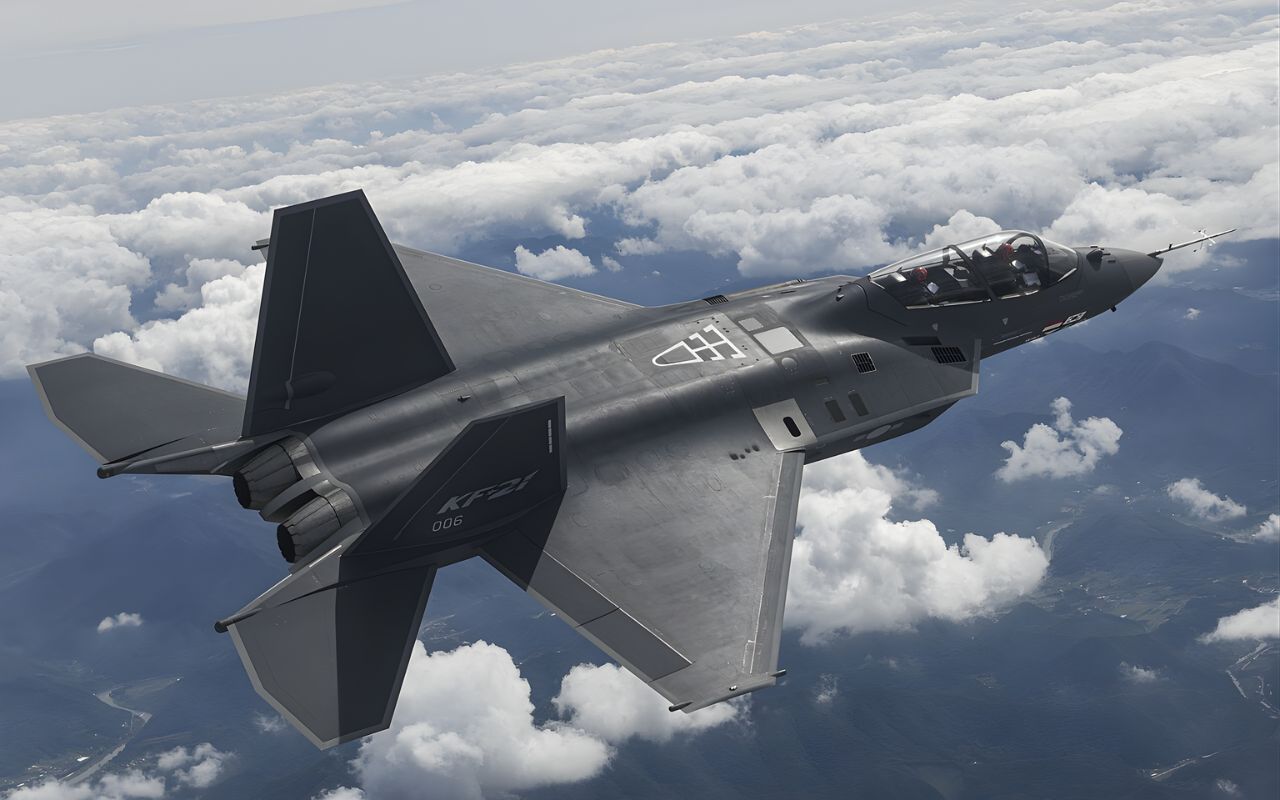
Military power: South Korea’s new KF-21 fighter jet will be a key component in replacing the aging aircraft of the air force, placing the country on the map of air military powers.
-
With 310 meters, 80 thousand tons, and capable of operating for 45 years, the new nuclear aircraft carrier France Libre will be the largest in France and will enter service in 2038.

About 20% of the world’s oil transported by sea passes through this strait, making the area one of the most sensitive points in global energy geopolitics.
Liaowang-1 Spy Ship Can Track Up to 1,200 Missiles Simultaneously
Among the technological capabilities of the Liaowang-1 spy ship, one of the most impressive is its ability to track multiple targets at the same time.
According to analyses released by international outlets, the sensors on the vessel can track up to 1,200 missiles or ballistic trajectory objects simultaneously.
This type of monitoring allows for real-time tracking of rocket launches, military tests, and aerial activities.
Additionally, estimates suggest that the observation range can reach up to about 6,000 kilometers, depending on operational conditions.
Because of this large-scale data processing capability, experts often describe the ship as a “floating supercomputer” geared towards military intelligence.
China Uses Spy Ship to Track Rockets and Satellites
The Liaowang-1 is part of a modern generation of Chinese ships designed to monitor space launches and weapon testing.
These vessels are used to track satellites, rockets, and missiles, as well as to collect electronic signals related to military operations.
With a displacement of about 30,000 tons, the ship boasts a robust technological infrastructure aimed at surveillance and strategic data analysis.
On board, there are large parabolic antennas, electronic sensors, and high-precision radars installed.
These devices allow the capture of military signals and electronic transmissions over long distances.
Thus, the ship functions as a true floating center for collecting and processing information.
Region Has a Constant Presence of Military Forces
The area where the Liaowang-1 spy ship was observed is closely monitored by various military powers.
Ships from the United States Navy conduct frequent patrols in the region to ensure the safety of the maritime route.
At the same time, naval forces from Iran also maintain regular operations near the Strait of Hormuz.
In this highly monitored environment, any advanced surveillance platform can offer significant advantages in gathering strategic information.
Thus, the presence of the Chinese ship generates interest among military analysts and international observers.


Liaowang-1 Spy Ship Shows Technological Advancement of China
The development of the Liaowang-1 spy ship also reflects an increasing technological competition between China and the United States.
Currently, Americans operate various platforms dedicated to electronic surveillance and military signal collection around the globe.
However, China’s advancement in this field indicates that Beijing seeks to rapidly expand its strategic monitoring capabilities.
Analysts point out that modern warfare increasingly depends on the ability to collect, interpret, and analyze data in real time.
In this context, intelligence ships like the Liaowang-1 become essential tools for enhancing situational awareness in scenarios of international tension.
Source: Sociedade Militar








Quer iniciar a 3ª Guerra Mundial ? Ao invés de afundar barcos iranianos desarmados, tente afundar este singelo navio chinês “desarmado”… Porque eu ficarei extremamente surpreso haver um ativo desta envergadura sozinho com um “alvo em forma de antena parabólica desenhado no topo do casco”
Eu aqui imaginando; Alguém ainda tem dúvidas, de que a terceira guerra (e última da humanidade) mundial, já começou, dissimuladamente ???
רק טראמפ. רק. ביבי. Minha missão proteger a integridade territorial de ISRAEL, Zacarias 12: 1 a 9