





 Portuguese
  English
  Spanish
  4 min of reading
  0 comments


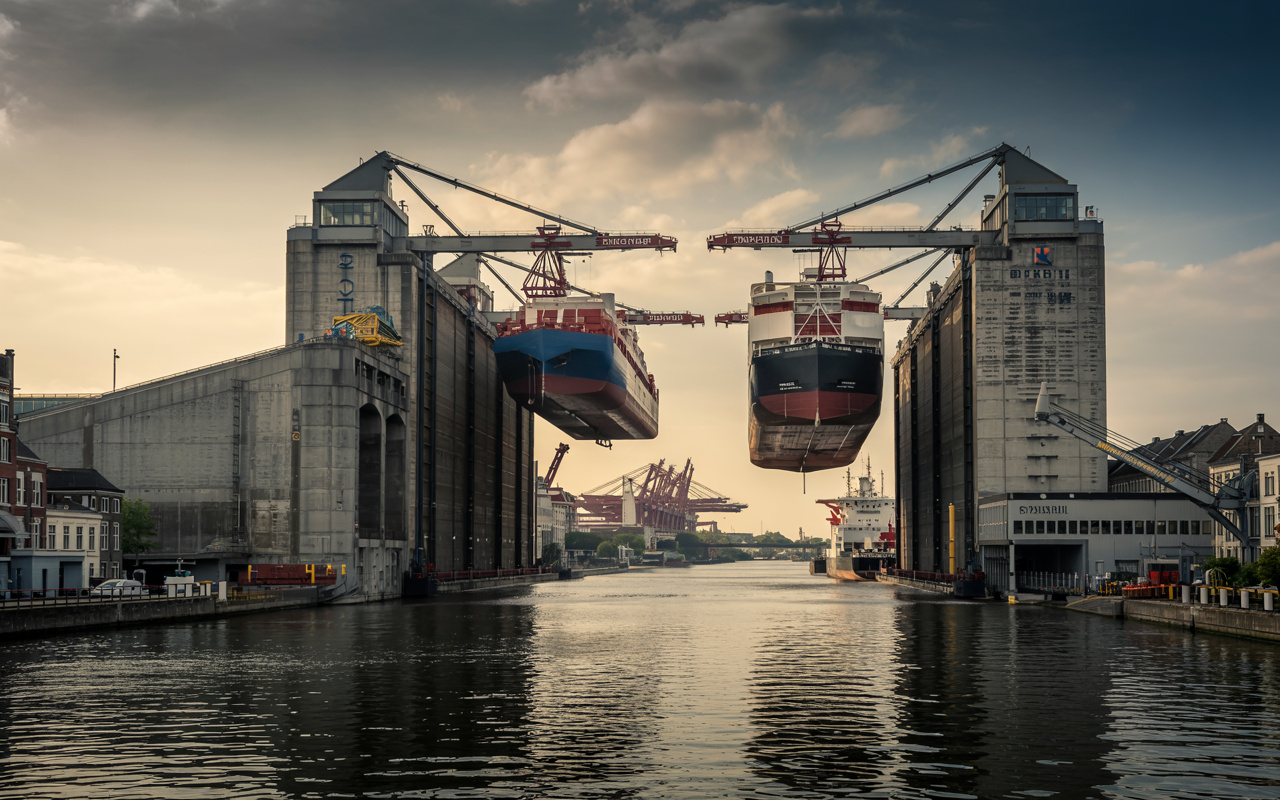
China Builds World’s Largest Ship Elevator at Pinglu Canal, With 300 Meters and Capacity to Lift Vessels Weighing 5,000 Tons by 2026.
The China is set to redefine naval engineering and transportation infrastructure standards with the construction of the world’s largest ship elevator at the Pinglu Canal, in the Guangxi Zhuang Autonomous Region. Estimated at 72.7 billion yuan (approximately US$ 10.5 billion), the project integrates the ambitious New Western Land-Sea Corridor and will be the first major Chinese canal to connect inland waterways directly to the sea. With a length of 134.2 kilometers, the new route will shorten the journey for vessels departing from southwestern China to Southeast Asian markets by over 560 kilometers, strengthening the region’s strategic role in the global economy.
Pinglu Canal: A Megaproject to Integrate China with the Sea
The Pinglu Canal connects the Xijin Reservoir in Hengzhou, passing through Qinzhou, to drain into the Beibu Gulf, an area known as the Economic Belt of the Gulf of Tonkin.
This area is vital for China’s cooperation with ASEAN countries, especially Vietnam, and is one of the most dynamic growth poles in the country. By creating a direct link between inland waters and the sea, the canal will boost goods transportation, reduce logistical costs, and expand the export capacity of the Guangxi region.
-
Congonhas receives the monorail promised for the 2014 World Cup after more than a decade of delays and becomes the first airport in Brazil with integrated subway.
-
Goodbye, concrete: a new trend in civil construction reduces the weight of the structure by up to 30%, accelerates projects by up to 40%, cuts costs on steel and labor, and improves thermal insulation with EPS.
-
Russian engineers create an innovative propeller blade for aircraft that could completely change the way airplanes and helicopters operate.

-
Couple finishes building PVC chalet on the beach on the last day, with air conditioning and curtains, but discovers the bathroom drain is inverted: water escapes from the drain, risking breaking the floor, and the rush continues before the trip.




According to estimates, when fully operational in 2026, the infrastructure will be able to accommodate vessels weighing up to 5,000 tons, with an annual throughput of 86 million tons of cargo. This increase in logistical capacity is seen as a key factor in making China even more competitive in international trade, especially in manufacturing, agriculture, and energy sectors.
World’s Largest Ship Elevator: Engineering on an Unprecedented Scale
The most impressive aspect of the project is undoubtedly the largest ship elevator ever constructed. Installed at Madao Junction — the first of three multi-level navigation hubs — it is designed to overcome a height difference of 65 meters between inland waters and sea level.
Measuring 300 meters in length, 34 meters in width, and eight meters in depth, the structure will feature three water-saving chambers capable of reusing up to 60% of the water volume needed to lift or lower vessels.
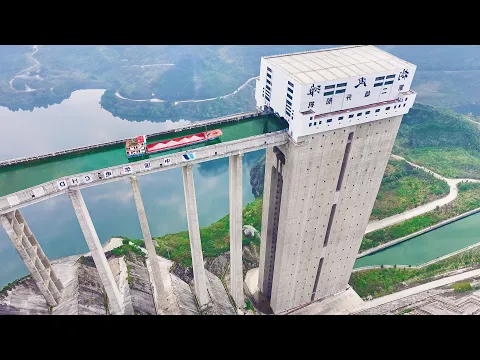
This technological solution not only reduces water consumption but also speeds up ship transit, allowing for a constant flow even under significant height differences. It represents an achievement comparable to the largest locks and ship elevators worldwide, but with superior capacity and efficiency.
Economic and Strategic Impacts for China
The strategic location of the Pinglu Canal transforms Guangxi into an essential corridor for the outflow of goods from China to the international market, particularly to Southeast Asian countries. By shortening distances and providing a direct route to the sea, the canal is expected to reduce transportation costs and travel times, making Chinese products even more competitive.
Moreover, the canal will allow inland ports to connect more efficiently to the global network, boosting investments in port and industrial infrastructure. For international logistics chains, the world’s largest ship elevator will be a symbol of how engineering can directly serve a country’s economic strategy.
The Role of the Project in the New Western Land-Sea Corridor
The New Western Land-Sea Corridor is an initiative aimed at enhancing integration between China’s inland provinces and international markets. In this context, the Pinglu Canal ship elevator is a key piece to ensure that the flow of goods is continuous and efficient, without relying solely on congested coastal ports.
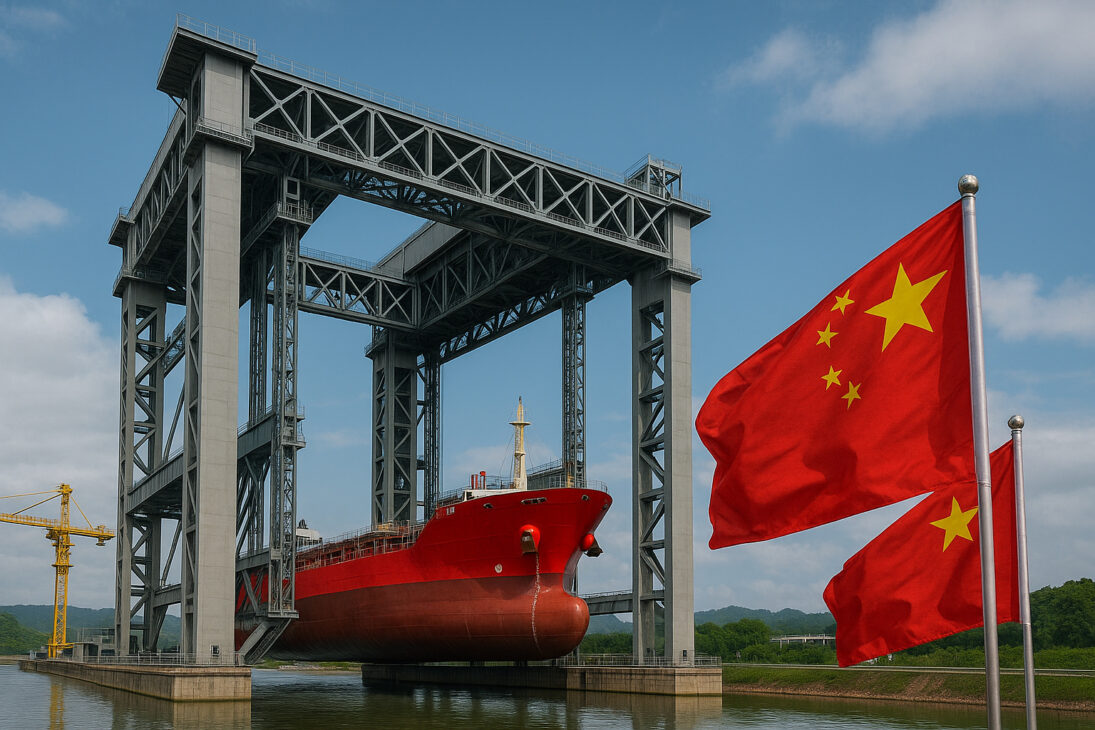
The initiative also expands possibilities for multimodal transport, connecting river transport with rail and road, creating an integrated logistics network with continental reach.
The design of the water-saving chambers in the largest ship elevator represents a significant advancement in the sustainable use of water resources in large-scale projects. By reusing a large portion of the water used in the lifting and lowering processes, the system reduces the need for constant pumping and minimizes environmental impacts, which is increasingly important for major infrastructure projects in China and worldwide.
Prospects for 2026 and Beyond
The forecast is that the Pinglu Canal and its world’s largest ship elevator will be operational by 2026, marking a new chapter in the history of inland navigation in China. For the global maritime sector, this project reinforces China’s leadership in engineering and logistics, while for the national economy, it represents the opening of a new strategic route for foreign trade.
If successful, the project could inspire similar enterprises in other countries facing geographical challenges to connect productive areas to the sea. By combining innovation, scale, and strategic vision, China demonstrates that infrastructure and economic policy can work together to redefine trade routes and expand the country’s geopolitical influence.
What do you think? Will the world’s largest ship elevator solidify the Pinglu Canal as one of Asia’s main logistics hubs and transform maritime transport in the region?










Seja o primeiro a reagir!