





 Portuguese
  English
  Spanish
  6 min of reading
  1 comment




Corn That Has Always Been a Symbol of Junina Festival Now Sustains Plants in the Midwest, Turns Into the Ethanol of the Future, Feeds Cattle with DDG and Brings Petrobras Back to the Biofuels Game
In Brazil, corn has always smelled like bonfire, pamonha, cuscuz, and junina festival cake. From farm food and animal feed, it has taken on a completely new role in the economy: today corn sustains plants in the Midwest, fuels cars and trucks with ethanol, and changes the logic of fuels in the country.
While many still associate the grain only with the table, a new industrial belt has emerged in the midst of the fields, where corn sustains plants in the Midwest, operates 12 months a year, and already accounts for almost one-fifth of all ethanol produced in Brazil, opening doors for billion-dollar investments, more efficient cattle confinement, and Petrobras’s return to the sector.
From Junina Festival Corn to the Fuel that Sustains Plants in the Midwest

For a long time, corn was seen as food for pigs, chickens, cattle, and the base of typical treats. Everything started to change when there was too much surplus corn in the Midwest, with high productivity, exports not keeping pace, and silos filled before the end of the harvest. In some seasons, the price devalued even in the field.
-
IPTU exemption for seniors in 2026: see how to secure the benefit.

-
The institute that trained the greatest aerospace engineers in Brazil has just opened its first campus outside São Paulo after 75 years: ITA Ceará will have R$ 445 million, new courses in energy and systems, and classes are expected to start in 2027.

-
Luciano Hang, owner of Havan, goes to Juiz de Fora after the tragedy in February, brings R$ 1 million, hands out R$ 2,000 cards, and donates up to R$ 15,000 to victims in the region.

-
The Brazilian passport allows legal residence in dozens of countries without the need for a prior visa, and most Brazilians are unaware that they can apply for residency directly upon arriving in nations in South America, Africa, and even Europe.


Faced with this scenario, the question that changed everything appeared almost as a provocation: if the United States had been making corn ethanol for years, why wouldn’t Brazil do it too, being one of the largest producers of the grain in the world and precisely where corn sustains plants in the Midwest with surplus raw material?
When Corn Becomes Ethanol and Sustains the First Plants in the Midwest
The first relevant experience came in Campos de Júlio, in northwestern Mato Grosso, when a sugarcane plant adapted its structure to operate as a flex plant, capable of producing ethanol from both sugarcane and corn. It was almost an experimental project, but it proved that corn could safely sustain plants in the Midwest both technically and economically.
The definitive turning point came in 2017, with the inauguration of the first large plant dedicated to corn ethanol in Lucas do Rio Verde. The plant started with about 200 million liters per year, already prepared to grow, surrounded by crops and highways in a region that breathes agribusiness. In a short time, this and other plants exceeded a billion liters, solidifying corn as the fuel that sustains plants in the Midwest throughout the year.
Costs Up to 40 Percent Lower and Year-Round Production
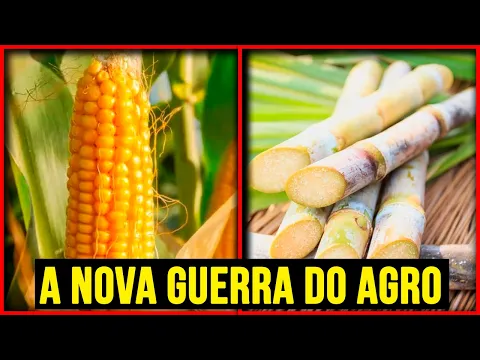

The secret of this revolution lies in two words: cost and efficiency. In the Midwest, corn comes in as a second crop after soybeans, in the so-called safrinha. The producer plants soybeans between October and December, harvests in the summer, and without wasting time, immediately plants corn in the same soil.
Since the soil is still moist from the soybeans and the machinery is already set up, the same hectare works twice, and corn sustains plants in the Midwest with stable supply, as it can be stored in silos for months. Unlike sugarcane, which needs to be harvested at the same time, corn ensures that distilleries operate almost year-round.
The location of the plants also plays a role. Instead of sending corn by truck for up to a thousand kilometers to the port, many producers now travel 20 kilometers to the plant’s gate, with less freight, less loss, and more margin. Combining short logistics, use of the safrinha, and full utilization of the grain, the result is direct: corn ethanol can be up to 40 percent cheaper to produce than sugarcane ethanol.
Inside the Plant: Nothing is Wasted from the Corn That Sustains the Business
Behind the ethanol tanks, there is an industry for the total utilization of the grain. The process begins with fermentation that transforms corn starch into fuel alcohol. After the ethanol is made, a nutrient-rich wet mass remains, which is not discarded.
At this point, corn oil is extracted before drying and is used for biodiesel production. Thus, the same corn sustains plants in the Midwest by producing two different fuels within the same plant: ethanol and biodiesel, with added benefits for the business.
The remaining material is dehydrated and turns into DDG, a type of high-nutritional-value feed. This DDG has almost four times more protein than whole corn, becomes premium food for chickens, pigs, and cattle, and has also begun to capture international markets, with export protocols opened for major feed consumers like China.
DDG, Cattle Confinement, and Smarter Land Use
DDG has changed the logic of livestock farming in several regions. With a stronger, closer, and cheaper feed, cattle confinement has gained momentum, accelerated fattening, and reduced the need for large areas of open pasture. Some of the lands previously dedicated solely to pasture can now be freed up for crops or environmental recovery.
This cycle closes a virtuous triangle: corn sustains plants in the Midwest, the plants produce ethanol and DDG, DDG feeds cattle, and the land is utilized more intensively and sustainably, connecting energy, animal protein, and area recovery within the same system.
Accelerated Expansion of Plants and the Leadership of New Companies

The model has been so successful that the industrial park for corn ethanol has exploded in just a few years. Today, Brazil already has dozens of plants in operation, others under construction, and several in planning, with a concentration precisely in the Midwest where corn sustains plants at the heart of agribusiness.
Companies specializing in converting grains into energy have grown rapidly and have begun to vie for position with traditional giants of the sugar-energy sector. In a short time, the country went from an isolated experiment to becoming the second-largest producer of corn ethanol in the world, with growth of over 30 percent per year since 2020 and a share already close to one-fifth of all national ethanol.
When Petrobras Returns to the Game Driven by Corn
For years, Petrobras treated ethanol as a secondary business and even divested from sugarcane plants to focus on oil. But the scenario has changed. With the pressure for clean fuels and the advance of corn ethanol that sustains plants in the Midwest with more stable production, the state-owned company decided to return to the biofuels sector.
This time, the focus is not sugarcane but corn. The logic is clear: corn plants produce year-round, have more predictable costs, profit from by-products like DDG and oil for biodiesel, and are less dependent on fluctuations in the international sugar market. In this context, Petrobras has started negotiating stakes in large corn ethanol groups, replicating the partnership model it already uses in the oil sector.
At the same time, new plants are emerging exactly in the region where corn sustains plants in the Midwest and where ethanol consumption has the potential to grow, reinforcing the image of the fuel as a central element of the strategy for decarbonizing the Brazilian matrix.
Corn, Energy, and the Future of the Brazilian Matrix
In the end, corn made a leap from the character of a junina festival to the protagonist of Brazil’s energy transition. It continues to be present in cuscuz, pamonha, and fresh corn at the market, but now it also fills the tanks of vehicles, powers industries, and feeds cattle with high-protein DDG.
By combining safrinha, short logistics, full grain utilization, and dozens of new plants, corn sustains plants in the Midwest and helps Brazil to be more productive and sustainable, planting and harvesting twice, generating fuel, feed, and new businesses all in the same mechanism.
In your opinion, is corn ethanol that sustains plants in the Midwest the smartest path for the future of Brazilian energy, or does the country still depend too much on this grain to bet everything on this model?








Opa…agora o nosso país vai milhorar o mundo.Pra frente Brasil…chegou a nossa vez de dar as cartas. É como fica os EUA??? de calças na mão. Kkkkk kkk…