





 Portuguese
  English
  Spanish
  3 min of reading
  0 comments


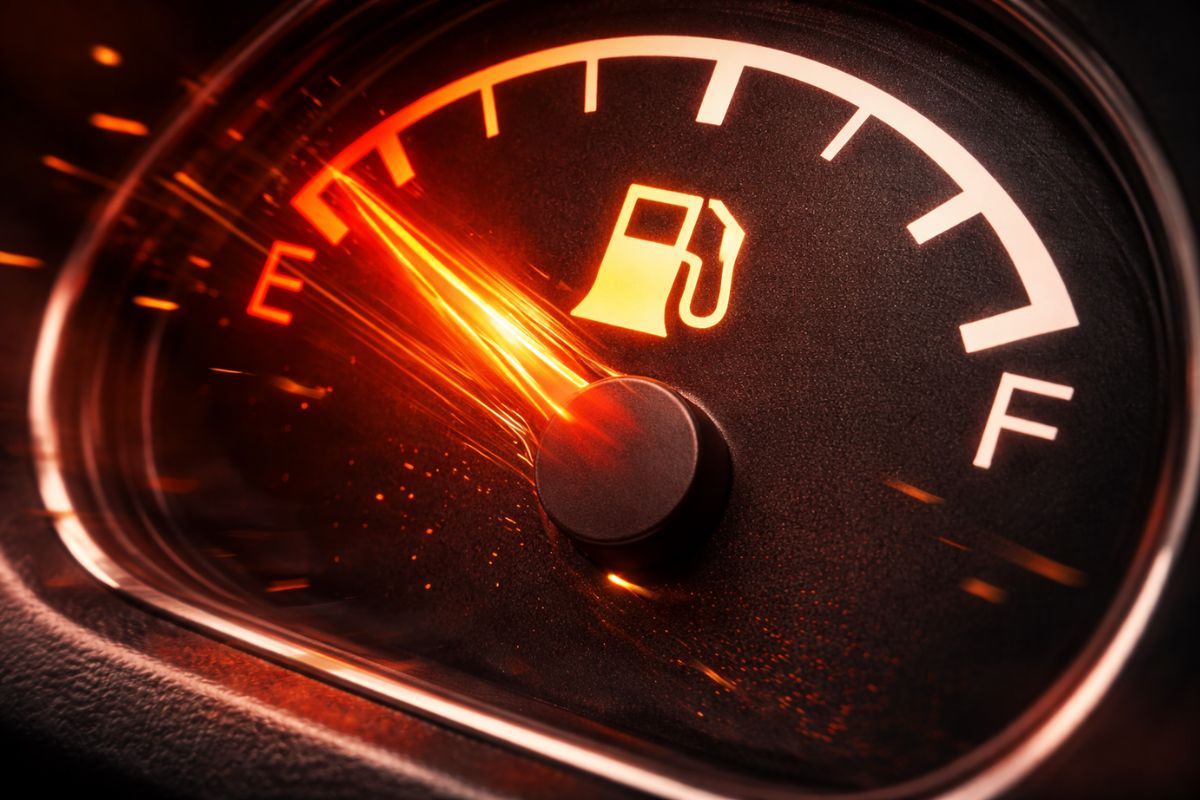
In a Test Released by Doctor-IE, a Renault Kwid Had Consumption That Nearly Doubled With the Air Conditioning On, but the Specialist Himself Warns That It Can’t Be Generalized. The Compressor Is Driven by the Engine and Requires More Fuel. At High Speeds, It Becomes a Parachute
In a predominantly hot country like Brazil, giving up air conditioning is not just discomfort: it can become a safety risk, especially in situations of intense heat and reduced attention. Still, when gasoline prices rise, the phrase resurfaces with force: “turn off the AC to save fuel.”
A video published on Instagram by the profile Doctor-IE Automotive Intelligence reignited the discussion by showing an extreme scenario: in the tested car, a Renault Kwid, the consumption nearly doubled with the air conditioning on. The specialist emphasizes that the result applies to that specific vehicle and cannot be generalized to the entire fleet.
Why the Air Conditioning Increases Fuel Consumption
The central explanation is mechanical and straightforward: the air conditioning compressor is not a “light accessory.” It is driven by the engine through the accessory belt. When you press the A/C button, the engine receives an extra task: in addition to moving the car, it needs to generate power to keep the compressor running.
-
“No one will make us change the Pix,” says Lula after the US report.

-
Lula responds directly to Trump and says that Pix is from Brazil and will not change under pressure from anyone, after a report from the United States pointed out the Brazilian payment system as an American trade barrier.

-
Amazon has just announced a new fee on all deliveries, and your online purchases will become more expensive starting April 17, including for those buying from the United States here in Brazil.

-
He sold his share for R$ 4 thousand, saw the company become a giant worth R$ 19 trillion, and missed the opportunity of a lifetime.


This additional effort requires energy, and that energy comes from burning fuel. Therefore, there is no miracle: air conditioning on tends to increase fuel consumption because the load on the engine increases.
Doubling Consumption: Rule or Exception in Fuel
The case of the Kwid presented in the video was treated as an extreme. Automotive industry experts point out that, in most vehicles, using air conditioning typically increases fuel consumption by 5% to 20%, varying according to car conditions and usage.
The variation depends on factors mentioned by experts: engine size and displacement, efficiency of the climate control system, vehicle weight, type of route, urban or highway, and maintenance condition of the system. Cars with smaller engines, like the tested model, tend to experience a greater impact because they have less power available to handle extra loads without reflecting that in fuel.
City vs. Highway: When Open Windows Can Use More Fuel
In urban traffic, with frequent stops and low speed, turning off the air conditioning can bring savings of up to 10%, especially on milder days. In this scenario, the compressor load weighs on fuel consumption, and the dynamics of constant accelerations make any extra effort more noticeable.
On the highway, the logic may reverse. Starting at around 80 km/h, driving with the windows open increases aerodynamic drag. The wind entering the car acts like a “parachute,” requiring more effort from the engine to maintain speed. In this situation, open windows can increase fuel consumption, and using air conditioning with the windows closed may be more economical than traveling with everything open.
What to Observe Before Deciding Between Air Conditioning and Open Windows
The key point is that there is no single rule for every car and every trip. The video shows a real case, but limited to the tested vehicle, while the parameters mentioned by experts indicate a typical range of fuel increase that is much lower in most models.
In practice, the decision depends on where you are driving, urban or highway, and the behavior of the car in the face of extra loads. System maintenance, air conditioning efficiency, and the type of engine help explain why fuel consumption can vary so much from one vehicle to another.
Do you usually save fuel by turning off the air conditioning, or have you noticed that, on the highway, driving with open windows worsens consumption even more?










Seja o primeiro a reagir!