





 Portuguese
  English
  Spanish
  5 min of reading
  3 comments


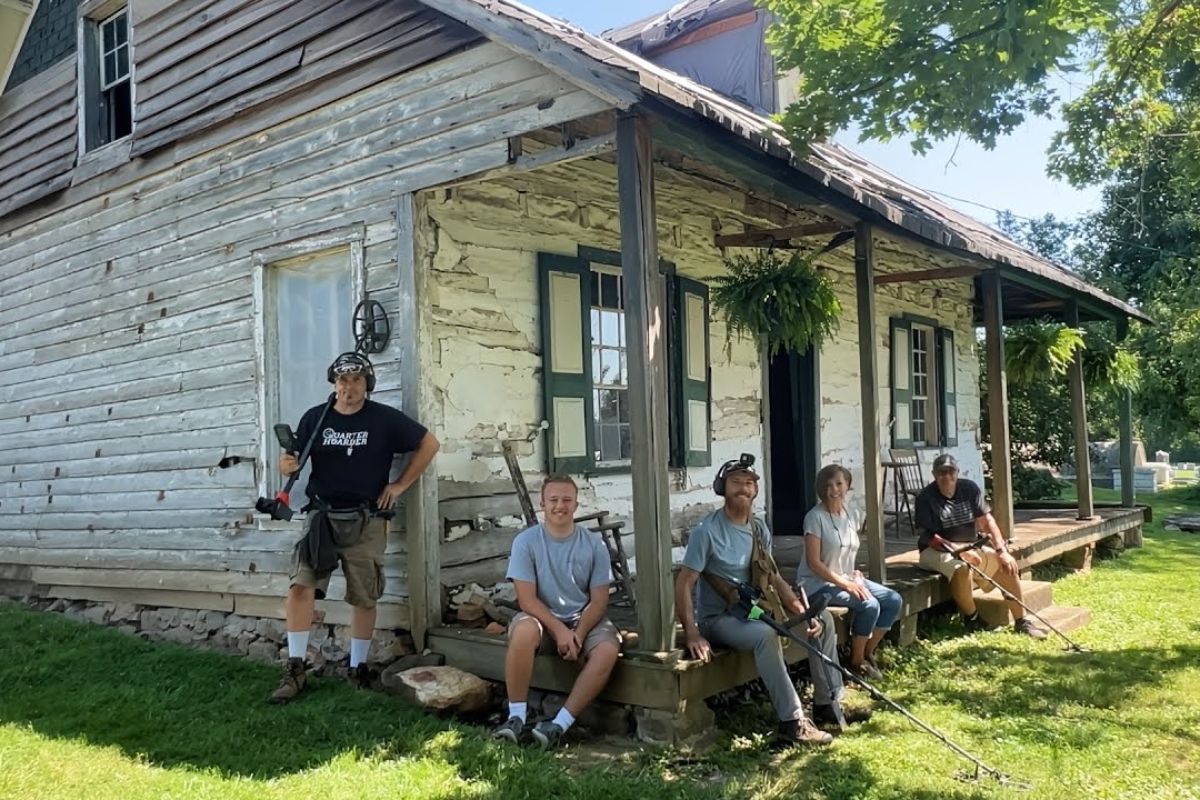


During The Restoration Of The Colonial Cabin Dated From The Early 1740s, An Owner Who Sifted The Soil Under The Floor And Around The Foundation Aggregated More Than 8,000 Artifacts, Many Related To The Old General Store, Revealing Consumption, Circulation And Daily Losses In A Discreet Rural Lot
The colonial cabin still standing in northern Maryland ceased to be just an old property when the restoration required removing floors, opening internal areas, and treating the surroundings as controlled excavation. The declared result is straightforward: more than 8,000 artifacts emerged where, for decades, only a common backyard and a shallow basement were visible.
The volume of finds changes the debate because it unites three rare elements at the same address: intense commercial use, residence for generations, and recent modern interventions. From 1789 to 1823, the site functioned as a general store, with a constant flow of people, and the cabin itself witnessed the arrival of electricity in 1930 and indoor plumbing in 1955, creating overlapping material layers.
What Appeared In The Soil And Why 8,000 Artifacts Matter In The Record

The number of artifacts is not just high; it suggests an uncommon pattern of disposal and loss in domestic contexts.
-
Goodbye iron: new technology from Xiaomi promises to revolutionize the way we iron clothes with 500 kPa steam, continuous flow of 120 g/min, heating in 65 seconds, and six smart modes for different fabrics.

-
Rio Pardo, the most mysterious city in Rio Grande do Sul: untouched Pampas castle, the missing treasure of the Devil Boy, bride’s saint, invisible tunnels, and a 200-year curse today.

-
China retires the J-7 fighter after years of military protection and can now transform military items into drones, following more than 60 years of operation of the J-7, derived from the MiG-21, with thousands of units produced and strategic use in the PLAAF and PLANAF.

-
Volunteers are sought to live in the mountains for a month: a study pays people to stay at 2,500 meters, with 24-hour monitoring of sleep, metabolism, and blood pressure.

The owner claims to have counted most of what was removed from under the floor and at the edge of the foundation, pointing out that around 6,000 artifacts came from an internal area sifted with repetitive methods during the restoration.
This collection includes more than 400 different items, with a strong presence of ceramics and glass, as well as wood, iron, seeds, beans, and materials that do not easily decompose.
The concentration of repeated sets of plates, cups, and saucers is striking because, in residential disposal scenarios, there are usually isolated pieces; here, the proposed explanation is that damaged goods and items lost in the routine of the general store accumulated under the structure.
How The Restoration Became Excavation And Where The Metal Detector Comes In

The restoration of the colonial cabin was not limited to finishing; it became a field operation when the floor was removed and the soil began to be sifted, item by item.
This decision transformed the interior into a space similar to a research site, with collection, sorting, and storage of artifacts in boxes and bags for later screening.
On the grounds, the reported team used a metal detector as a quick screening tool, searching for signals in the yard and in areas of old passage. One cited example was the identification of targets about 15 centimeters deep and, in other points, surface finds guided by a precision locator.
The metal detector appears here as a prospecting tool, not as isolated proof: it indicates the point, but the technical value lies in the careful excavation and the context in which each piece is removed during the restoration.
Timeline Of The Colonial Cabin And The Layers That Mingle

The dating of the building itself is treated as a material indication: parts of the lower structure suggest construction already in the early 1740s, although there is mention of reuse of pieces.
The colonial cabin later gained a commercial function and a narrative documented by names associated with the property: George Day appears as the previous owner; William Mullen buys the property in 1788 and opens the general store; and the sons-in-law Elisha Kirk and Levi Kirk take over the operation around 1810.
The property also records signs of daily life long beyond the colonial period. There is a mark of a plaster signed on May 30, 1869, by James Barer and the observation that a room had multiple layers of wallpaper, reaching ten.
In the 20th century, the colonial cabin witnessed the installation of electricity in 1930 and plumbing in 1955, and a resident reportedly lived there for over 90 years, experiencing these changes and enhancing the value of the record in the restoration.
What The Artifacts Suggest About Work, Consumption And Circulation
Among the described artifacts are cutlery, pieces of plates, bottles, ceramics, marbles, coins, and buttons, as well as fragments of objects like a broken old bell.
The presence of approximately 250 metal buttons with an eagle symbol, cited as part of the collection, opens hypotheses about uniforms, services, and personal connections, even though the general store had already closed in 1823, which requires caution when connecting different periods.
There are also indications of routes and movements. A section of the grounds is associated with an old stagecoach road between Baltimore and Philadelphia, which helps explain why certain artifacts appear in external areas and at the edges of the lot.
When artifacts appear on the surface or a few centimeters deep, interpretation depends on what is known about space use, erosion, renovations, and people’s circulation, and the colonial cabin offers a rare intersection of these factors in northern Maryland.
From Raw Find To Museum: What Needs To Happen For The Collection To Become A Reference
The declared goal of the owner is to structure a small museum around the colonial cabin, but the path between discovery and public exhibition is long.
The technical priority is cataloging: separating by material, recording dimensions, noting the origin location, associating each piece with the moment of restoration when it was found, and maintaining packaging that reduces corrosion and loss of information.
The second stage is interpreting without extrapolating. In a collection with over 8,000 artifacts, the risk is turning coincidences into certainties.
The gain lies in crossing simple patterns: the proportion of items attributed to the general store, the repetition of sets of dishware, the distribution of coins and buttons around the foundation, and the finds from the metal detector in passage areas.
It is this chain that can transform a rural lot into one of the largest material records of daily life in early America.
The restoration of a colonial cabin from the 1740s in northern Maryland showed how an apparently common lot can hold a lasting physical archive.
More than 8,000 artifacts do not explain everything by themselves, but they create a map of consumption, trade, and domestic life that strengthens when method and context are preserved.
If you were facing such a colonial cabin, what would convince you that the find has real historical value: the quantity of artifacts, the presence of a general store, or the discipline of the restoration with metal detector and sifting? And in your place, would you open a local museum or keep this collection restricted to the property?










Corrigindo : Fosse nos EUA “ele*viraria” um “Museu Vivo !”. * Correto !.
Caros Amigos : Os Estados Unidos preservam o seu passado histórico. Nos anos 70’s em Belém do Pará descobriu-se o homem + velho do Brasil. Chamava-se “Doroteu”. Ele conheceu numa visita ao Pará o Dom Pedro II . Fosse nos EUA eleição viraria um “Museu Vivo” (iriam extrair o máximo de informações dele !). Detalhes ; ele faleceu pouco tempo depois de ter sido descoberto (alguns meses ). Os Estados Unidos possuem uma Cidade preservada (período colonial); chamada de “Williamsburg”. Parece que fica na Virgínia (????).
No Brasil, os sítios arqueológicos, inclusive os históricos, são protegidos por lei. Somente podem ser escavados por arqueólogos e com propósito de pesquisa devidamente autorizada pelo Instituto Histórico e Artístico Nacional. A escavação por leigos consiste em crime.