





 Portuguese
  English
  Spanish
  4 min of reading
  0 comments


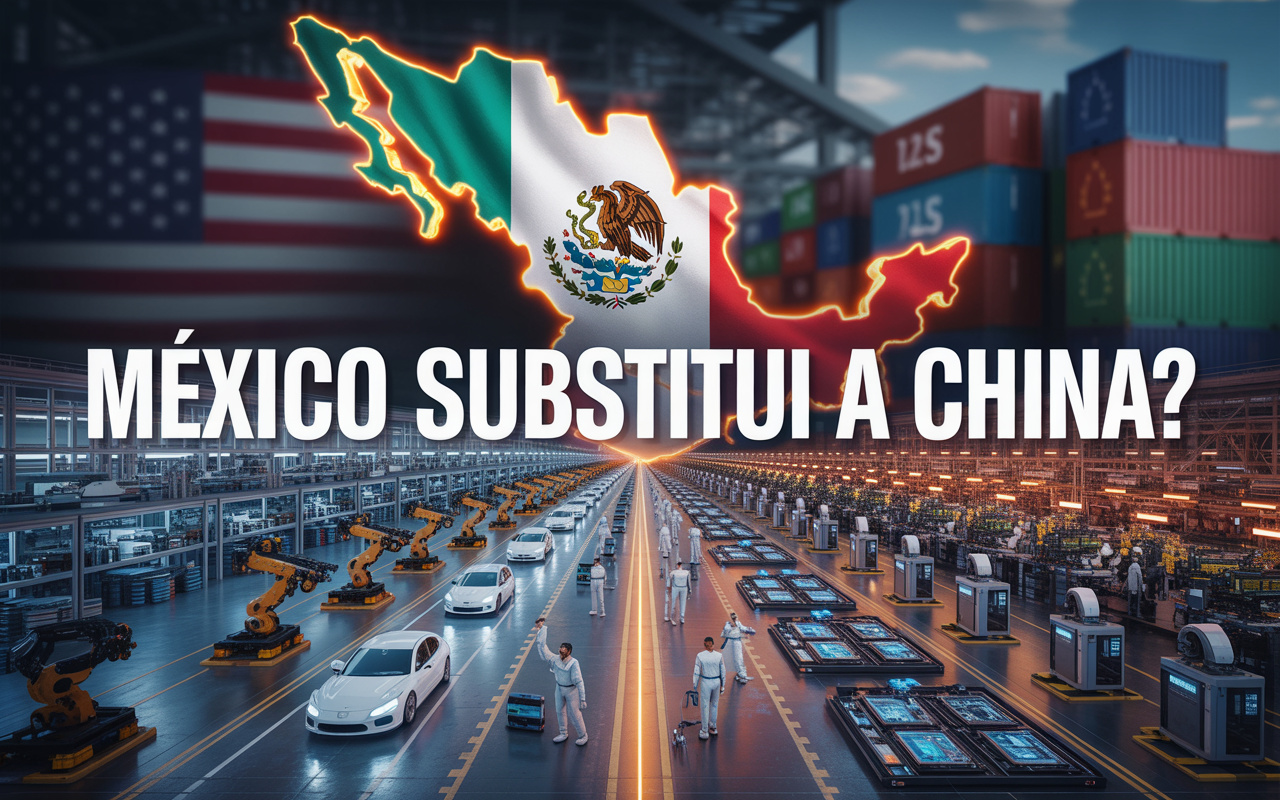
Driven By Over US$ 40 Billion In Nearshoring, Mexico Attracts Factories From The U.S., Expands Manufacturing, And Assumes A Strategic Role In The New Global Industry.
For decades, China held the title of the world’s largest factory alone. This hegemony began to be questioned after successive shocks to the global supply chain, geopolitical tensions, a pandemic, and trade disputes. In this new scenario, one country has consistently stood out as a real industrial alternative to the United States: Mexico.
The movement is not rhetorical. It is supported by numbers, real factories, and strategic decisions from multinational companies.
Billions In Investments Driven By Nearshoring
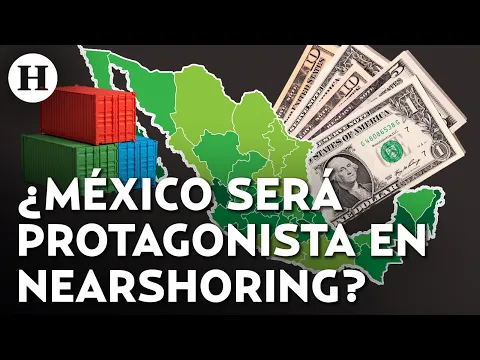

Recent data shows that Mexico received over US$ 40 billion in foreign direct investment, a historical record, with a strong concentration in the manufacturing sector.
-
Global summit with over 40 countries pressures Iran for a blockade in the Strait of Hormuz and warns of direct impact on oil, food, and the global economy.
-
Russia has broken the U.S. maritime blockade to send oil to Cuba and is now loading a second ship while Trump says that “Cuba is next” in a possible military action against the island.
-
Spain challenges the USA and closes its airspace for operations against Iran, raising global tension and provoking the threat of a trade rupture.

-
While no other country manufactures tanks in Latin America, Argentina activates the TAM 2C-A2 and raises a curiosity about the technological lag in the region.


A significant portion of this capital is directly related to nearshoring, a strategy in which companies bring their factories closer to the end consumer market to reduce logistical risks, costs, and dependency on Asia.
Unlike previous waves of investment, the capital that is arriving now is not limited to simple assembly. It involves complete production lines, logistics centers, component factories, and deep integration with North American industrial chains.
Proximity To The U.S. And Strategic Advantage
The main advantage of Mexico is not just production cost. It is geography combined with trade agreements.
The country is part of the USMCA (formerly NAFTA), which guarantees preferential tariff access to the U.S. and Canada markets. This allows a product manufactured in Mexico to cross the border in hours, not weeks, something impossible for factories located in Asia.
In a world where logistical delays cost billions, this proximity has become a strategic differentiator.
Automotive Supply Chains On A Continental Scale
The automotive sector is the clearest example of this transformation. Mexico already produces about 4 million vehicles per year, most of which are destined for export, particularly to the United States.
Global automakers and auto parts manufacturers have expanded operations in the country, creating complete industrial corridors, with suppliers, logistics, and specialized labor concentrated in strategic regions.
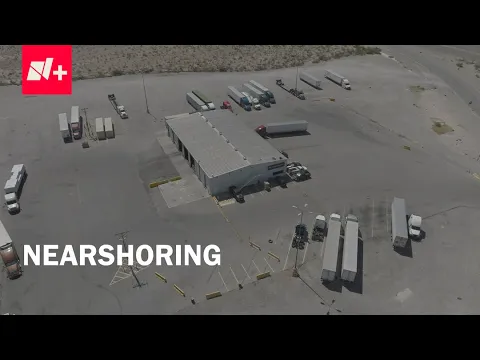
This structure did not emerge from nowhere. It is the result of decades of industrial integration with the North American market, now accelerated by nearshoring.
Electronics, Appliances, And Advanced Manufacturing
Besides cars, Mexico has become a significant hub for electronics, appliances, electrical equipment, and industrial components.
Factories that previously depended on China have started operating in Mexican territory to directly serve the U.S. market, reducing transportation costs, inventories, and exposure to external shocks.
This movement has elevated the country from a simple production base to a strategic link in global value chains.
It’s Not “Replacing China,” It’s Reducing Dependence
It is important to separate rhetoric from reality. Mexico does not replace China on a global scale, nor does it intend to do so. What is happening is a redistribution of manufacturing, in which companies seek to reduce excessive dependence on a single country.
In this context, Mexico emerges as the main industrial alternative in North America, not as a new “factory of the world.”
This distinction is crucial to understand why the movement is sustainable.
Infrastructure, Jobs, And Economic Impact
The industrial advancement has direct effects on the Mexican economy. New industrial parks, port expansions, investments in energy and logistics accompany the arrival of factories.
The result is the creation of hundreds of thousands of direct and indirect jobs, as well as the strengthening of revenue and the national production base.
States in the north and center of the country are already experiencing a race for industrial land, driven by growing demand from foreign companies.
Mexico In The New Map Of The Global Industry
What is unfolding is not a passing cycle, but a structural change. With over US$ 40 billion in recent investments, deep integration with the United States, and consolidated production chains, Mexico today occupies a role that few countries can assume: being industrially competitive, geographically strategic, and politically integrated with the world’s largest consumer market.
In the reorganization of the global economy post-pandemic, Mexico has not only entered the game — it has become one of the main winners of the new industrial geography of the 21st century.







-

-

-

4 pessoas reagiram a isso.