





 Portuguese
  English
  Spanish
  6 min of reading
  0 comments


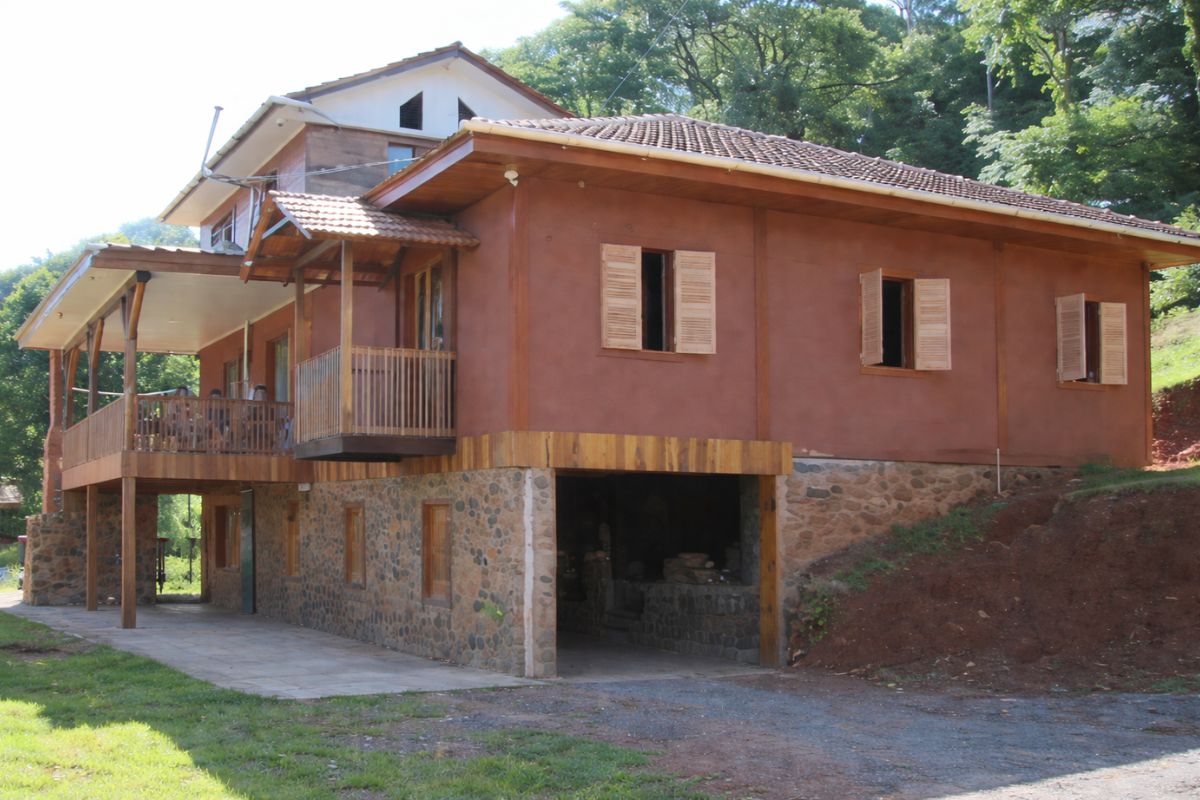
In a Bioconstruction Project in Seara, the Family Builds an Ecological House with 300 m², Turns the Clay House into a Sustainable House and Shows That an Ecological House Can Be Cool and Economical, with Up to 10 Degrees Less and More Than 70% Savings Compared to a Traditional Construction.
In the municipality of Seara, a family builds an ecological house with their own hands, in a long project, done step by step, that took about six years to become their permanent home. The farmer Valdir, self-taught in sustainability, turned his curiosity about bioconstruction into a real plan to change the way the family lives.
Alongside his family, he started with the choice of land and the decision to intervene as little as possible in the soil. Starting in 2020, after a discreet leveling, the first stones, clay, wood, and recycled materials arrived. The result is a 300 m² ecological house, in three floors, that is up to 10 degrees cooler inside and cost more than 70% less than a conventional construction.
From Dream to Project: Purpose, Study and Patience
Before raising the walls, came the study. Valdir always had an interest in sustainability and, over the years, sought references in bioconstruction, visited projects up close and talked to those who already applied these techniques.
-
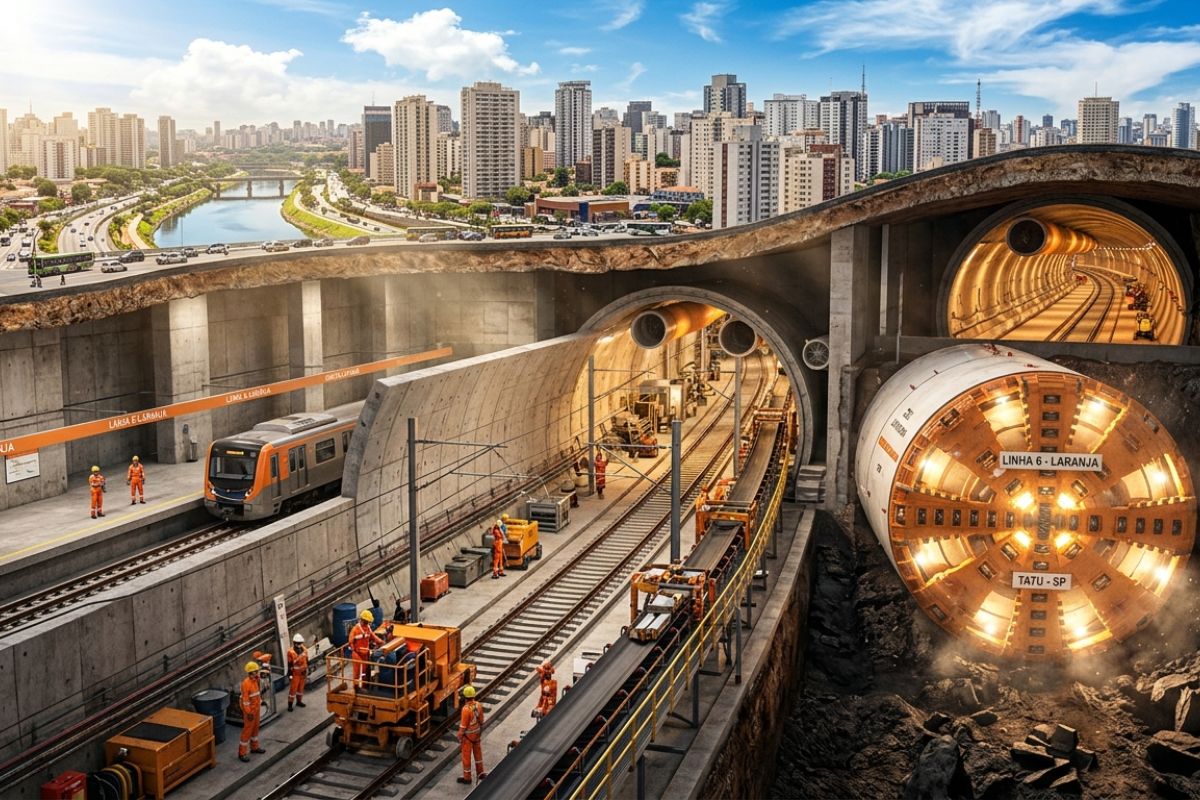
Under São Paulo, Line 6-Orange reaches 15.3 km and 15 stations, promising 23 minutes from Brasilândia to the Center and 633,000 passengers per day; with autonomous trains, it will open a partial section in October 2026.
-
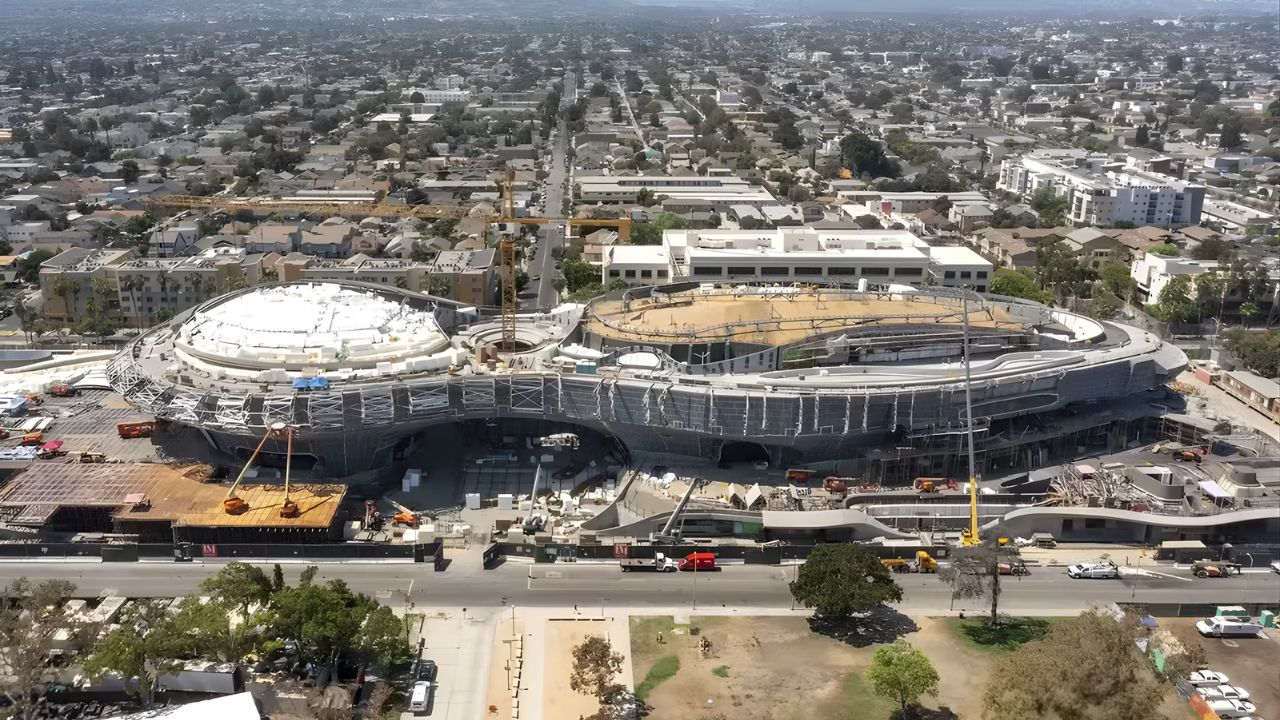
Created by George Lucas with over $1 billion, a futuristic museum in the shape of a spaceship with 1,500 curved panels is about to open in Los Angeles and will house one of the largest private collections of narrative art in the world.
-
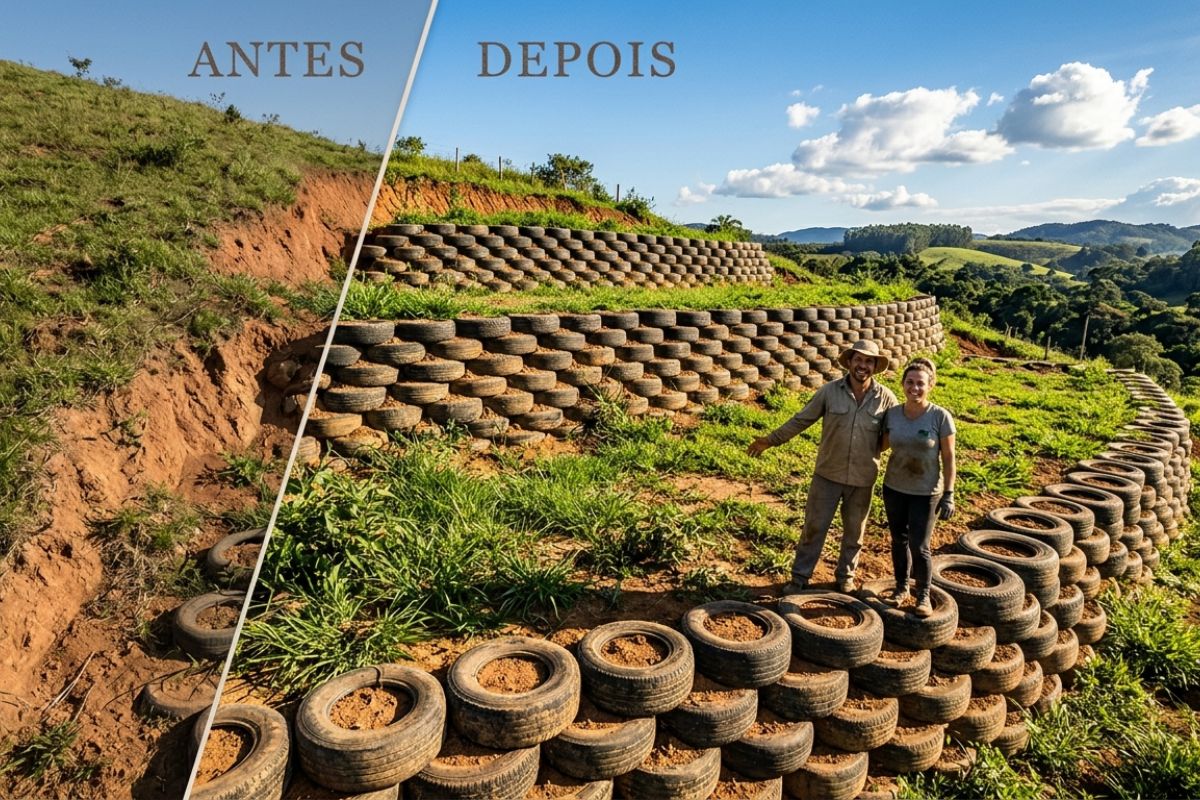
Couple shows how they built a retaining wall on their property using 400 old tires: sloped land turned into plateaus, tires are aligned, filled, and compacted with layers of soil, with grass helping in support and at almost zero cost.
-
Engineer explains drainage during the rainy season: the difference between surface water and deep water, ditches, gutters, and water outlets on the road, as well as drains and drainage mattresses, to prevent erosion, aquaplaning, and flooding at the construction site today.


He is neither an engineer nor an architect, but he dedicated time to understand how nature can work in favor of the house.
When the time came to take the plan off the paper, the family decided to build their own home on their own property in Seara. The idea was not to “scrape” the land or make large earth movements.
They took advantage of a space that was already naturally suitable for construction and from there, began to design a house that dialogued with the terrain, the wind, and the sun.
The execution time was a consequence of this more artisanal path. Between maturing the project, learning new techniques, gathering materials, and getting their hands dirty, the family spent about six years directly involved in the construction.
More than just raising walls, the process became a daily exercise of purpose, patience, and joint planning.
Bioconstruction in Practice: Stone, Clay, Eucalyptus and Recycled Materials

The base of the ecological house literally emerged from the ground of the property. There are a lot of stones on the land, and it was with them, without perfect cuts, without millimetrically aligned blocks, that the foundations were raised.
The stones were carefully and patiently fitted together, forming a solid and resistant base.
In the structure, Valdir made use of eucalyptus trees that he already had on the property to build the skeleton of the house. Instead of relying solely on industrial materials, he combined what the land offered with woods available on-site.
This choice reduced costs, shortened the path between the resource and the work, and maintained the focus on a truly ecological house.
For the walls, especially on the second floor, the wattle and daub technique came into play. First, a framework of bamboo is assembled as if it were an upright “basket.”
Then, the clay is prepared and manually filled into this structure, forming walls that breathe, insulate, and at the same time retain heat more evenly.
Additionally, the family turned to recycled materials to complete the project. Tiles, openings, and reclaimed boards were integrated into the work, always with care to combine aesthetics, cost, and functionality.
The ecological house that was born in Seara is a mosaic of stone, clay, wood, and recycled parts, assembled with a keen eye on reuse and minimal waste.
Cool and Efficient House: Up to 10 Degrees Less and More Than 70% Savings
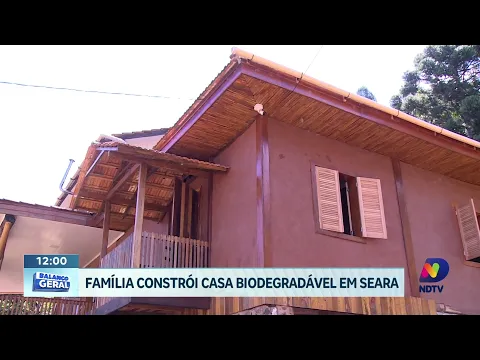

One of the central points of the project was to consider thermal comfort without relying solely on equipment. Valdir took into account the direction of the sun, the path of the wind, and the air currents that cross the land.
The house was oriented to take advantage of these natural elements, allowing air to circulate and heat to be better controlled throughout the day.
The clay walls, the thermal mass of the stones, and the combination of natural materials help to stabilize the temperature.
While the heat predominates outside, the interior remains much more pleasant. According to the family, the difference can reach up to 10 degrees less inside the house compared to outside, thanks to ecological techniques and the study of the environment.
The benefit is not only in comfort. The project also weighed much less on the budget than a conventional construction of the same size.
Considering the entire process, the family achieved more than 70% savings compared to a traditional construction of 300 m² spread over three floors.
In other words, the family builds a large, comfortable, and efficient ecological house spending less than a third of what would be expected in a common model.
Support from the Cooperative and Family Labor Force
To turn the dream into a reality, the family had the support of a credit cooperative experienced in financing ecological houses.
This support helped to make construction phases viable and showed that sustainable projects can, indeed, be on the radar of the financial system when they are well planned.
But the big difference lies in the shared labor. Each family member participated in some phase of the construction, from the heaviest tasks to the finishing details.
Some helped prepare clay, fill the bamboo frames of the wattle and daub, organize materials, and follow the step-by-step of the work.
One of the daughters, for example, had a direct hand in the clay walls, helping to fill the framework with wet material until the surface became uniform.
In practice, the family builds an ecological house not just as an architectural project, but as a collective experience, where each person leaves their mark in the place where they live.
Music, Daily Life and New Relationship with the House
At the end of the report that presented the house, father and daughter appear together doing something that goes beyond the physical construction: they sing.
Music enters as an expression of the family’s story, the path taken, and the emotion of seeing the home ready after so many years of effort.
This detail shows that the house is not just a beautiful object or a technical experiment, but the center of a life where nature, art, and routine mix.
The same family that raised walls with clay and stone also transformed the space into a stage for simple moments, like playing and singing together at the end of the day.
More than just an address, the ecological house in Seara is the result of a well-defined purpose: to live in a way more aligned with the environment, spend less, take advantage of what the land offers, and build a home that tells the story of those who live there.
When a family builds an ecological house with this level of involvement, every corner of the construction becomes a memory and a symbol of a life choice.
And you, would you live in an ecological house built like this, by the family’s own hands, if it meant more comfort and less spending in the long run?




-

-

-

-

6 pessoas reagiram a isso.