





 Portuguese
  English
  Spanish
  4 min of reading
  36 comments





Under Pressure from ANS, Hapvida Sees Shares Plummet According to BNC Amazonas, Market Value Plummeting from Over R$ 110 Billion to Under R$ 7 Billion, and Analysts Projecting Tough Restructuring and Risk of Service Gaps for 16 Million Clients and SUS Across the Country.
Hapvida has officially entered a new phase of its crisis, which intensified in November and December 2025, according to a report from BTG Pactual. After successive negative revisions from major banks and an accelerated deterioration of financial indicators since 2024, the largest healthcare operator in the country saw nearly R$ 7 billion evaporate in a single trading session, raising maximum alerts regarding its ability to honor contracts and continue serving its more than 16 million beneficiaries.
The harshest reaction came from the National Agency of Supplementary Health (ANS), which summoned Hapvida to explain its financial statements in detail from 2024 onwards. The company, which had already been classified as having systemic risk due to the size of its client base, is now being closely monitored by the regulator, concerned about the combination of high claims rates, cash burn, and continuous decline in shares.
ANS Increases Pressure and Targets Risk of Service Disruption
According to ANS, the focus now is to avoid a potential mass service disruption if Hapvida fails to prove it has the financial strength to navigate the turmoil without leaving patients unattended.
-
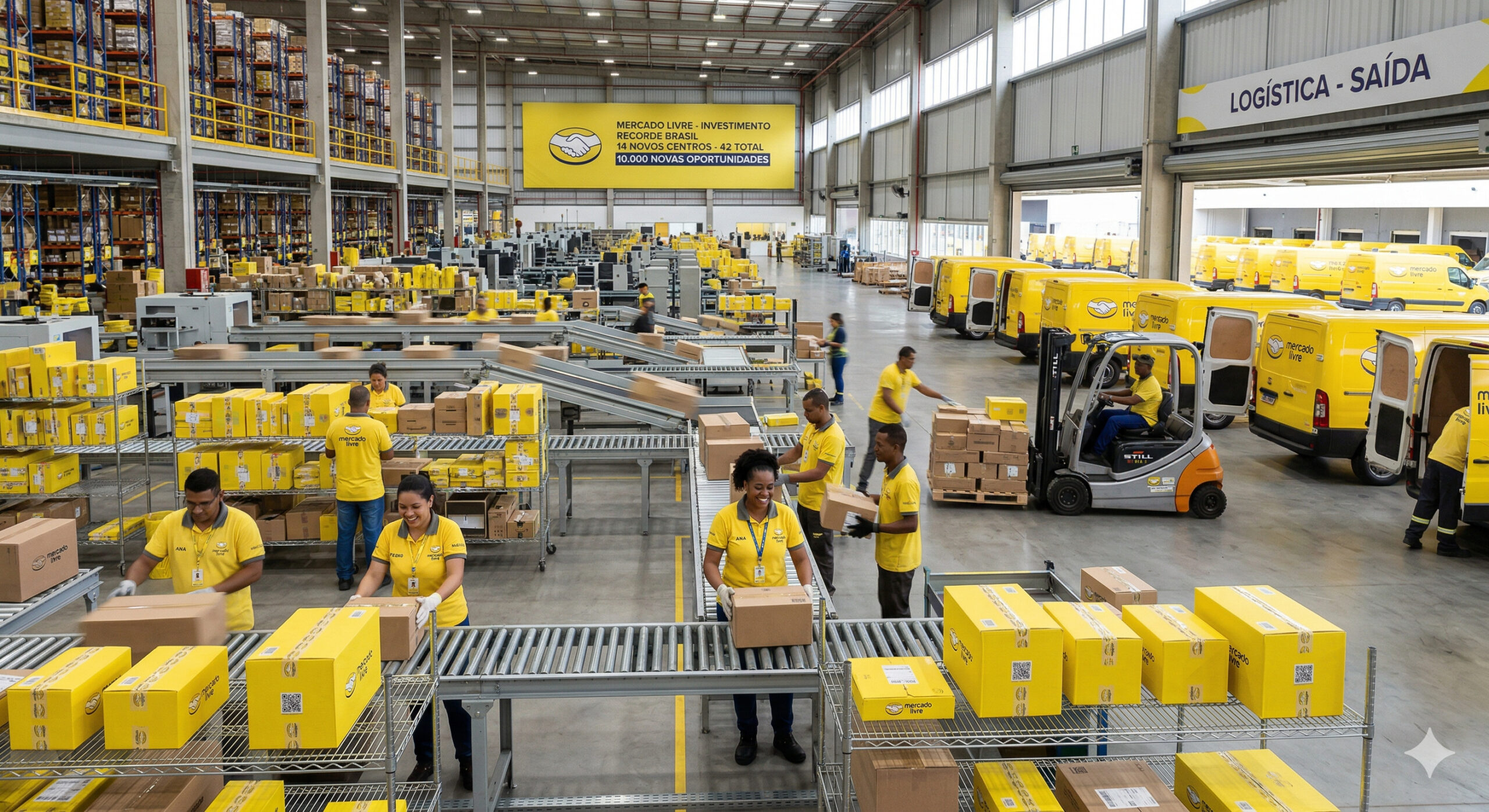
Mercado Livre “opens the vault” and announces a record investment of R$ 57 billion in Brazil in 2026, a value 50% higher than the previous year, with an expansion plan that includes 14 new logistics centers, totaling 42 units in the country and hiring an additional 10,000 employees.
-
How investment in technology can revolutionize the national economy and enhance industrial gains, according to a study that highlights the direct impact on productivity, innovation, and wealth retention within Brazil.

-
The largest food company on the planet, JBS, has just opened a 4,000 square meter laboratory in Florianópolis to develop customized proteins that modulate muscle mass gain, immune response, and metabolic performance.

-
After nearly 30 bids and competition among industry giants, a Spanish company purchases one of the largest airports in Brazil for almost R$ 3 billion and takes over the management of Galeão in a concession that will last until 2039.


Technicians are monitoring claims rates, cash indicators, and the company’s ability to keep its network functioning without abrupt cuts.
Ultimately, the agency may take extraordinary measures if it concludes that the operator cannot ensure operational continuity.
Among the possibilities are extraordinary measures that reorganize Hapvida’s operations and reduce risk for the most vulnerable beneficiaries.
Market Value Shrinks and Banks Speak of Heavy Restructuring
The stock market collapse has reinforced the sense of urgency. Hapvida’s market value, which once exceeded R$ 110 billion, is now below R$ 7 billion, a loss that summarizes the waning confidence of investors and the degree of uncertainty regarding the group’s future.
In the most recent reports, analysts from the country’s major banks have shifted from merely discussing minor adjustments to outlining a worst-case scenario in which Hapvida would fail to recover cash or control claims rates.
In this extreme scenario, the company would be pushed toward a forced restructuring, portfolio returns, and suspension of loss-making services.
What Could Happen to Contracts and Beneficiaries


For now, this scenario remains a projection, but the fact that it is on the banks’ radar and the ANS’s radar already changes the lives of those who depend on Hapvida.
For the more than 16 million clients, the risk is seeing the routine of consultations, exams, and surgeries impacted by any potential abrupt adjustments.
In extreme cases, beneficiaries may face changes in the care network, increased wait times, relocation to other cities, and a greater need to rely on SUS for assistance.
Public Contracts in the North Come Under Debate Focus
Another sensitive point is the large public contracts that Hapvida holds, especially in the Northern region and in states like Amazonas.
The concern is that any retreat by the company in these agreements could leave a gap in care in areas where the private infrastructure is already more limited and reliance on SUS is greater.
If Hapvida reduces its presence or returns portfolios linked to public contracts, local governments may face immediate challenges in providing coverage.
This could further strain already overloaded public hospitals and increase the sense of insecurity among employees and beneficiaries who currently depend on plans managed by the operator.
Extra Pressure on SUS if Crisis Goes Out of Control
The combination of systemic risk, a gigantic customer base, and financial fragility places SUS at the center of the discussion.
In the event of a collapse or disordered restructuring, millions of patients could migrate simultaneously to the public health network, which is already operating at its limit in various regions of the country.
Therefore, ANS not only monitors Hapvida’s financial health but also the potential repercussions on public structures.
A poorly calibrated intervention, whether too early or too late, could have the opposite effect and end up pushing more demand onto public hospitals that are already experiencing overcrowding.
Reality Checkpoint: What Is Fact and What Is Projection
So far, the facts are clear: Hapvida has lost market value at an accelerated pace, has been formally requested by ANS to explain its numbers since 2024, and faces an environment of strong distrust among investors and analysts.
The agency itself acknowledges that the size of the portfolio transforms any issue faced by the company into a potential risk for the system.
The scenarios of restructuring, portfolio returns, and strong pressures on SUS appear, for now, mainly in the reports from banks that describe the worst-case scenario possible.
They help to illustrate the magnitude of the problem if Hapvida cannot recover cash or reduce claims rates, but do not yet mean that these measures will actually be adopted.
Given this context, a quick question for you: in your opinion, should ANS intervene more harshly now to ensure Hapvida’s stability, or have the markets overreacted and the company can still recover on its own?









….como sempre, com uma agência reguladora que só intervém quando estão em situação insustentável, essas empresas com administração temerária vão se enriquecendo, mas o dinheiro some. É bom para quem(s) ?
Meu pai tem convênio pela hapivida vá algum tempo,cancelaram seu contrato mediante a falta de pagamento,e todos os meses estão pagos,indo atrás pra ver o que aconteceu.
Não confio minha vida e ninguém meu a esse plano de saúde matador humano