





 Portuguese
  English
  Spanish
  3 min of reading
  1 comment


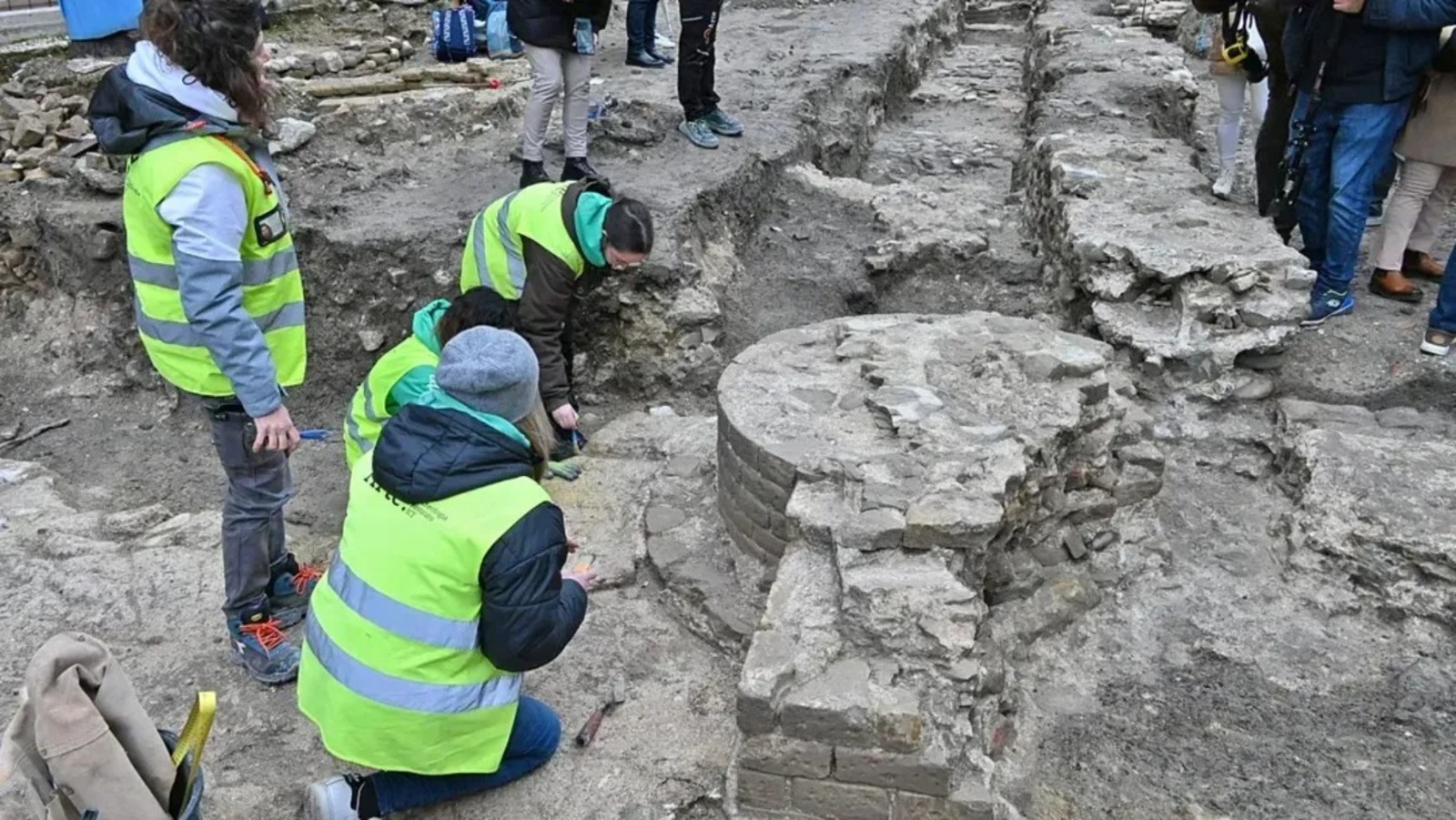


Discovery Transforms Classic Treatise into Physical Evidence and Reinforces Importance of Vitruvius for Understanding Roman Architecture and World Artistic Heritage Over the Centuries of Human History
For centuries, scholars have tried to imagine what one of the most emblematic works envisioned by an architect of Antiquity would be like, inspiring names such as Leonardo da Vinci. The basilica mentioned in his own writings remained invisible, restricted to the pages of a classic treatise. Now, this story gains a new chapter with the archaeological confirmation of a structure that exactly corresponds to the descriptions made over two thousand years ago.

A Work That Existed Only in Texts
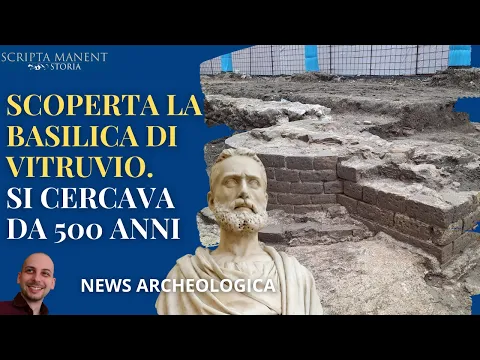
Archaeologists confirmed the discovery of a basilica designed by Marcus Vitruvius Pollio, author of the treatise De Architectura.
The structure was located in the center of the city of Fano, at the site known in Roman times as Fanum Fortunae.
-
Supercomputer calculates when humanity may disappear from Earth, predicts a scorching supercontinent, temperatures of up to 70 degrees, and a planet moving towards becoming uninhabitable.

-
INMET danger alert: heavy rains between the 3rd and 4th may drop up to 100 mm/day and winds of 60 to 100 km/h in several regions of Brazil require extra caution.

-
The parts crisis may bring back the drop notch and microSD in 2026; while Windows 11 promises to become lighter, leaks mention batteries of up to 10,000 mAh and 200 MP cameras.

-
In Kenya, engineer Nzambi Matee created “bricks 2.0” using packaging plastic: a mixture with sand, heated and pressed; they are 5 times more resistant, already have official licensing, and are being used in streets and construction projects.
Historians had long known that Vitruvius had built a basilica in the region, but they had never found concrete traces.
The excavations took place in Piazza Andrea Costa, where bases of columns and foundations compatible with the building described by the architect emerged.
The discovery gained momentum when a column mentioned in ancient texts appeared exactly at the indicated point.

Perfect Correspondence Between Theory and Practice
The basilica has a rectangular floor plan and columns distributed along the sides, faithfully following the design recorded in De Architectura.
The construction dates back to around 19 BC, the final period of the Roman Republic. This coincidence between account and structure confirmed the authenticity of the find.
Until then, Vitruvius’s work was seen primarily as a theoretical text. With the discovery, it becomes possible to observe how he applied, in practice, his three central principles: proportion, function, and aesthetics.
A Landmark for Archaeology
The Italian Minister of Culture, Alessandro Giuli, stated that “history books will speak of this day” and compared the significance of the find to the discovery of Tutankhamun’s tomb in 1922.
The mayor of Fano, Luca Serfilippi, emphasized that the basilica had been sought for over five centuries and that the confirmation represents a milestone for the city and the country.

Who Was Vitruvius
Marcus Vitruvius Pollio lived between approximately 80 BC and 15 BC. His treatise De Architectura is the oldest preserved text on architecture to this day.
The work influenced generations of architects and artists, including Leonardo da Vinci, who based his famous drawing of the Vitruvian Man on it.
The confirmation of the basilica helps to better understand not only Vitruvius’s work but also the relationship between theory and practice in Roman architecture, offering new perspectives on a fundamental period of history.
With information from Brasil Paralelo.








Gosto muito desse tipo de assunto. É muito bacana entendermos a história