





 Portuguese
  English
  Spanish
  6 min of reading
  0 comments


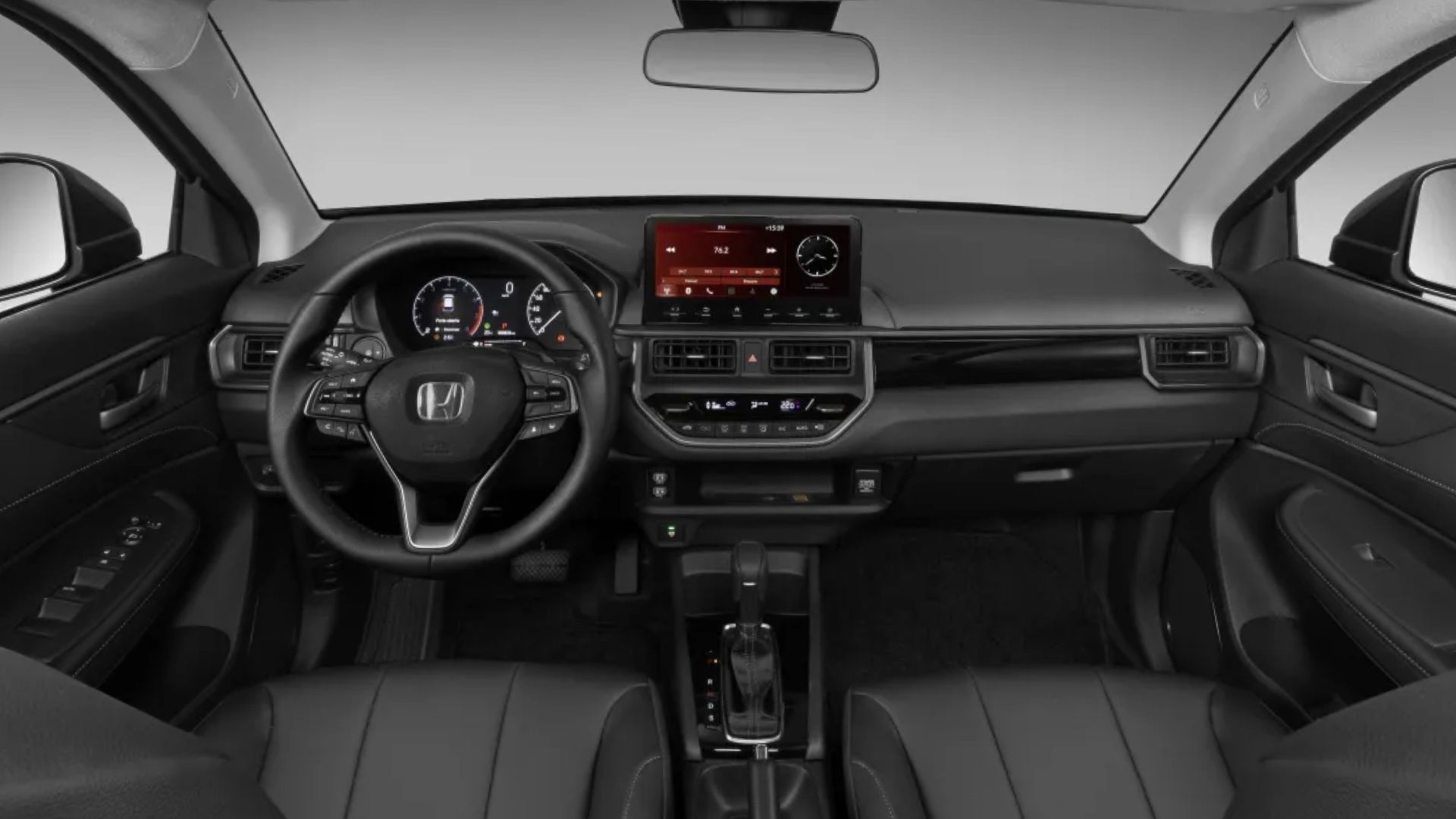
Honda WR-V 2026 Debuts As The Brand’s New Entry-Level SUV, Combines 1.5 Economical Engine, Spacious Interior And Competitive Price To Face Direct Rivals In The Segment, While Preserving Elements That Marked The Old Fit.
The Honda WR-V 2026 marks the return of the name to the Brazilian market as a compact entry-level SUV, positioned below the HR-V and focused on interior space, a spacious trunk, and family use.
With a 1.5 flex aspirated engine delivering 126 hp, CVT automatic transmission, and fuel consumption within the segment’s average, the model competes for customers of compact SUVs like Hyundai Creta, Volkswagen Nivus, Renault Kardian, and Fiat Pulse.
This offers a lower price than the HR-V and an estimated range of up to about 512 km with gasoline, according to official consumption data and tank capacity disclosed in the Brazilian Vehicle Labeling Program and by the manufacturer.
-
The car stored for 38 years: when opening the barn door, what appears is breathtaking and looks like a scene from a movie!

-
Fiat works miracles in the Brazilian market, lowers the price of its 0 km hatch to R$ 69,990, reestablishes the model as the cheapest car in the country, and reignites the battle against Kwid and C3.
-
Chevette with cooking gas: How the gas cylinder ends up being used in cars clandestinely and why this makeshift solution can result in leaks, explosions, damaged engines, and seized vehicles.

-
Fiat launches the new 2027 Toro hybrid with 48V, 176 hp, an electric motor of 15.5 hp, a 0.85 kWh battery, up to 7% fuel savings, 8% fewer emissions, and possible exemption from IPVA.
Fit Legacy And Family Positioning
Produced in Brazil from 2003 to 2021, the Honda Fit became known for its exemplary use of interior space, versatility of the trunk, and reputation for mechanical reliability, becoming one of the most remembered compacts in the country.

Upon ending the production of the minivan in 2021, amid portfolio adjustments and changes in emission rules, the brand stated that the gap would initially be filled by the City hatchback, derived from the sedan.
Despite this, part of the public continued to point out the absence of a vehicle that combined ground clearance, space for five occupants, and a spacious trunk, as the Fit offered within the Honda lineup.
In this scenario, the WR-V returns in a new generation with the mission of taking on the role of the brand’s rational and family vehicle, now in a format aligned with what the market most seeks today: that of a compact utility vehicle.
New Project And Expanded Internal Space
Unlike the previous generation, which used the Fit’s base with an adventurous look, the new WR-V 2026 adopts a specific SUV project, with taller proportions and a body featuring straight lines, aimed at enhancing internal space and a sense of robustness.
Specialized publications and official material indicate that the model is very close in size to the HR-V, but with a declared focus on providing more space especially in the rear seat.
The SUV measures about 4.32 meters in length, 1.79 meters in width, 1.65 meters in height, and 2.65 meters in wheelbase, numbers that place it among the largest models in the compact SUV range.
In these dimensions, the highlight is the wheelbase and height, which favor the legroom and headroom of those traveling in the back.

Another emphasized point is the trunk of 458 liters, which surpasses the capacity of the old Fit and also that of the HR-V, according to comparisons from automotive magazines.
In practice, the WR-V takes over the role of the old minivan in the task of transporting family and luggage comfortably, but now within the aesthetics and format of an SUV.
1.5 Engine And CVT Transmission Known To The Public
The mechanical set of the WR-V 2026 repeats a recipe already familiar to consumers of the brand in Brazil.
Under the hood, there is the 1.5 DI i-VTEC flex aspirated engine, with direct injection, capable of delivering up to 126 hp and 15.8 kgfm of torque, always combined with a CVT automatic transmission simulating seven gears.
The same engine equips the City family and part of the HR-V lineup, which tends to facilitate maintenance and understanding of the car’s behavior for those already familiar with other Honda models.
Press tests describe the dynamic proposal as focused on comfort and relaxed driving, without a focus on sportiness.
The performance is classified as adequate for everyday use, with sufficient responses for urban traffic and normal highway travel.
Consumption And Autonomy In Real Use

According to the official data from the Brazilian Vehicle Labeling Program, the WR-V registers averages between 8.2 and 8.9 km/l with ethanol and 12.0 to 12.8 km/l with gasoline, in a combined cycle.
The numbers place it in line with other compact SUVs with a 1.5 aspirated engine and CVT, maintaining consumption consistent with its size and focus on interior space.
Considering the tank capacity of 44 liters, the autonomy in use with gasoline can exceed 500 km, sustaining the reference range of up to about 512 km.
Safety And Technology Equipment
The list of equipment is one of the points that Honda used to justify the WR-V’s positioning as a rational option within the lineup.
All versions come standard with the Honda Sensing package, which includes adaptive cruise control, autonomous emergency braking, lane-keeping assist and mitigation, and automatic high beams.
The model also features six airbags, electronic stability and traction controls, and hill-start monitoring.

In the comfort and technology package, the SUV includes full LED headlights, 17-inch alloy wheels, a partially digital panel, and a 10-inch multimedia center with wireless mirroring.
Higher trim levels receive leather-wrapped seats, functional roof rails, and wireless phone charging.
Honda also offers six years of warranty for the model.
Prices, Versions And Rivals In The Segment
The WR-V 2026 arrives in Brazil in the EX and EXL versions, with prices ranging from 144,990 to 149,990 reais, as disclosed in the official presentation and at dealerships.
These values position the model as the most affordable option among Honda’s utilities and create a gap of over ten thousand reais compared to the entry-level HR-V.
In practice, the WR-V competes with Hyundai Creta, Volkswagen Nivus, Renault Kardian, Fiat Pulse, and, in some comparisons, even with the Volkswagen Tera and the upcoming Toyota Yaris Cross.
The combination of dimensions close to those of medium models with a compact label and competitive pricing aims to attract consumers who have migrated from hatches and sedans but who still do not wish to enter the price range of larger SUVs.
Relationship With The Fit And Reorganization Of The Honda Lineup

The history of the WR-V name helps explain the expectations created for this new generation.
The previous model used the Fit’s platform and factory, with raised suspension and external plastic parts.
Now, by adopting a project developed to be an SUV, Honda retains the name acronym but directs the product towards an audience seeking high driving position, a robust look, and spacious interior, preserving some of the valued attributes of the Fit.
This movement also reorganizes the brand’s portfolio.
The HR-V remains as the immediate superior model, while the City sedan and City hatch cater to those who prefer traditional cars.
With the WR-V taking the place of the entry-level SUV, Honda begins to engage both former Fit customers and families looking for their first utility vehicle from the brand.








-

-

-

-

-

23 pessoas reagiram a isso.