





 Portuguese
  English
  Spanish
  4 min of reading
  8 comments


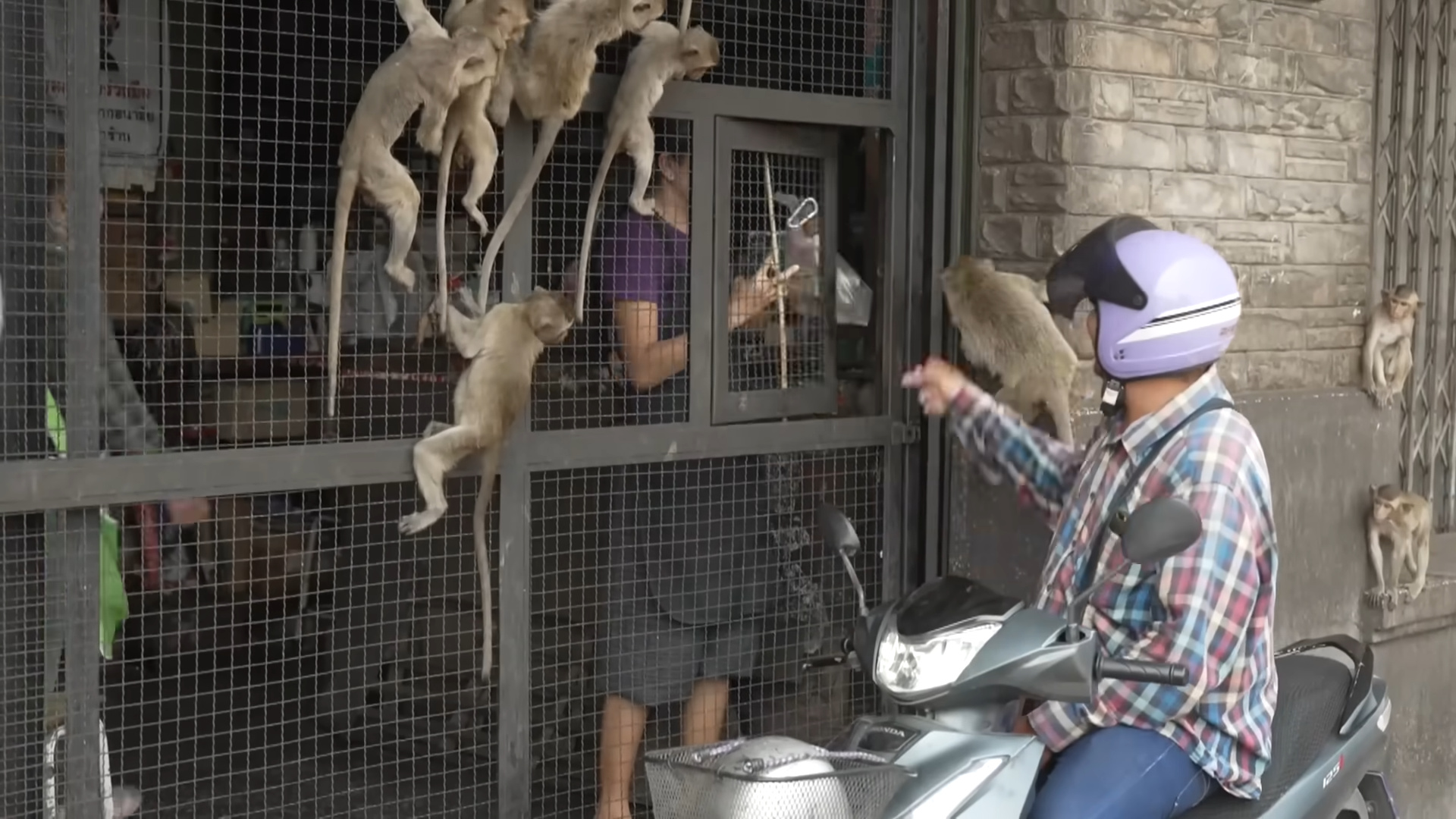


In Lopburi, Thailand, thousands of monkeys have come to dominate streets and buildings after years of human feeding and uncontrolled tourism, creating an environmental, sanitary, and social crisis.
Lopburi, a historic city located about 150 kilometers north of Bangkok, has become one of the most extreme examples of how poorly planned human interaction with wildlife can spiral out of control. What started as symbolic coexistence and a tourist attraction has transformed over decades into a critical situation: thousands of monkeys began to occupy streets, public buildings, temples, shops, and homes, profoundly altering the urban dynamic.
The city, famous for its ancient temples and cultural relationship with monkeys, has seen the population of these animals grow explosively, driven almost exclusively by human actions.
The Origin of the Problem: Easy Food and Continuous Stimulation
For decades, the monkeys of Lopburi were treated as a local symbol and tourist attraction. Visitors were encouraged to feed the animals freely, a practice reinforced by merchants and even official events. Stalls sold fruits specifically to offer to the monkeys, creating a constant, predictable, and abundant food source.
-
Tourists on Everest were poisoned by guides who mixed substances in food to provoke false symptoms of altitude sickness while helicopter operators and hospitals charged inflated rescue fees to insurance companies.

-
Few people know this, but Neil Armstrong, one of the most famous NASA astronauts in history, survived the Korean War after jumping from the plane during his seventh combat mission aboard the USS Essex aircraft carrier of the United States.

-
Diving with a camera in Lake Furnas reveals a submerged city with an entire street, almost intact houses, a preserved bridge, a wood stove, a Kombi, and even a bus at the bottom of the largest lake in the Southeast.

-
Iceland accidentally drilled into a magma pocket at 2,100 meters and revealed that the extreme heat beneath the crust could pave the way for a new source of continuous energy.




Without natural predators and with guaranteed food every day, the monkeys began to breed at an accelerated rate, breaking any ecological balance.
The urban environment became more advantageous than the forest: easy food, shelter in buildings, and absence of risks.
Population Explosion and Loss of Urban Control
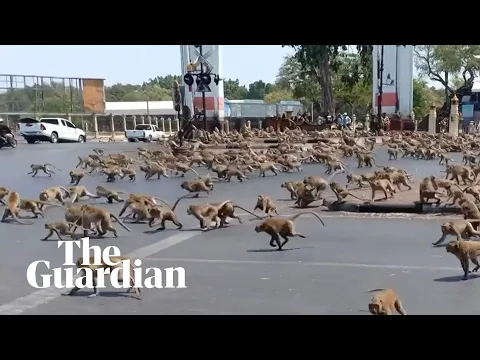
It is estimated that the monkey population in Lopburi has reached over 3,000 individuals concentrated in a few square kilometers, a number considered unsustainable for an urban environment. Entire troops began to dominate intersections, rooftops, poles, squares, and building facades.
As a result, conflicts intensified. The animals began to invade stores, steal food, destroy stocks, rip out wiring, break rooftops, and cause frequent damage. In many cases, residents report that leaving their homes without protection has become risky.
Sanitary Impacts and Public Health Risks
The uncontrolled growth has also brought serious sanitary problems. Feces scattered across sidewalks, rooftops, and interior areas of buildings have become routine.
Local authorities have warned of the risk of disease transmission since monkeys can be vectors for viruses, bacteria, and parasites dangerous to humans.
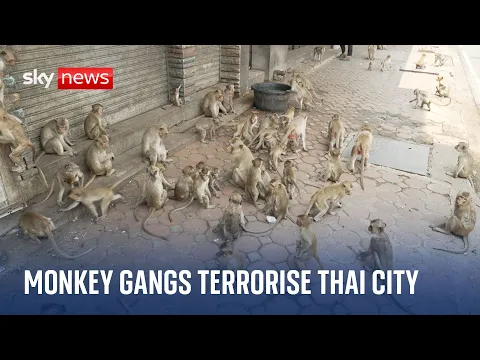
There has been a significant increase in bites and scratches, primarily among tourists trying to interact or protect their belongings. Each incident requires immediate medical attention, vaccination, and monitoring, putting pressure on the local healthcare system.
Collapsing Tourism and Affected Economy
Ironically, what once attracted visitors has now repelled them. Restaurants closed, hotels reported declines in occupancy, and merchants reported constant losses. During periods of lower tourist traffic, such as during the pandemic, the problem worsened further.
With the abrupt reduction of tourists, the monkeys were left without their main source of artificial food, becoming more aggressive and competitive, fighting over scraps and invading even more sensitive areas of the city.
Late Attempts at Population Control
In the face of urban chaos, the Thai government initiated emergency control programs, including capture, sterilization, and relocation of the monkeys.
The strategy, however, faces enormous limitations: capturing animals in an urban environment is difficult, expensive, and slow, while the reproduction rate remains high.
Experts point out that, even with intensive campaigns, it will take years to stabilize the population, provided that the food supply is rigorously interrupted—something that still faces cultural and economic resistance.
A Global Example of Imbalance Caused by Humans
The case of Lopburi has become an international reference in studies on conflict between wildlife and urban environments.
The problem was not caused by the monkeys, but by decades of unplanned human stimulation, absence of preventive public policies, and unrestricted tourism exploitation.
Today, the city serves as a warning to other countries that romanticize coexistence with wildlife in urban areas. When nature adapts to human conveniences, control ceases to be ecological and becomes a social, economic, and sanitary issue.
A Human-Created Problem, Hard to Reverse
Lopburi does not face an “animal invasion,” but rather the direct consequences of human choices accumulated over time. Feeding wildlife, turning fauna into a tourist attraction without rules, and ignoring environmental limits have created a situation that now demands harsh, long, and costly interventions.
The case clearly shows that unmanaged coexistence turns into crisis, and that restoring balance after it is lost is always more difficult and expensive than preserving it from the start.









Aqui no Brasil o exemplo são os P.T..foram dando espaço agora não tem mais jeito de interromper o crescimentos desses apedeutas
Eu tenho uma ideia 💡 mas poucos vão gostar mas e pelo próprio bem da população da cidade eliminar parte dos macacos e deixar alguns afinal de contas existem muitos deles no paíz e eles não vão sumir se eliminar parte deles da cidade é a minha opinião 😒😅 se alguém tiver outra ideia 💡 prós coitados podem dar.
No nosso Brasil,a proliferação é de marginais, pois o STF e mais este governo,acabam de liberar milhares na saidinha de Natal,e sem obrigação de voltar.🤮🤔