





 Portuguese
  English
  Spanish
  6 min of reading
  0 comments



How Much It Costs to Build a House in 2026 Varies According to Construction Standard, Layout, Structure, Frames, Finishes, and Land, with Average Costs Per Square Meter Starting from Simple Works, Advancing to Medium Standards and Rapidly Scaling in High-End Projects
Knowing how much it costs to build a house in 2026, according to the channel Eng. Jonatan Oliveira, depends on the project’s standard and five items that pressure the budget, with labor at 40% to 50% and structure at 15% to 20%, as well as average ranges per square meter for normal, medium, and high standards.
Normal Standard Starts with Layout and Small Environments
The definition of standard, in the base material, starts with the layout and not just with finish choices. In the normal standard, the environments tend to be small, with dimensions cited such as 3 x 3, 3.5 x 3.5, and even 4, with bedrooms between 9 and 12 m².
In this model, the report indicates that there is no integration of environments. The house is described as “all with walls,” with no joining of the living room and kitchen, because integration requires a more robust structure to support larger spans, which increases the cost of beams, slabs, and execution.
-
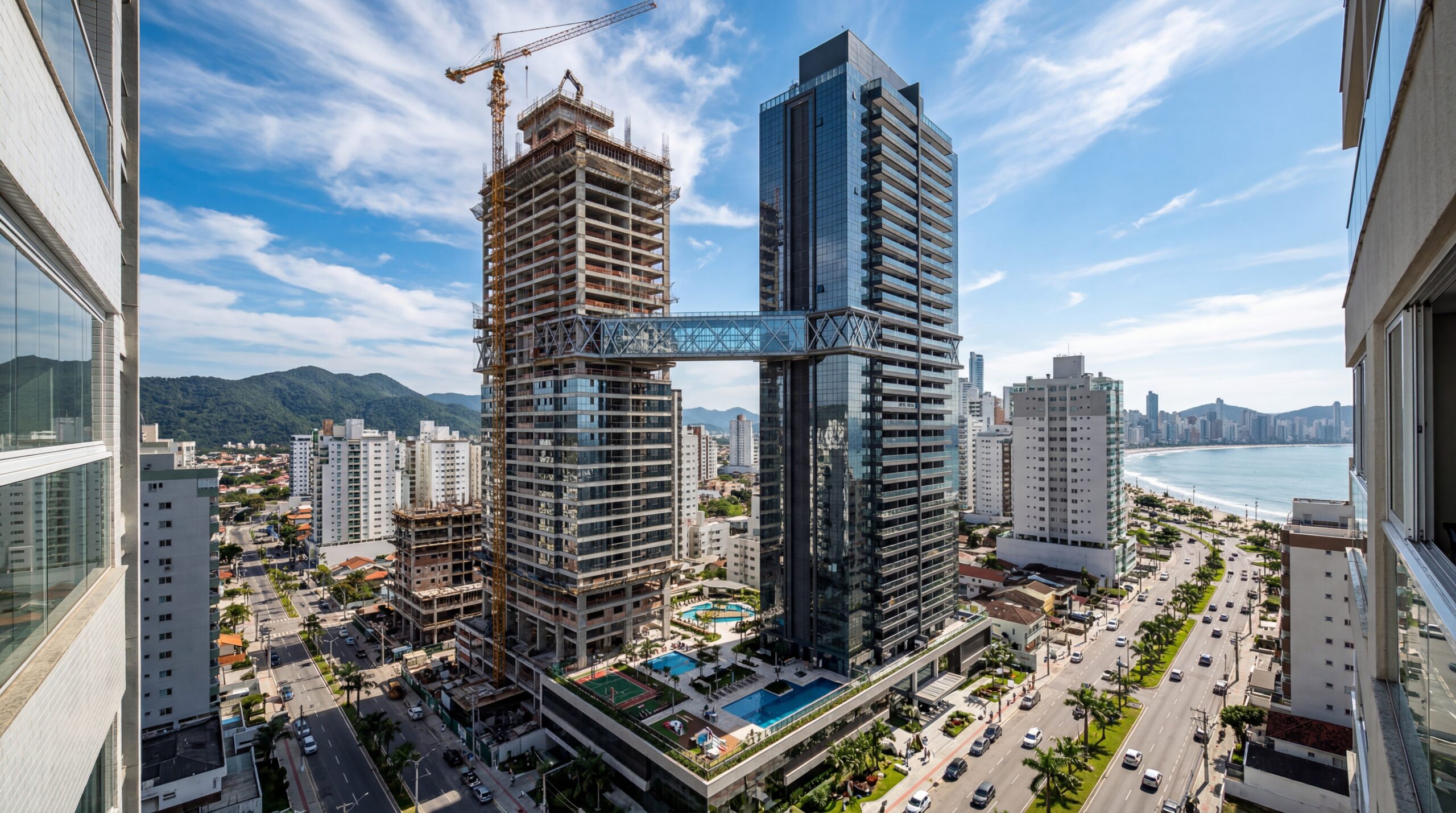
With 55 floors, 177 meters in height, a 15-meter walkway between the twin towers, ventilated facade, and 6,300 m² of leisure space, Ápice Towers already has one tower completed and another nearly at the top.
-
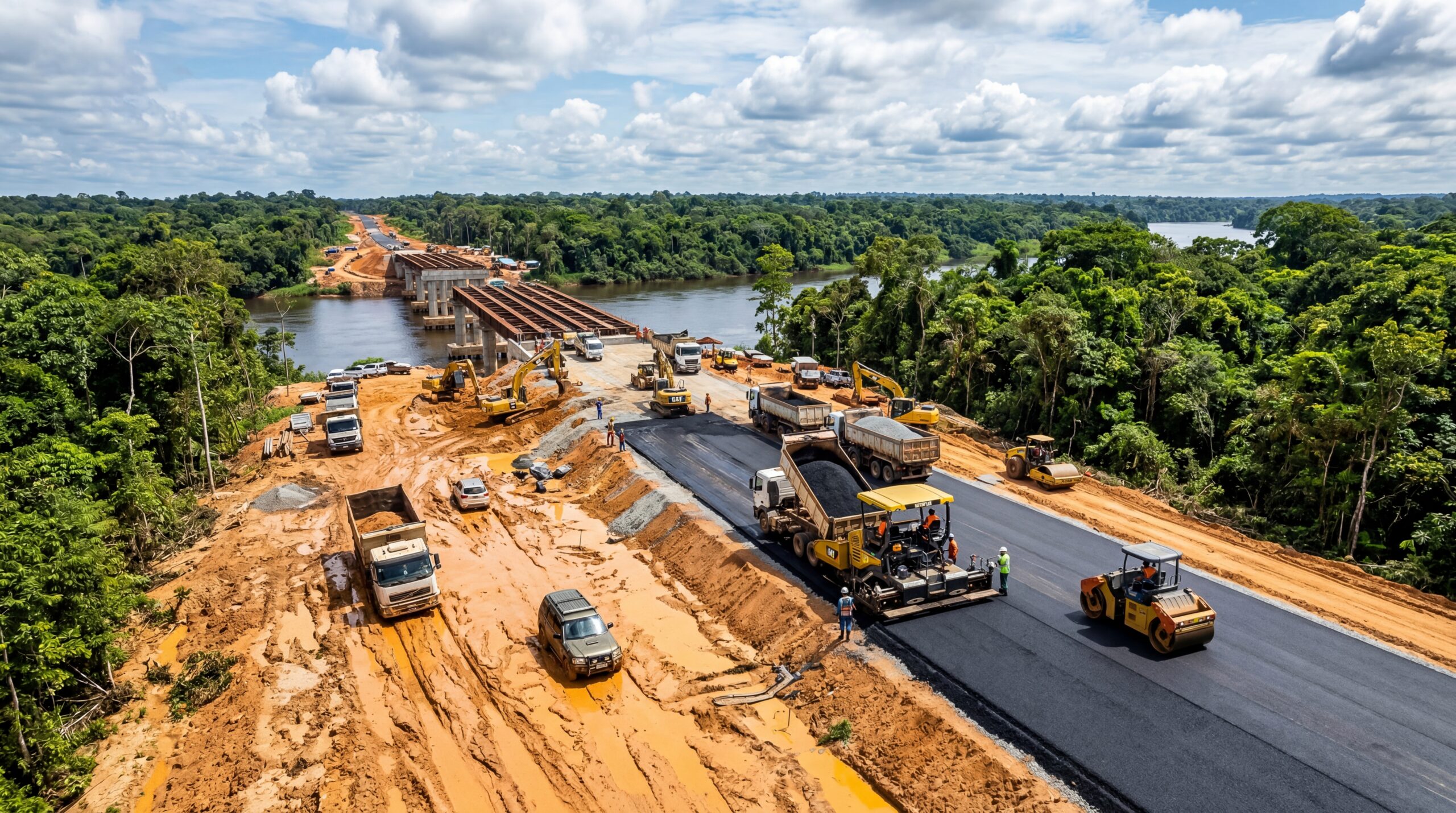
After nearly 50 years of neglect, BR-319 receives R$ 678 million to pave 340 km, gain a 320-meter bridge, and try to lift Amazonas out of the mud, the quagmire, and road isolation.
-
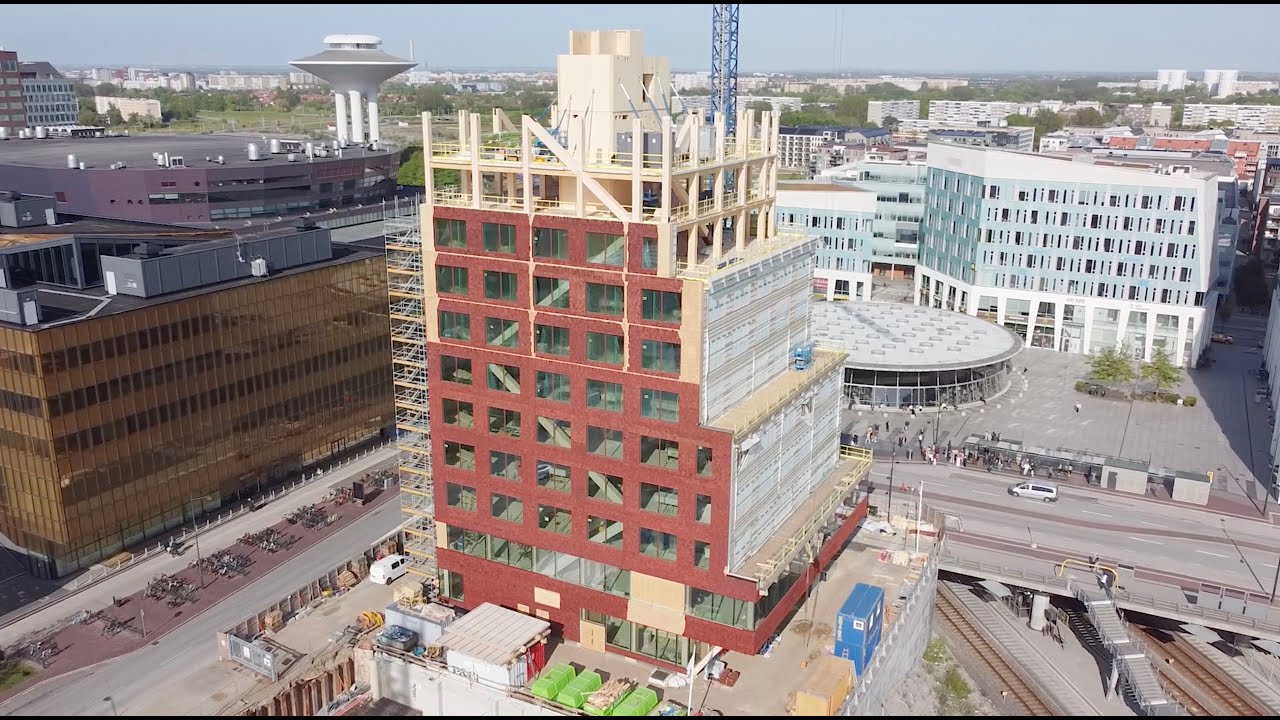
In Sweden, a 51-meter tower was built almost entirely of wood, without a concrete structural core and with solar panels integrated into the facade, using CLT and laminated beams to challenge the dominance of steel and concrete in modern buildings.
-
The section of Serra da Rocinha on BR-285 is now open in Timbé do Sul: 50 m tensioned curtains and top-down technique stabilize the slope, with a stairway duct controlling the water.


The normal standard is also associated with simpler internal finishing solutions. The material describes the use of smooth plaster directly on the block as a cheaper alternative than plastering, with a productivity advantage, but with limitations in flatness and a greater chance of cracks and fissures.
Frames, Doors, and Ceilings Help to Separate the Standards
In the normal standard, doors and windows are treated as “commercial sizes,” bought ready-made at large stores. The content cites an 80 by 2.10 door and a 1.50 by 1.20 window as references for this set, avoiding non-standard pieces.
When comparing solutions, the material distinguishes tempered glass from the complete aluminum set. In a high-standard house shown as an example, there is a door about 7.40 m wide by 2.20 m high, with aluminum profiles, cited as the most expensive line.
Still in this comparison, the video states that when working only with tempered glass, the cost is “somewhere in the range” of 60% to 70% of the value compared to an aluminum “frame.” The difference is attributed to the standard, size, and type of finish involved.
On the ceiling topic, the normal standard is associated with a simpler ceiling, with plaster on the ceiling. At higher levels, solutions like plaster ceilings and vinyl ceilings emerge, with the idea of “hiding the slab” and raising the finishing level.
Medium Standard Expands Environments and Moves to Plaster and Custom
In the medium standard, the material reports an increase in dimensions, with environments “starting from 4, 5 m,” which requires more structure and raises the cost compared to smaller environments. The relationship is presented as direct: the smaller the environments, the cheaper; the larger, the more expensive.
The finishing approach also changes. The content states that in this standard, the house is “entirely plastered,” without the use of smooth plaster as the main solution. The base text also describes work phases where part of the walls is left in the sealer when it will receive carpentry.
On the ceiling, the medium standard is described with a plaster ceiling throughout the house, without points of plaster directly on the slab or direct plastering. In the frames, a possible combination arises: some pieces in aluminum and others simpler with tempered glass, with larger and different doors.
From then on, the material emphasizes the effect of “custom-made.” When mentioning a door about 1.50, the content states that it no longer fits into a ready-made model and requires hiring a specialized company to produce specific frames, increasing costs and complexity.
High Standard Integrates Environments and Makes the Structure Heavier
In the high standard, the content relates the increase in cost to the integration of environments and the size of the spans. The example presented describes a dining room, living room, kitchen, and lounge connected, requiring larger beams, more concrete, shoring, steel, and labor, as well as more time for execution.
The logic of the structure appears as a consequence of the architectural project. To maintain a large span, including a door “of about almost 8 m wide,” the material states that a supporting beam is necessary to sustain the opening without intermediate support.
In finishes, the high standard is described with plastered walls and the use of finishing compound and painting. The statement indicates that, at this level, the ceiling can go beyond plaster, including vinyl ceilings, pointed out as being around twice the price of plaster ceilings.
The material also expands the possible variation with wooden ceilings, mentioning cases where the expenses can be four, seven, or 10 times higher than plaster, depending on the type. As an extreme example, it states that this cost can reach R$ 1,000 per m².
The Five “Villains” of the Budget and the Cited Percentages
After differentiating the standards, the content presents five factors that pressure the cost and says that they help to “attack the right villains” to build within the budget. The first is labor, pointed out as about 40% to 50% of the total cost.
In this item, the main recommendation of the material is to have a contract with a defined and fixed value, to avoid the risk of not having a clear cost in execution. The video points out this scenario as the worst case in labor relations.
The second villain is the structure, linked to the layout of the architectural project. The material associates larger spans, aesthetic overhangs, and wide openings with higher costs, placing the structure as something around 20% of the project cost, typically between 15% and 20%.
The third villain is the finishes, including flooring, porcelain tiles, stonework, and lighting, cited as typically around 15% of the value. The content argues that while reducing finishes helps, labor and structure together already sum up to 60% of the cost.
The fourth villain is the set of frames, described as more expensive the more customized they are. The material states that frames typically represent around 10% of the total construction value, reinforcing the difference between commercial pieces and custom-made.
The fifth item is the land, pointed out as variable, influenced by slopes and how the architectural project fits into the lot. The content mentions that the adjustment can consume 10%, 15%, or 20% of the construction value and cites cases of R$ 150,000 and R$ 200,000.
Cost Ranges Per m² in 2026, According to Works from His Own Portfolio
When presenting values, the material states that the cited averages are based on works executed by the author himself, without searching online. For the normal standard, the report indicates a range of 3 to 3.5 per m², within the described model of compartmentalized layout and simpler solutions.
For the medium standard, the content points to a start of 4 to 4.5, saying that “lately” it is difficult to be outside of this, still with possible variations. The standard is associated with larger environments, plastering, plaster ceilings, and more custom items, like doors and some frames.
In the high standard, the material states that it starts at 5.5 per m² and that from there on, “the sky is the limit,” with many possibilities. The difference between high standard and luxury is reinforced by examples of flooring at R$ 100 per m² versus marble at R$ 2,000 per m².
In closing, the video indicates two options to estimate costs more closely to reality: a class that works with data updated monthly and a methodology called “smart consumption method,” aimed at building within the budget and securely, from calculation to execution.








-

-

4 pessoas reagiram a isso.