





 Portuguese
  English
  Spanish
  9 min of reading
  1 comment


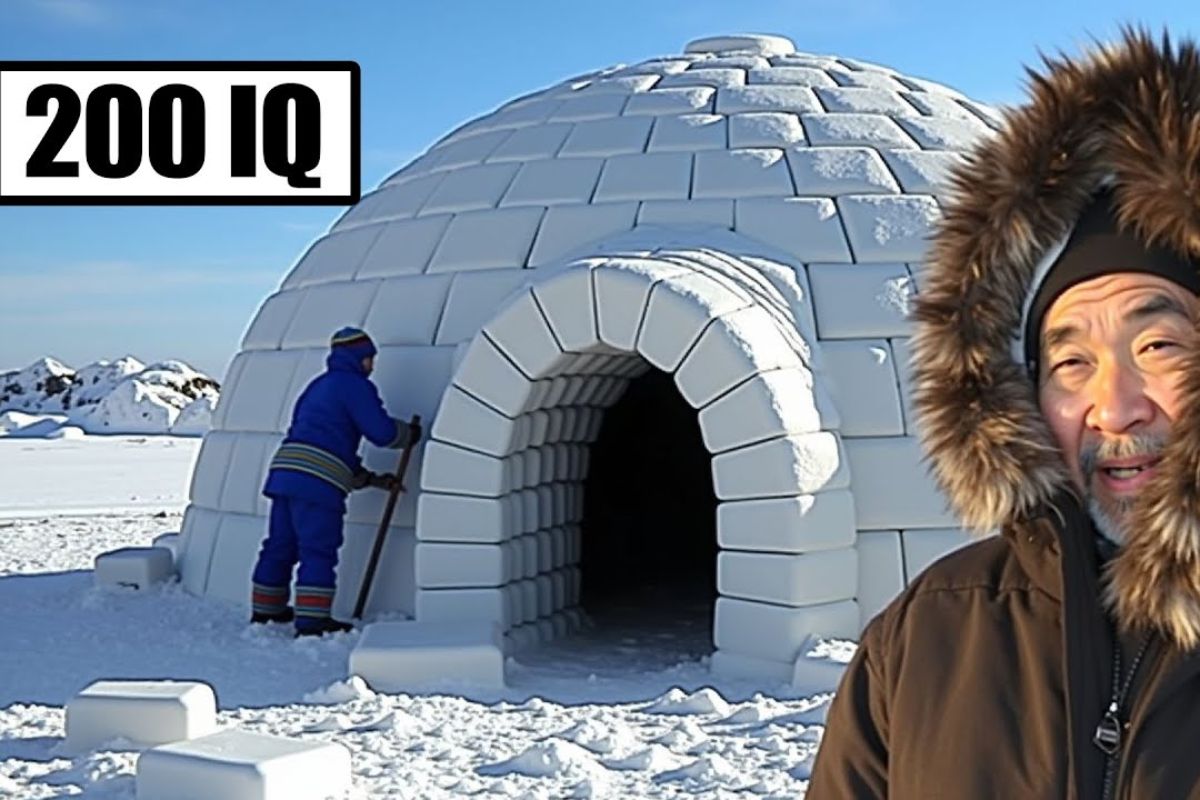


While Many See A Functional Igloo As An Ice Curiosity, Inuit Communities Use Compacted Blocks, Intuitive Angle Calculation, And Cold Air Tunnels To Create, In A Few Hours, A Stable, Reusable, And Safe Thermal Shelter For Hunting Trips In The Arctic, Even In Extreme Winds And Prolonged Darkness.
The Inuit Have Transformed The Functional Igloo Into A Technical Response To A Radical Problem: How To Keep People Alive, Minimally Warmed, And Able To Hunt In Regions Where The Thermometer Can Plummet To About 50 Degrees Fahrenheit Below Zero And The Wind Cuts The Skin Like A Blade. This Is Not A “Snow House,” But An Architectural Solution Tested Over Thousands Of Years In One Of The Most Hostile Environments On The Planet.
Over The Centuries, Experienced Hunters Have Learned To Identify The Right Type Of Snow, Cut Blocks Almost As Strong As Concrete, Assemble A Self-Supporting Spiral Dome, And Use Only Body Heat And A Small Flame To Transform A Functional Igloo Into A Shelter With An Internal Temperature Close To The Freezing Point, While The Exterior Remains In Extreme Cold. The Engineering Is In Every Detail: From The Choice Of Terrain To The Last Block Fitted On Top.
Who Can Raise A Functional Igloo In A Few Hours

The Functional Igloo Is, Above All, The Product Of Community Knowledge. It Is Not A Recent Invention, Nor The Isolated Creation Of An Individual.
-
Goodbye iron: new technology from Xiaomi promises to revolutionize the way we iron clothes with 500 kPa steam, continuous flow of 120 g/min, heating in 65 seconds, and six smart modes for different fabrics.

-
Rio Pardo, the most mysterious city in Rio Grande do Sul: untouched Pampas castle, the missing treasure of the Devil Boy, bride’s saint, invisible tunnels, and a 200-year curse today.

-
China retires the J-7 fighter after years of military protection and can now transform military items into drones, following more than 60 years of operation of the J-7, derived from the MiG-21, with thousands of units produced and strategic use in the PLAAF and PLANAF.

-
Volunteers are sought to live in the mountains for a month: a study pays people to stay at 2,500 meters, with 24-hour monitoring of sleep, metabolism, and blood pressure.

The Inuit Communities Have Perfected This Type Of Shelter Over Approximately 4,000 Years, In Arctic Regions Where Trees Are Rare, The Soil Is Hard, And Snow Is, Paradoxically, The Most Abundant And Cheapest Material Available.
Experienced Builders Can Raise A Functional Igloo In About Two Hours Of Focused Work. Typically They Are Hunters Or Older Members Of The Community, Who Learned By Observing Parents, Grandparents, And Other Snow Masters As Children.
The Transmission Of Knowledge Is Practical, Direct, Based On Repetition And Correction. Each Functional Igloo Built On A Hunting Trip Is, At The Same Time, Shelter And Classroom.
This Shelter Is Not Designed For Tourism Or Aesthetics. It Is Mainly Used On Hunting Trips That Can Last Days Or Weeks, And Also As A Seasonal Base In Certain Areas.
During These Displacements, The Functional Igloo Allows Small Groups To Sleep, Rest, Process Game Meat, And Plan Subsequent Moves In Relative Thermal Safety, Without Relying On Fixed Structures Or Modern Equipment.
Where A Functional Igloo Begins: Choosing The Right Snow

Building A Functional Igloo Does Not Start With The Shape Of The Dome, But With The Snow. Using The Wrong Type Of Snow Is Like Trying To Raise A Brick House Made Of Wet Cookies.
The Inuit Have Developed A Selection Method That Combines Physical Sensitivity And Implicit Understanding Of The Weather.
They Look For A Specific Type Of Snow, Compacted By The Wind, In Which The Crystals Have Been Pressed Together More Firmly.
Technically, It Is Denser Snow, In Which The Flakes Have Partially Melted And Re-frozen, Creating Small “Bridges” Of Ice Between The Particles.
In Practice, The Test Is Simple: The Hunter Walks With A Stick, Poking It Into Different Snowbanks, Feeling The Resistance. If The Stick Goes In Too Easily, The Snow Is Too Powdery; If It Doesn’t Go In, It Is Hard As Solid Ice.
Experienced Builders Can Test Dozens Of Points Until They Find The Ideal Snow For A Functional Igloo.
When They Finally Locate This Compacted Layer, They Start Cutting Blocks From It, Knowing That There Lies The Rare Combination Of Lightness And Strength.
In Good Conditions, These Blocks Can Be Stronger Than Concrete Of The Same Thickness, Thanks To The Internal Network Of Crystals That Formed Under Pressure.
Minimal Tools, Maximum Precision


A Functional Igloo Is Even More Impressive When Looking At The Tools Involved. There Is No Construction Truck, Crane, Or Heavy Equipment.
The Inuit Traditionally Rely On A Reduced Set Of Tools, Perfected For The Snow.
The Centerpiece Is The Snow Knife, Called Pana In The Inuit Language. It Is A Long, Wide Blade, Quite Rigid, Designed Specifically For Cutting And Shaping Compacted Snow Blocks.
In Modern Contexts, Carpenter Saws Can Replace The Pana For Some Tasks, As Long As They Are Long Enough To Cut Through Blocks About 60 Centimeters Long.
The Shovel Helps Clear The Ground And Accumulate Loose Snow, Which Will Later Be Used To Seal Gaps Between Blocks.
Another Important Technical Detail Is Measurement. Instead Of Metal Tapes, Many Builders Use Their Own Forearm As A Standard Unit, Ensuring Consistent Proportions From Block To Block.
To Protect Their Vision, Snow Glasses With Narrow Slits, Traditionally Made Of Horn Or Wood, Filter Out Excess Light Reflected By The White Surface.
In A Functional Igloo, Everything Is Designed To Operate With The Absolute Minimum Of Resources, Yet With Maximum Structural Efficiency.
How The Shape Is Born: From The Circular Base To The Self-Supporting Dome
The Engineering Of A Functional Igloo Begins With The Base. The Ground Is Cleared Of Loose Snow And Compacted.
Next, The Builders Draw A Nearly Perfect Circle Using A Rope: One Person Stays In The Center, Holding One End; Another Walks Around, Marking The Perimeter With The Other End, Like A Human Compass In The Snow.
The Snow Blocks, Measuring Approximately 60 Centimeters Long, 30 High, And 20 Thick, Are Then Placed Along This Circle.
The First Block Is Crucial: It Is Already Positioned With A Slight Tilt Inward, About 15 Degrees, Determining The Angle Of The Wall Toward The Future Dome.
Each Subsequent Block Is Cut And Set Respecting This Angle, Closing The Initial Ring With A Kind Of Low Wall, Already Inclined.
From There, The Most Delicate Part Begins: The Spiral Construction. Instead Of Raising Perfectly Horizontal Rows, The Inuit Create A Continuous Spiral, Where Each Block In The Above Row Partially Supports On The Block Below, Always Tilted A Few Centimeters More Inward.
Over Time, This Sequence Generates The Characteristic Curvature Of The Dome.
The Result Is A Structure Where Each Block Exerts Enough Pressure To Compress The Neighbor, Making It Stronger, But Without Crushing It.
The Top Block That Decides The Fate Of The Functional Igloo
All These Spiral Snow Blocks Converge To A Decisive Moment: The Placement Of The Top Block, Often Called The Main Block Or “King” Block.
It Is The Last To Be Fitted And Transforms A Pile Of Juxtaposed Blocks Into A Self-Sustaining Functional Igloo.
This Block Is Intentionally Cut Slightly Larger Than The Remaining Opening In The Dome.
Its Shape Resembles A Truncated Pyramid, Wider On One Face Than The Other, Making It A Kind Of Wedge. The Builder Pushes It Through The Opening From The Outside, And Once Inside, Carefully Rotates It Until It Fits And Distributes Forces Equally Around The Dome.
When The Top Block Finally “Locks” The Structure, The Pressure Becomes Shared By All Blocks, Consolidating The Functional Igloo.
Even For Experienced Builders, This Fitting May Require More Than One Attempt.
The Block Breaks If Forced At The Wrong Angle, The Opening May Need Adjustments, And Small Imperfections In The Spiral Accumulate At The Top.
Still, When The Fit Is Successful, The Feeling Of Security Changes Instantly: The Interior Stops Being A Fragile Space And Becomes A Cohesive Shelter, Already Able To Withstand Strong Winds.
Heat, Cold Air, And The Thermal Logic Of A Functional Igloo
The Efficiency Of A Functional Igloo Does Not Depend Only On The Dome. The Inuit Master The Behavior Of Hot And Cold Air Inside The Shelter, Designing The Interior With The Same Precision Applied To The Structure.
The Entrance Is Rarely Just A Simple Hole In The Wall; Instead, It Is Built As A Lowered Tunnel, Lower Than The Internal Floor.
This Tunnel Forms What Is Called A Cold Trap. The Cold Air That Enters Tends To Descend And Accumulate In The Lowest Part, Near The Entrance, While The Warmer Air, Generated By The Bodies And A Small Flame, Remains In The Elevated Part Of The Interior.
Thus, The Functional Igloo Creates A Natural Separation Between The Cold That Enters And The Heat That Is Desired To Be Preserved.
At The Top, A Small Ventilation Hole, Approximately The Size Of A Fist, Prevents The Accumulation Of Smoke And Moisture.
As The Interior Heats Up, A Thin Layer Of The Internal Snow Surface Melts Slightly And Refreezes, Forming A Film Of Ice That Strengthens The Dome And Reduces Wind Passage.
In Typical Conditions, The Internal Temperature Of A Functional Igloo Can Be About 40 Degrees Fahrenheit Above The External Temperature, Meaning It Can Maintain Something Around The Freezing Point Inside Even When The Exterior Is In Extreme Cold.
How A Functional Igloo Sustains Long Hunts And Food Storage
On Hunting Trips, The Functional Igloo Is Much More Than An Improvised Sleeping Place. It Functions As A Temporary Base, Rest Area, Minimal Kitchen, Equipment Storage, And Above All, A Space For Storing Meat.
The Internal Temperature, Just Below Freezing, Is Ideal For Preserving Food For Long Periods Without Rapid Spoiling.
The Thick Snow Walls Also Protect Against Predators Interested In Animal Carcasses, Such As Hungry Bears.
Unlike Wooden Or Fabric Structures, Which Can Be Ripped Apart Or Knocked Down, A Well-Maintained Functional Igloo Has Few Gaps And Makes Direct Access To The Stored Meat Difficult.
In Practice, It Functions As A Combination Of House, Refrigerator, And Improvised Safe In The Middle Of The Arctic Landscape.
For Short Hunting Trips, A Functional Igloo Can Be Simple, With A Single Compartment And Basic Sleeping Arrangements. Seasonal Bases, Used Over Weeks, May Include Internal Divisions, Specific Areas For Equipment, And Groupings Of Several Igloos Nearby, Forming A Kind Of “Snow Camp,” With Separate Functions For Rest, Food Storage, And Work.
Maintenance, Lifespan, And Limits Of A Functional Igloo
A Functional Igloo Is Not A Permanent Structure. It Is Designed To Accompany The Rhythm Of The Snow, The Wind, And The Hunting Season Itself.
With Use, Cracks, Melting Points, And Weaker Areas Appear. Hunters Fix This By Adding Fresh Snow To Critical Parts, Filling Cracks And Reinforcing The Base Exposed To The Wind. Each Repair Increases Insulation A Little And Prolongs The Shelter’s Lifespan.
Still, There Is A Limit. The Functional Igloo Is Intended To Last For A Specific Expedition Or Season, Not For Years. Temperature Changes, Variations In Snow Type, And Constant Displacements Require Rebuilding Or Abandoning Old Structures.
The Logic Is Always The Same: Build Quickly, Use Efficiently, Maintain Enough, And When Necessary, Start Over With The Same Ancient Technique.
More Than A Symbol Of A People, The Functional Igloo Is A Reminder That Low-Tech Solutions Can Be Extremely Sophisticated When Born From Patient Observation, Repetition, And Adaptation To The Environment.
In A World That Emphasizes Composite Materials, Electronics, And Industrial Insulation, The Inuit Arctic Continues To Show That Compacted Snow, Precise Geometry, And Basic Thermal Organization Still Solve A Problem That No Screen Or Chip Directly Faces: How To Survive Tonight In Extreme Cold.
What The Functional Igloo Reveals About Us
When Observing A Finished Functional Igloo, It Is Easy To See Just A Simple White Dome In The Middle Of Nowhere.
Behind This Simplicity, However, There Is A Buildup Of Technical Decisions: Type Of Snow, Block Dimensions, Cutting Angles, Spiral Sequence, Lowered Entrance Tunnel, Superior Ventilation, Use Of Body Heat And Controlled Flame.
In A Scenario Of Climate Change And Extreme Events, Such Solutions Raise An Uncomfortable Question: To What Extent Do Ancestral Technologies, Such As The Functional Igloo, Still Align Better With The Environment Than Many Modern Designs Intended To Last Short And Consume A Lot?
Perhaps The Snow House That Rises In Two Hours Says More About Real Sustainability Than A Glass Building Full Of Sensors.
For You, Who Read This Analysis: If You Had The Chance To Spend A Night In A Real Functional Igloo, In The Arctic, Would You Trust More In The Snow Engineering Of The Inuit Or In The Protection Of A Modern Tent Full Of Equipment?










Eu não passaria por não gostar de frio, mas admiro muito a inteligência destas pessoas.