





 Portuguese
  English
  Spanish
  5 min of reading
  0 comments


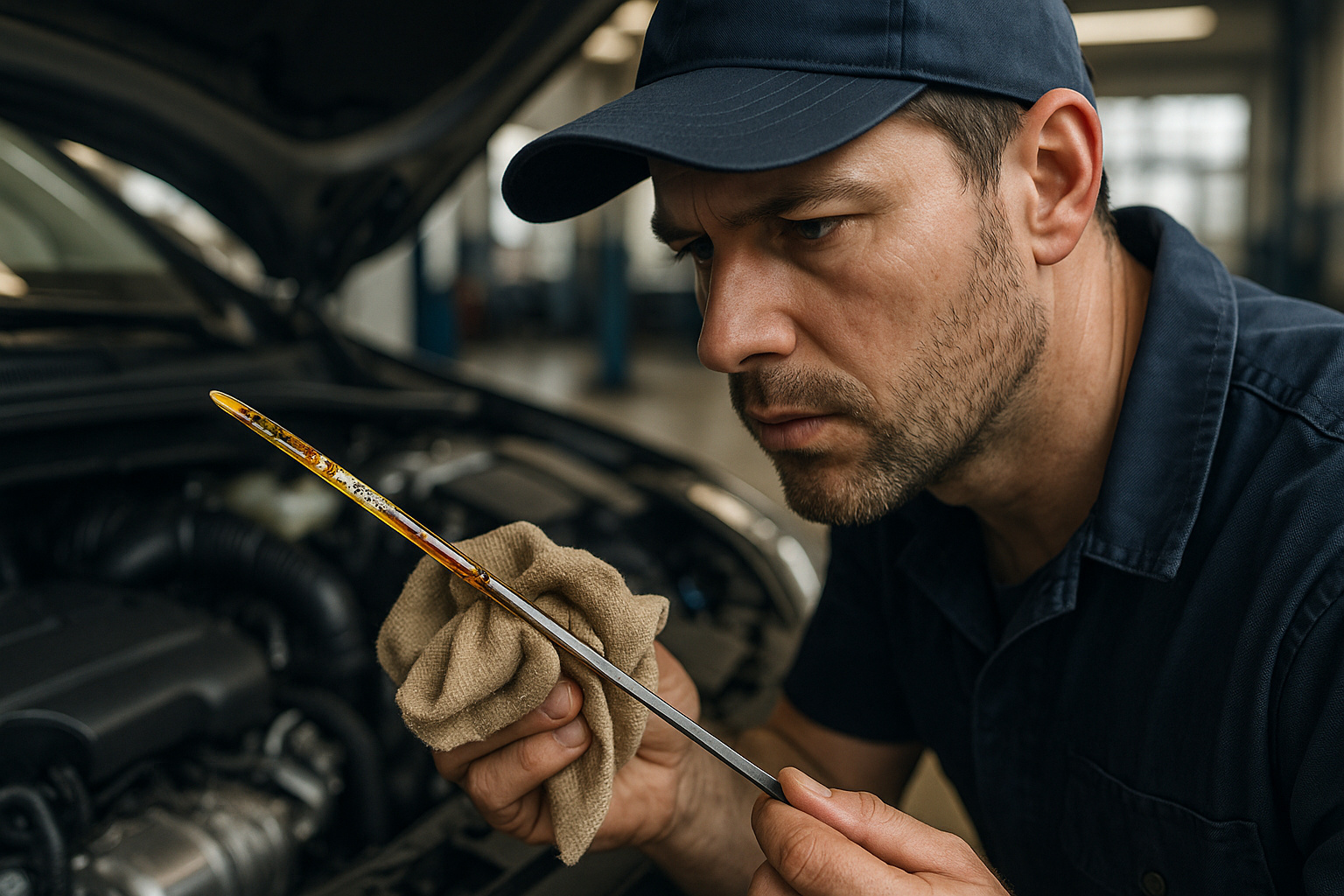
Choosing a Reliable Lubricant Goes Beyond Price: Experts Show How to Detect Adulterated Oil, Understand the Limits of Home Inspection, and Reveal the Indispensable Care to Preserve the Engine and Avoid Irreversible Damage
The engine oil is the silent heart of automotive mechanics. It ensures the lubrication of all moving parts in the propulsion system, reduces friction between components, helps to control internal temperature, and keeps the engine clean. Additionally, it retains combustion particles and prevents deposits that could compromise the lifespan of pistons, bearings, and gears.
However, despite this indispensable function, many drivers still face difficulties in properly following the maintenance standards recommended by manufacturers. Part of this issue lies in the lack of knowledge among consumers and workshops, but also in the large circulation of adulterated products in Brazil.


According to the Brazilian Association for Combating Counterfeiting (ABCF), about 20% of lubricants sold in the country may be adulterated. This alarming data highlights the importance of identifying possible signs of alteration before the oil compromises the car’s performance. As highlighted by the magazine Auto Esporte, in addition to strictly following the manufacturer’s manual, it is essential to learn how to observe signs of adulteration.
-
With a 1.0 engine producing 75 hp and costing less than R$ 70,000, Fiat’s car returns to the podium as the cheapest in the country; a temporary promotion for the 2026 Like version reduces the price of the Fiat Mobi.

-
With a mild hybrid system of 48 V, 176 hp and a price of R$ 175,990 in the Sahara version, the new Jeep Renegade changes mostly on the inside, improves slightly in fuel consumption, and remains almost the same car.

-
With a 293.5 cm³ engine and a range of up to 400 km with a 14.1-liter tank, the Honda CB 300F Twister 2026 has up to 24.7 hp, an initial price of R$ 25,150, and already exceeds R$ 29,000 in the Fipe Table.

-
With a 1.3 engine, nearly 700 km of range, and Turbo 200, the Fiat model surpasses Polo, Tera HB20, and Onix, becoming the best-selling car in March; see the numbers for the Fiat Strada and others.

Visual and Physical Changes: First Signs of Alarm
The appearance of the oil is one of the clearest indications that something may be wrong. Danilo Sad, Marketing Manager of Additives at Lubrizol Latin America, states that “the main visual sign of alteration is excessive darkening, indicating oxidation or the accumulation of combustion residues.”
Another point of attention is the presence of metallic particles or dirt on the dipstick. This could indicate wear in bearings, pistons, or gears. The color also helps: oils with a milky appearance reveal contamination by water or coolant, forming an emulsion that compromises lubrication.
Professor Clayton Zabeu from the Mauá Institute of Technology emphasizes that viscosity can only be measured in a laboratory. According to him, manual touch is not sufficient to identify subtle variations. Thiago Vega, Product Development Manager at Vibra, warns of abrupt color changes accompanied by a strong smell or unusual texture, signals of accelerated degradation or contamination.
The odor is also an important clue. Sad explains that the smell of fuel indicates dilution by gasoline or diesel, while a burnt odor suggests overheating. A sweet aroma may reveal the presence of coolant. In all cases, these symptoms should be observed with caution.
Limits of Home Inspection: When to Seek a Laboratory
Checking the oil level and appearance with the dipstick is a common and quick practice, but it has its limitations. Zabeu explains that a drop in volume may indicate leaks or wear, while an increase may signal contamination by fuel or coolant.
However, visual inspection cannot confirm chemical adulterations. For this diagnosis, only laboratory analyses are reliable. According to Vega, “the tests measure viscosity, acidity, contamination by water or fuel, and even the presence of metals resulting from internal engine wear.”
Sad adds: “even oils that appear normal can undergo serious chemical changes that compromise efficiency.” Therefore, home inspection should be viewed only as a preventive measure. Detecting early signs helps avoid serious damage to the engine and provides greater safety for the driver.
Causes of Premature Oil Degradation
Even following the change intervals, oil can degrade before the recommended timeframe. Among the main factors is the use of adulterated or low-quality fuel, which increases oil dilution and accelerates deposit formation.
According to Zabeu, engines facing heavy traffic, frequent starts, and high loads suffer even more from lubricant wear. Sad reminds us that mechanical failures also interfere: defective head gaskets and worn rings allow fluids and combustion residues to contaminate the oil.
He also emphasizes that choosing the right lubricant and using quality fuels are fundamental to preventing this process. Oils formulated with detergent and dispersant additives provide protection against oxidation, sludge, and wear, especially in urban and highway conditions.
Severe Consequences of Using Adulterated Oil
Running on adulterated or degraded oil can cause serious and costly damage. Vega explains that lack of lubrication increases friction between critical parts, raising temperature and accelerating engine wear.
Zabeu adds that the formation of sludge and deposits can block lubrication channels, compromising cooling and reducing the car’s efficiency. Sad warns that adulterated products increase fuel consumption, cause overheating, and can even lead to irreversible mechanical failures.
Additionally, counterfeit lubricants can harm other vital systems, such as transmission and steering, jeopardizing the safety of the vehicle and its passengers.
How to Prevent Problems and Ensure Engine Protection
The best way to protect yourself is simple: buy oil only from trusted dealers. Zabeu reminds that prices well below the market should be viewed with suspicion, as they are a common indication of adulteration.
Another precaution is to strictly follow the manufacturer’s specifications, observing viscosity, technical classification, and change intervals. Vega emphasizes that visual inspection helps identify early signs, but in case of doubt, laboratory analyses are essential.
Sad concludes by highlighting that modern lubricants must meet specific standards and contain appropriate additives. Low SAPS oils (low levels of ash, phosphorus, and sulfur) are fundamental to protect catalysts and particle filters in modern engines.
The visual observation of oil serves only as an initial alert. To ensure the lifespan of the engine and the efficiency of the vehicle, it is essential to follow the manufacturers’ recommendations, use reliable products, and maintain regular inspections. As Zabeu summarizes: “Dark oil is not a problem; the real risk lies in trusting products without provenance.”
As highlighted by Auto Esporte, following these guidelines correctly is the most effective way to preserve the car and avoid future headaches.









Seja o primeiro a reagir!