





 Portuguese
  English
  Spanish
  4 min of reading
  3 comments





Hybrid Retirement Is Recognized by the INSS and the Justice: Workers Can Add Rural and Urban Time to Meet the Required Minimum Contribution.
The right to retirement in Brazil has always been marked by challenges. Millions of Brazilians who divided their lives between the countryside and the city found themselves without options: rural time was not counted in practice, and urban contributions seemed insufficient. This started to change with the recognition of hybrid retirement by the INSS and the Judiciary, a benefit that ensures that periods of rural and urban work can be combined to fulfill the required minimum contribution.
This model serves a large audience: workers who migrated from the countryside to the city throughout their lives. These are farmers who left the hoe to become laborers, rural day laborers who later became formal employees, and even children of small producers who started helping in the fields before seeking jobs in urban areas.
What Is Hybrid Retirement
Hybrid retirement — also known as mixed-age retirement — is a benefit provided for in Article 48 of Law No. 8,213/1991, in paragraphs 3 and 4.
-
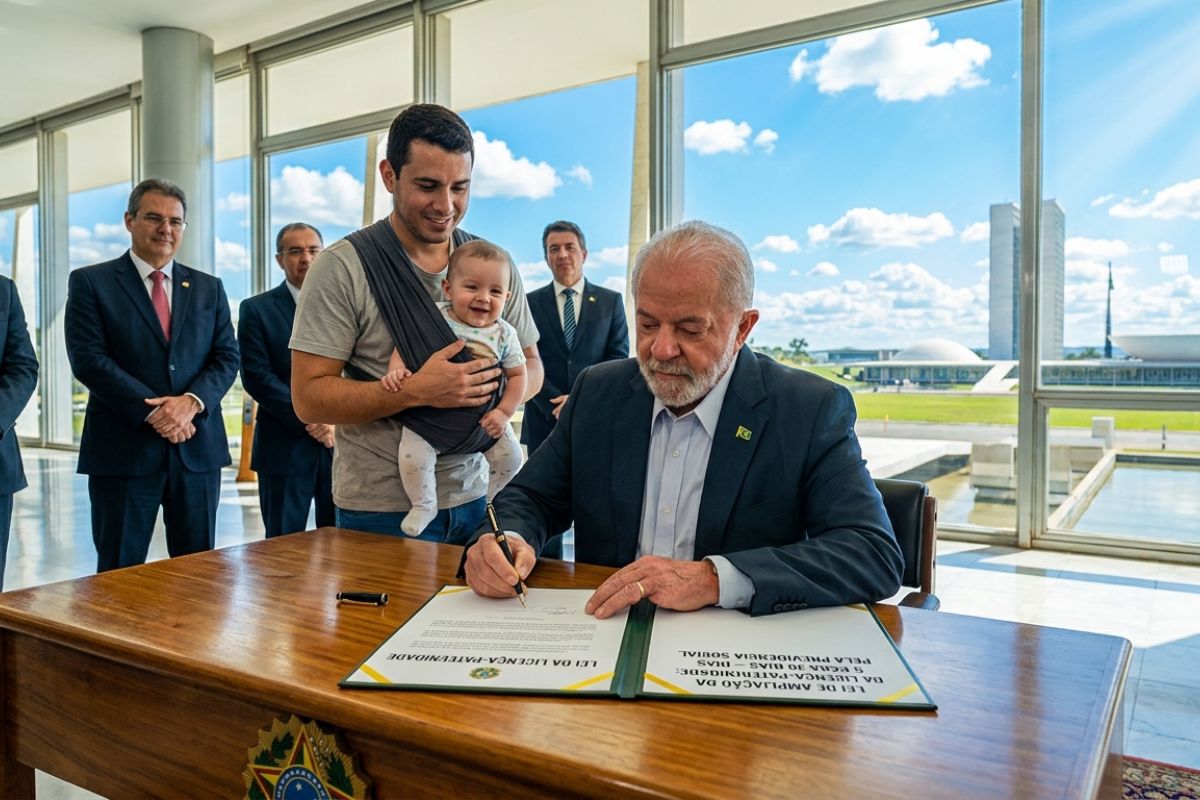
Government enacts new law: paternity leave increases from 5 to 20 days with gradual increases until 2029, and Social Security pays the paternity salary; companies no longer bear the absence cost, estimated at R$ 5.4 billion.
-
End of the 1-hour lunch break in the CLT? Current labor law maintains the break, allows for negotiated reductions, and defines rules for working hours and home office in Brazil.

-
Employee Fired After Accumulating 114 Days of Medical Leave in One Year, Labor Court Upholds Company’s Decision

-
Employee Fired While Treating Depression Wins in Court and Vale Is Required to Rehire Him Following Decision Based on the CLT and INSS Benefits


It allows for the combination of urban and rural work periods to meet the minimum contribution requirement demanded by the INSS.


This means that rural time, even without contributions, can be used to reach the minimum contribution time, provided it is properly documented. The innovation lies in considering these two worlds — rural and urban — as part of the same contributory trajectory.
The Rules to Obtain Hybrid Retirement
To access the benefit, certain requirements must be met:
- Minimum Age: 65 years for men and 62 years for women (after the Pension Reform, with possible transition rules for those who had already contributed before 2019).
- Minimum Contribution: at least 180 months (15 years) of contributions, which can be achieved by combining urban and rural time.
- Proof of Rural Period: documents such as birth certificates of siblings showing parents listed as farmers, lease agreements, rural producer receipts, union registrations, and even witnesses in court actions.
The differentiating factor of hybrid retirement is that rural time can be used even if it was remote (prior to 1991), as long as it is documented. The STJ, in Repetitive Theme 1007, confirmed that this time counts toward the minimum contribution, even if it is discontinuous.
The Importance of the STJ Decision
The Superior Court of Justice was decisive in consolidating hybrid retirement. In the judgment of Theme 1007, the ministers stated that the remote rural service time should be recognized to fulfill the minimum contribution for hybrid retirement, even if the worker is no longer in the countryside at the time of the request.
This decision paved the way for thousands of people to obtain the benefit after years of administrative denial.
Thus, the Judiciary reinforced social protection for those who worked hard in the fields but had no means of formally contributing.
Social and Economic Impact
The impact of hybrid retirement is profound. It is estimated that millions of Brazilians fall into this category — people who left the rural environment in search of better living conditions in cities.
Without this possibility of combination, these workers would be left unprotected, as neither isolated rural time nor urban time alone would be sufficient for retirement.
Moreover, the benefit corrects a historical injustice: a large part of agricultural work was done informally, without contribution collection, but with clear economic relevance for the country. Recognizing this time is also recognizing the importance of rural work in building Brazil.
Required Documents to Prove Rural Work
The main difficulty for those seeking hybrid retirement is the proof of the rural period. The INSS requires robust documentation, and not all rural workers have kept records. Among the main accepted documents are:
- birth certificates of children or siblings indicating the parents’ profession as farmers;
- lease, partnership or rural loan agreements;
- certification from rural unions;
- registration as a rural producer;
- invoices for the sale of agricultural products;
- marriage certificates indicating rural activity;
- school records from rural schools.
In the absence of complete documents, it is possible to turn to the courts, presenting witnesses and indirect evidence. Many hybrid retirement cases end up being recognized in court.
Changes After the Pension Reform
The Pension Reform (Constitutional Amendment 103/2019) brought significant adjustments. Previously, men could retire at 65 and women at 60 years under hybrid retirement. After the reform, the retirement age for women increased to 62.
Those who had already met requirements before the reform have an acquired right and can retire under the old rules. For others, the new minimum age applies.
Practical Cases
- A worker who lived in the countryside from ages 12 to 20, without formal registration, and then worked as a mason’s apprentice for another 10 years, can combine these periods to meet the 15 years of minimum contribution.
- A female farmer who helped her family until age 25 and then worked as a domestic employee for 12 years can also use both periods to retire.
These examples illustrate the relevance of the rule for those who had fragmented professional trajectories.
Hybrid retirement represents a victory for workers who built their lives between the countryside and the city. By recognizing this right, the INSS and the Judiciary take an important step toward correcting historical inequalities and valuing the efforts of millions of Brazilians.
In the end, the message is clear: the time devoted to work, whether in the fields or in the urban environment, has value and should be recognized. This achievement is more than a social security benefit; it is a symbol of social justice.









Tenho 60 anos.22 anos de agricultura de início e depois assinei carteira tenho 23 anos deserviço como concursado.posso somar os tempos e fazer o fator previdenciario.
Tenho 54 anos tem 16 de aquicultura e 16 de carnê não precisa mais pagar carne só esperar a idade
Se eu fosse vc continuaria pagando pois se vc precisar de uma perícia? E não estiver no período de carência? 11 meses