





 Portuguese
  English
  Spanish
 5 min of reading
  7 comments


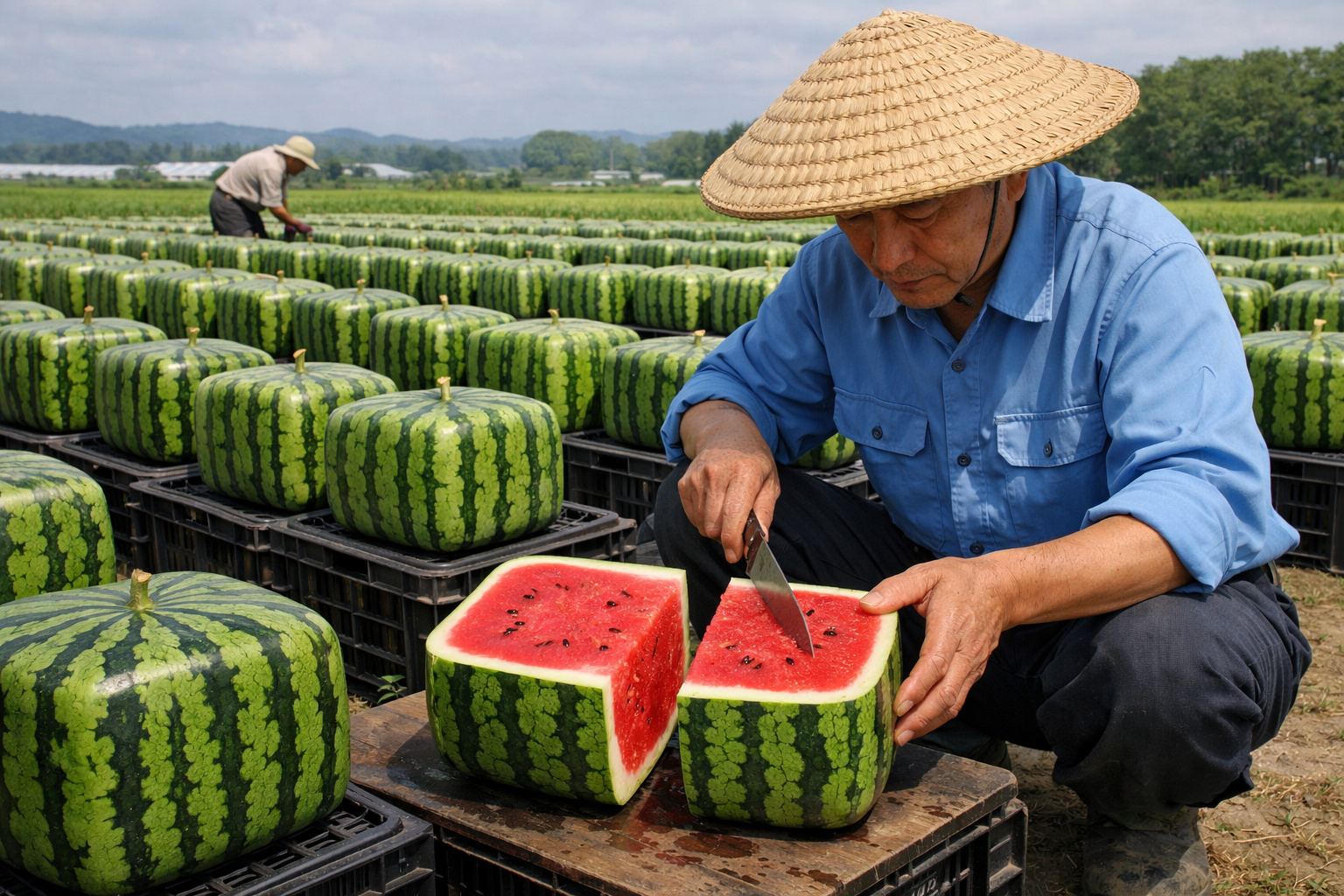


From Practical Solution for Space Shortage to Status Symbol, Design and Agricultural Innovation: The Curious Story of Square Watermelons Originated in Japan and Eventually Gained a Brazilian Version in the Interior of Ceará
Since early on, few things seem as obvious as the shape of a watermelon. Round, heavy, difficult to stack, and always taking up excessive space in the fridge, this fruit is part of the daily life of millions of people around the world. However, despite this image consolidated over centuries, Japanese farmers decided to challenge what seemed immutable and proved that even such a traditional fruit could take on a new shape — literally.
The watermelon is among the most produced fruits on the planet, alongside banana, apple, and tomato — which, despite popular confusions, is also classified as a fruit. Every year, global production approaches 200 million tons, highlighting its economic and food importance. Still, for thousands of years, its shape remained practically unchanged, always round, until Japan decided to challenge this historical pattern.
The origins of the watermelon continue to be debated by researchers, but most evidence points to Africa as the cradle of its domestication. Modern studies, including DNA analyses conducted on leaves found in tombs of Ancient Egypt, indicate that at least 3,500 years ago, the Egyptians were already cultivating watermelons very similar to those consumed today. In other words, for millennia, no one had altered its geometry — until Japanese creativity came into play.
-
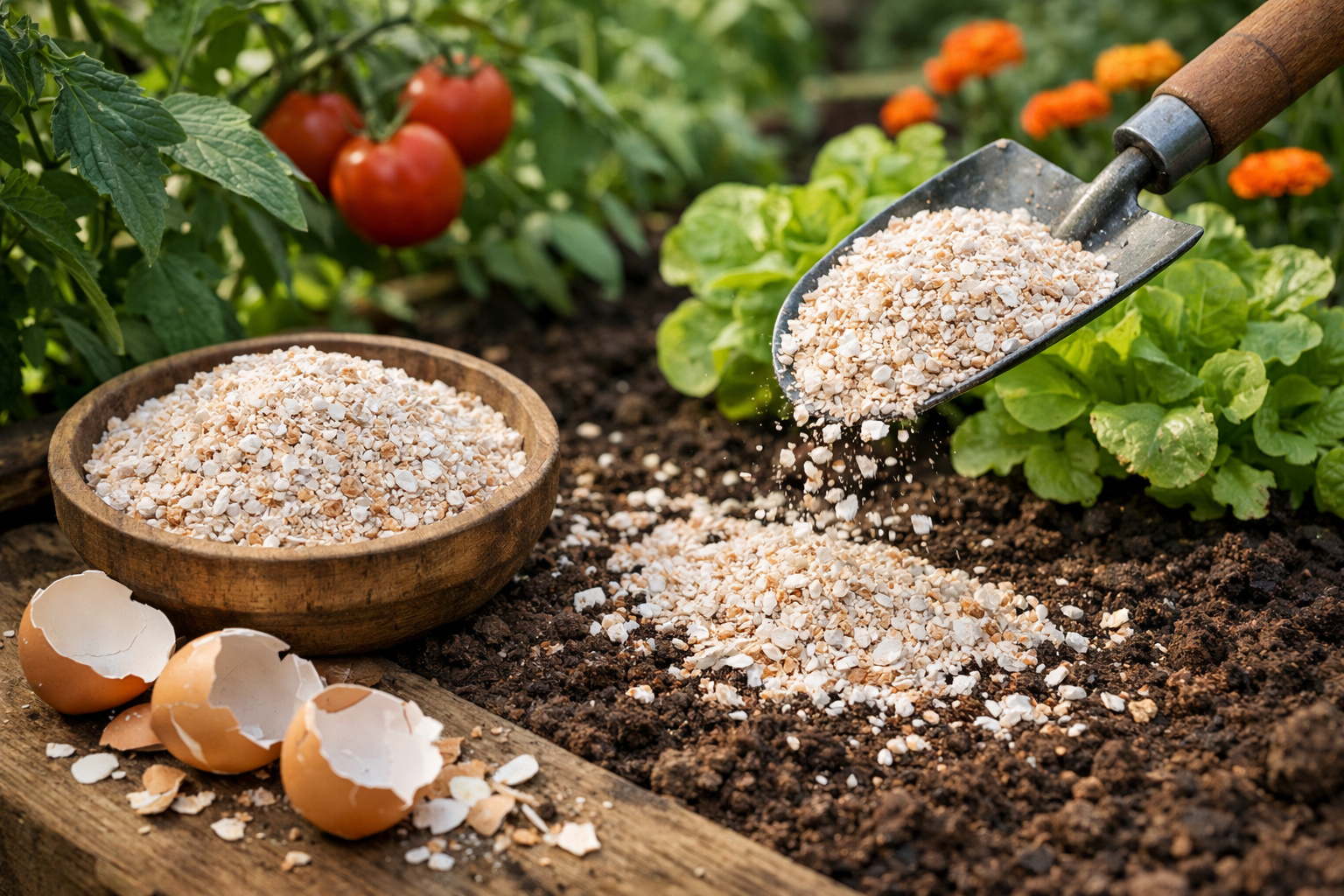
The eggshell that almost everyone throws away is made up of about 95% calcium carbonate and can help enrich the soil when crushed, slowly releasing nutrients and being reused in home gardens and vegetable patches.
-
This farm in the United States does not use sunlight, does not use soil, and produces 500 times more food per square meter than traditional agriculture: the secret lies in 42,000 LEDs, hydroponics, and a system that recycles even the heat from the lamps.

-
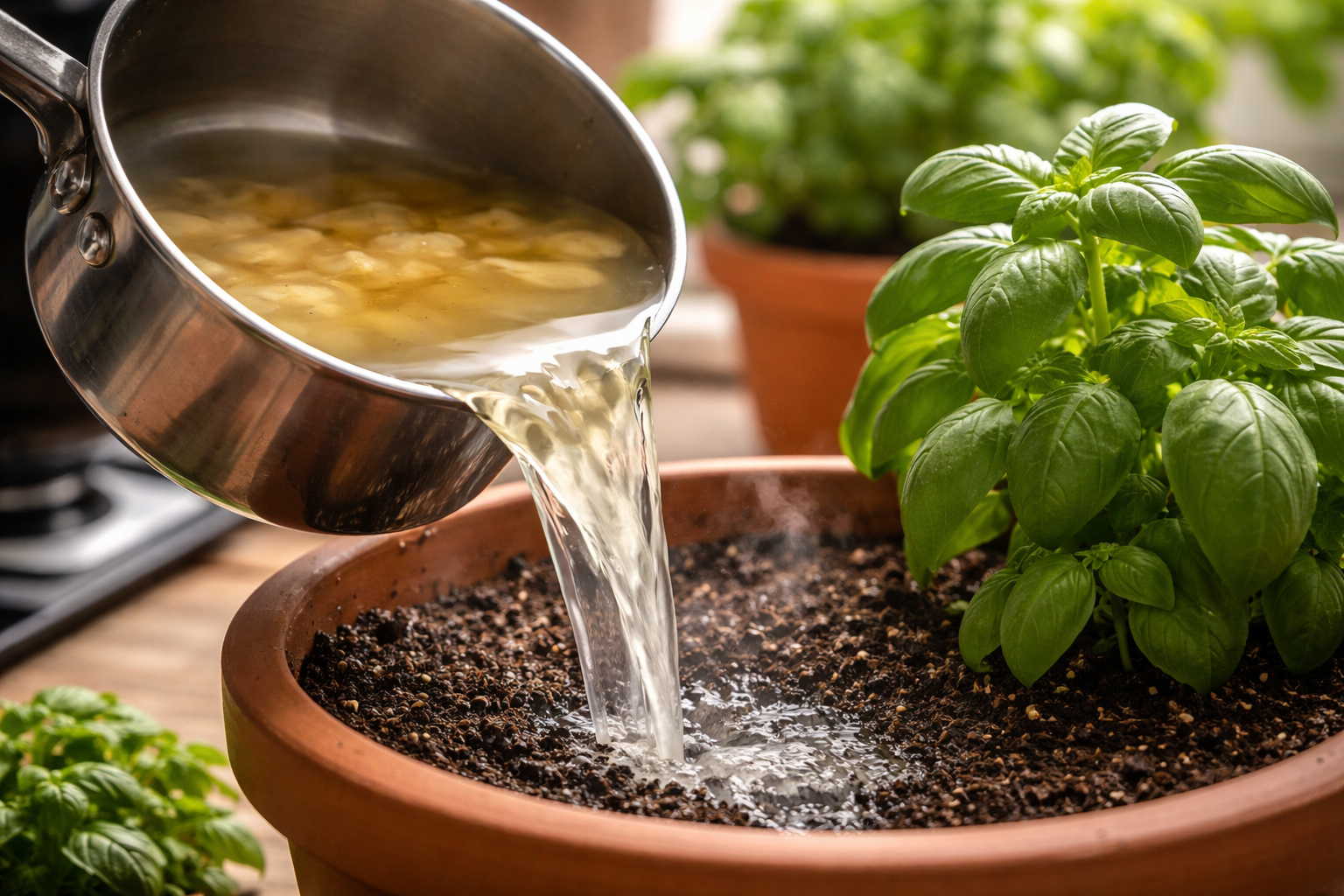
The water that almost everyone throws away after cooking potatoes carries nutrients released during the preparation and can be reused to help in the development of plants when used correctly at the base of gardens and pots, at no additional cost and without changing the routine.
-
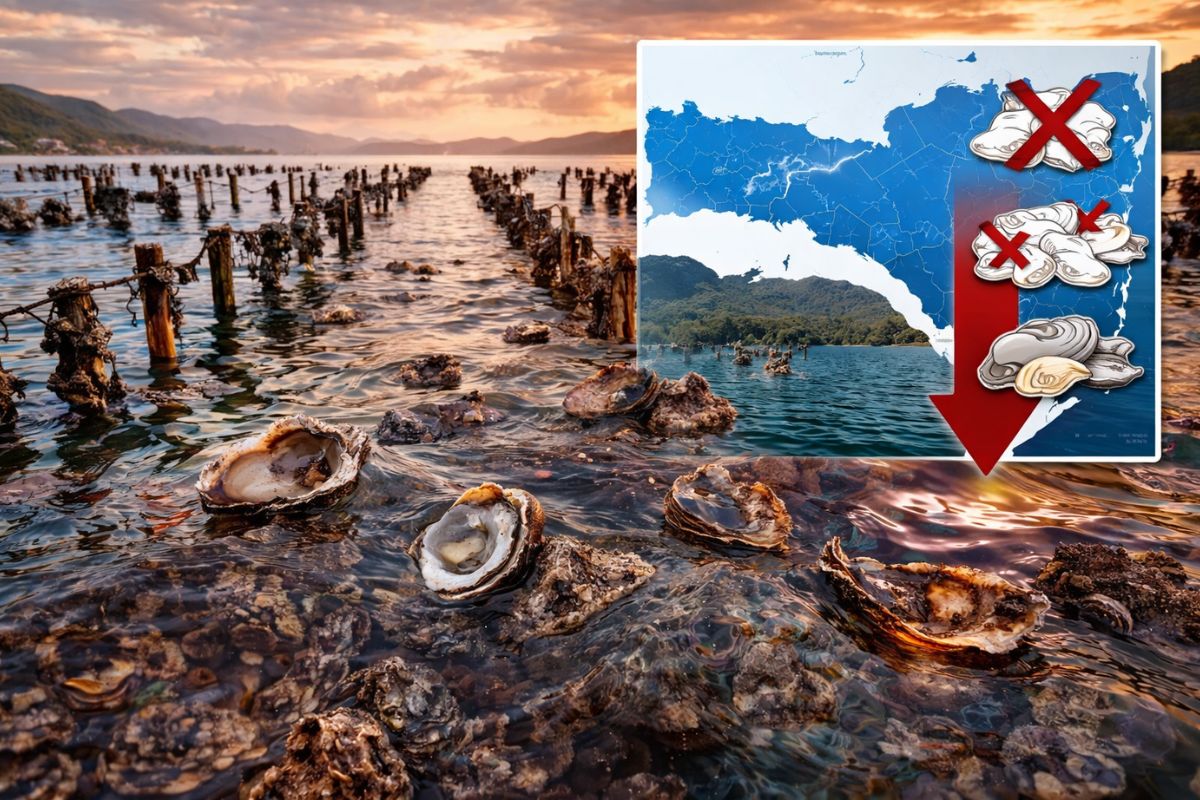
The sea water temperature rose from 28 to 34 degrees in Santa Catarina and killed up to 90% of the oysters: producers who planted over 1 million seeds lost practically everything and say that if it happens again, production is doomed to end.

How Japan Transformed a Common Fruit Into a Perfect Cube

The idea of square watermelons emerged in the 1970s in the region of Shikoku, one of Japan’s islands. Local farmers faced a rather specific and everyday problem: space shortage. In the country, agricultural land is limited, markets have small areas for storage, and apartments — just like fridges — are significantly smaller than those seen in countries like Brazil.
In this context, the round watermelon became a logistical nuisance. It doesn’t stack well, occupies too much space, and can easily roll, making storage and transport difficult. Thus arose a simple yet brilliant question: what if the watermelon were shaped like a box?
The solution found was ingenious and surprisingly simple. When the watermelon is still small, right at the beginning of its growth, it is placed inside a rigid mold, usually made of glass or acrylic. As the fruit grows, there is no room for lateral expansion, causing it to take on the shape of the container. There is no genetic modification or use of chemical products. It is merely basic physics: natural growth under limited space.
The result is a watermelon with flat faces, right angles, and an almost perfect appearance, as if it came off an industrial assembly line. However, this visual perfection comes at an important cost, which directly influences the destiny of these fruits.
Why Japanese Square Watermelons Cost Up to R$ 1,000

To maintain the perfectly defined shape, square watermelons must be harvested before full maturity. This means they do not reach the ideal level of sweetness. For this reason, in Japan, these fruits are not intended for traditional food consumption, but rather for decoration and the luxury gift market.
According to information disclosed by reports and content specialized in Japanese agriculture, a single square watermelon can easily cost the equivalent of R$ 400, and some specimens exceed R$ 1,000. They are displayed in sophisticated showcases, sold in specialty stores, and given as formal gifts on important occasions.
This habit is deeply tied to Japanese culture. In the country, gifting someone with impeccably presented fruits represents respect, consideration, and care. In certain contexts, a square watermelon can be seen as a gift as symbolic as a piece of jewelry. Moreover, there is a strong aesthetic factor involved. Japan values visual harmony, design, and perfection, and a fruit without blemishes, deformities, and with exact geometry fits perfectly into this cultural concept.
With the international repercussion and curiosity sparked around the world, it didn’t take long for other countries to try to reproduce the idea. And so, the story of square watermelons crossed oceans — until it reached Brazil.
From Japan to Ceará: The Brazilian Version of the Square Watermelon


In 2017, farmers from the city of Icapuí, on the coast of Ceará, decided to invest in the production of square watermelons using the same technique developed in Japan. However, the Brazilian objective was quite different. While in Japan the focus was on aesthetics and luxury, in Ceará the aim was to produce edible square watermelons, seedless, and at a lower cost.
The experience surprised everyone. The production was successful and quickly attracted international market interest. Practically the entire harvest began to be exported to Europe, mainly to England. At the time, each unit was sold for about R$ 50, a significantly more accessible price than that practiced in Japan.
This price difference can be explained by several factors. The favorable climate of Ceará, the cheaper labor, and the lower agricultural input costs make Brazilian production much more competitive. Even so, the volume is still small, and the square watermelons produced in Brazil rarely reach the national market, being almost always grown on demand for export.
Despite this, the producers themselves do not rule out the possibility of selling this type of fruit in Brazil in the future. The experience showed that the country has the capacity to innovate in the field and adapt international ideas to its agricultural reality. Who would have thought that a simple watermelon could turn into a symbol of luxury, design, and innovation, while also revealing the creative potential of Brazilian agriculture?









Verdade Fernando, aqui pessoas gostam de dizer qto pagou, para refletir poder de compras. E pagou tanto, eu posso! 😲… Daqui há pouco, alguém diz: cara, mais eu comi melancia quadra !
Japoneses no Ceará praticando esse cultivo né? Só dando nome aos bois…
Fotos das frutas brasileiras, CADÊ?
Está logo acima dos comentários. Creio que você não notou.
Como é bobinho esse menino… essa primeira foto aí não é no Ceará nem no Japão e nem na China… se fosse assim eu também juntamente com a IA seria um grande produtor fazendo montagem assim aqui no quintal de casa.