





 Portuguese
  English
  Spanish
  10 min of reading
  0 comments


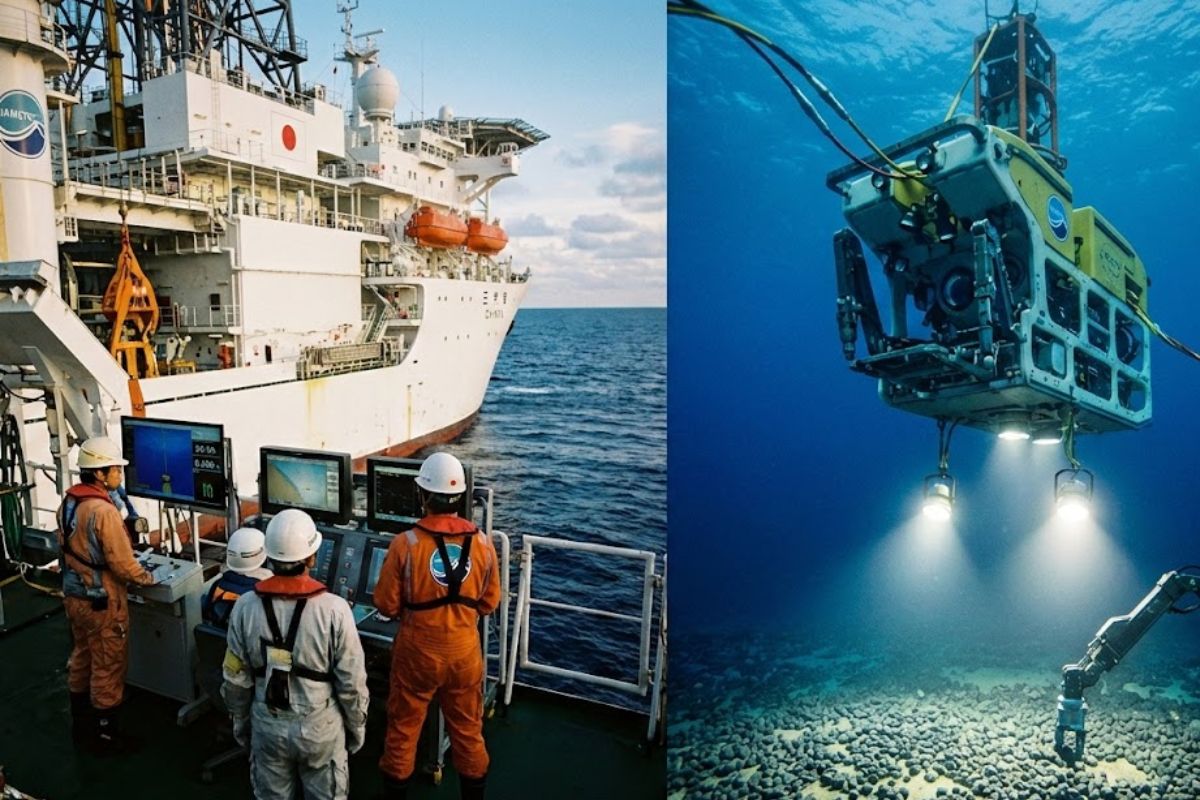
Unprecedented Mission Places Japan in the Race for Critical Minerals: The Chikyu Departed Shimizu at 9 AM Heading to Minami Torishima to Attempt to Extract Rare Earths at 6,000 Meters. The Operation Seeks to Diversify Suppliers Amid Chinese Dominance and Grows Under Tension Regarding Taiwan Following Statements by Prime Minister Sanae Takaichi.
Japan launched a mission on Monday, the 12th, aiming to make history by targeting the extraction of rare earths at a depth of around 6,000 meters in the Pacific Ocean. The initiative is presented as a direct strategy to reduce Japan’s dependence on China, currently the largest global supplier of these minerals.
The move occurs during a period of heightened tensions between Tokyo and Beijing over Taiwan. China considers the island part of its territory and asserts its intention to reclaim control, even by force if necessary. From the Japanese side, the escalation gained new weight after Prime Minister Sanae Takaichi declared in November that Japan could respond militarily to a potential Chinese attack on Taiwan.
What Japan is Trying to Do at 6,000 Meters in the Pacific
The mission has both a practical and political objective: to attempt to extract rare earths from ultra-deep waters, an area described as capable of concentrating large volumes of strategic minerals.
-
After China, it’s now the turn of the USA to ‘secure’ a share of Brazil’s natural resources: the country buys critical rare earths for R$ 3 billion and enters the center of the global technology dispute.
-
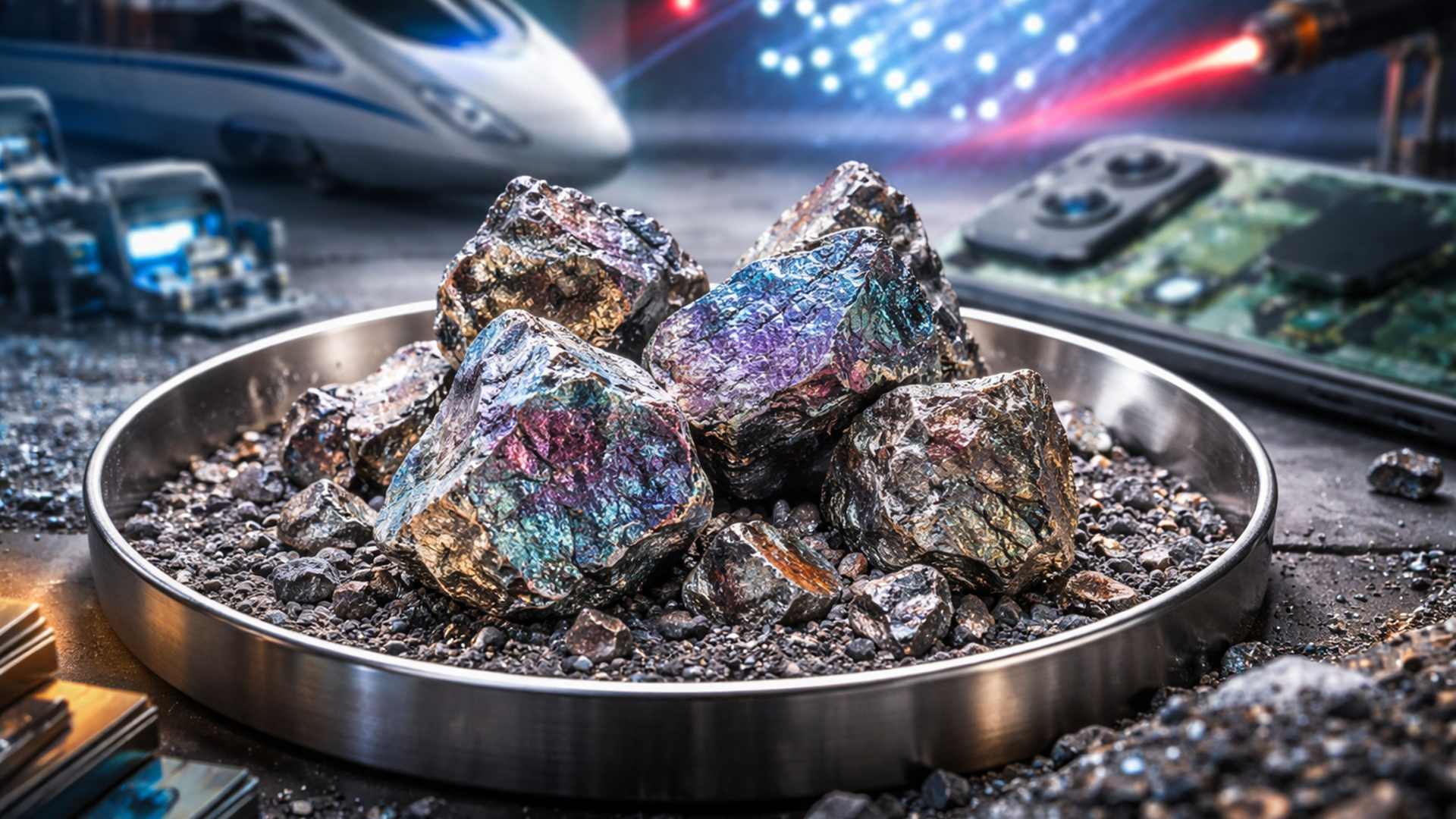
Rare earths are in everything, from cell phones to bullet trains, and what almost no one realizes is why they have become the target of such a delicate global war.
-
Brazil extracts 26.3 million tons of ore from what was previously treated as waste, transforming residues into wealth, producing over 3 million tons of sand, and demonstrating how national mining is relearning to generate value.

-
A $3.5 billion megaproject in Latin America pumps desalinated seawater at 1,050 liters per second over 194 km to keep a copper supermine in the Andes operational for another 20 years.

The operational focus is at a depth of approximately 6,000 meters, a level that elevates extraction to a challenge that few countries have even attempted to confront.
The protagonist of this operation is the scientific drilling ship Chikyu, described as a research vessel from Japan. It began the mission on Monday, the 12th, with the task of searching for rare earth elements at the bottom of the Pacific Ocean.
In practice, it entails placing a scientific drilling instrument at the center of a dispute for critical minerals that has already crossed the borders of the industry.
The central data point of this phase is simple and striking: the attempt occurs at a depth of 6,000 meters. This depth alone communicates the level of technological complexity needed to carry forward the drilling, maintain stability, and bring sufficient material for evaluation and possible continuity.
Chikyu Departs from Shimizu and Heads to Minami Torishima
The Chikyu left the port of Shimizu around 9 AM, starting its navigation towards its destination. In Brasília time, the departure record corresponded to 9 PM on Sunday, indicating that the movement and planning were monitored across different time zones, with international attention to what Japan decided to execute.
The destination is the remote island of Minami Torishima, presented as an area with the potential to concentrate large volumes of strategic minerals.
This choice is a crucial detail because it connects geography with strategy: it is not an abstract search for resources, but a specific point in the Pacific, on a defined route with a declared mission.
The operation thus begins with a clear narrative: port, time, ship, destination, and depth. These elements form the core of what Japan is trying to demonstrate to the world on this Monday, the 12th, by placing rare earths at the center of its technological, industrial, and diplomatic agenda.
Why Minami Torishima Comes into the Spotlight for Critical Minerals
Minami Torishima appears as more than just a point on the map. In the way the mission has been presented, the area may concentrate significant volumes of strategic minerals, which explains the decision to direct the Chikyu there.
When a country chooses a remote island as the target for scientific drilling at 6,000 meters, it signals priority and persistence.
What changes here is the logic of dependency. Instead of accepting that rare earths come through external supply chains, Japan is attempting to carve a path for its own extraction, even under extreme conditions. This transition, if successful, alters how the country positions itself in the face of supply shocks, export delays, and diplomatic pressures.
That is also why the mission is described as capable of initiating an unprecedented race for critical minerals.
When a country tries to execute something deemed unprecedented in the world, the gesture often inspires responses, imitations, resistance, or competition. In the case of rare earths, the demonstration effect can be as important as the material obtained.
Dependence on China and the Stated Reason for Diversifying Suppliers
The official justification highlighted for the mission is to reduce Japan’s dependence on China, the largest global supplier of rare earths. The logic is straightforward: when a material is essential and a supplier dominates the market, the risk ceases to be theoretical and becomes strategic.
This concern appears explicitly in statements from Japanese authorities. Shoichi Ishii, director of a Japanese government program, explained that the Chikyu mission could pave the way for domestic production of rare earths.
The phrase that summarizes the intention is objective: diversify sources of supply to avoid excessive dependence on specific countries.
When talking about avoiding excessive dependence, Japan is, in practice, acknowledging that rare earths are not just an import item.
They are a pillar of technological and industrial sovereignty. The country is not merely announcing a scientific research effort, but an attempt to reposition its supply chain.
Rare Earths: 17 Metals Difficult to Extract and Essential for Strategic Technologies
The significance of rare earths in the modern economy is evident in the range of applications described. They are defined as a group of 17 metals that are difficult to extract but essential for strategic sectors. This combination explains the urgency: they are minerals that are not only difficult to obtain but also indispensable.
The cited applications include electric vehicles, wind turbines, hard drives, as well as military uses in armaments and missiles. In other words, rare earths appear in both energy transition and digital infrastructure and defense capabilities.
This detail changes the framing of the Chikyu mission. If the minerals were peripheral, the discussion would be purely scientific.
But when they support energy, data, and security, any interruption in supply has the potential to generate economic and political impact. That is why Japan is treating the search for rare earths as a lever for autonomy.
Unprecedented Exploration in Deep Waters and What It Means to Be the First in the World
The Japan Agency for Marine-Earth Science and Technology described the mission as the first in the world focused on the exploration of minerals at such depths.
This point is central because it transforms the initiative into a milestone: it is not just a Japanese mission, but an operation aiming to establish a standard.
The term unprecedented, in this context, is not a decorative adjective. It suggests that there is still no established blueprint for this type of operation at 6,000 meters, and that Japan is testing boundaries. This helps explain why the mission draws attention beyond Asia: the extraction of rare earths at this depth is not considered routine globally.
If the mission is successful, it could become a reference point for other similar initiatives.
If it faces obstacles, it could also serve as a warning about costs, risks, and technical difficulties. In both cases, Japan places rare earths at the center of a dispute where technology and strategy go hand in hand.
Taiwan at the Center of the Escalation and the Direct Effect on Industrial Decisions
The start of the operation coincides with increased diplomatic tensions between Tokyo and Beijing, with Taiwan as the axis.
China considers Taiwan part of its territory and asserts its intention to reclaim control of the island, even by force if necessary. This stance, in itself, creates an unstable environment that reverberates through supply chains.
On the Japanese side, tensions intensified after Prime Minister Sanae Takaichi stated in November that Japan could respond militarily to a potential Chinese attack on Taiwan.
This type of statement elevates the conflict from the rhetorical field to the realm of scenarios, and supply chains such as those for rare earths begin to be evaluated from a risk perspective.
In this scenario, the Chikyu mission shifts from being merely a scientific initiative to becoming a component of Japan’s economic security architecture. The country seeks to reduce vulnerabilities that could be exploited in times of crisis.
Having control, even if partial, over rare earths means reducing the implicit coercive power in supply bottlenecks.
Rare Earths as an Instrument of Influence and the Context of Trade Pressures
Another central point is the perception that China uses its dominance over rare earths production as a geopolitical instrument.
The issue even appears in the context of the trade war involving former President Donald Trump’s administration, which reinforces the view that critical minerals can be used as a pressure tool.
There is also information that, according to international media outlets, China had postponed Japanese imports and exports of rare earths to Japan as part of the dispute between the two countries.
The underlying message is clear: when the flow of minerals is affected by disputes, dependency becomes vulnerability.
For Japan, this helps justify the search for an alternative that does not rely on decisions from a single supplier.
Diversification appears as a strategic insurance, especially as the Taiwan issue and the bilateral relationship with Beijing take on tougher contours.
What Japan Seeks to Gain with Domestic Production of Rare Earths
The mission is presented as a possible pathway for domestic production of rare earths. The word possible is important because Japan is not announcing established production, but an attempt to pave the way.
This gives the project a proof of concept character: testing viability, drilling capacity, and potential for continuity.
Takahiro Kamisuna, a researcher at the International Institute for Strategic Studies, summarized the potential gains on two levels.
First, if Japan can consistently extract rare earths around Minami Torishima, the country would secure a supply chain for key industries.
Second, this would become a fundamental strategic resource for Prime Minister Takaichi to significantly reduce dependence on supplies from China.
This vision combines industry and politics. The supply chain is not just logistics; it is planning power.
When an industry knows it will have access to the minerals it needs, it invests with greater predictability. And when a government reduces critical dependencies, it expands its diplomatic maneuvering room.
The Delicate Balance Between Science, Industry, and Geopolitics
The Chikyu mission puts three dimensions on the same maritime route. The first is scientific: drill, extract, analyze.
The second is industrial: ensure inputs for sectors such as electric vehicles, wind turbines, hard drives, and defense systems. The third is geopolitical: reduce dependence on China at a time of tension over Taiwan.
By doing this, Japan signals that it views rare earths as a state issue, not just a market one. The timing of the initiative and its description as unprecedented indicate a repositioning effort, with the potential to influence the regional debate on critical minerals.
This set of circumstances also helps explain why this subject could reshape the industrial balance of Asia. If supply chains redirect based on new sources of rare earths, investment decisions and industrial alliances may change.
Even before any extraction on a large scale, Japan’s gesture already alters expectations and strategies of other actors.
The Race for Critical Minerals and the Potential Impact on Asia
The initiative has been described as a milestone that inaugurates an unprecedented race for critical minerals. This race does not need to be formally announced to exist.
It can begin when a country demonstrates capability, opens a new technological frontier, and places strategic resources at the center of a conflict of interests.
In the case of Japan, the message is that the country wants to move from a position of dependence to an active attempt at control.
The depth of 6,000 meters serves as a symbol of ambition and difficulty. The harder it is to access, the greater the strategic value of what is being sought.
The outcome, still uncertain, is that the issue of rare earths is now discussed simultaneously as a basis for energy transition, technological infrastructure, and military power. This is what transforms a drilling ship into a vector of geopolitical debate.
What Changes If Extraction is Constant and What Changes If It Is Not
The turning point cited by analysts is the possibility of constant extraction. If Japan can consistently extract rare earths around Minami Torishima, the potential consequence is securing a supply chain for key industries and reducing dependence on supplies from China.
But the opposite scenario also exists. If extraction cannot be sustained, the effect may be more political than material: Japan will have still demonstrated the intention and capacity to try, but will remain dependent on external supply.
In this case, the diplomatic dispute remains, and the vulnerability in the supply chain continues to be a pressure factor.
In both scenarios, the mission already fulfills a signaling function.
Will Japan’s quest for rare earths in deep waters reduce its dependence on China or further increase geopolitical tension in Asia?







Seja o primeiro a reagir!