





 Portuguese
  English
  Spanish
  5 min of reading
  0 comments


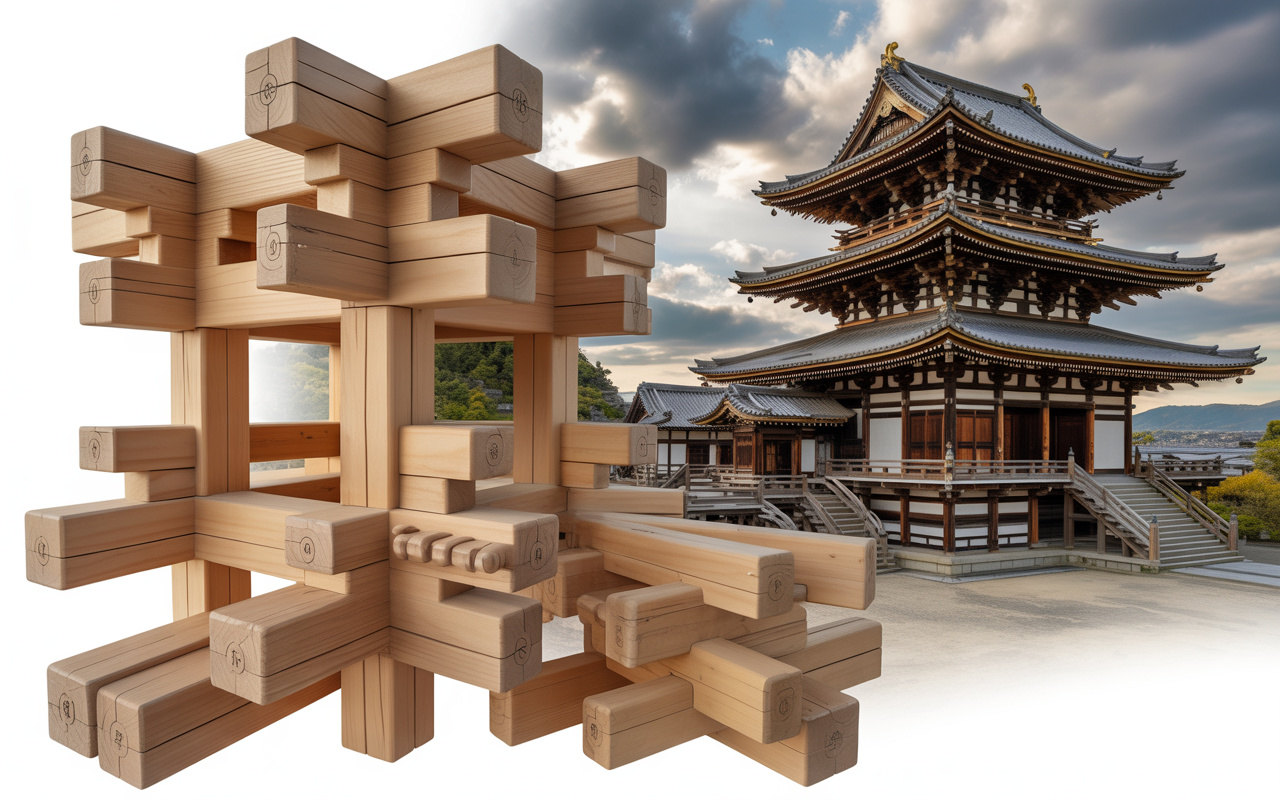
Ancient Japanese Temples Defy Earthquakes and Time Using Wooden Joints Without Nails, Screws, or Glue — Pure Engineering and Geometric Precision.
In a country marked by frequent earthquakes, typhoons, and extreme climate variations, it was natural to imagine that traditional Japanese constructions would have disappeared over the centuries. But the opposite has happened: wooden temples over a thousand years old continue to stand, without collapsing, without corrosion, and without apparent fatigue.
The technical explanation for this phenomenon lies in a construction system that defies modern logic based on steel, concrete, and screws: Japanese carpentry, or daiku, which uses geometric joints capable of connecting beams, pillars, and roofs without a single nail, glue, or metal fasteners. Everything relies on physics, geometry, wood anisotropy, and, above all, artisanal precision.
This technique was brought to its peak between the 8th and 17th centuries and remains alive in temples like Hōryū-ji (7th century), considered the oldest wooden building in the world still in use, and Kiyomizu-dera (8th century), built on a cliff using suspended structural platforms without a single metal nail.
-
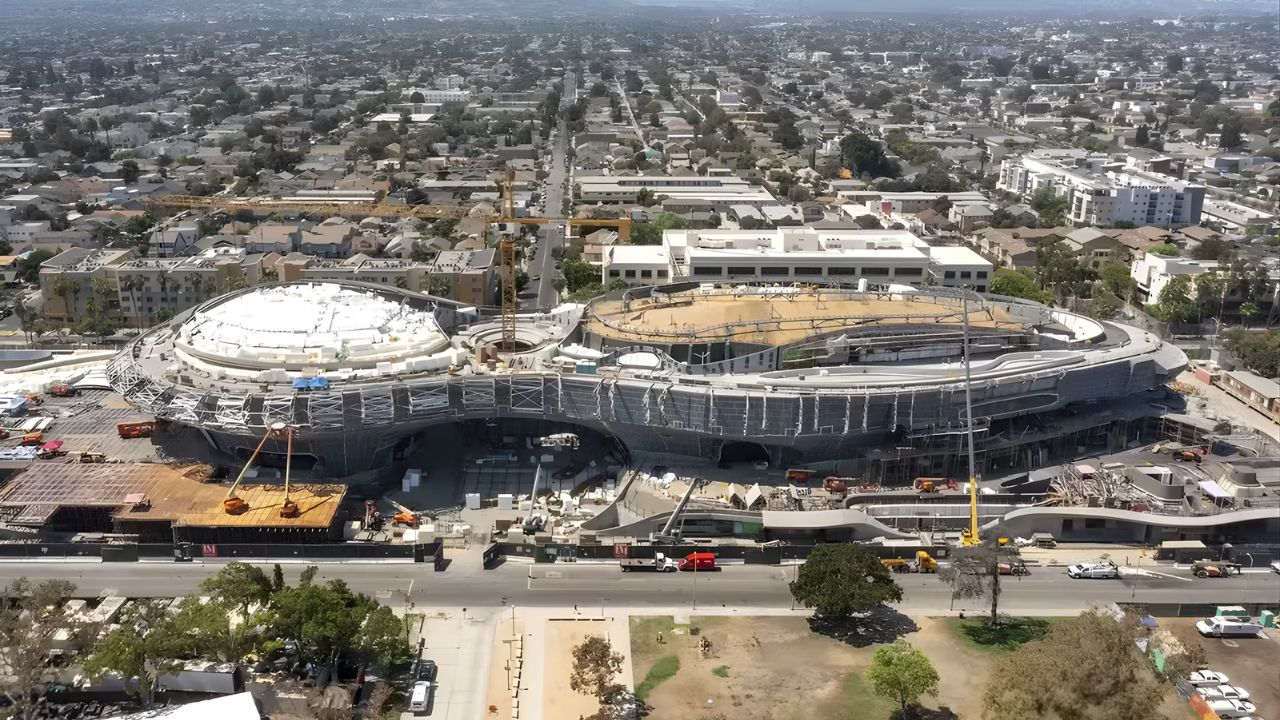
Created by George Lucas with over $1 billion, a futuristic museum in the shape of a spaceship with 1,500 curved panels is about to open in Los Angeles and will house one of the largest private collections of narrative art in the world.
-
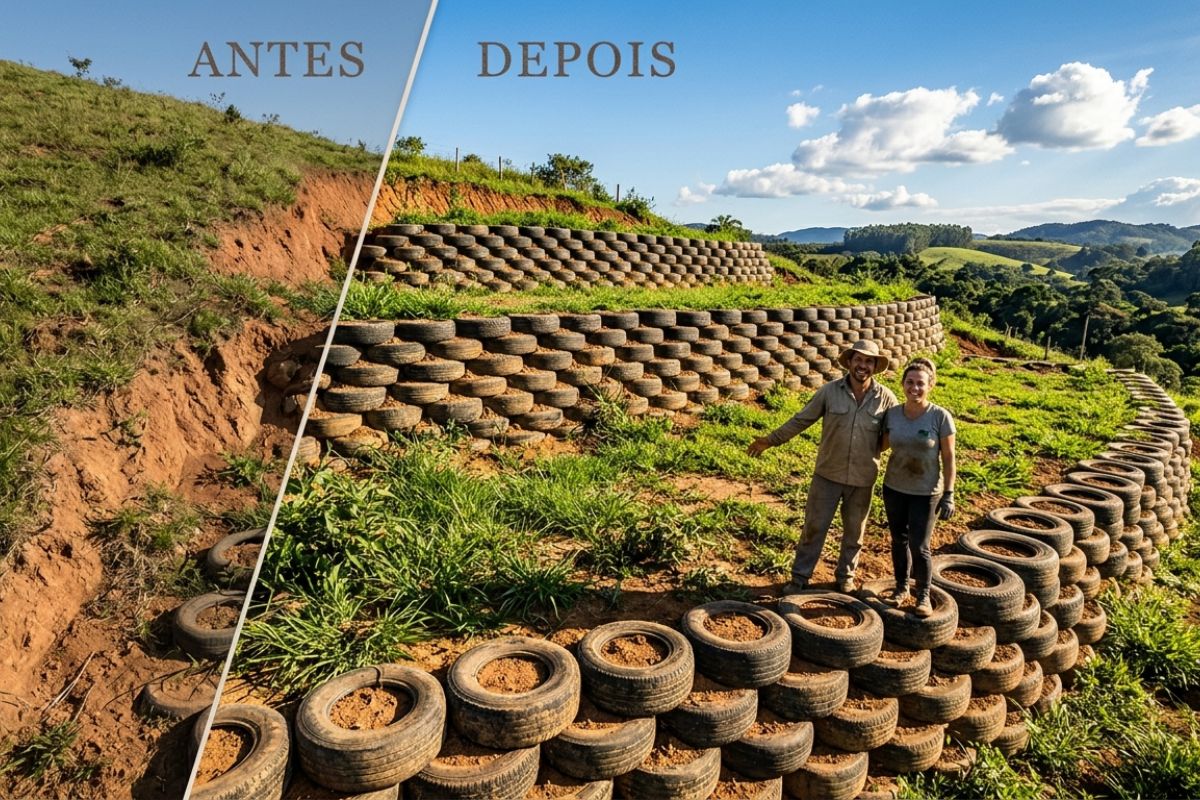
Couple shows how they built a retaining wall on their property using 400 old tires: sloped land turned into plateaus, tires are aligned, filled, and compacted with layers of soil, with grass helping in support and at almost zero cost.
-
Engineer explains drainage during the rainy season: the difference between surface water and deep water, ditches, gutters, and water outlets on the road, as well as drains and drainage mattresses, to prevent erosion, aquaplaning, and flooding at the construction site today.

-
With 55 floors, 177 meters in height, a 15-meter walkway between the twin towers, ventilated facade, and 6,300 m² of leisure space, Ápice Towers already has one tower completed and another nearly at the top.

The Structural Principle: Why the System Works Without Metal and Without Glue
To understand the Japanese method, it is necessary to comprehend how wood behaves. Unlike concrete, which is strong in compression but weak in tension, wood resists well to tension, compression, and bending, especially when oriented along the grain. This allows pieces to be designed to lock into one another like gears.


Japanese carpentry exploits this characteristic with three-dimensional joints called tsugite (longitudinal joints) and shiguchi (joints between structural pieces). These systems:
- lock beams and pillars
- distribute vertical and horizontal load
- allow controlled movement under seismic load
- eliminate the risk of metal corrosion
- facilitate disassembly for maintenance
In practice, a temple can be dismantled piece by piece without destroying the structure, exactly like a modular piece of furniture. This explains why many Japanese temples have been disassembled, restored, and reassembled over the centuries, preserving their original architecture.
Earthquake Resistance: The Engineering of Controlled Movement
Japan sits on the meeting point of four major tectonic plates, making it one of the countries with the highest seismic activity on the planet. Yet, temples like Tōdaiji and Kōdai-ji have stood firm after earthquakes that destroyed modern buildings. This is not by chance — it is engineering. Structures like pagodas and temples utilize three fundamental elements:
- flexible base, which absorbs vibration;
- independent pillars, which allow relative movement;
- movable joints, which act as mechanical dampers.
An emblematic example is the five-story pagoda, whose central tower functions as a swaying column that dissipates seismic energy. Instead of trying to “stop” the earthquake, the system dances with it, allowing controlled displacements that prevent rupture.
This philosophy is radically different from reinforced concrete, which tends to crack or collapse when exceeding elastic limits, especially if the internal steel loses adhesion.
Durability and Maintenance: Why Temples Last Longer Than Concrete
Wood is often underestimated in modern construction. However, when well-selected and worked, it can last for centuries. The Japanese use woods such as:
- hinoki (Japanese cypress)
- sugi (Japanese cedar)
- keyaki (zelkova)
These species exhibit a high concentration of resins, which make the material:
- resistant to moisture
- resistant to fungi
- resistant to insects
- resistant to decay
The Hōryū-ji, for example, uses hinoki that is nearly 1,400 years old. For technical comparison, reinforced concrete structures designed today have a nominal lifespan of 50 to 100 years, depending on the environment and maintenance.

Moreover, wood does not corrode. Reinforced concrete, on the other hand, suffers from:
- carbonation
- chlorides
- rust expansion
- cracking
- delamination
Without corrosion, the maintenance of the temple is essentially aesthetic and superficial — replacing tiles, painting, small parts — while its main structure remains intact.
Geometric Precision: Carpentry as Science and Art
The complexity of Japanese joints does not lie in the force applied, but in geometric precision. It is common for a single joint to have:
- curved profiles
- interlocked teeth
- diagonal braces
- conical openings
- loading offsets
One of the most famous joints, the kanawa-tsugi, is a beam extension joint capable of transmitting tension, compression, and torsion, all without hardware.
This level of precision was achieved with hand tools such as:
- kanna (planes)
- nokogiri (saws)
- nomi (chisels)
Today, universities and research centers study these joints using structural simulation, parametric modeling, and even CNC-assisted manufacturing, demonstrating how the ancient technique has modern applications.
Dismantling and Modularity: Concepts the West is Rediscovering Now
Modern construction has recently begun to discuss concepts such as:
- modularity
- reverse cycle
- dismantlable construction
- closed-loop materials
Japanese carpentry has been doing this for over a thousand years. Entire temples are dismantled for restoration. Each piece is labeled, cataloged, and reassembled, preserving the same original wood. This creates a maintenance system over centuries that reinforced concrete would never allow.
The Contrast with Industrialized Construction
The Japanese technique clashes with the current paradigm:
| Criteria | Japanese Carpentry | Reinforced Concrete |
|---|---|---|
| Material | Wood | Concrete + Steel |
| Joint | Geometric Joints | Hardware + Adhesion |
| Durability | Centuries | 50–100 years |
| Repairability | Total (dismantlable) | Low |
| Corrosion | Does not exist | Always present |
| Seismic Behavior | Flexible | Fracture under tension |
In summary: while the West relies on material strength, the Japanese system explores the intelligence of geometry.
The Lesson Japan Has Left for Modern Engineering
Japanese carpentry is not just folklore or historical curiosity: it offers solutions to contemporary problems, such as:
- sustainable construction
- low carbon emissions
- reversible material cycles
- seismic adaptation
- extended durability
- programmable maintenance
Today, there is a contemporary reinterpretation of these techniques at universities like ETH Zürich, MIT, and research centers in Japan that study joints without hardware for laminated wood and bamboo.
In the end, the technical message is simple: we don’t always need concrete, steel, and nails to build safely, and the history of Japanese temples proves this with centuries of evidence.










-

-

-

5 pessoas reagiram a isso.