





 Portuguese
  English
  Spanish
  5 min of reading
  5 comments


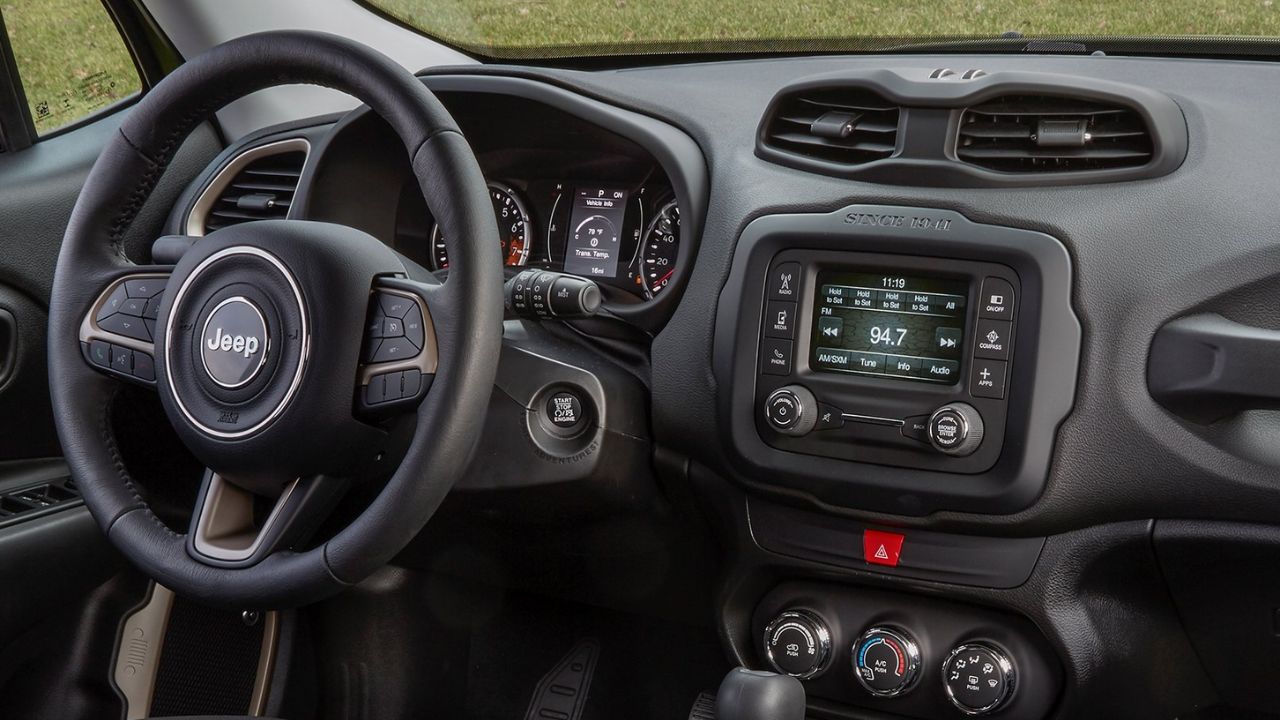


Find Out If The 2016 Jeep Renegade Is A Good Used Car. Check Fuel Consumption, Power, Strong Points, Recommended Versions, And What To Evaluate Before Buying.
The 2016 Jeep Renegade is a model that has won over those looking for a compact utility vehicle with a robust look. But after all, what does this vehicle offer, who is looking for it, when did it come out, where was it produced, how has it evolved over the years, and why does it remain relevant?
These are crucial questions to understand why the SUV remains among the most desired on Brazilian streets.
Even though new generations and technologies have appeared since then, the Jeep Renegade manufactured in 2016 continues to attract buyers by delivering a rare combination: striking style, safe driving, and relatively viable costs for those investing in a used car.
-
The car stored for 38 years: when opening the barn door, what appears is breathtaking and looks like a scene from a movie!

-
Fiat works miracles in the Brazilian market, lowers the price of its 0 km hatch to R$ 69,990, reestablishes the model as the cheapest car in the country, and reignites the battle against Kwid and C3.
-
Chevette with cooking gas: How the gas cylinder ends up being used in cars clandestinely and why this makeshift solution can result in leaks, explosions, damaged engines, and seized vehicles.
-
Fiat launches the new 2027 Toro hybrid with 48V, 176 hp, an electric motor of 15.5 hp, a 0.85 kWh battery, up to 7% fuel savings, 8% fewer emissions, and possible exemption from IPVA.


This balance helps explain why it still ranks among the most sought-after on the used car platforms.
Origin And Evolution Of The Jeep Renegade
The Jeep Renegade trail began internationally in 2014, with production starting in Italy and Germany under the umbrella of the former Fiat Chrysler Automobiles (FCA).
The proposal was ambitious: to bring the Jeep identity into a compact format, designed for both the city and light adventures.
In Brazil, the Renegade was consolidated starting in 2015, when Jeep opened its factory in Goiana (PE).
This plant became strategic for the country and Latin America, allowing for the national production of an SUV that was previously associated with larger and more expensive models.
Why Does The 2016 Used Jeep Renegade Still Please?
Even after several years, the 2016 Jeep Renegade continues to be relevant because of its unique design, “classic Jeep” style, and sense of robustness.
It stands out among urban utilities for maintaining square lines and a stance that recalls the brand’s classics — something uncommon in compact SUVs.

Additionally, those analyzing the used model are impressed with the package of items: depending on the version, it’s possible to find stability control, hill start assist, multimedia with Bluetooth, and even more advanced features, which add value to the vehicle.
Power (hp) And Performance
In terms of power, the flex version of the 2016 Jeep Renegade is powered by a 1.8 E.torQ engine that delivers around 132 hp when fueled with ethanol and 130 hp with gasoline.
This engine, while not sporty, offers consistent accelerations for an urban utility vehicle, with an estimated time of 0 to 100 km/h in approximately 11.5 seconds — making the used car a functional option for everyday use.
The 2.0 turbodiesel version offers a significant performance boost, with around 170 hp, along with high torque, which improves pick-up and makes the vehicle more competent for demanding routes or mixed-use.
Fuel Consumption: The “Price” Of Robustness
One of the main points of criticism of the used Jeep Renegade is its consumption.
For the flex 1.8 model, the figures according to Inmetro data are:
- Ethanol in the city: 6.5 km/l
- Ethanol on the highway: 7.2 km/l
- Gasoline in the city: 9.4 km/l
- Gasoline on the highway: 10.5 km/l
Although this may seem high, many buyers accept this consumption as part of the “Jeep package”: presence, finish, and sense of security.
In the diesel version, the scenario improves significantly.
Thanks to the 2.0 turbodiesel engine, the Renegade delivers an estimated consumption of 9.4 km/l in the city and 11.5 km/l on the highway, values that are quite interesting for a 4×4 SUV, especially for those taking long trips or needing good performance with relative fuel efficiency.
Robustness And Light Off-Road Capability
Despite being compact, the 2016 Jeep Renegade shows its adventurous side with a good ground clearance: the 1.8 4×2 version has about 20 cm, and the 2.0 diesel 4×4 reaches approximately 21.8 cm.
This, combined with favorable approach and departure angles, allows it to handle dirt trails or light tracks with more confidence.
Even in urban use, the SUV’s suspension balances rigidity and absorption well, resulting in a comfortable ride — without sacrificing the sense of security typical of a Jeep.
Dynamics, Interior Comfort, And Space
Inside, the used Jeep Renegade delivers a high driving position, which offers great visibility and a sense of road dominance.
The wheelbase of 2.57 meters ensures decent space for front passengers, but the back seat can be tight for three adults.

The trunk, with only 260 liters, is a point to consider: it is smaller than many hatchbacks, which limits practicality for transporting bulky luggage.
However, the interior finish impresses with good fit of the pieces, well-chosen fabrics, and details that reference the more sophisticated Jeep models.
Jeep Renegade: Recommended Versions To Buy Used
One of the most balanced options in terms of cost and features is the Longitude version, which can come with either the 1.8 flex engine or the 2.0 diesel.
This configuration includes useful items such as digital air conditioning, traction control, multimedia system, rear sensor and camera, disc brakes on all four wheels, hill start assist, and much more.
It is a very interesting choice for those looking for a used car that offers comfort and functionality.
Maintenance: What Adds Up
Maintaining a used Jeep Renegade requires attention. In the 1.8 AT6 model, parts such as brake pads (R$ 150–300), spark plugs (R$ 120–220), and rear shock absorbers (pair for R$ 700–1,000) have costs that should be taken into account.


If it’s the 2.0 diesel 4×4 version, costs may rise for specific components, but durability and robustness compensate for many buyers.
Common Risks And Problems
Owners of the 2016 flex Jeep Renegade often report issues with the electrical system, with failures in power windows, multimedia, and headlight module.
The automatic transmission can present inaccuracies or problems with the heat exchanger.
For diesel versions, there are reports of excessive oil consumption and carbon buildup in the engine.
These points require a careful review before closing the deal on a used car.
Is It Worth Investing In A Used Jeep Renegade?
If you are looking for a used car with SUV presence, a robust feel, and good finish, the 2016 Jeep Renegade is an attractive alternative.
Even with high consumption in the flex version, the power (132 hp in the flex and 170 hp in the diesel) and the good build make it a solid choice.
However, it is essential to check the maintenance history, real consumption, and the condition of the transmission to ensure that the investment is worthwhile in the long term.
Source: AutoPapo









Mecanica robusta e muito agradável de dirigir, mas o que mais surpreende é a segurança. Vale muito a pena, se bem cuidado chega aos 300 mil Km fácil. Estou no segundo e vou para o terceiro, agora com motor 1.3 turbo. Vale muito a pena.
Não e não.. Péssimo.. tem sérios vícios mecânicos.. consome muito, pq o motor e fraco e carroceria pesada.. fujão deste modelo e ano.. está matéria si tem pq e paga..
não sei da sua experiência, tenho um renegade 1.8 19/20 a 6 anos e tá difícil achar outro carro bom , hoje só motor 3 cilindro.
Naofaz essa kilometragem por litro nem em cima da cegonha….Cuidado!!!
o meu faz esse km , já cheguei fazer 12kml estrada boa Bom combustível coisas que estão acabando no brasil.