





 Portuguese
  English
  Spanish
  4 min of reading
  0 comments


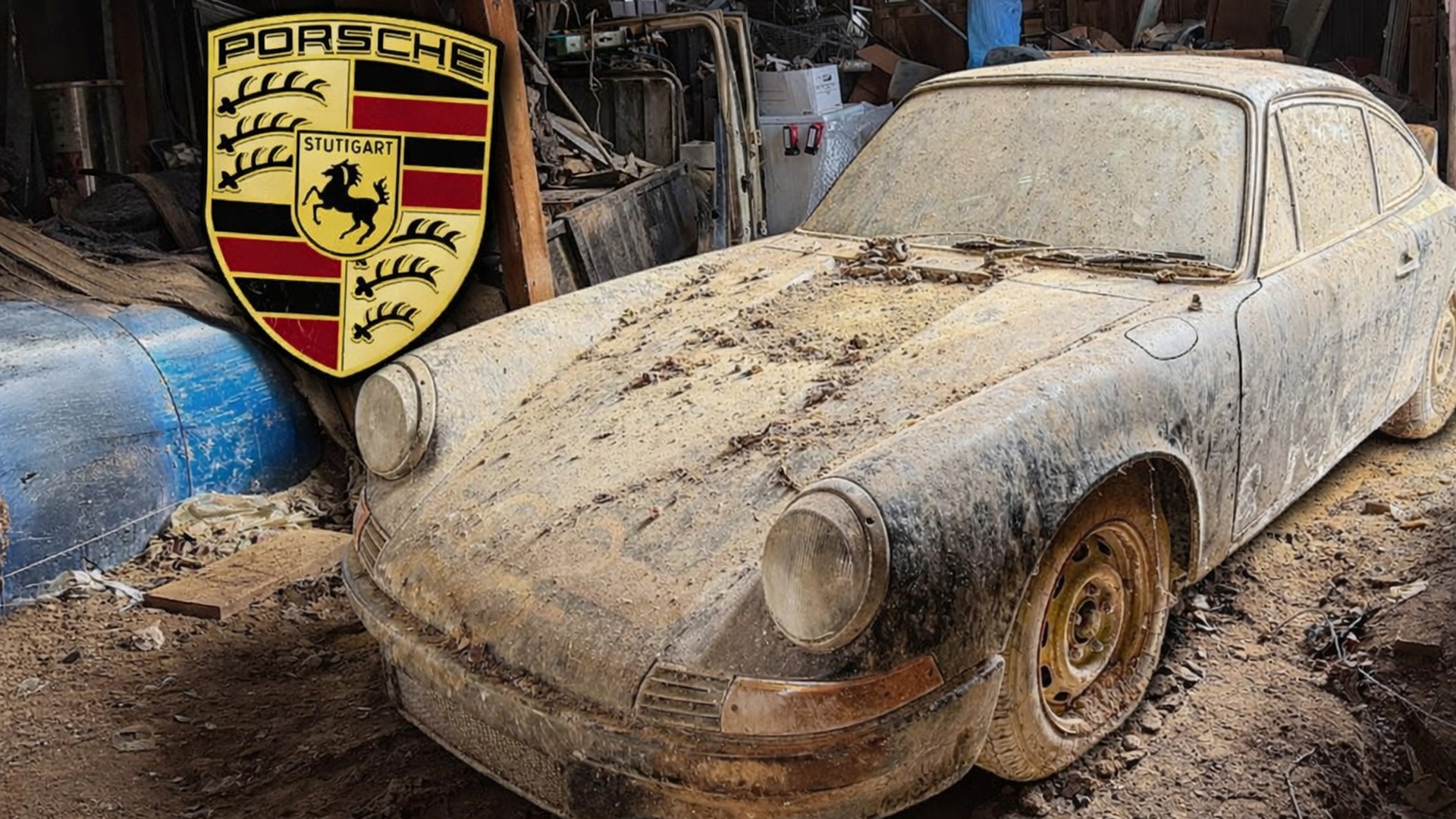
Found After About 30 Years Sitting in a Rural Barn in the United States, the 1969 Porsche 912 Was Removed Without an Engine, Underwent Detailed Technical Cleaning, Revealed Surprisingly Preserved Chassis and Ended Up Being Negotiated During the Recording Itself, Raising Discussions About Restoration, Value and Resale
A 1969 Porsche 912 Abandoned for About 30 Years Was Taken Out of a Barn in Rural Ohio, United States, Underwent Detailed Technical Cleaning and Ended Up Being Bought During Filming, Revealing Rare Structural Conditions and Raising Debates About Market Value, Restoration, and Resale Viability.
Discovery of the Vehicle and Operation Context
The vehicle was found in an isolated barn, covered in thick dust, accumulated dirt, and organic debris, with no movement for approximately three decades. The removal occurred during a recording of the WD Detailing channel, specializing in extreme automotive detailing.
The vehicle was positioned on packed dirt flooring, with structural risk due to the presence of a large hole just below the chassis. Despite this, the absence of the engine significantly reduced the total weight, allowing the car to be literally lifted and moved manually by several people.
-
With a 293.5 cm³ engine and a range of up to 400 km with a 14.1-liter tank, the Honda CB 300F Twister 2026 has up to 24.7 hp, an initial price of R$ 25,150, and already exceeds R$ 29,000 in the Fipe Table.

-
With a 1.3 engine, nearly 700 km of range, and Turbo 200, the Fiat model surpasses Polo, Tera HB20, and Onix, becoming the best-selling car in March; see the numbers for the Fiat Strada and others.
-
The Honda Fit has been discontinued for years, but the 2018 model is worth more today in the Fipe table than it cost brand new, proving that this used car, valued with a 1.5 i-VTEC engine and Magic Seat, only increases in price.

-
Volkswagen unveiled the 2027 Atlas with a 282-horsepower EA888 turbo engine, a 15-inch screen, massage seats, and a completely new interior to finally elevate the three-row SUV built on the MQB platform to a new level.


Initially, there was uncertainty about the exact version of the model, as visual details and external modifications could indicate a Porsche 911.
The confirmation only occurred after the dirt was removed, when the “912” inscription was directly identified on the hood, eliminating any technical uncertainty.
Structural Condition, Body, and Absence of Severe Corrosion
Even after 30 years sitting in an uncontrolled environment, the chassis exhibited a condition considered unusual for vehicles of that period. No critical points of structural rust were identified, only localized superficial oxidation in specific areas of the body.
The longitudinal beams, floor, and internal areas of the engine compartment were preserved, with no perforations or advanced degradation. The fact that the car was not left on concrete, usually associated with constant moisture, resulted in no severe damage, which surprised the technical team.
The original paint, despite being extremely contaminated, retained enough integrity to allow partial correction. Visible scratches were present under the layer of dirt, along with progressive fading, forming a gradient between darker golden and yellowish tones, characteristic of prolonged aging.
Preserved Interior, Unusual Findings, and Biological Risks
The interior of the Porsche 912 showed wear consistent with time, but without significant structural damage. The leather seats showed no tears, the door panels were intact, and the original controls remained installed, which reinforces the restoration potential.
During the inspection of the front trunk, various objects were found, including an old tool kit attributed to a brand, as well as organic debris. Among the findings were mummified remains of small animals, possibly rodents or bats, indicating infestation over the years.
The fuel tank contained extremely degraded gasoline, estimated to be about 30 years old, with dark coloration and a strong odor. The removal was necessary for safety reasons, as the fumes caused discomfort and risks during the initial cleaning process.
Cleaning, Detailing, and Paint Correction Process
Before the external washing, all loose material was vacuumed to avoid cross-contamination. Next, deep cleaning of the body began, including chemical decontamination, the use of clay mitts, and high-cut abrasive compounds.
The most critical stage focused on the hood, the area most exposed to the environment during the abandonment period. A rotary polishing technique with a wool pad and high-cut compound was used, removing deep layers of embedded dirt and reducing superficial scratches.
The result did not restore the original factory finish, but it did recover reflection, color visibility, and enough uniformity to significantly enhance the overall package. The process took about eight continuous hours of work, according to the technical lead.
Wheels, Aesthetic Modifications, and Visual Identity
The original wheels showed chipped paint and severe contamination. They were removed and sent for complete repainting in a gold shade inspired by the Trans Am style, aligned with the aesthetics already present in the bodywork.
The car had non-original visual modifications, such as a later generation rear spoiler and custom graphics. These alterations indicate that a previous owner sought to adapt the Porsche’s appearance to references of American muscle cars, creating an unusual hybrid identity.
Although non-original, the modifications did not compromise the vehicle’s structure. The decision was made to retain part of this visual identity as a narrative element of the car’s history, rather than a completely faithful restoration to factory standards.
Negotiation, Unexpected Purchase, and Project Future
During the recordings, the car was being acquired by content creator Doug Vargo, who was developing a series focused on purchasing and reselling vehicles to reach enough capital to acquire a dream car.
However, after the cleaning and visual recovery process, members of the WD Detailing team decided to make a direct offer for the vehicle. The negotiation took place on site, without disclosed amounts, and resulted in the immediate sale of the Porsche.
The final encouragement was motivated by emotional involvement with the project, above-average structural condition, and the possibility of installing a new mechanical set. The team stated that any future engine choice will be based on public opinion.
The car remains without an engine and without a defined schedule for complete restoration. Still, the case reinforces the potential appreciation of barn finds when associated with documentation, structural integrity, and well-recorded narrative.
This article was prepared based on content published by the WD Detailing channel on YouTube, which fully documented the discovery, removal, technical cleaning, and negotiation of the 1969 Porsche 912.






-

-

-

-

-

12 pessoas reagiram a isso.