





 Portuguese
  English
  Spanish
  4 min of reading
  0 comments


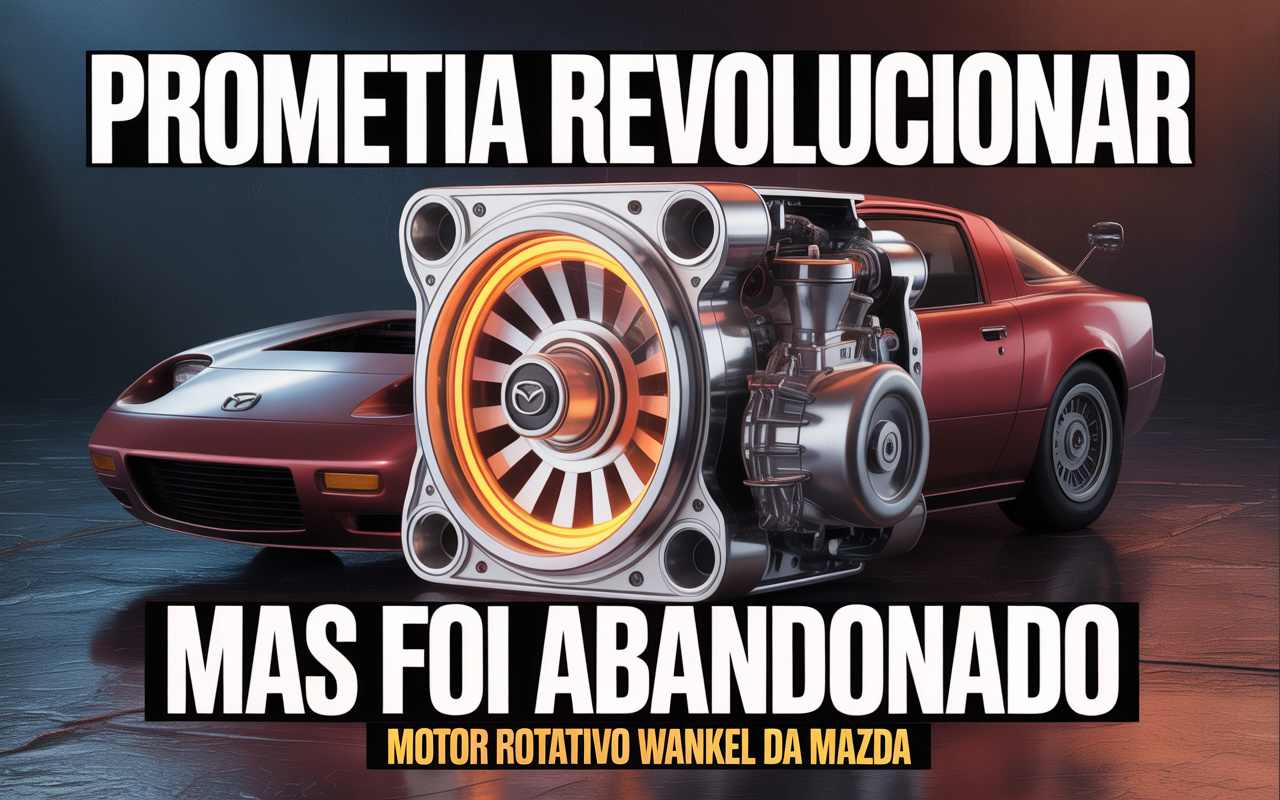
The Wankel Rotary Engine Promised to Revolutionize the Automotive Industry, But Was Abandoned. Understand Why Mazda’s Technology Never Became the Standard That Seemed Inevitable.
For several decades in the 20th century, many engineers believed that the traditional internal combustion engine was on borrowed time. Heavy, filled with moving parts, high vibration, and clear efficiency limitations. In this scenario, an alternative seemed simple, elegant, and almost futuristic: the Wankel rotary engine.
Compact, lightweight, silent, and with an impressive power-to-weight ratio, it was seen as the next logical step for the industry. No brand took this bet as far as Mazda. Still, the technology was ultimately abandoned by the global market. The inevitable question is: how did something so promising end up discarded?
The Genius of the Concept: Fewer Parts, More Theoretical Efficiency
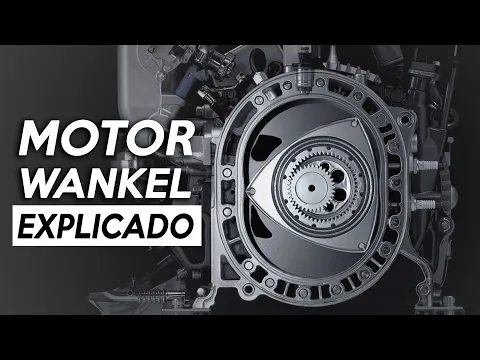
The Wankel engine was created by German engineer Felix Wankel, with a radically different proposal from the piston engine. Instead of cylinders, connecting rods, and a crankshaft, the system uses a triangular rotor spinning inside an oval chamber. In practice, this meant:
-
With a 1.0 engine producing 75 hp and costing less than R$ 70,000, Fiat’s car returns to the podium as the cheapest in the country; a temporary promotion for the 2026 Like version reduces the price of the Fiat Mobi.
-
With a mild hybrid system of 48 V, 176 hp and a price of R$ 175,990 in the Sahara version, the new Jeep Renegade changes mostly on the inside, improves slightly in fuel consumption, and remains almost the same car.
-
With a 293.5 cm³ engine and a range of up to 400 km with a 14.1-liter tank, the Honda CB 300F Twister 2026 has up to 24.7 hp, an initial price of R$ 25,150, and already exceeds R$ 29,000 in the Fipe Table.
-
With a 1.3 engine, nearly 700 km of range, and Turbo 200, the Fiat model surpasses Polo, Tera HB20, and Onix, becoming the best-selling car in March; see the numbers for the Fiat Strada and others.

- fewer moving parts,
- extremely smooth operation,
- absence of reciprocating motion,
- ability to achieve high RPMs easily,
- much more compact dimensions.
For engineers in the 1950s and 1960s, this seemed to be the inevitable future of internal combustion.


Why Mazda Bet Everything on Wankel
While many automakers tested the Wankel cautiously, Mazda made the rotary engine a central part of its identity. The Japanese brand saw in the technology a way to:
- differentiating itself from global giants,
- showing technical capability,
- competing without copying conventional engines.
Models like Cosmo Sport, RX-7, and RX-8 made the Wankel synonymous with Mazda, and for a time the brand was seen as the main guardian of a revolutionary technology.
Performance Delighted, But Consumption Frightened
In practice, the Wankel delivered impressive performance for its size. Small engines produced power equivalent to larger blocks, with smooth acceleration and a characteristic sound. The problem appeared in real-world use:
- high fuel consumption, especially at low RPMs,
- thermal efficiency lower than piston engines,
- greater oil consumption as a design characteristic.
In an era of oil crises and tightening environmental laws, this started to weigh against it.
The Achilles Heel: Sealing and Durability
The biggest technical challenge of the Wankel has always been the seals at the ends of the rotor, known as apex seals. They needed to:
- perfectly seal the chamber,
- withstand high temperatures,
- resist constant wear.
In theory, it worked. In practice, these seals suffered accelerated wear, leading to:
- loss of compression,
- increased consumption,
- decreased performance,
- expensive repairs if maintenance was not rigorous.
This created a reputation for being a sensitive engine, especially outside markets with specialized maintenance.
Emissions: The Final Blow
When emission standards began to tighten, the Wankel faced its greatest obstacle. The shape of the combustion chamber:
- made complete combustion of fuel difficult,
- increased hydrocarbon emissions,
- complicated the use of traditional catalysts.
While conventional engines evolved with direct injection, variable timing, and downsizing, the Wankel required complex and expensive solutions to remain viable.
Why Other Manufacturers Quickly Gave Up
Brands like NSU, Citroën, and even Mercedes-Benz tested the rotary engine but abandoned the project early on. The reason was simple: the cost of making it reliable, efficient, and clean was too high for the real gain offered. Mazda insisted more than anyone else — and paid the price for it.
The Mazda RX-8, launched in the 2000s, represented both the peak and the end of the Wankel as a mass-produced engine. Despite technical advancements, it:
- still consumed more than its rivals,
- required careful maintenance,
- faced difficulties in meeting new environmental regulations.
In 2012, Mazda ended production of cars with rotary engines. What seemed like a pause turned out to be, in practice, a termination.
Did Wankel Fail? Not Exactly
Calling the Wankel a failure is overly simplistic. It:
- worked,
- delivered real performance,
- went racing,
- left a mark.
The problem is that the world changed faster than the technology could keep up. Emissions, efficiency, and total cost of ownership became more important than mechanical genius.
Why It Still Fascinates Engineers and Enthusiasts
Even abandoned by the industry, the rotary engine continues to captivate. Its concept is still studied, and Mazda itself explores the Wankel today as:
- generator in hybrid systems,
- auxiliary range-extending engine.
In these roles, its disadvantages are mitigated, and its qualities make sense again.
The Future That Arrived Too Soon
The Wankel rotary engine did not die because it was bad. It died because it was too good for a world that began demanding different priorities.
Lightweight, compact, and brilliant, it seemed inevitable. But efficiency, emissions, and cost won over mechanical elegance. Yet, few automotive technologies have managed to leave such a mark on the collective imagination. The Wankel did not become a standard. But it became a legend.









Seja o primeiro a reagir!