





 Portuguese
  English
  Spanish
  5 min of reading
  2 comments


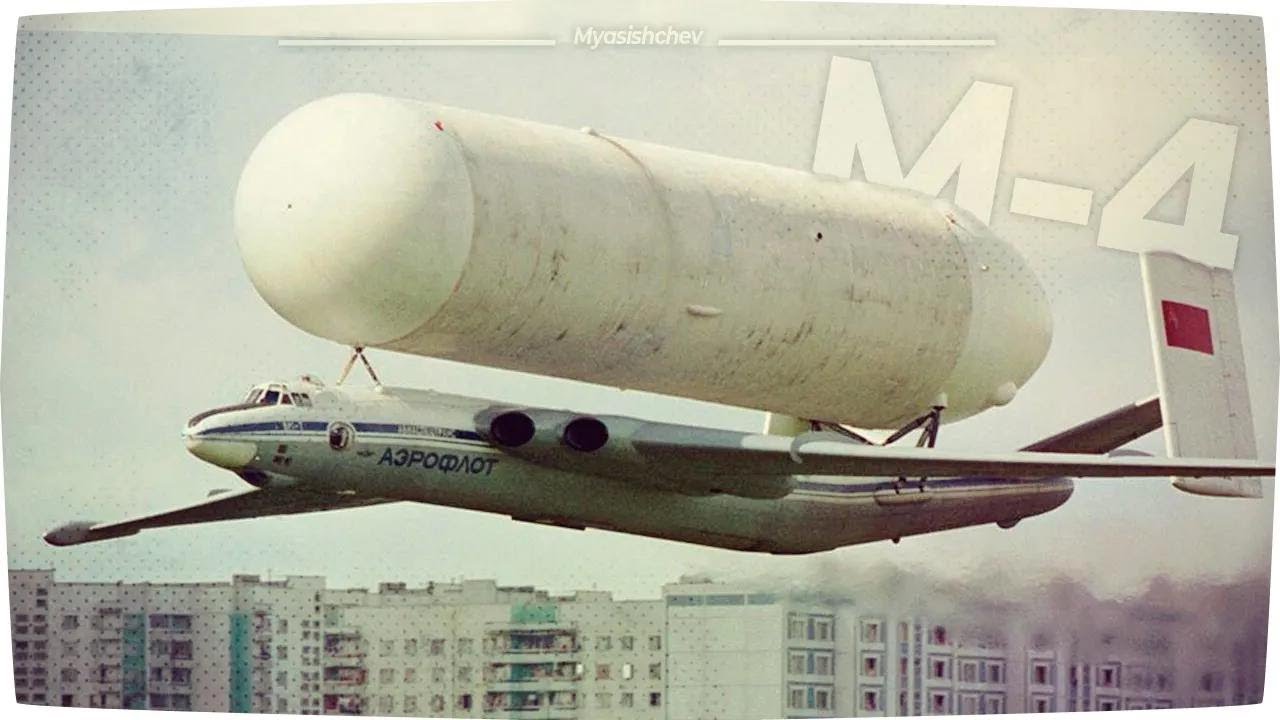


Myasishchev M-4 Bison: The Soviet Strategic Bomber That Created the “Bomber Gap” in the Cold War and Forced the U.S. to Accelerate B-52 Production
The Cold War arms race was not limited to intercontinental ballistic missiles and nuclear submarines. During the 1950s, the ability to launch nuclear attacks via strategic bombers was the main indicator of military superiority between the United States and the Soviet Union. While Washington developed the Boeing B-52 Stratofortress, Moscow responded with the Myasishchev M-4 Bison, a jet bomber designed to target locations in North America. The program was born under enormous political, industrial, and technological pressure, ultimately producing one of the greatest strategic bluffs of the Cold War: the so-called “bomber gap.”
The psychological impact of the Bison was far greater than its actual operational capability.
Mikulin AM-3A Engines: Structural Limitations That Compromised Intercontinental Range
From the outset, the M-4 design faced a critical problem: the planned Dobrynin BD-5 engines were still under development. Vladimir Myasishchev was forced to adapt the Soviet strategic bomber to use four Mikulin AM-3A turbojets.
-
The German “steel monster” weighing 55 tons fires up to 10 projectiles per minute at over 40 km and avoids counterattacks on the battlefield by moving quickly to escape enemy attacks; meet the Panzerhaubitze 2000.
-
USS Gerald R. Ford, the largest aircraft carrier in the world, returns to sea after a fire in the laundry in the Red Sea; repaired in Crete, it resumes missions of Operation Epic Fury against Iran.
-
Military power: South Korea’s new KF-21 fighter jet will be a key component in replacing the aging aircraft of the air force, placing the country on the map of air military powers.
-
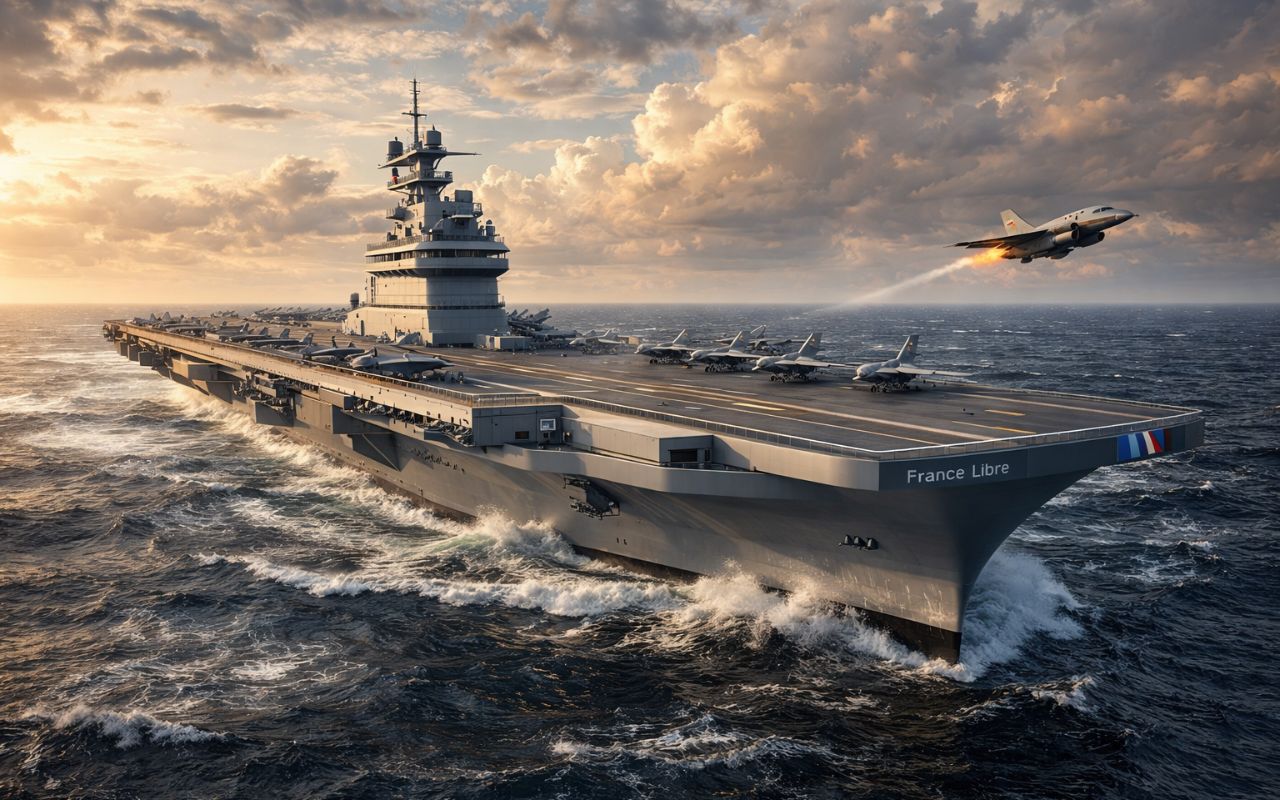
With 310 meters, 80 thousand tons, and capable of operating for 45 years, the new nuclear aircraft carrier France Libre will be the largest in France and will enter service in 2038.
Each engine delivered 19,280 pounds of thrust, totaling 77,120 pounds, but fuel consumption was extremely high. This directly impacted the aircraft’s fundamental requirement: to reach U.S. continental territory without refueling.


The engines were mounted at the roots of the wings in a partially embedded configuration, similar to the British De Havilland Comet. This solution reduced parasitic drag but created thermal and maintenance challenges. It also limited future upgrades, as any more powerful engine would require significant structural redesign.
The maximum speed reached 947 km/h during tests, but the economical cruising speed was limited to 800 km/h to conserve fuel. The operational ceiling of 12,200 meters was adequate against first-generation jet interceptors but would quickly become vulnerable with the evolution of supersonic fighters in the 1960s.
Dimensions, Nuclear Capability, and Defensive Armament
The Myasishchev M-4 was 47.2 meters long and had a wingspan of 50.5 meters — dimensions comparable to the American B-52.
The maximum takeoff weight was 181,500 kg, requiring long and reinforced runways. The bomb load capacity reached 24 tons of conventional or nuclear armaments in the internal compartment. The Bison could also carry cruise missiles externally, enhancing its strategic versatility.
The defensive armament included up to nine 23 mm cannons distributed in dorsal, ventral, and tail turrets. This concept reflected the Soviet doctrine still based on the idea of self-defending bombers — a view that would become obsolete with the introduction of radar-guided air-to-air missiles.
Tandem Landing Gear: An Uncommon Structural Solution in Strategic Aviation
One of the most unusual features of the M-4 was its landing gear in a tandem configuration. Instead of bogies under the wings, two main assemblies were positioned along the fuselage.
Small retractable stabilizer wheels at the tips of the wings prevented contact with the ground during takeoff and landing.
This solution saved structural weight but made operations in crosswinds particularly delicate. Crosswinds above the operational limit required cancellation of landings, reducing tactical flexibility.
Insufficient Range and Failure to Meet the Intercontinental Requirement
The original requirement called for a range of 12,000 km. The M-4 delivered only 5,600 km in real missions. Even in ferry configuration, the maximum was 8,100 km, which was insufficient for round-trip missions to the United States without air refueling.
This limitation compromised the strategic role of the bomber. In response, the Soviet Union began studies on aerial refueling. The second production aircraft was modified to act as a tanker, and the first received a refueling probe.

In 1956, the improved 3M Bison-B version flew, equipped with more efficient Dobrynin RD-7 engines, with a 25% reduced fuel consumption. The fuselage was redesigned for weight reduction, and the wings gained greater wingspan.
Seventy-four units were built between 1956 and 1963. The defensive armament was reduced to save weight, acknowledging that active defense against modern interceptors was increasingly less viable.
The 1954 Parade and the Myth of the “Bomber Gap”
The M-4’s first public appearance occurred during the May Day parade in 1954 in Red Square. Eighteen aircraft flew over Moscow.
In reality, only ten existed. They repeated the flyover with a calculated interval to simulate mass production. The CIA concluded that hundreds of bombers would be in production. Estimates projected up to 800 units by 1960.

The United States responded by accelerating the production of thousands of B-47 Stratojets and B-52 Stratofortresses.
The “bomber gap” became a central political argument in the nuclear arms race — essentially based on a bluff.
Conversion to Tanker: A New Strategic Role
With the failure in the intercontinental bomber role, the M-4 was converted into a tanker. Defensive armaments were removed, and hose-drogue systems were installed.
This conversion allowed extending the fleet’s service life and supporting Tu-95 Bear bombers and later Tu-160 Blackjack. The last unit was retired in 1994.
In the 1980s, the Ilyushin Il-78 Midas replaced the Bison tankers.
Based on the Il-76, the Il-78 could transfer up to 105 tons of fuel in flight, operating with three simultaneous refueling points. It entered service in 1987.
Vacuum Titanium Welding: Strategic Technology of the 1950s
The development of the Bison involved electron beam welding in a vacuum environment — essential technology for joining titanium components.
The process requires an evacuated chamber to 10⁻⁴ Torr to prevent oxidation of titanium heated to 1,668°C. This technique was later revived in the Russian aerospace industry for modern strategic programs.
Three aircraft were converted to the VM-T Atlant version to transport components of the Energiya-Buran space program. The cargo was mounted externally above the fuselage.
Dual vertical stabilizers were installed to compensate for turbulence. This adaptation transformed the old bomber into a strategic space transport.
Limited Production and Cessation Under START Treaties
The total production for all variants reached just 93 aircraft. Compared to the hundreds of B-52s and thousands of B-47s produced by the U.S., the number was modest.
The majority of airframes were dismantled under arms limitation treaties, especially START-1. The last Bison were retired or converted in 1987.
The Myasishchev M-4 Bison never fully met its original mission as an intercontinental bomber. But its strategic impact was profound.
It instigated the “bomber gap,” accelerated B-52 production, and became a symbol of the Cold War arms race. In numbers, it was modest. In geopolitical effect, it was enormous.









RUSSO GOSTA MUITO DE MOSTRAR MAQUETE E 25 ANOS DEPOIS A COISA NÃO DÁ CERTO! O SU 57 A 25 ANOS QUE TÁ NESSE CHOVE E NÃO MOLHA E NÃO CONSEGUE VOAR E SE VOAREM NO ESPAÇO AÉREO UCRANIANO, SÃO DERRUBADOS!
SE TEM UMA COISA QUE RUSSO SABE FAZER MUITO BEM É: MENTIR E ENVENENAR!