





 Portuguese
  English
  Spanish
  7 min of reading
  7 comments


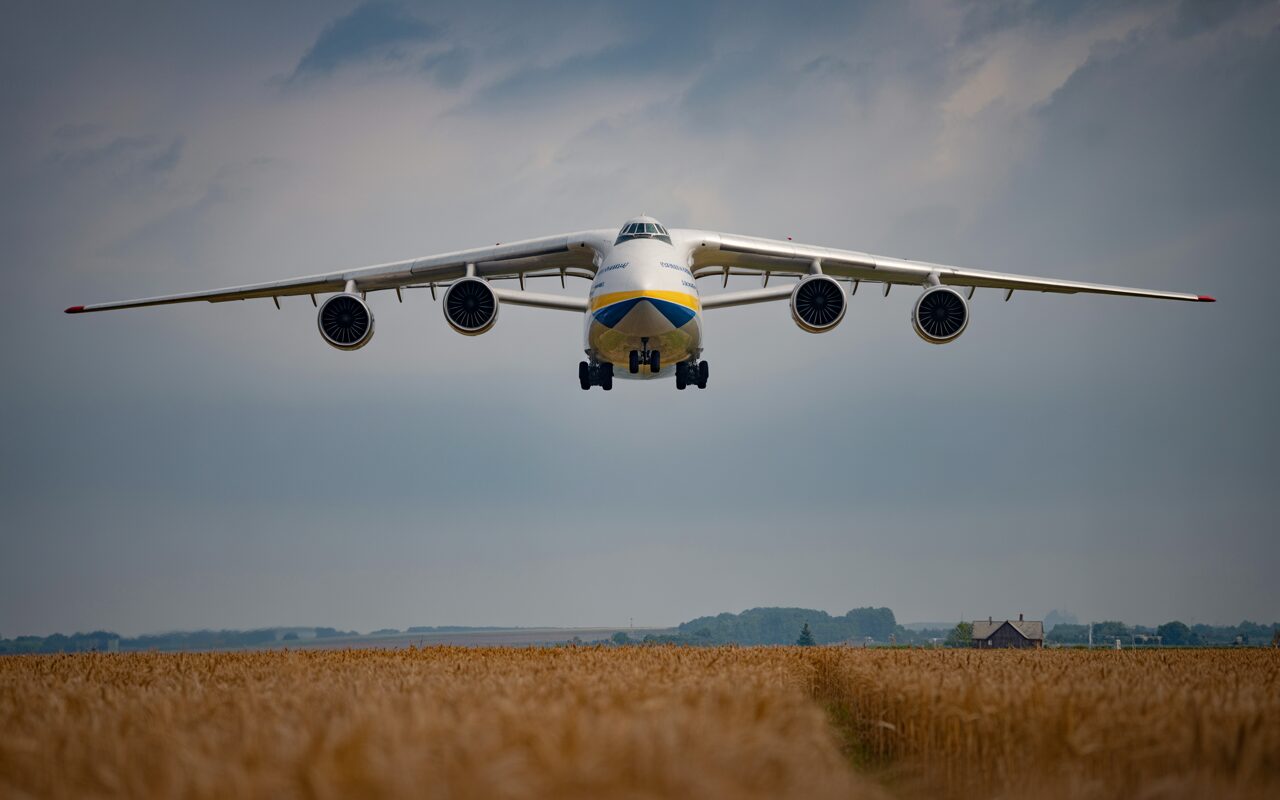


Designed To Carry Rockets and Impossible Cargo, the Antonov An-225 Mriya Is the Most Powerful Airplane in Aviation History and Also One of the Most Fuel-Consuming: About 15 Liters Per Second. With Its Six Engines and a Maximum Weight of 640 Tons, This Aircraft Is a True Flying Power Plant — and Its Legacy Still Makes an Impact in 2025.
The Airplane That Consumed 15 Liters Per Second: In the 1980s, during the Cold War, the Soviet Union needed a solution to transport its Buran space shuttle, as well as gigantic rocket components and military equipment. The answer was to create an airplane that would exceed any technical limits of the time. The result was the Antonov An-225 Mriya, designed by the Antonov Design Bureau in Kiev, now Ukraine. Based on the Antonov An-124, but even larger and more robust, the An-225 was designed to:
- Transport up to 250 tons of payload, either internally or on top of the fuselage;
- Operate safely on runways longer than 3,000 meters, with oversized cargo;
- Be reusable in multiple special civil and military transport missions.
Officially launched in 1988, the Antonov An-225 successfully made its first flight and has since accumulated records that no other aircraft has been able to surpass.
Birth During the Cold War
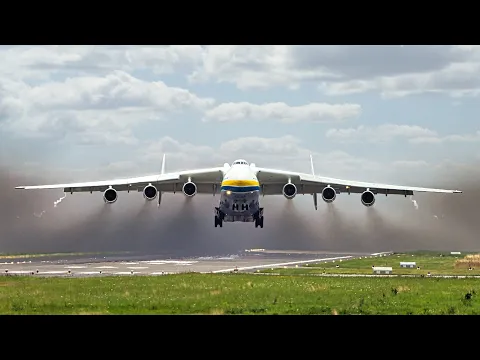

The Antonov An-225 was designed in the 1980s by the Antonov Design Bureau in what was then the Ukrainian Soviet Socialist Republic, part of the USSR. The aircraft was based on the previous Antonov An-124 model, but needed to be even more robust. Its main purpose was to transport the Buran, the Soviet space shuttle — a direct response to the American Space Shuttle program.
-
According to an analysis by NASA, only one human-made structure is visible from space, and it is not the Great Wall of China or the Pyramids of Egypt.

-
After 377 years of history, the Brazilian Army will have its first female general: Colonel Claudia Cacho has been promoted to brigadier general by Lula and will receive the sword and command baton this Wednesday in Brasília.

-
A Mercado Livre customer opened their package and found 32 resumes of people looking for jobs crumpled as protective paper inside the box, exposing names, addresses, documents, and phone numbers of dozens of candidates.

-
Iceberg A23a, one of the largest in the world, is undergoing accelerated collapse and may disappear: what explains the end of the ice giant?


To achieve this, the An-225 was stretched by nearly 15 meters compared to its predecessor, received a reinforced fuselage, a landing gear with 32 wheels, and two additional engines. In total, six Progress D-18T turbofans were installed, each capable of generating about 229 kN of thrust, allowing for the transport of absurdly large loads at cruising altitude.
The first flight of the An-225 took place on December 21, 1988. Within a few months, it had already set several world records, including the largest payload transported by an aircraft — 250 tons in a single flight — and the longest overall length (84 meters). Its wingspan reached 88.4 meters, equivalent to a football field and a half.
Technical Data: Why It Is the Most Powerful Airplane in History
The Antonov An-225 was, until its destruction, the largest cargo airplane on the planet, both in dimensions and in takeoff capacity and internal volume.
Main Technical Specifications:
| Characteristic | Details |
|---|---|
| Official Name | Antonov An-225 Mriya |
| Length | 84 meters |
| Wingspan | 88.4 meters |
| Height | 18.1 meters |
| Maximum Takeoff Weight | 640,000 kg (640 tons) |
| Engines | 6 x Progress D-18T turbofans |
| Total Thrust | 1,377 kN (approximately 140,000 kgf) |
| Cruising Speed | 850 km/h |
| Range (with Cargo) | ~4,000 km |
| Maximum Payload | 250 tons |
| Operating Altitude | up to 11,000 meters |
The set of six Progress D-18T aircraft engines was essential to provide the necessary thrust for the heaviest airplane in the world. No other civil or military aircraft had received this configuration from the factory.
Unrealistic Consumption: 15 Liters Per Second at Full Operation
One of the most impressive factors of the An-225 was its fuel consumption, which exceeded 15 liters per second during critical flight phases like takeoff at maximum load or initial climb.
Detailed Estimates:
- Light Cruising Consumption: ~12,000 L/h
- Average Consumption on Mission with Cargo: ~45,000 to 54,000 L/h
- Takeoff Consumption: can exceed 60,000 liters per hour, depending on weight and initial altitude
This level of consumption placed it among the most fuel-demanding aircraft in the world, even surpassing supersonic strategic bombers in conventional flight mode.
Flying the An-225 required more than technical skill: it demanded fuel in industrial proportions. During its flights with full cargo, the airplane could consume approximately 15 liters of fuel per second — which translates to 900 liters per minute or over 50 thousand liters per hour.
This consumption is not just a reflection of the aircraft’s total weight, but of the enormous power generated by its six engines. The Progress D-18T, although efficient for its time, is not comparable to modern turbines in terms of fuel consumption per ton transported. Still, it was necessary: the An-225 required brute force to take off with loads that, in many cases, would require the work of two or more conventional freighters.
The cruising speed of the Mriya was 850 km/h, with a range of up to 4,000 km loaded. On missions without cargo, it could reach 15 thousand kilometers, but the operational cost was always high. The refueling with kerosene could exceed 300 thousand reais per international flight — this in values prior to the 2022 war.
Comparison: How It Stands Out Among the Giants of the Skies
To understand how special the An-225 was, it is worth comparing it with other aviation giants:
| Aircraft | Engines | Maximum Cargo | Average Consumption (L/h) | wingspan |
|---|---|---|---|---|
| Antonov An-225 Mriya | 6 | 250 t | ~54,000 | 88.4 m |
| Boeing 747-8F | 4 | 140 t | ~16,700 | 68.4 m |
| Airbus A380 | 4 | 150 t | ~13,000 | 79.8 m |
| Lockheed C-5M Galaxy | 4 | 129 t | ~24,000 | 67.9 m |
| Tu-160 Blackjack (military) | 4 | 40 t (weapons) | ~30,000 | 55.7 m |
The An-225 not only surpassed competitors in size and capacity, but also required special refueling logistics, with adapted tanks and runways.
The Destruction of the An-225 and Its Impact on Aviation
In February 2022, the world was shocked by images of the destroyed hangar at Hostomel Airport, near Kiev, in Ukraine. Amid the conflict that began with the Russian invasion, the only operational An-225 was bombed and became completely unusable.

The news generated worldwide sorrow. The UN itself lamented the destruction, and thousands of pilots, engineers, and enthusiasts expressed their grief on social media. The An-225 was not just a piece of engineering: it was a symbol of cooperation, technical achievement, and peace through science.
However, hope did not die. In 2022, Antonov announced that there was a secondary fuselage, partially built in the 1990s and never completed. The structure accounts for about 70% of the second An-225, and since then, campaigns have begun to make its completion feasible.
2025: The Renaissance of the Mriya Is Being Prepared
Three years after the destruction of the aircraft, Antonov, now with support from European governments and international institutions, officially initiated the second phase of planning for the reconstruction of the An-225. The project is being called Mriya-2, and is expected to incorporate modern technologies, such as digital avionics, composite materials, and next-generation engines with reduced consumption.
In April 2025, the German government announced a contribution of €40 million to help with the project, followed by a technical agreement with Airbus for sharing engineering tools. The expectation is that the new An-225 will be ready between 2027 and 2028, possibly even receiving a new name.
If this happens, the new aircraft could maintain the title of the most powerful airplane in the world, but now with more efficient engines and less environmental impact — something unthinkable in the 1980s.
What Makes the An-225 Unique, Even Among Military Aircraft
Even elite military aircraft, such as the American B-1B Lancer strategic bomber or the Russian supersonic Tupolev Tu-160, do not come close to the combination of power and cargo of the An-225. These planes, while faster, are designed to operate with armaments and not with tons of metal structures or industrial generators.
The Antonov An-225 was the only aircraft to unite scale, cargo, and performance with proven safety. It operated for over 30 years without major incidents, proving its reliability even in the face of its complexity.
Its six engines, when operating together, generated over 1,370 kN of thrust — a number that put it ahead of any civil aircraft and many military ones. Not to mention its landing gear system with 32 wheels, capable of turning individually to facilitate ground maneuvers.
Absurd Consumption, but with a Clear Purpose
The number of 15 liters of kerosene per second may seem unrealistic — and indeed it is. But to transport a load of 250 tons directly between continents, the energy cost was justified. In many cases, using the An-225 avoided the disassembly and re-shipment of parts by ship, which could take weeks.
The speed and logistical capacity of the aircraft offset the operational cost. Even with such high consumption, it was economically viable, as its flights were highly specialized and charged at rates exceeding US$ 500 thousand per trip, depending on the route and cargo.
An Engineering Icon That May Fly Again
As reconstruction efforts advance, the Antonov An-225 remains a technical and emotional landmark. Its legacy goes beyond performance: it represents an era in which the impossible was surpassed with calculation, welding, and turbines.
In a world seeking to decarbonize aviation and make it more efficient, the Mriya still inspires engineers to dream big. It may be that we never see such a massive and bold aircraft again, but its memory lives on — and, who knows, soon, returning to cross the skies with more power and less impact.




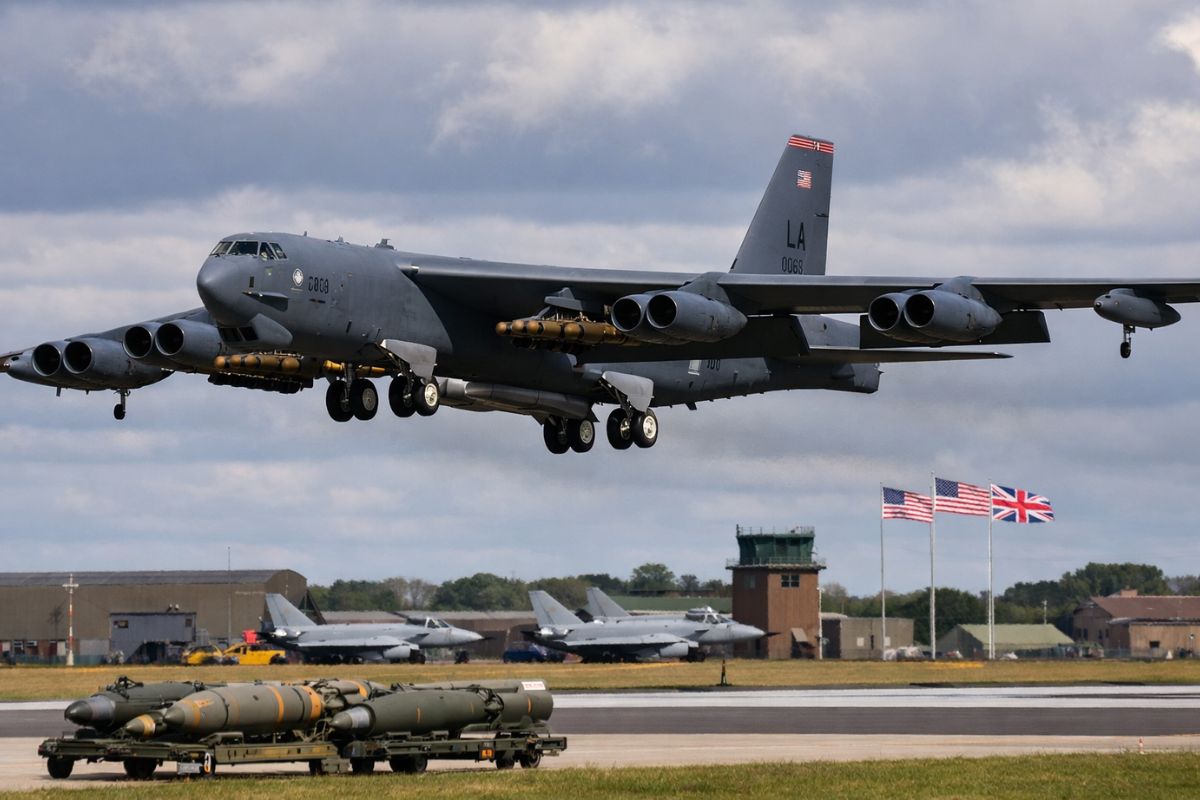




Que título ****, porque não coloca o maior avião de carga que tivemos, ou com maior capacidade de carga e por aí vai. Usa uma expressão pejorativa. Editor de **** esse aí….
Tem vários vídeos espalhados pelo mundo do AN225 Myria, mas a matéria mostra, a foto do outro avião o AN124 Ruslan que é menor e só tem quatro motores e vez por outra aterriza por algum aeroporto brasileiro. O AN225 Myria é único e uma verdadeira majestade por onde passa, pois todos correm pra ver pelos aeroportos que aterriza e decola pra alguma missão. Um verdadeiro Colosso de avião.
In the article AN225 was based on the AN124 which I assume is why it’s pictured
Este avião da foto tem 4 motores e ñ 6.
Isso é falta de competência em colocar fotos reais do avião.