





 Portuguese
  English
  Spanish
  5 min of reading
  0 comments


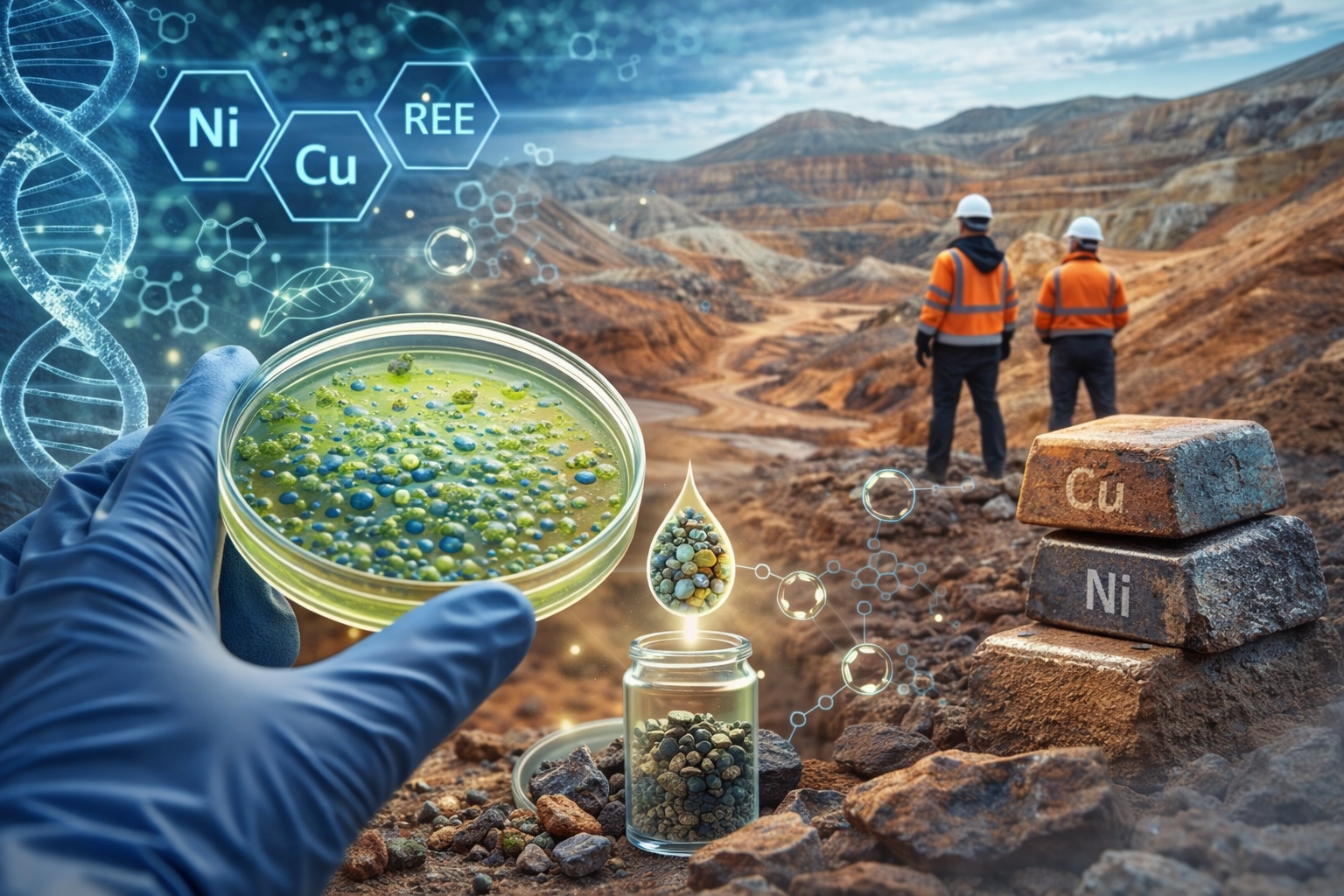
Miners Are Testing Fermentation Broths, Genetic Monitoring, and Even Engineered Microbes to Recover Metal Where Ore Has Been Depleted, Striving to Maintain Production Amid Surging Demand for Batteries, Data Centers, and Renewable Energy.
In a pine forest in northern Michigan, a nickel mine that is now a rare find in the United States is reaching that tedious point in the life of every mining operation: the good ore is running out, and what remains is lower-quality material, more expensive to process, and harder to justify on paper.
But the timing is cruel. Nickel continues to be an important ingredient for many batteries, and when the supply chain needs metal, closing a mine is not just a local issue. It becomes a bottleneck.
It is in this scenario that biotechnology is trying to come in through the front door with a simple yet bold proposal: using microorganisms and their byproducts to extract more metal from where traditional mining has already “squeezed” almost everything.
-
INMET danger alert: heavy rains between the 3rd and 4th may drop up to 100 mm/day and winds of 60 to 100 km/h in several regions of Brazil require extra caution.

-
The parts crisis may bring back the drop notch and microSD in 2026; while Windows 11 promises to become lighter, leaks mention batteries of up to 10,000 mAh and 200 MP cameras.

-
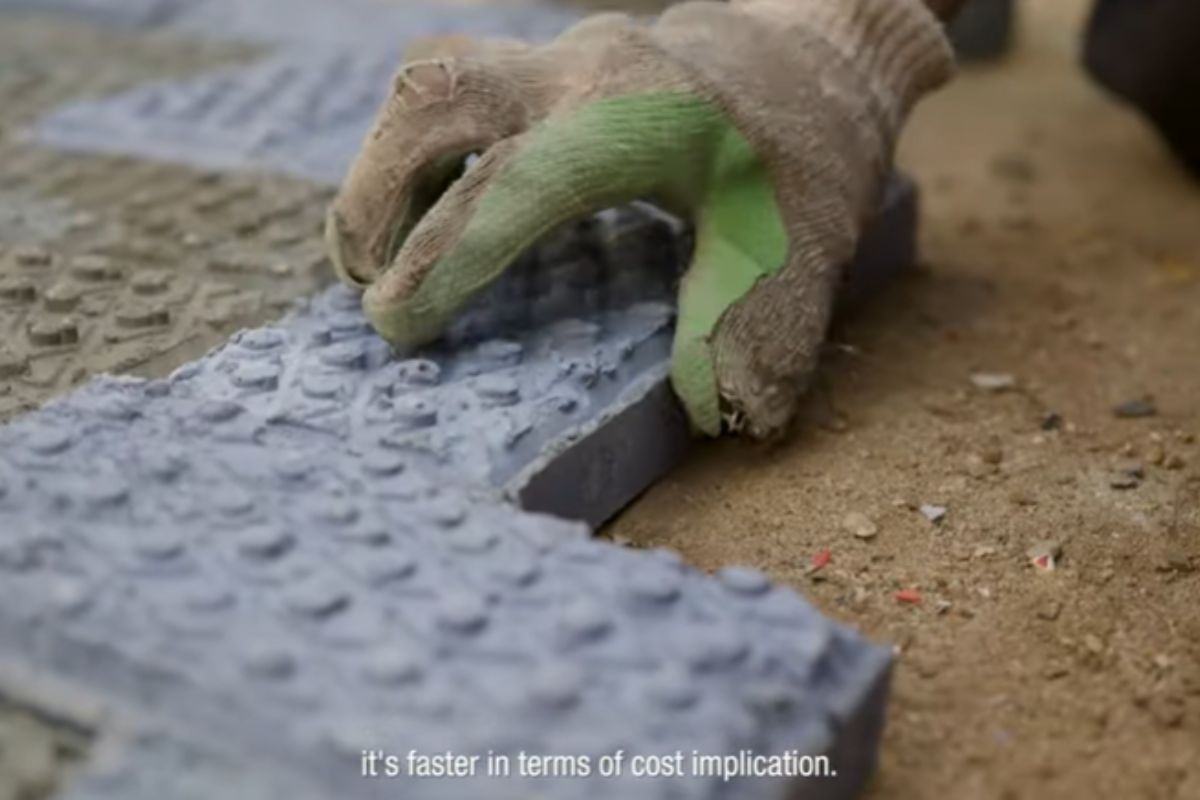
In Kenya, engineer Nzambi Matee created “bricks 2.0” using packaging plastic: a mixture with sand, heated and pressed; they are 5 times more resistant, already have official licensing, and are being used in streets and construction projects.
-
More than 20,000 positions could be opened, and thousands of technicians are starting to be trained in Brazil, as the expansion of data centers creates an urgent race for professionals to keep the internet, cloud, and artificial intelligence running 24 hours a day.

The New Plan of Miners Is to Extract Metal from What Was Once Considered “The End of the Line”
In practice, the idea is to capitalize on three fronts at the same time.
The first is to improve extraction in mature mines, where the grade has fallen. Instead of abandoning the operation, the company tries to maintain production with processes that work better with lower-quality ore.
The second is to transform piles of tailings and residual materials into a sort of second mine. Where there was once waste, there may now be recoverable metal.
The third is to make extraction less dependent on opening new areas, which often bumps into licensing, time, cost, and environmental conflict.
In the case of the Michigan mine, what is being tested looks like a far less glamorous scene than the word biotechnology suggests. Two containers, a fermentation-derived mixture, and concentrated ore undergoing a process designed to capture impurities and release more nickel even when the quality of the material no longer assists.
The argument is straightforward: if you can extend the lifespan of existing mines, you buy time, reduce pressure for new extraction fronts, and meet demand without relying on miracles.
How Microbes Have Been Doing This for Decades, and Why It’s Getting Smarter Now

Microbes are nothing new in the sector. Mining has long used bioleaching, especially for copper. The classic method is almost an “industrial farming” in crude form: crushed ore becomes a pile, acid is applied, microorganisms that thrive in acidic conditions are added, and the biological process helps break the chemical bonds holding the metal.
But for years, this was done somewhat on autopilot. Maintaining acidity, injecting air, waiting for the microbial community to do its work. The problem is that waiting yields results, but not always the best results. And in the current scenario, metal has become a race.
The difference now is that the cost of genetic tools has fallen, and it has become much easier to understand what is alive in that pile, what is functioning well, what is weak, and what needs reinforcement.
Some startups are analyzing DNA and RNA present in the liquids that drain from the piles to map who is there and how these microorganisms are behaving. This way, they attempt to “manage” the community, suggesting which microbes to add to increase the extraction rate. This is an important shift because it takes the process out of the “let it happen” category and places it in the “optimize and repeat” shelf.
In the midst of this new wave, the main source that organized the examples, companies, and criticisms from the sector was the MIT Technology Review, which describes everything from nickel tests to attempts to expand bioleaching to more complex metals.
The Problem Is Scale, and This Is Where Many Promises Die
All of this sounds incredible in the lab. But mining is not a laboratory. It involves tons, dust, material variability, climate, time, and a level of complexity that swallows fragile solutions.
That’s why doubts arise that cut the hype at the root. If a company claims it will throw microbes into the pile to improve extraction, how can it guarantee that they will survive, establish themselves, and dominate the environment in the expected way? Microbes don’t sign contracts. They adapt or they disappear.
And there is another invisible barrier: large mining companies have already optimized everything. Pipes, hoses, temperature, mixing, time. Convincing this crowd requires proof, data, and repetition. And data in mining takes time. It’s not software. You can’t launch a new version in two weeks and pretend everything is fine.
The pace shock also affects biotech startups backed by investment. Investors like quick returns. Mining enjoys long testing and risk control. This creates natural friction that can kill good projects simply because the money clock doesn’t match the ore clock.
The Boldest Bet Is Genetic Engineering, but It Comes at a Cost
Some companies want to go beyond working only with natural microbes. The idea is to genetically adjust organisms to tackle specific challenges in each mine, increasing performance and selectivity.
However, this path has a trap. Engineered organisms can become more difficult to cultivate, more sensitive, and less predictable outside of the controlled environment. It’s the kind of solution that can turn into a Ferrari that can’t handle dirt roads.
That’s why an alternative path is gaining traction: using products from microbial fermentation instead of live organisms. In other words, let the microbes work on producing useful molecules and apply those molecules to the industrial process. This reduces the risk of “the microbe didn’t take” and keeps biotechnology within a more controllable package.
In this vein, initiatives are emerging using proteins to capture and separate rare earths or organic acids produced by modified bacteria to extract valuable elements from poor ores and also from modern waste, such as ashes, slags, and even electronic components.
The Race Is Against Demand, and Time Is Tight
The demand for nickel, copper, and rare earths continues to grow with electric cars, data centers, and renewable energy requiring a lot of metal. But the easy ore is gone. What remains is more expensive, weaker, and harder to process.
It is exactly for this reason that biomining seems to be gaining real traction. It does not promise to replace everything tomorrow. It promises to enhance what already exists, recover metal where it was once deemed unfeasible, and increase yield where traditional mining is already at the limit of cost.
Whether it will become a revolution or just another tool is still up in the air. But the direction is clear: if it’s possible to extract metal from waste and old mines, what was once discarded starts to look active.







-

-

2 pessoas reagiram a isso.