





 Portuguese
  English
  Spanish
  5 min of reading
  0 comments


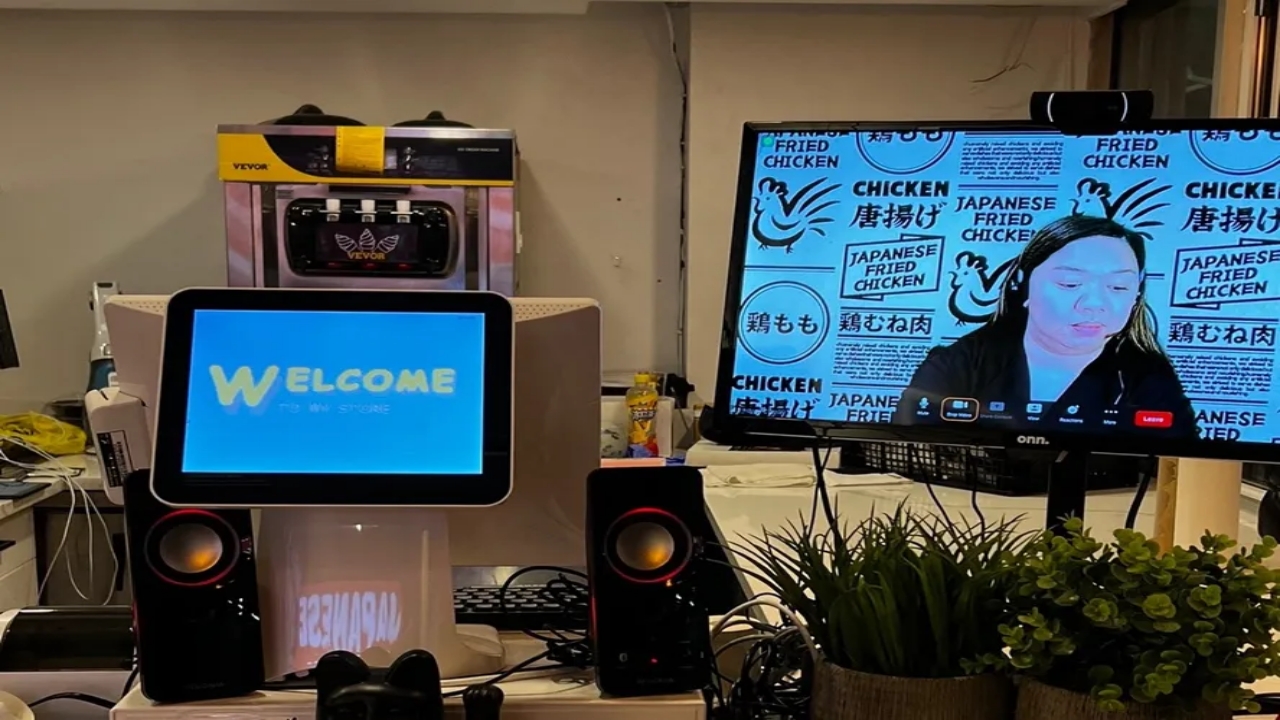
New York Is Experiencing An Unprecedented Revolution: With The Labor Shortage, Restaurants In The United States Hire Attendants Who Work From Home And Serve Customers Through Live Video.
The labor shortage in New York, one of the most sought-after cities in the United States, is changing the way restaurants operate. To reduce costs and maintain service, several establishments have begun to hire foreign attendants who work from home in the Philippines and appear on screens at counters to receive customers through video calls.
The new remote service model, driven by rising rents and inflation, raises concerns about the future of job opportunities and labor rights.
The scene, increasingly common in New York restaurants, reflects how the global labor market is adapting to the digital age and the relentless pursuit of savings.
-
With a length of 399.9 meters and a capacity for over 24,346 containers, the MSC Irina becomes the largest ship in the world and revolutionizes global maritime transport.

-
With nearly 6,000 square meters and an investment of $100 million, the building that seems to move in Las Vegas has a reflective stainless steel façade, creates optical illusions, and has become a symbol of creativity worldwide.

-
From Florianópolis to Antarctica non-stop at 60 years old: 1st Brazilian woman to sail solo makes history by facing one of the most dangerous routes on the planet.

-
A Brazilian recounted how a sudden malaise triggered the entire hospital machinery in the United States, with emergency protocols, tests to rule out a heart attack, and a bill that could reach $40,000.

But innovation, despite reducing costs and ensuring remote service, also raises alarms about the impact of this practice on local job opportunities and labor rights.
A Service That Literally Comes From The Other Side Of The World
At the restaurant Sansan Chicken, in the Queens neighborhood, the virtual attendant smiles and recommends the fried chicken sandwich. On the other side of the screen, at home in the Philippines, Romy tries to maintain a stable connection while conversing with the customer.
She is one of 12 virtual attendants hired by the company Happy Cashier, founded by Chi Zhang, a Chinese entrepreneur based in New York who saw an opportunity amid the food sector crisis.
Zhang, a former owner of the restaurant Yaso Tangbao — closed during the pandemic — explains that the goal is to help small businesses survive inflation and high commercial rents.
Each remote attendant receives the equivalent of BRL 16.35 per hour, a value that, according to the entrepreneur, is twice the average for similar roles in the Philippines. Meanwhile, the minimum wage in New York is approximately BRL 87 per hour.
The system, still in the expansion phase, is already functioning in establishments in Queens, Manhattan, and Jersey City, such as Sansan Ramen, Sansan Chicken, and Yaso Kitchen. Two other restaurants in Long Island have also adopted the novelty but chose not to identify themselves.
According to Zhang, the service started being tested in October 2024 and gained popularity after a viral video on social media in April 2025. “This is a way for small businesses to face costs that grow faster than profits,” he stated in an interview with The New York Times.
An Innovative Solution Or The Beginning Of A Problem?
Although the idea of having virtual attendants via video calls seems modern and efficient, not all customers were convinced. “You hear ‘hello’ and think: what is this?” commented Shania Ortiz, 25, after a visit to Sansan Ramen. She shared feeling uncomfortable with the surveillance camera and the golden monitor in the foyer.
Other consumers share the sense of strangeness. “I thought it was an advertisement video, I didn’t even realize it was a real person,” said Will Jang, an employee at Goldman Sachs, after having lunch at Yaso Kitchen.
For critics, the novelty opens precedents for international outsourcing of labor in roles that, until now, depended on physical presence. According to Teófilo Reyes, chief of staff at Restaurant Opportunities Centers United — an organization advocating for food industry workers in the U.S. — the practice is concerning:
“The fact that they found a way to outsource labor to another country is alarming. This will put pressure on industry wages and weaken labor protections.”
The Impact Of Technology On The Workforce
Automation and digitalization have been transforming the restaurant market in the United States, which has already lost thousands of positions since the pandemic.
According to the Center for an Urban Future, the average number of employees per fast-food restaurant in New York dropped from 9.23 in 2019 to 8.5 in 2022, a trend that is expected to intensify with the advancement of remote service technologies.
Happy Cashier claims it intends to set up virtual attendants in over 100 restaurants by the end of 2025, expanding the business model.
In addition to serving customers, virtual workers also coordinate delivery orders, answer calls, and even monitor online reviews on sites like Yelp and Google Maps.
However, the company assures that the employees are formally contracted in the Philippines, and that all financial transactions continue to be managed by local restaurants. Still, according to the New York State Department of Labor, minimum wage laws “only apply to workers physically present in the state,” making the practice legal, though ethically debated.
Between Economy And Ethics
For Rosy Tang, manager of Sansan Chicken in the East Village, the experience has been positive. “It’s a way for small businesses to survive,” she said. With cost and space savings, Rosy plans to even open a small coffee kiosk inside the restaurant.
But not everything runs perfectly. During a recent test, a reporter who tried to order a sandwich without cheese through the screen was advised to find an in-person staff member — the system apparently still cannot handle customized orders.
Amber, one of the virtual attendants who has been working for three months at Yaso Kitchen, says she sees advantages in the new model.
“It’s my first time working from home,” she said, smiling in front of a virtual background with drawings of Chinese dumplings. When asked where she lived exactly, she replied: “Sorry, I can’t share personal details. Can I take your order?”
An Uncertain Future For Human Work
What began as a creative solution to address the labor shortage and high operating costs may become a global trend.
At a time when companies worldwide are experimenting with hybrid and automated models, the line between what is human and what is remote is becoming increasingly blurred.
Experts warn that if there is no proper regulation, the phenomenon could expand to other sectors, generating a “digital uberization” of work.
Meanwhile, neighborhood restaurants in New York continue to be laboratories for a silent transformation, which could redefine how we interact with those who serve us — even if the person is half a planet away.
Leave your comment below and share this story so we can discuss together the future of work and how technology is transforming daily life in restaurants in the United States.








Seja o primeiro a reagir!