





 Portuguese
  English
  Spanish
  7 min of reading
  1 comment


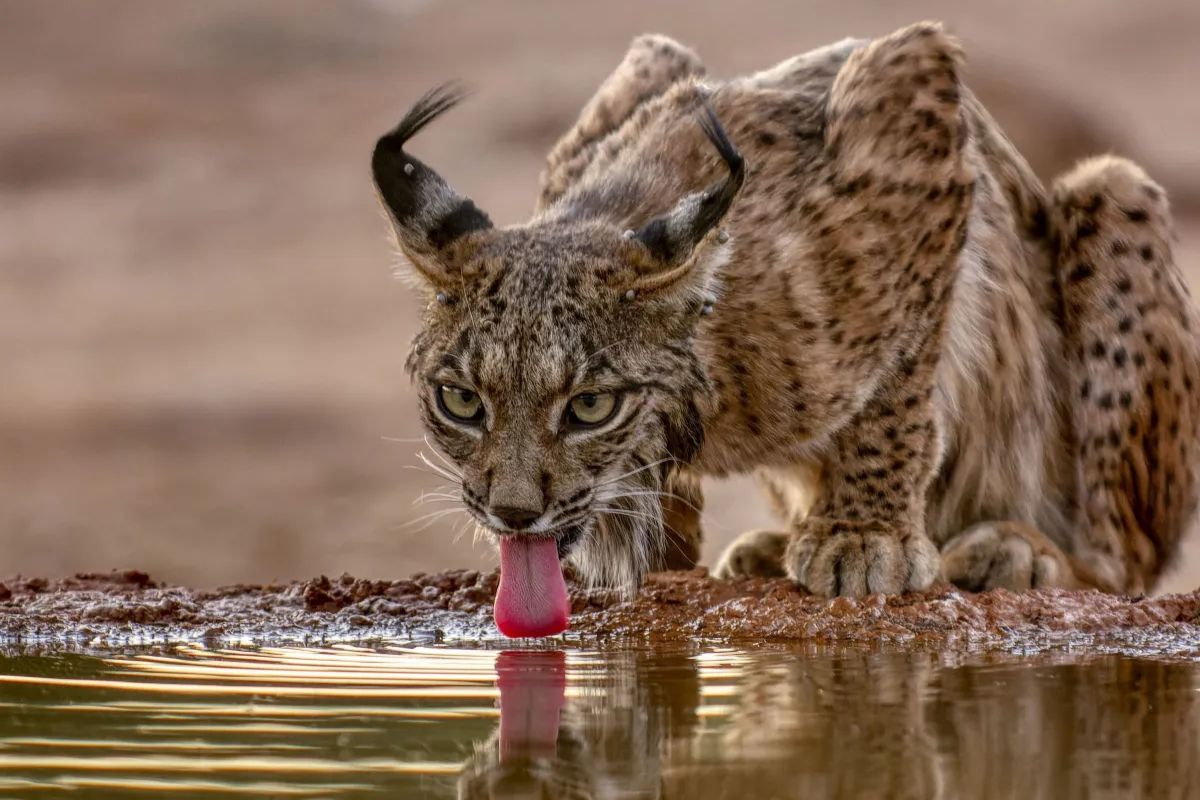


In Portugal and Spain, The Iberian Lynx Consolidates the Greatest Recovery of a Large Cat in Europe: The 2024 Census Sums 2,401 Animals, Expands Breeding Areas, Changes Status on the Red List and Exposes Challenges Such as Collisions and the Goal of 6,000 Individuals
On May 22, 2025, the annual census released on the iberian lynx confirmed a historic turnaround on the Iberian Peninsula, in Portugal and Spain: the population jumped from 2,021 in 2023 to 2,401 in 2024, an increase of 19% in just one year, with 844 births registered throughout 2024.
The numbers from 2024 also explain why the species changed category on the IUCN Red List, moving from “endangered” to “vulnerable.” Even with the celebration, the data reinforce that the objective for safety still depends on additional growth and mortality reduction, especially from non-natural causes.
Where It Happened and Why the Iberian Peninsula Became a Reference

The recovery of the iberian lynx took place on the Iberian Peninsula, bringing together coordinated efforts in Portugal and Spain.
-
At the bottom of the sea, scientists have found a true underwater cathedral measuring 62 meters at the base, 31 meters at the top, and 1,347 square meters of giant coral in the Maug Islands, estimated to be 2,050 years old.

-
Surrounded by the sea, the airport will have a system to prevent airplanes from falling into the water; technology will be installed in Ilhéus (BA), with an investment of R$ 70 million.

-
With a cost per shot close to zero, the DragonFire laser could change naval warfare in 2027 and provide British ships with nearly unlimited defense against drones.

-
A British startup creates tires that generate electricity in electric vehicles when passing over potholes, speed bumps, and cracks.

The species, which was on the brink of extinction at the beginning of this century, began to be monitored year after year through conservation programs that created a solid foundation for population and territorial expansion.
The evolution is not just a biological phenomenon, but a direct result of ongoing environmental management in the two countries, with planning, monitoring, and data-driven decision-making.
Portugal and Spain have turned the Iberian lynx into a symbol of recovery, not due to an isolated event, but through more than two decades of accumulated work.
The Jump of 19% in 2024 and What It Reveals About the Species

The most impactful data from the 2024 census is the growth of 19% in a single year, with the total population reaching 2,401 animals, compared to 2,021 in 2023.
This advance has come not only from greater survival rates but also from intense reproduction: 844 new lynxes were born in 2024, reinforcing that the species has entered a phase of consistent population expansion.
This growth indicates that, in several areas, the Iberian lynx is no longer just surviving.
It is reproducing regularly, occupying more territory, and consolidating populations that support the species in a more stable manner, which is crucial to reducing extinction risk.
Adults, Breeding Females and the Backbone of Recovery
The 2024 census identified 1,557 adult lynxes, including 470 breeding females, a number that increased by 64 compared to 2023.
In conservation terms, this statistic is crucial because it is not enough to have many individuals. What sustains the future of an endangered species is the ability to reproduce consistently, with enough females spread across functional territories.
Breeding females are the real engine of population continuity.
When this number rises, growth tends to become less dependent on isolated actions and more related to a natural cycle of replenishment, provided there is habitat and safety.
Spain Concentrates the Majority of Lynxes and Leads the Population Map
In 2024, Spain recorded 2,047 Iberian lynxes, gathering the largest share of the total population on the Iberian Peninsula.
The country concentrates diverse populations, with regions that stand out for housing large contingents and, at the same time, supporting breeding zones that help expand the species.
The Spanish regions mentioned in the 2024 census include Castilla La Mancha, with 942 lynxes, Andalusia, with 836, Extremadura, with 254, and Murcia, with 15.
This distribution shows that the species has strengthened in more than one regional axis, consolidating not only a “refuge” but a network of areas with active reproduction.
Portugal Advances in the Guadiana Valley and Expands the Presence of the Species
In Portugal, 354 Iberian lynxes were identified in 2024, with the population concentrated in the Guadiana Valley.
This jump is significant because in the previous census the number was 291, demonstrating that growth is not restricted to Spanish territory.
The Portuguese advance also reinforces the role of cross-border work, as the lynx does not recognize political boundaries.
What determines success is the territorial continuity of breeding areas and the ability to connect populations, avoiding isolation and reducing vulnerabilities.
Territorial Expansion: 17 Breeding Areas and Connections Between Populations
The Iberian lynx is not only increasing in number but also expanding its range.
In 2024, the species was already reproducing in 17 different geographical areas, an indicator that the occupied territory has diversified.
Some of these areas feature interconnected populations, which favors the natural circulation of individuals and reduces typical risks of fragmented populations.
The territorial expansion is essential because it prevents recovery from being confined to a few vulnerable points, where any adverse event could cause a sudden decline.
Why 2020 Was a Turning Point in the Growth Curve
The announcement indicates that the recent evolution is considered even more remarkable from 2020, when 1,111 animals were identified.
This milestone serves as a reference because, in just a few years, the population has nearly doubled, reaching over two thousand and consolidating continuous growth.
Additionally, it was highlighted that the population trend for the Iberian lynx is positive and continuous since 2015, reinforcing that the data from 2024 is not a statistical exception.
They form part of a consistent sequence of progress, with a direct reflection on the species’ classification.
Category Change: From “Endangered” to “Vulnerable” in 2024
In 2024, the Iberian lynx stopped being classified as “endangered” and moved to “vulnerable” on the IUCN Red List.
This category leap is symbolic but also technical: it signals a reduction in the immediate risk of extinction, based on demographic trends and territorial expansion.
The change also reinforces the understanding that the conservation project has become one of the most successful examples of endangered species recovery in Europe.
Nevertheless, vulnerable does not mean safe.
It means that the species has improved but remains exposed to threats that could reverse the curve if not addressed.
Deaths in 2024: Collisions Continue as a Central Threat
Even in recovery, the Iberian lynx still faces mortality from non-natural causes that is considered significant.
In 2024, 214 lynxes died, and 162 of those deaths occurred due to collisions on roads in the Iberian Peninsula, involving Portugal and Spain.
This data exposes a common paradox in recovering species.
As the population grows and spreads, it crosses more roads, encounters more human areas, and becomes more exposed to collisions, which requires ongoing measures to reduce this type of loss.
The Captive Breeding Strategy and Releases Since 2011
A decisive phase of the Iberian lynx conservation project was the captive breeding.
The first animals began to be released into the wild in 2011, and by 2014, 403 lynxes born in captivity had been released.
This figure is important because it shows that recovery was not just “natural.”
It was built with planned intervention, strengthening populations in strategic territories, allowing time for wild populations to re-establish with consistent reproduction.
Cooperation Between Portugal and Spain and the Management of the Project
The recovery of the Iberian lynx involves various public and private entities in Portugal and Spain, with national coordination and regional articulation.
In Portugal, coordination is led by the Institute for Nature Conservation and Forests, which integrates into the joint effort with Spanish teams.
This cooperation is a structural element of success because the species’ breeding territory crosses different areas and requires alignment in strategies, monitoring, and ongoing actions.
The Iberian lynx has become a country project, but also a cross-border project, which only works because decisions do not remain isolated.
What Is the Goal for a Favorable Conservation Status
Despite the good results, scientists and project leaders believe that to achieve a “favorable conservation status,” the population needs to reach between 4,500 and 6,000 individuals, with at least 1,100 breeding females.
This goal indicates that current recovery, while historic, is still on an intermediate path.
The growth to 2,401 animals in 2024 is a milestone, but it is not the finish line, especially if mortality from collisions remains high.
Why the Iberian Lynx Became the Largest Environmental Symbol of Europe
The Iberian lynx has become a symbol because the recovery has scale, time, and proven results.
In just over two decades, it grew from fewer than 100 individuals in 2002 to over 2,000 in 2023 and reached 2,401 in 2024.
This kind of jump is rare in large species, especially in regions with intense human pressure.
Additionally, the trajectory combines elements that support the success narrative: reproduction, releases into the wild, territorial expansion, and status review on the red list.
This is not a survival case; it is a case of reconquest.
What Still Needs to Happen for the Species Not to Risk Again
Even with growth, the mentioned challenges indicate that it is still necessary to ensure the continuity of progress and address factors causing losses.
Mortality from collisions in 2024 shows that a significant part of the problem is now connected to coexistence with human infrastructures.
The future success depends on increasing individuals and, primarily, increasing breeding females, to consolidate the species at levels considered safe.
The recovery has already been proven, but definitive stability still requires time and constant protection.
In your opinion, can the Iberian lynx already be considered a definitive victory for Portugal and Spain, or is it still at risk of decline if collisions continue at the same rate?









Lo primero que está bien recuperar un símbolo patrio del país , yo les dirían que seguirían así , y recuperar , el 100 por cien , de los linces, es como si se tuviera que recuperar los oscuros osos, cántabros o asturianos, ánimo seguir así recuperando esos animales, y otros animales , del mundo, con peligro de extinción, en el mundo, les daría una grandísima , alegría a la diosa madre Gaia o pachapama, ya me despido hasta otro día.